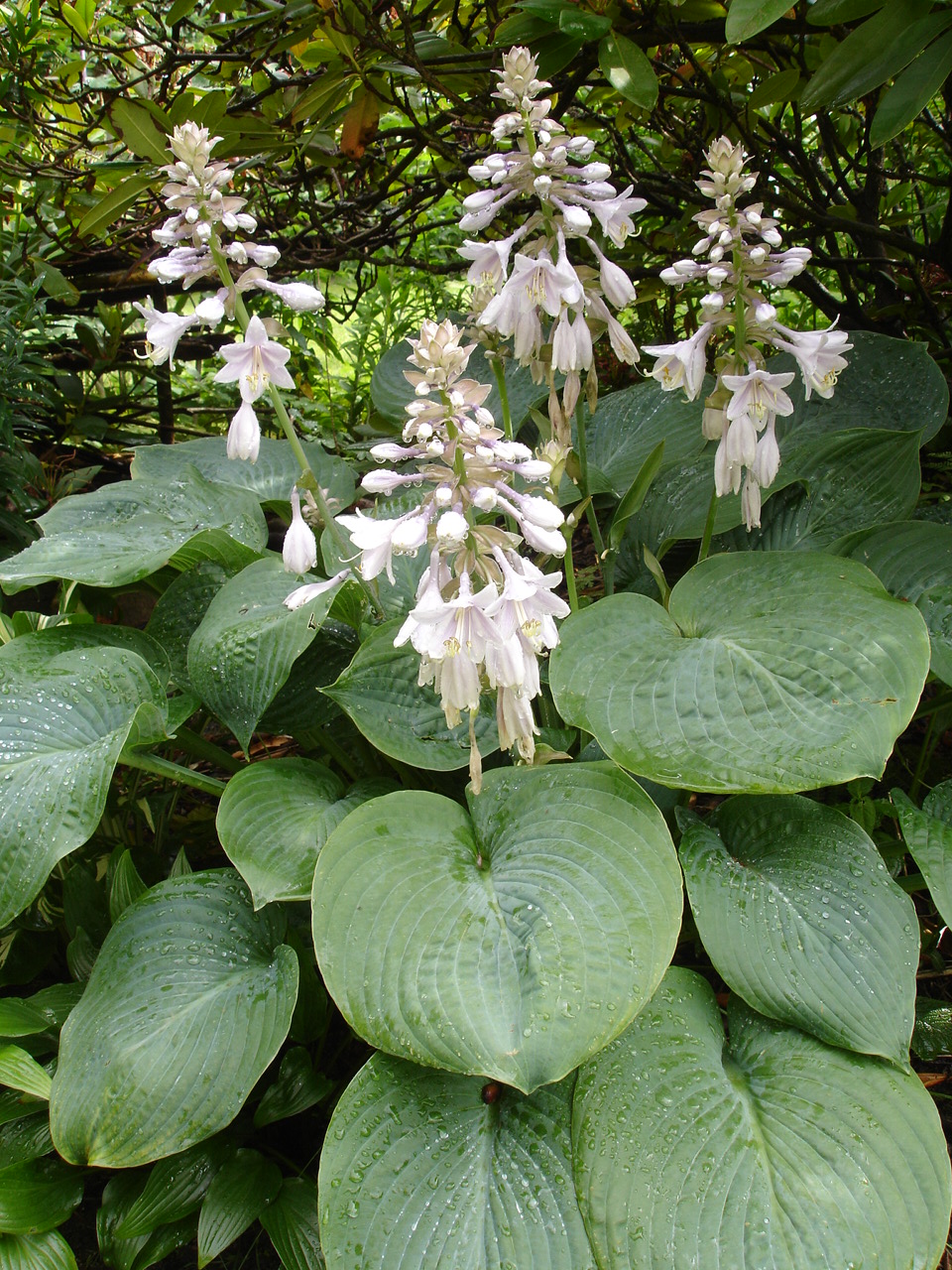
Fragrant plantain lily (Hosta plantaginea) is a clump-forming herbaceous perennial native to south-central and southeastern China, recognized for its large, intensely sweet-scented white flowers. Unlike common shade hostas, it is the sole progenitor of all fragrant cultivated hosta hybrids.
This species requires several hours of direct morning sun to set flower buds reliably in cooler northern climates. It fails to bloom if planted in dense, unbroken shade.
Key Facts
- Light: Dappled shade to morning sun; needs sun for blooms
- Water: 2.5 cm (1 in) of water per week
- Soil: Moist, rich, well-draining loam (pH 6.0–7.0)
- Bloom time: August to early September
- Flower scent: Strong citrus, jasmine, and honeysuckle fragrance
- Safety: Toxic to dogs and cats due to saponins
Growing Fragrant Plantain Lily in the Garden
Fragrant plantain lily demands higher heat and more sunlight than standard blue or dark green shade hostas to initiate flower scapes. It suits border fronts, patio beds, and walkways where evening pedestrians can enjoy its perfume.
Because its flowers open in late afternoon and stay open through the night, plant it near outdoor seating areas. Gardeners in USDA Zones 3 to 5 should provide full morning sun to accumulate enough heat units for August flowering. In Zones 7 to 9, midday shade protects the glossy foliage from leaf scorching.
Identifying Hosta plantaginea Foliage and Blooms
You can identify Hosta plantaginea by its smooth, shiny chartreuse leaves and tubular white blossoms that measure 10–13 cm (4–5 in) in length. It produces the largest flowers of any wild hosta species.
Leaf blades are cordate-ovate (broadly heart-shaped), measuring 20–30 cm (8–12 in) long and 15–20 cm (6–8 in) wide, with 7 to 9 pairs of distinct, deeply impressed veins. Foliage remains glossy bright green without the waxy powder found on glaucous cultivars.
- Flower length: 10–13 cm (4–5 in) long, trumpet-shaped
- Flower color: Pure waxy white
- Flower opening: Late afternoon (around 4:00 PM), lasting until noon the next day
- Leaf appearance: Thin, light green, glossy, with undulating margins
- Scape height: Stems rise 60–90 cm (24–36 in) above the mound
Sun and Light Requirements for August Lily
Fragrant plantain lily grows best with 3 to 5 hours of morning direct sunlight followed by afternoon shade. Deep, heavy shade reduces flower counts and causes flower stems to stretch and lean.
Avoid harsh afternoon sun from 1:00 PM to 4:00 PM, which bleaches the chartreuse leaves to pale straw-yellow and crisps the margins. If your garden is located north of USDA Zone 6, position the plant against an east- or south-facing wall to absorb summer warmth. Southern growers must provide dappled canopy shade beneath high-branched deciduous trees to avoid foliage scald.
Soil Preparation and Planting Steps
Plant crowns with the growing eyes positioned 2.5 cm (1 in) below the final soil line in compost-rich, moisture-retentive ground. This species tolerates heavy soils better than other perennials if drainage is steady.
Dig a hole twice as wide as the root mass and incorporate equal parts native soil and aged leaf mold or compost. Spread the thick, fleshy roots outward and downward over a slight mound in the center of the planting pit. Water thoroughly with 10 L (2.5 gal) of water right after backfilling to eliminate air pockets, then apply a 5 cm (2 in) mulch collar, keeping it clear of the crown tissue.
Watering and Fertilizer Needs
Provide 2.5 cm (1 in) of water per week throughout the active growing season from May to September. August lily possesses large, broad foliage that loses water quickly on breezy, warm days.
Apply supplemental water directly to the root zone via soaker hoses early in the day; overhead watering wets the flowers and encourages fungal rot. Feed plants in early spring just as the pointed leaf shoots (eyes) emerge from the soil:
- Apply a balanced, slow-release 10-10-10 granular fertilizer at a rate of 30 g (1 oz) per plant.
- Top-dress with a 2.5 cm (1 in) layer of mature compost in late spring.
- Cease all fertilizer applications by mid-July so the plant can prepare for autumn dormancy.
Pruning and Maintenance
Cut flower stalks back to the base of the plant as soon as individual scapes finish blooming in September. Removing spent scapes prevents seed formation and redirects carbohydrate reserves back into the fleshy rhizome.
Do not prune green foliage during summer, as healthy leaves produce energy for next year’s spring bud development. After the first killing autumn frost collapses the leaves, shear all dead foliage to soil level and discard it off-site to clear away overwintering slug eggs.
How to Divide Fragrant Plantain Lily
Divide mature clumps every 4 to 6 years in early spring when shoots are 5–8 cm (2–3 in) tall. Division is straightforward and yields genetically identical, fragrant specimens.
- Dig up the entire root clump using a sharp garden spade, cutting 15 cm (6 in) outside the leaf line.
- Wash away loose soil with a garden hose to expose the clustered crowns and root junctions.
- Slice through the tough woody rhizome with a sanitized knife, ensuring each section has at least 2 eyes and a cluster of fleshy roots.
- Replant divisions immediately at the original depth and water deeply.
Managing Slugs, Snails, and Foliage Blemishes
The thin foliage of Hosta plantaginea is highly susceptible to slug and snail damage from April through July. Because the leaves lack the thick, leathery substance of blue hostas, pests chew ragged holes through leaf margins and centers overnight.
Crown rot, caused by the soil-borne fungus Athelia rolfsii, emerges during humid periods above 27 °C (80 °F), causing leaf stems to rot at soil level. Inspect plants routinely for Hosta Virus X (HVX), which causes mottled ink-bleed patterns on leaves; infected plants cannot be cured and must be dug up and destroyed.
- Scatter iron phosphate slug bait around the drip line every 2 weeks from spring shoot emergence onward.
- Clear old leaf litter away from crowns each autumn to reduce slug egg reservoirs.
- Sanitize division tools with a 10% bleach solution between cuts to stop the spread of viruses.
- Avoid splashing mud on lower leaf stalks during hot summer irrigation.
Year-Round Care for Fragrant Plantain Lily
| Spring | Spread 30 g (1 oz) of 10-10-10 slow-release fertilizer when shoot buds push through soil. Distribute iron phosphate slug bait around the drip line, and divide overcrowded 4- to 6-year-old clumps before leaves unfurl. |
|---|---|
| Summer | Deliver 2.5 cm (1 in) of water weekly via drip irrigation, increasing during heatwaves. Shield pale foliage from harsh midday sun and cut faded August flower spikes flush with the crown. |
| Autumn | Stop feeding by mid-July. After the first killing frost turns foliage yellow and soft, cut leaves back to 2 cm (1 in) above ground level and clear away all debris to eliminate slug egg sites. |
| Winter | Spread a 5 cm (2 in) layer of shredded bark mulch over crowns in USDA Zones 3 to 4 to protect against soil frost heaving. No watering is necessary while the plant remains completely dormant. |
Diagnosing Fragrant Plantain Lily Problems
| What you see | Likely cause | What to do |
|---|---|---|
| Ragged holes through inner and outer leaf margins | Slugs and snails feeding overnight on tender leaf tissue | Apply iron phosphate bait rings around the base of the plant every 14 days from early spring. |
| Pale, crispy bleached patches in leaf centers | Sunscald from intense midday or afternoon light | Relocate the plant to a spot with morning sun and dappled afternoon shade. |
| Mature clump produces lush foliage but zero flowers in August | Excessive shade or insufficient summer heat | Move the plant to an eastern exposure receiving at least 4 hours of direct morning sun. |
| Lower stems turn brown, mushy, and collapse at ground level | Petiole rot or crown rot from overwatering in hot weather | Remove infected leaves, clear mulch away from the crown, and allow topsoil to dry between waterings. |
| Mottled, translucent ink-bleed patches along leaf veins | Hosta Virus X (HVX) infection | Dig up and bin the entire plant immediately; never compost HVX-infected material. |
Notable Hosta plantaginea Cultivars and Hybrids
- ‘Grandiflora’ – longer trumpet blooms and narrower leaves
- ‘Aphrodite’ – fully double white flowers with scent
- ‘Venus’ – large double white blossoms, vigorous habit
- ‘Fragrant Bouquet’ – yellow-edged hybrid offspring with scented flowers
- ‘Ming Treasure’ – tetraploid sport with wide gold margins
Companion Plants for August Lily
Pair fragrant plantain lily with woodland perennials that require identical rich, evenly moist soil and partial shade. Its broad, glossy, light-green leaves offer sharp textural contrast alongside plants with divided, fern-like or narrow foliage.
Combine it with early summer performers so your garden displays interest before the August lily blossoms in late summer. Suitable companions include:
- Ostrich fern (Matteuccia struthiopteris) for upright, feathery architectural contrast behind the hosta clump.
- False goat’s beard (Astilbe chinensis), which produces pink plumes that echo hosta bloom timings.
- Foamflower (Tiarella cordifolia) as an early spring groundcover around the expanding hosta shoots.
- Siberian bugloss (Brunnera macrophylla) for heart-shaped, silver-variegated foliage in early spring.
Frequently Asked Questions
Why is my fragrant plantain lily not flowering?
Fragrant plantain lily fails to flower when grown in deep shade or in cool summers lacking sufficient warmth. Transplant it to an east-facing spot that receives 3 to 5 hours of direct morning sunshine.
Are the flowers of Hosta plantaginea edible?
Hosta flowers and young spring shoots (urui) have been traditionally consumed in parts of East Asia after blanching. However, keep the plant away from pets, as it contains saponins toxic to dogs and cats.
How does Hosta plantaginea differ from other hostas?
Unlike almost all other hosta species which have scentless purple or pale lavender flowers, fragrant plantain lily produces large, night-blooming, pure white flowers with an intense sweet citrus fragrance. It also features glossy light green leaves rather than dull or powdery blue foliage.
What is Hosta plantaginea var. grandiflora?
Hosta plantaginea var. grandiflora is a naturally occurring botanical variety with slightly more elongated leaf blades and longer, slender flower trumpets than the typical species. It shares the same strong scent and late-summer blooming period.
Is fragrant plantain lily toxic to dogs?
Yes, fragrant plantain lily is toxic to dogs, cats, and horses because all parts contain steroidal saponins. Ingestion causes vomiting, diarrhea, abdominal pain, and lethargy.
Information about traditional or historical uses is provided for educational interest only and is not medical advice. Do not use any plant to treat a condition without speaking to a qualified professional.
Sources & Verification
Taxonomy and distribution are checked against the databases below. Care guidance is written for cultivated species only and reviewed by our editor. How We Build Plant Profiles →
- Kew Plants of the World OnlineTaxonomic baseline and distribution data
- Missouri Botanical Garden Plant FinderCultivation specifications, height, spread, and zone tolerances
- Royal Horticultural SocietyHardiness, habit, and ornamental characteristics
- ASPCA Animal Poison ControlToxicity profile and clinical signs
- GBIF — Global Biodiversity Information Facilitytaxonomy, synonyms, occurrence records
- Wikipediageneral reference