
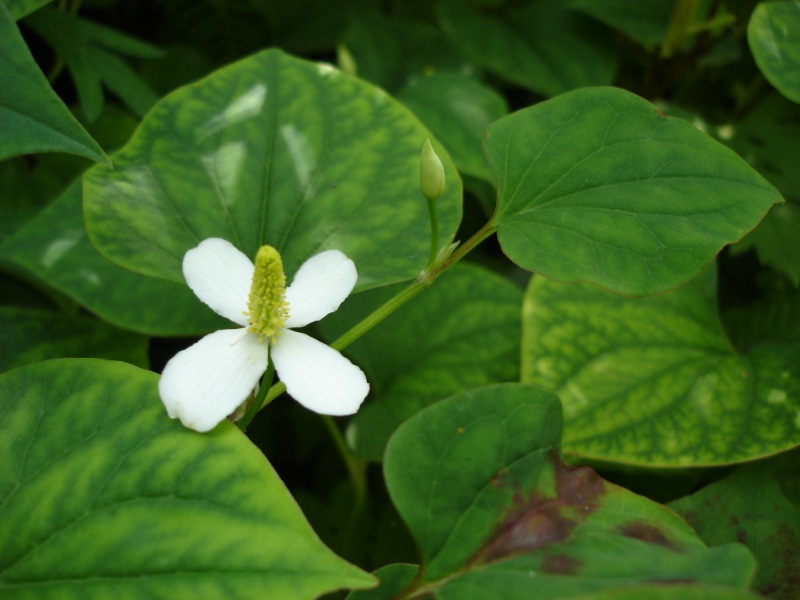
Fish mint, known botanically as Houttuynia cordata, is a creeping herbaceous perennial native to wet meadows and stream banks across Southeast Asia and East Asia. It produces heart-shaped foliage that releases a distinct tangy, fish-like aroma when crushed.
This species spreads rapidly through underground rhizomes and requires strict containment in pots or lined beds to prevent unmanageable garden invasion. It thrives in boggy soils and shallow water margins where other culinary herbs fail to establish.
Key Facts
- Plant Type: Herbaceous spreading perennial
- Sun Exposure: Full sun to partial shade
- Soil Moisture: Wet, boggy, or submerged up to 5 cm (2 in)
- USDA Zones: 5 to 11
- Flavor Profile: Tangy, citrusy, and distinctly fish-like
- Spreading Habit: Invasive rhizomes require physical root barriers
Is Fish Mint Right for Your Garden?
Fish mint is best suited for containers, bog gardens, or submerged pond margins where its rampant rhizomes cannot escape into open soil. It appeals to growers interested in Southeast Asian herbs, but its aggressive creeping root system makes direct garden planting risky without sealed root barriers sunk 30 cm (12 in) deep.
This plant survives winter freezing down to USDA zone 5, dying back to underground rhizomes in autumn and re-emerging in early spring. If you lack moist soil or have limited pot space, common mint (Mentha arvensis) offers a far more manageable growing habit.
How to Identify Fish Mint Plants
Fish mint grows as a leafy groundcover 20 to 60 cm (8 to 24 in) tall with smooth, broad heart-shaped leaves measuring 4 to 9 cm (1.5 to 3.5 in) long. The stems are slender, jointed, and often tinted reddish-purple near the base, creeping horizontally through soil or water.
In early summer, tiny yellow flowers assemble on dense central spikes surrounded by four bright white petal-like bracts measuring 1 to 2 cm (0.4 to 0.8 in) across. White underground rhizomes run horizontally, producing roots and erect leafy stems at jointed nodes every few centimeters.
- Leaves: Heart-shaped, green or tricolor variegated, 4-9 cm (1.5-3.5 in) long.
- Flowers: Small yellow spike flanked by 4 white petal-like bracts.
- Roots: Pale white jointed rhizomes smelling sharply of raw fish when cut.
- Scent: Strong fishy, metallic, and lemony scent when foliage is crushed.
Ideal Soil and Sunlight for Fish Mint
Fish mint requires constantly saturated soil or shallow standing water up to 5 cm (2 in) deep to produce tender, flavorful leaves. It tolerates full sun in cool climates, but leaves grow larger and sweeter under partial shade when summer temperatures exceed 28 °C (82 °F).
The plant adapts to heavy clay, rich loam, or pure muddy substrate with a soil pH ranging between 6.0 and 7.5. In dry soils, foliage scorches quickly, stems become woody, and leaf yields decline sharply within a few days.
Planting and Propagating Fish Mint Seeds and Stems
Propagating fish mint is fastest using 10 cm (4 in) stem cuttings or rhizome segments submerged in water, as seeds germinate slowly over 21 to 35 days. Stem nodes root within 5 to 7 days when placed in damp soil at temperatures of 18–24 °C (65–75 °F).
To plant in pots or submerged nursery containers, bury rhizome segments 3 cm (1.2 in) deep in organic potting soil mixed with composted manure. Space cuttings 15 cm (6 in) apart to form a full green canopy within six weeks of establishment.
- Stem propagation: Snip 10 cm (4 in) shoots and place in water until roots reach 2 cm (0.8 in).
- Rhizome division: Dig rhizomes in spring and cut into 5 cm (2 in) pieces with active buds.
- Container depth: Plant in shallow pots at least 25 cm (10 in) wide with continuous saucers.
- Seed sowing: Press seeds lightly onto damp peat paste without covering; keep under glass.
Water and Fertilizer Requirements for Fish Mint
Water fish mint daily to keep soil completely waterlogged at all times, never allowing the top layer to dry out. Submerging potted plants up to the container rim in decorative ponds guarantees ideal moisture levels throughout the growing season.
Feed plants monthly from May to August using a diluted organic liquid fertilizer balanced at 5-5-5 NPK. Excess nitrogen triggers soft vegetative stems that lower the concentration of aromatic volatile oils in the harvested leaves.
Harvesting Leaves and Roots
Harvest fresh fish mint leaves 60 to 75 days after planting once stems reach at least 15 cm (6 in) in height. Use clean scissors to cut young top leaves and shoot tips, leaving 5 cm (2 in) of stem attached to prompt fresh regrowth.
Thick white rhizomes are harvested in late autumn or early spring by sifting through the soil mixture with a garden fork. Wash roots thoroughly in cool running water to eliminate muddy debris before trimming away fine fibrous rootlets.
How to Prepare and Eat Fish Mint
Eat fresh fish mint raw in fresh herb platters, or add young leaves to Vietnamese gỏi duck salads and fish soups right before serving. In Northeastern India and Southwestern China, raw leaves and crispy cooked rhizomes are tossed with fresh chilies, garlic, and fermented soybean pastes.
Cooking or boiling reduces the strong fishy punch, leaving a pleasant peppery, citrus-like flavor reminiscent of coriander (Coriandrum sativum). Stem tips and leaves should be consumed uncooked or added to hot dishes during the last 30 seconds of cooking.
- Vietnamese cuisine: Served raw alongside grilled meats as part of rau sống platters.
- Assamese cuisine: Cooked with freshwater fish curry, known locally as masunduri.
- Chinese cuisine: Rhizomes are washed, sliced, and stir-fried with chili in Guizhou style.
- Sichuan style: Cold-dressed crispy roots tossed in chili oil, soy sauce, and black vinegar.
Controlling Invasive Spreading and Leaf Pests
Prevent uncontained garden invasion by planting exclusively in sealed above-ground containers or lined beds sunk into the ground. Underground rhizomes can travel over 1 m (3.3 ft) per season through loose garden soil, choking out nearby ornamental perennials.
Fish mint has few serious pest issues due to its pungent aromatic oils, though slugs and snails occasionally chew ragged holes in spring foliage. Handpick pests or apply iron phosphate slug bait around container rims during wet spring weather.
Storing Fresh Leaves and Rhizomes
Store freshly harvested leaves for up to 5 days by wrapping them in damp paper towels inside a sealed plastic container kept at 4 °C (39 °F). Unwashed stems can also stand upright in 2 cm (0.8 in) of water inside the refrigerator door for a week.
Harvested rhizomes stay crisp for up to 14 days when submerged in cold water kept inside the refrigerator, with water refreshed every two days. Freezing degrades leaf texture, so dry fresh leaves in a dark, warm place if long-term storage for herbal tea is desired.
Frequently Asked Questions
What does fish mint taste like?
Fish mint leaves have a unique flavor profile combining strong citrus, metallic pepper, and a distinct raw fish finish. Cooking or boiling the leaves softens the fish aroma and highlights tangy lemon notes.
What are the health benefits and side effects of fish mint?
Fish mint has been traditionally used in Asian medicine to treat respiratory inflammation, fever, and indigestion. Excessive consumption may cause mild stomach upset or intestinal discomfort in sensitive individuals.
What is fish mint called in Vietnamese, Hindi, Assamese, and Bengali?
In Vietnamese it is known as giấp cá or diếp cá. In Assamese it is called masunduri, while in Hindi and Bengali regions it is frequently referred to as ja-muki or machh-pata.
Is fish mint invasive in gardens?
Yes, fish mint spreads aggressively via creeping underground rhizomes and can quickly overrun garden beds. Always grow this species in pots, containers, or lined bog beds to control root spread.
How do you eat fish mint leaves and roots?
Raw leaves are consumed fresh in salads, spring rolls, and herb platters alongside savory meats. The crunchy white rhizomes are cleaned, cut into segments, and stir-fried or tossed with chili oil.
Information about traditional or historical uses is provided for educational interest only and is not medical advice. Do not use any plant to treat a condition without speaking to a qualified professional.
Sources & Verification
Taxonomy and distribution are checked against the databases below. Care guidance is written for cultivated species only and reviewed by our editor. How We Build Plant Profiles →
- Plants of the World Online (Kew)Taxonomic baseline and distribution record for Houttuynia cordata.
- North Carolina State ExtensionCultivation parameters, growth habit, and invasiveness notes.
- Missouri Botanical GardenMoisture requirements, hardiness zones, and cultivar characteristics.
- GBIF — Global Biodiversity Information Facilitytaxonomy, synonyms, occurrence records
- Wikipediageneral reference