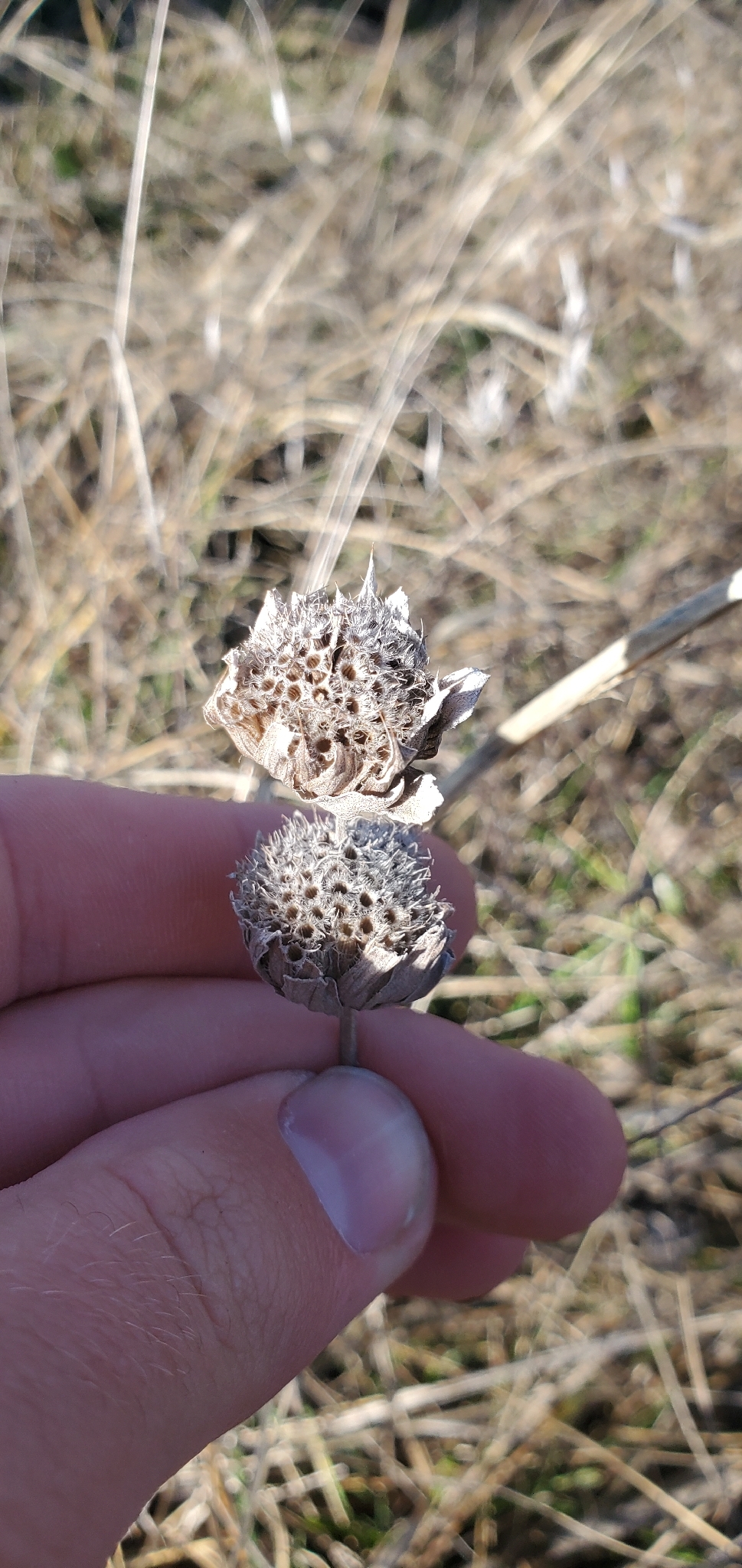
Wild bergamot (Monarda fistulosa) is a clump-forming herbaceous perennial native to North American prairies, distinguished by aromatic gray-green foliage and ragged spherical heads of lavender-pink flowers. It belongs to the mint family (Lamiaceae) and derives its common name from the citrus scent shared with the bergamot orange, though the two are entirely unrelated.
This plant establishes rapidly by shallow rhizomes and demands free-draining soil with strong air movement to prevent fungal leaf blights. Clumps require division every three years to keep the woody centers productive and prevent sprawling in small garden borders.
Key Facts
- Light: Full sun to partial shade (at least 6 hours direct sunlight)
- Water: Low to moderate; let the top 5 cm (2 in) dry
- Height: 90–120 cm (3–4 ft), spreading 60–90 cm (2–3 ft) wide
- Hardiness: USDA Zones 3–9 (tolerates winter temperatures down to -40 °C / -40 °F)
- Soil: Well-drained loam, sand, or clay with pH 6.0–7.5
- Bloom time: Midsummer to late summer for 4–6 consecutive weeks
Is Wild Bergamot Right for Your Garden?
Wild bergamot suits open, sunny borders, naturalized meadows, and drought-tolerant plantings where its rhizomatous spread has room to expand. Because it spreads 30 to 60 cm (12 to 24 in) wider every two seasons, it can quickly overwhelm compact rockeries or delicate, slow-growing border perennials.
You will succeed with this plant if your site has unobstructed air circulation and soil that never sits in standing water. It handles lean, alkaline clay soils where ornamental cultivars often perish, but it will flop over if grown in deep shade or over-amended, nitrogen-heavy compost.
Consider wild bergamot if you want to support native insect populations. A single established patch provides nectar and pollen for bumblebees (Bombus spp.), clearwing hummingbird moths (Hemaris thysbe), and swallowtail butterflies throughout July and August.
Identifying Monarda fistulosa
You can identify Monarda fistulosa by its square, branched green stems, aromatic opposite leaves, and terminal pom-pom heads of tubular, two-lipped lavender blossoms. The plants reach a mature height of 90 to 120 cm (3 to 4 ft) with an upright, bushy architecture.
The leaves are lanceolate to ovate, measuring 5 to 10 cm (2 to 4 in) long and 2 to 4 cm (0.8 to 1.6 in) wide, with serrated margins and short petioles. When crushed, both the leaves and stems release a sharp, spicy aroma reminiscent of oregano and thyme due to high concentrations of the essential oil thymol.
- Stems: Distinctly four-angled, light green, hollow, occasionally tinted purple at the nodes.
- Foliage: Opposite, grayish-green, soft to the touch, and lightly pubescent on the undersides.
- Flowers: Dense terminal clusters 4 to 8 cm (1.5 to 3 in) across, surrounded by pale green or purplish leafy bracts.
- Corolla: Tubular, 2 to 3 cm (0.8 to 1.2 in) long, dividing into a slender upper lip and a broader, three-lobed lower lip.
Where to Plant Monarda fistulosa
Plant wild bergamot in an open location that receives at least 6 to 8 hours of direct sunlight every day. While plants tolerate light afternoon shade in hot southern climates, full exposure keeps stems sturdy and dries wet foliage rapidly before fungal spores take hold.
The plant adapts to gravelly soils, heavy clay, and standard garden loam, provided drainage is adequate during winter dormancy. Waterlogged soil during cold months causes the underground rhizomes to rot within several weeks.
Space plants away from solid fences, enclosed courtyards, or dense shrub masses. Constant breeze lowers the relative humidity around the inner leaves, which serves as the most effective cultural barrier against powdery mildew.
Planting and Spacing Wild Bergamot
Space individual plants 45 to 60 cm (18 to 24 in) apart to allow air circulation and accommodate outward clump growth. Dig a planting hole twice as wide as the root container and equal in depth, keeping the crown level with the surrounding soil surface.
If planting bare-root divisions in spring, spread the horizontal roots across a firm mound of soil within the hole before backfilling. Water the soil thoroughly with 5 to 10 liters (1.3 to 2.6 gal) of water to settle air pockets around the root fibers.
- Dig the hole to root-ball depth; never bury the basal green shoots beneath the soil line.
- Firm the native soil gently with your hands instead of tamping hard with boots.
- Spread a 3 to 5 cm (1 to 2 in) layer of coarse wood bark mulch, keeping it 5 cm clear of the stems.
- Saturate the planting site immediately, then irrigate twice weekly for the first month.
Water and Fertilizer Requirements
Give established plants 2.5 cm (1 in) of water every 10 to 14 days during prolonged dry periods, directing water strictly at the base of the plant. Newly planted specimens need regular moisture during their first summer, but mature root systems withstand several weeks of summer drought without dropping foliage.
Avoid overhead sprinklers, which wet the dense foliage canopy and invite fungal diseases. Morning drip irrigation or soaker hoses provide the cleanest delivery method.
Wild bergamot performs best without synthetic fertilizers. Rich soil or high-nitrogen fertilizers cause weak, spindly stems that collapse under the weight of summer rain, while simultaneously increasing foliar susceptibility to mildew.
How to Prune and Control Spread
Cut stems back by one-third in late spring (late May to early June) to promote branching, create a denser habit, and delay flowering by roughly two weeks. This simple pinching technique lowers the mature height to around 75 cm (30 in), which eliminates the need for staking in windy beds.
Deadheading spent flower clusters throughout July and August encourages a modest second flush of smaller auxiliary blooms. Trim individual flower stems down to the nearest healthy leaf axil once the central petals turn brown and drop.
In late autumn, you can cut the entire plant back to 5 cm (2 in) above ground level to eliminate overwintering mildew spores. Alternatively, leave the sturdy stems and dried seed heads standing until early March to feed overwintering American goldfinches (Spinus tristis).
Propagating Monarda fistulosa
The most dependable way to propagate wild bergamot is through root division in early spring just as new green shoots break through the soil surface. Lift the entire clump using a spade fork every three to four years.
Discard the woody, hollow center of the clump and slice the vigorous outer ring into divisions containing at least three active shoots and a cluster of pale rhizomes. Replant these sections immediately at their original depth.
- Cold stratification for seed: Mix seeds with moist sand and store at 2 to 4 °C (35 to 40 °F) for 30 days before sowing.
- Surface sowing: Press seeds onto damp compost without burying them, as germination requires light exposure.
- Germination conditions: Maintain temperatures of 20 to 22 °C (68 to 72 °F); seedlings emerge in 10 to 14 days.
- Basal softwood cuttings: Take 8 to 10 cm (3 to 4 in) non-flowering shoots in May, dip in rooting hormone, and root in pumice within 3 weeks.
Managing Powdery Mildew and Pests
Prevent powdery mildew (Erysiphe cichoracearum) by thinning out one-third of the central stems down to the ground in early spring to maximize airflow through the crown. This fungal disease appears as a dusty white powder across the leaf surfaces during humid midsummer weather.
If mildew appears, prune off heavily infected lower foliage and apply an organic potassium bicarbonate spray or neem oil solution early in the morning. Keep soil evenly moist around the roots, as drought stress accelerates mildew colonization on older foliage.
Wild bergamot is generally unpalatable to white-tailed deer and rabbits due to its pungent essential oils. Occasional stem borers can hollow out older stalks; slice off and burn any wilting stems showing entry holes near the base.
Wild Bergamot Bloom Time and Seed Collection
Monarda fistulosa blooms continuously for 4 to 6 weeks from July through August, with each terminal flower head opening outer florets first before working toward the center. The soft lavender-pink petals contrast with small gray-green button bracts.
After the petals wither, the remaining seed buttons turn dark brown and dry out by late September or October. Inside the tubular calyces sit hundreds of tiny, dark brown nutlets measuring barely 1 to 2 mm in size.
To collect seed, cut mature seed heads on a sunny afternoon and place them upside down in a paper bag for two weeks. Shake the bag vigorously to dislodge the nutlets, then screen out the chaff and store seeds in a sealed glass jar in a cool, dark room.
Seasonal Maintenance for Wild Bergamot
| Spring | Divide overgrown clumps every 3 years as shoots reach 5 cm (2 in). Thin out one-third of weak central shoots in May and pinch stems back by a third to build strong, bushier crowns. |
|---|---|
| Summer | Water at the soil level during dry spells lasting longer than 10 days. Deadhead spent flower heads to trigger minor reblooming, and monitor lower leaves for white mildew patches. |
| Autumn | Collect ripe seeds from dried brown calyces in October. Cut foliage back to 5 cm (2 in) to remove mildew debris, or leave stems standing to provide winter seed for wild birds. |
| Winter | Ensure drainage remains unobstructed around dormant crowns to prevent winter rot. Order fresh seeds and complete 30 days of cold stratification in the refrigerator before late winter sowing. |
Diagnosing Wild Bergamot Problems
| What you see | Likely cause | What to do |
|---|---|---|
| White, flour-like coating covering leaves in late summer | Powdery mildew (Erysiphe cichoracearum) caused by stagnant air and dry roots | Thin out crowded stems, apply potassium bicarbonate spray, and water at ground level. |
| Stems flopping open and collapsing toward the ground | Excess soil nitrogen, over-watering, or too much shade | Move to full sun, eliminate fertilizers, and pinch shoot tips back by one-third in late spring. |
| Center of mature clump dying out with hollow, leafless stems | Aging rhizomes crowding the central crown after 3 to 4 years | Lift the clump in early spring, discard the woody center, and replant the vigorous outer edges. |
| Lower leaves turning yellow, crisping, and dropping prematurely | Drought stress combined with intense heat | Soak the root zone with 15 liters (4 gal) of water per square meter and apply 5 cm of mulch. |
Notable Monarda fistulosa Varieties and Cultivars
- ‘Claire Grace’ – darker lavender-purple flowers, sturdier stems, and superior mildew tolerance
- var. menthifolia – compact western variety with solitary heads and gray, mint-scented leaves
- ‘Prairie Gypsy’ – semi-double pinkish-purple florets on compact 60 cm (24 in) stems
Best Companion Plants for Wild Bergamot
Pair wild bergamot with deep-rooted native prairie grasses and taprooted perennials that will not be crowded out by its lateral rhizomes. Structurally stiff companion plants also provide physical support for bergamot stems as they reach their full height in midsummer.
Warm-season ornamental grasses contrast with the ragged, circular flower heads of bergamot while thriving in identical full-sun conditions. Their fibrous root networks also help manage excess soil moisture in winter.
- Purple coneflower (Echinacea purpurea): Matches blooming periods and provides complementary magenta petals and rigid coned centers.
- Black-eyed Susan (Rudbeckia fulgida): Contributes golden yellow daisy blooms that set off the lavender heads of bergamot.
- New England aster (Symphyotrichum novae-angliae): Takes over the floral display in September just as wild bergamot goes to seed.
- Little bluestem (Schizachyrium scoparium): Provides upright blue-green summer foliage that turns coppery orange in autumn.
- Switchgrass (Panicum virgatum): Creates an airy, structural backdrop that hides bare lower bergamot stems late in the season.
Frequently Asked Questions
What is the difference between Monarda fistulosa and Monarda didyma?
Monarda fistulosa produces lavender-to-pink flowers and naturally inhabits dry-to-mesic prairies and open woods, while scarlet beebalm (Monarda didyma) produces bright crimson blooms and requires consistently damp, rich stream-bank soils.
Can you make tea from Monarda fistulosa?
Yes, both fresh and dried leaves of wild bergamot can be steeped in hot water to make tea. Indigenous peoples traditionally used infusions of this plant for bronchial coughs, colds, and minor stomach aches due to the presence of thymol.
How tall does Monarda fistulosa grow?
Wild bergamot typically reaches 90 to 120 cm (3 to 4 ft) in average garden soil. In rich soils with ample moisture, plants may reach up to 150 cm (5 ft), which may require staking if not pinched back in spring.
What is the native range of Monarda fistulosa?
Wild bergamot is native across most of North America, ranging from Quebec to British Columbia in Canada and south through the United States into northern Mexico. It occurs naturally in prairies, dry thickets, open woods, and roadsides.
Do Monarda fistulosa seeds need cold stratification to germinate?
Yes, sowing seeds requires 30 days of cold, moist stratification at 2 to 4 °C (35 to 40 °F) to break their natural dormancy. Seeds sown outdoors in autumn receive this chilling naturally over winter.
Information about traditional or historical uses is provided for educational interest only and is not medical advice. Do not use any plant to treat a condition without speaking to a qualified professional.
Sources & Verification
Taxonomy and distribution are checked against the databases below. Care guidance is written for cultivated species only and reviewed by our editor. How We Build Plant Profiles →
- Kew Plants of the World OnlineTaxonomic classification and native distribution
- Missouri Botanical Garden Plant FinderHorticultural traits, height, hardiness, and garden culture
- North Carolina Extension Gardener Plant ToolboxGrowing requirements, landscape use, and identification details
- USDA PLANTS DatabaseNative habitat records and North American distribution
- GBIF — Global Biodiversity Information Facilitytaxonomy, synonyms, occurrence records
- Wikipediageneral reference