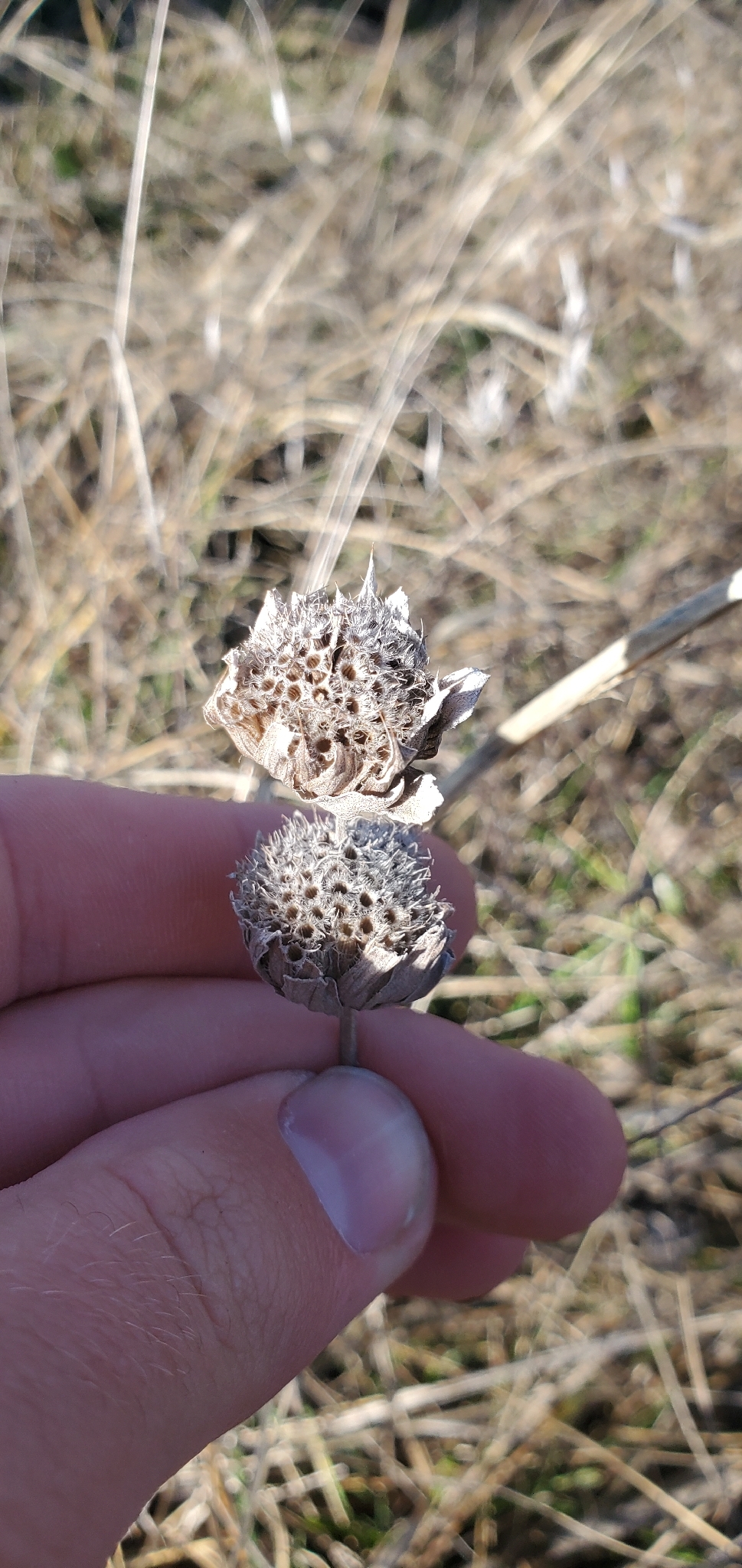
Bee balm (Monarda didyma) is an aromatic perennial native to eastern North America, recognized by its tubular scarlet blooms and square stems. It produces citrus-scented leaves that yield Oswego tea and attract ruby-throated hummingbirds throughout summer.
Unlike drought-tolerant prairie mints, this moisture-loving species wilts rapidly in dry soil and requires consistent ground humidity to resist powdery mildew. Plant it in rich soil where roots remain moist while stems enjoy air circulation.
Key Facts
- Height: 90–120 cm (3–4 ft) tall
- Hardiness: USDA Zones 3 to 9
- Light: Full sun to partial shade
- Water: Keep soil constantly moist
- Bloom Time: Mid to late summer
- Toxicity: Non-toxic to dogs and cats
Growing Bee Balm in Your Garden
Bee balm thrives in moist, sun-lit borders where it spreads by underground rhizomes to form 60–90 cm (2–3 ft) wide colonies within two seasons. Its native habitat includes stream banks and damp thickets from New York to Georgia, meaning it demands more soil moisture than typical garden herbs.
This herbaceous perennial suits damp garden beds, rain garden margins, and cottage garden borders. If planted in dry beds, growth stunts and foliage drops early in the season.
- Rain garden edges with naturally moist soil
- Cottage garden borders alongside tall summer perennials
- Native pollinator gardens targeting bees and hummingbirds
- Container displays in large 38 cm (15 in) pots with moisture-retentive potting mix
Identifying Bee Balm Flowers and Foliage
Bee balm reaches 90–120 cm (3–4 ft) in height, producing square, upright stems clad in lanceolate, dark green leaves with serrated margins measuring 8–15 cm (3–6 in) long. Crushing the foliage releases a strong citrus odor reminiscent of bergamot orange.
In July and August, terminal flower heads form dense whorls of 20 to 30 tubular flowers resting on reddish bracts. Each scarlet flower stem stays erect without staking if grown in full sunlight.
- Four-angled, square stems characteristic of the mint family (Lamiaceae)
- Opposite, dark green leaves with prominent veins and bergamot scent
- Terminal flower heads measuring 5–8 cm (2–3 in) across with bright red bracts
- Tubular two-lipped corollas designed for hummingbird pollination
Where to Plant Bee Balm
Plant bee balm in a site receiving 6 hours of daily sunlight with rich, moisture-retentive soil and strong air circulation to minimize foliar fungi. In southern zones (USDA Zones 8 and 9), afternoon shade protects the delicate petals from scorching.
Avoid tight corners against wooden fences or crowded foundation beds. Stagnant air around dense foliage invites powdery mildew infection by mid-summer.
- Morning sun exposure to dry foliage quickly after rain
- Deep soil amended with 5–8 cm (2–3 in) of organic compost
- Sheltered positions shielded from high winds that snap tall stems
- Spacing of 45–60 cm (18–24 in) between plants for airflow
How to Plant Bee Balm Seeds and Root Divisions
Sow bee balm seeds indoors 8 weeks before your last spring frost, press them lightly into wet soil without covering them, and maintain temperatures of 20–22 °C (68–72 °F). Germination occurs within 10 to 14 days under direct grow lights.
Spring or early autumn is ideal for transplanting nursery stock or bare-root divisions into garden beds. Water newly planted specimens twice weekly for the first month to establish thick root systems.
- Surface-sow seeds because light is required for germination
- Harden off seedlings outdoors over 7–10 days before planting out
- Dig a hole twice as wide as the root ball and level with the crown
- Water deeply immediately after planting with 4–5 liters (1 gal) of water per root mass
Watering and Feeding Bee Balm
Supply bee balm with 2.5–5 cm (1–2 in) of water per week to keep the root zone damp, as dry roots trigger leaf drop and powdery mildew outbreaks. Soil should feel like a wrung-out sponge at a depth of 5 cm (2 in).
Feed plants once in early spring with a 2.5 cm (1 in) top-dressing of compost. Excessive high-nitrogen fertilizers cause tall, floppy growth and weaken fungal resistance.
- Apply water directly to the soil surface using drip lines or a soaking wand
- Maintain a 5–7 cm (2–3 in) organic mulch layer to retain soil moisture
- Top-dress soil each spring with 2.5 cm (1 in) of well-rotted compost
- Avoid synthetic high-nitrogen fertilizers that create soft growth prone to mildew
Pruning and Deadheading Bee Balm
Deadhead faded bee balm flowers back to the next stem joint to prolong bloom production into early autumn. Pruning off early flower spikes forces secondary side shoots to produce smaller bloom clusters.
Pinch stem tips back by half in late spring to encourage bushier branching. In May, cut out one in three stems down to the ground to improve internal air movement.
- Snip spent blooms weekly during July and August to encourage lateral buds
- Thin out one-third of stems in May to improve interior air circulation
- Shear foliage back to basal leaves if powdery mildew covers more than 30% of the plant
- Cut stems down to 5 cm (2 in) above ground in late autumn after frost
How to Propagate Bee Balm
Divide established bee balm clusters every 3 years in early spring as new shoots reach 5–10 cm (2–4 in) above ground level. Rapid rhizomatous growth causes the center of older clumps to die out over time.
Softwood stem cuttings measuring 10 cm (4 in) taken in June root reliably within 3 weeks in a mix of perlite and peat moss.
- Lift entire root clumps using a sharp garden spade in April
- Slice off active outer shoots with attached roots, discarding dead wooden centers
- Replant divisions immediately 45 cm (18 in) apart at original soil depth
- Take 10 cm (4 in) softwood cuttings in early summer and keep in high humidity
Bee Balm Bloom Time and Flower Duration
Bee balm blooms from mid-July through late August, with individual flower clusters lasting 3 to 4 weeks on the stem. Flowers secrete nectar continuously, holding up to 30% sugar content during morning hours.
Deadheading spiky red flower heads extends the floral display into early September. Leaving late-season seed heads intact provides food for goldfinches throughout late autumn.
- Peak bloom occurs when daily high temperatures hit 24–30 °C (75–86 °F)
- Flower heads feature 20–30 individual scarlet tubular florets
- High nectar concentration draws ruby-throated hummingbirds and bumblebees
- Deadheading extends flower display by an additional 2–3 weeks
Bee Balm Care in Fall and Winter
Cut bee balm stems down to 5 cm (2 in) above the soil line in late fall after the first hard freeze has killed top growth. Clean up fallen debris to eliminate overwintering fungal spores.
Root crowns tolerate winter ground freezing down to -35 °C (-31 °F) without protection. Container-grown specimens require overwintering in an unheated garage to prevent root freeze-thaw damage.
- Prune dead stems to ground level after night temperatures drop below 0 °C (32 °F)
- Rake away and dispose of infected leaves to stop fungal spore overwintering
- Apply 5 cm (2 in) of bark mulch over the crown in Zone 3 and 4 areas
- Water container-grown plants lightly once a month in frost-free storage sheds
Common Bee Balm Problems and Powdery Mildew
Powdery mildew, caused by the fungus Erysiphe cichoracearum, is the primary threat to bee balm foliage during humid summer weather. It manifests as a white, flour-like dusting over the upper leaves, turning foliage yellow and crisp.
Prevent infection by planting resistant cultivars, maintaining soil dampness, and watering ground roots without wetting foliage. Rust fungi and spider mites occasionally target water-stressed plants during dry spells.
- White chalky coating on leaf surfaces: spray sulfur or potassium bicarbonate fungicide
- Stems flopping over: cut back stems by half in spring and reduce shade
- Brown leaf margins: increase weekly watering volume to prevent soil drying
- Rust spots on underside of foliage: remove lower foliage and avoid overhead watering
Bee Balm Through the Seasons
| Spring | Divide overcrowded root clumps every 3 years as shoots reach 5 cm (2 in). Apply a 2.5 cm (1 in) layer of compost around crowns and pinch stem tips back by half in May. |
|---|---|
| Summer | Provide 2.5–5 cm (1–2 in) of water weekly to prevent dry roots. Deadhead spent blooms back to leaf joints weekly to prolong flower spikes through August. |
| Autumn | Cut dead stems back to 5 cm (2 in) above ground level after the first hard freeze. Rake up all leaf debris to prevent fungal spores from overwintering in the soil. |
| Winter | Ensure outdoor crowns remain mulched in USDA Zones 3 and 4. Move container-grown pots into an unheated garage and moisten soil lightly once a month. |
Bee Balm Problems and Diagnosis
| What you see | Likely cause | What to do |
|---|---|---|
| White dusty coating on leaves | Powdery mildew (Erysiphe cichoracearum) | Thin stems for airflow, keep soil continuously moist, and apply potassium bicarbonate fungicide. |
| Stems bending and flopping over | Excessive nitrogen or insufficient sunlight | Pinch back growth in late spring by one-third and avoid synthetic nitrogen fertilizers. |
| Lower leaves turning yellow and dropping | Drought stress or dry root zone | Increase weekly watering to 2.5–5 cm (1–2 in) and apply a 5 cm (2 in) layer of mulch. |
| Orange-brown pustules under leaves | Rust fungal infection | Strip infected lower foliage, avoid wetting leaves, and dispose of autumn stems. |
Popular Bee Balm Cultivars
- ‘Jacob Cline’ – 120 cm (4 ft) tall, vivid red flowers, high resistance to powdery mildew
- ‘Gardenview Scarlet’ – 90 cm (3 ft) tall, crimson blooms, strong mildew resistance
- ‘Raspberry Wine’ – 90 cm (3 ft) tall, wine-red tubular blooms, sturdy stems
- ‘Marshall’s Delight’ – 75 cm (2.5 ft) tall, pink flowers, highly resistant to mildew
- ‘Petite Delight’ – dwarf cultivar 30 cm (1 ft) tall, rose-pink blooms ideal for pots
Best Companion Plants for Bee Balm
Pair bee balm with prairie perennials that share its sun requirements and provide structural support for its 90–120 cm (3–4 ft) stems. Combining contrasting flower colors hides bare lower stems that lose leaves late in the season.
Excellent garden companions include purple coneflower (Echinacea purpurea), black-eyed Susan (Rudbeckia fulgida), and anise hyssop (Agastache foeniculum). Combine it with wild bergamot (Monarda fistulosa) for color variation.
- Purple coneflower (Echinacea purpurea): rigid stems support bee balm growth
- Black-eyed Susan (Rudbeckia fulgida): yellow flowers contrast against scarlet blooms
- Anise hyssop (Agastache foeniculum): attracts pollinators while sharing moisture needs
- Wild bergamot (Monarda fistulosa): adds soft lilac accents to native borders
Frequently Asked Questions
When does bee balm bloom?
Bee balm blooms from mid-July through late August, with individual flower heads lasting 3 to 4 weeks. Deadheading spent flowers extends the bloom period into early autumn.
Is bee balm toxic to dogs or cats?
Bee balm is non-toxic to dogs, cats, and horses according to the ASPCA. The aromatic foliage is safe if lightly chewed, though large amounts may cause minor upset.
How do you make bee balm tea?
Native Americans made Oswego tea by steeping 1 to 2 teaspoons of fresh or dried Monarda didyma leaves in hot water for 5 to 10 minutes. The resulting herbal tea has a minty, bergamot-citrus flavor.
Can you use bee balm in lip balm or skincare?
Essential oils extracted from Monarda didyma contain thymol, historically used in salve formulations, herbal lip balms, and skin washes. Leaf extracts were traditionally applied topically to soothe minor skin irritations.
What is the difference between bee balm and wild bergamot?
Scarlet bee balm (Monarda didyma) has bright red flowers and prefers moist, rich soil, whereas wild bergamot (Monarda fistulosa) produces lavender to pink flowers and adapts to drier, alkaline soils.
How tall does bee balm grow?
Standard cultivars of bee balm grow 90 to 120 cm (3 to 4 ft) tall with a spread of 60 to 90 cm (2 to 3 ft). Dwarf varieties such as 'Petite Delight' remain compact at 30 to 45 cm (1 to 1.5 ft) high.
Information about traditional or historical uses is provided for educational interest only and is not medical advice. Do not use any plant to treat a condition without speaking to a qualified professional.
Sources & Verification
Taxonomy and distribution are checked against the databases below. Care guidance is written for cultivated species only and reviewed by our editor. How We Build Plant Profiles →
- Plants of the World Online (Kew)powo.science.kew.org
- NC State University Extensionplants.ces.ncsu.edu
- Missouri Botanical Gardenmissouribotanicalgarden.org
- Royal Horticultural Societyrhs.org.uk
- ASPCA Toxic and Non-Toxic Plantsaspca.org
- GBIF — Global Biodiversity Information Facilitytaxonomy, synonyms, occurrence records
- Wikipediageneral reference