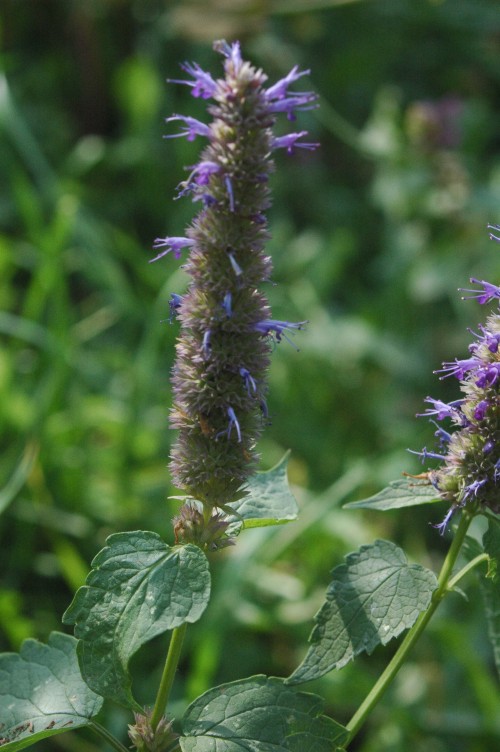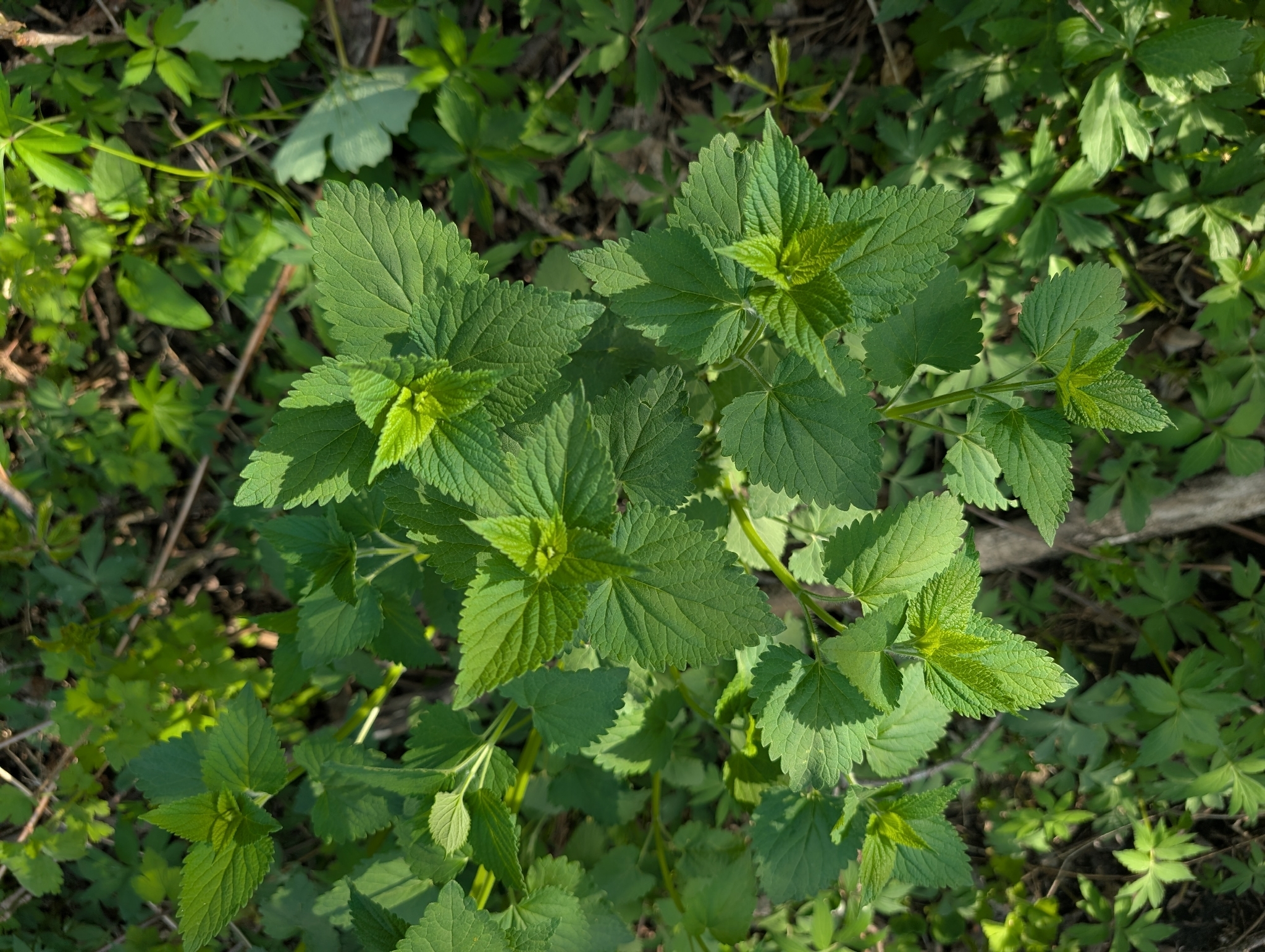
Anise hyssop (Agastache foeniculum) is a herbaceous perennial in the mint family native to northern North America, identified by its upright purple flower spikes and distinct liquorice fragrance. Its foliage yields essential oils when crushed.
This species requires full sunlight and sharp soil drainage to prevent root decay in winter. While short-lived in wet soils, healthy clumps self-seed reliably without spreading by aggressive runners.
Key Facts
- Height: 60 to 120 cm (2 to 4 ft)
- Light: Full sun to partial shade
- Water: Low to moderate; drought-tolerant when established
- Hardiness: USDA zones 4 through 9
- Foliage Scent: Anise and mint when bruised
Growing Anise Hyssop in Your Garden
Anise hyssop thrives in sunny beds where it supplies months of nectar for bees and butterflies while needing little maintenance. It suits herb gardens, prairie plantings, and cottage borders due to its upright growth habit.
The plant establishes quickly from young nursery stock or direct seeds. Because it forms neat clumps rather than spreading underground, it remains where you plant it while providing consistent summer blooms.
Anise Hyssop Height and Botanical Traits
Mature anise hyssop reaches 60 to 120 cm (2 to 4 ft) in height with a spread of 30 to 60 cm (1 to 2 ft). It features square stems characteristic of the family Lamiaceae and broad, lance-shaped leaves with serrated edges measuring 5 to 10 cm (2 to 4 in) long.
The leaves display a white downy underside and release a sharp anise odor when handled. Dense terminal flower spikes hold hundreds of tiny tubular lavender-blue flowers measuring 8 to 12 mm (0.3 to 0.5 in) each from July to September.
Best Sunlight and Soil for Anise Hyssop
Plant anise hyssop in full sun to light shade with soil that drains freely. It accepts poor, sandy, or rocky ground provided water does not pool around the roots.
Heavy clay soils require amendment with grit or coarse sand before planting. Soil pH should remain between 6.0 and 7.5 for maximum nutrient uptake and flower output.
Anise Hyssop Planting Instructions and Pot Care
Space individual plants 45 cm (18 in) apart when setting out young transplants in spring after frost danger passes. Dig a hole twice as wide as the root ball and sit the plant at the exact depth it grew in its container.
For anise hyssop care in pots, select a container with a minimum diameter of 30 cm (12 in) and bottom drainage holes. Fill with a potting blend containing 30% perlite or horticultural grit to ensure oxygen reaches the root system.
- Dig planting holes 45 cm (18 in) apart.
- Set plant crowns level with the soil line.
- Backfill with indigenous soil mixed with grit.
- Water thoroughly immediately after planting.
Anise Hyssop Plant Care: Water and Fertilizer Needs
Water new plantings weekly for the first six weeks, after which anise hyssop requires only 2.5 cm (1 in) of water every two weeks during dry summer periods. Established roots tolerate extended dry periods without wilting.
Avoid heavy synthetic nitrogen fertilizers, which cause weak, floppy stems and reduce essential oil concentration in the leaves. A single top-dressing of organic compost each spring provides adequate nutrition.
Anise Hyssop Pruning and Spring Care
Prune old stems back to 5 to 10 cm (2 to 4 in) in early spring before fresh green shoots emerge from the crown. Deadhead spent flower spikes in midsummer to encourage a secondary flush of late-season blooms.
Spring care involves clearing leaf debris around the base to improve airflow and applying a thin mulch layer. Avoid covering the central crown with deep mulch, which retains dampness and encourages crown rot.
How to Propagate Anise Hyssop Seeds and Division
Anise hyssop seeds germinate in 10 to 14 days when sown on the surface of damp soil at 20 °C (68 °F). The seeds require light to break dormancy, so press them firmly into the medium without covering them with soil.
Divide mature clumps every three years in early spring just as new growth starts. Lift the root mass with a spade, slice it into smaller sections with stems and healthy roots attached, and replant immediately.
- Sow seeds indoors 6 to 8 weeks before the last spring frost.
- Press seeds on top of potting mix without burying them.
- Divide mature crowns every 3 years in spring.
- Take softwood cuttings of non-flowering shoots in early summer.
Is Anise Hyssop Invasive and What Diseases Affect It?
Anise hyssop is not invasive in native or cultivated settings because it lacks underground runners. It self-sows modestly in open ground, but unwanted volunteer seedlings pull up easily by hand.
Powdery mildew can attack foliage during humid late-summer periods if airflow is restricted. Downy mildew and root rot occur exclusively in waterlogged soils with poor drainage.
Anise Hyssop Winter Care and Fall Preparation
Anise hyssop survives cold winters down to USDA zone 4 (-34 °C / -30 °F) without artificial protection when grown in the ground. Leave standing dry flower heads through late fall to feed wintering birds like goldfinches.
Fall care requires stopping all nitrogen fertilizing by late August to allow soft growth to harden. Container-grown specimens in zones 4 and 5 should be moved into an unheated garage or sunk into garden soil over winter to insulate roots from freezing winds.
Anise Hyssop Bloom Period and Pollinator Value
Blossoms open continuously from July through September, forming terminal spikes 8 to 15 cm (3 to 6 in) long. The individual flowers contain high sugar concentrations in their nectar, attracting bees, bumblebees, and hummingbirds.
Flowers maintain their lavender color for weeks as individual florets open progressively from the bottom of the spike to the top. Cutting spent spikes before seed set encourages additional flower stalks into early autumn.
Anise Hyssop Through the Seasons
| Spring | Cut dead stems down to 5 cm (2 in) before new growth starts. Apply a 2 cm (0.8 in) layer of compost around the base and sow fresh seed indoors. |
|---|---|
| Summer | Water during dry spells exceeding two weeks. Deadhead faded flower spikes to stimulate late-season blooms and harvest leaves for culinary use. |
| Autumn | Leave seed heads intact for foraging songbirds. Collect dry seed pods for propagation and stop fertilizing so stems harden for frost. |
| Winter | Protect potted specimens in cold zones by insulating containers. Avoid overwatering overwintering roots in dormant soil. |
Common Anise Hyssop Problems
| What you see | Likely cause | What to do |
|---|---|---|
| White powdery patches on leaves | Powdery mildew due to high humidity and poor airflow | Space plants further apart and trim lower stems to improve ventilation. |
| Yellowing leaves and collapsing stems | Root or crown rot from waterlogged soil | Improve drainage with sand or relocate the plant to elevated ground. |
| Stems flopping over | Excessive nitrogen fertilizer or insufficient sunlight | Move to full sun and discontinue high-nitrogen fertilizers. |
Anise Hyssop Cultivars and Hybrids
- ‘Blue Fortune’ – sterile hybrid with 10 cm (4 in) blue flower spikes that bloom continuously without seeding
- ‘Golden Jubilee’ – bright yellow-green leaves paired with standard purple flowers, reaching 60 cm (2 ft)
- ‘Black Adder’ – dark violet-blue flower buds opening to lavender spikes up to 90 cm (3 ft) tall
Best Companion Plants for Anise Hyssop
Pair anise hyssop with full-sun perennials that match its moisture needs and summer flowering window. Planting it alongside distinct flower shapes creates texture contrast in borders.
Combine with purple coneflower (Echinacea purpurea), black-eyed Susan (Rudbeckia fulgida), wild bergamot (Monarda fistulosa), and Russian sage (Salvia yangii) for continuous pollinator activity.
- Purple coneflower (Echinacea purpurea)
- Black-eyed Susan (Rudbeckia fulgida)
- Wild bergamot (Monarda fistulosa)
- Russian sage (Salvia yangii)
Frequently Asked Questions
What are the benefits and uses of anise hyssop?
Anise hyssop leaves and flowers are used to flavor teas, desserts, and salads with a liquorice-like taste. Traditionally, Indigenous North American communities used leaf preparations to treat coughs, fevers, and wounds.
How do you make anise hyssop tea?
Steep 1 tablespoon of fresh anise hyssop leaves or 1 teaspoon of dried leaves in 240 ml (8 fl oz) of boiling water for 5 to 10 minutes. Strain out the foliage before drinking.
Is anise hyssop invasive?
No, anise hyssop is not invasive. It does not spread by aggressive runners, though it may self-sow in open, undisturbed soil.
What is the native range of anise hyssop?
Anise hyssop is native to northern North America, ranging from central Canada south into the upper Midwestern United States, including prairies and dry open woodlands.
How do you care for Blue Fortune anise hyssop?
Provide full sunlight, well-draining soil, and modest water. Because 'Blue Fortune' is a sterile hybrid, it does not self-seed and blooms longer into early autumn.
Information about traditional or historical uses is provided for educational interest only and is not medical advice. Do not use any plant to treat a condition without speaking to a qualified professional.
Sources & Verification
Taxonomy and distribution are checked against the databases below. Care guidance is written for cultivated species only and reviewed by our editor. How We Build Plant Profiles →