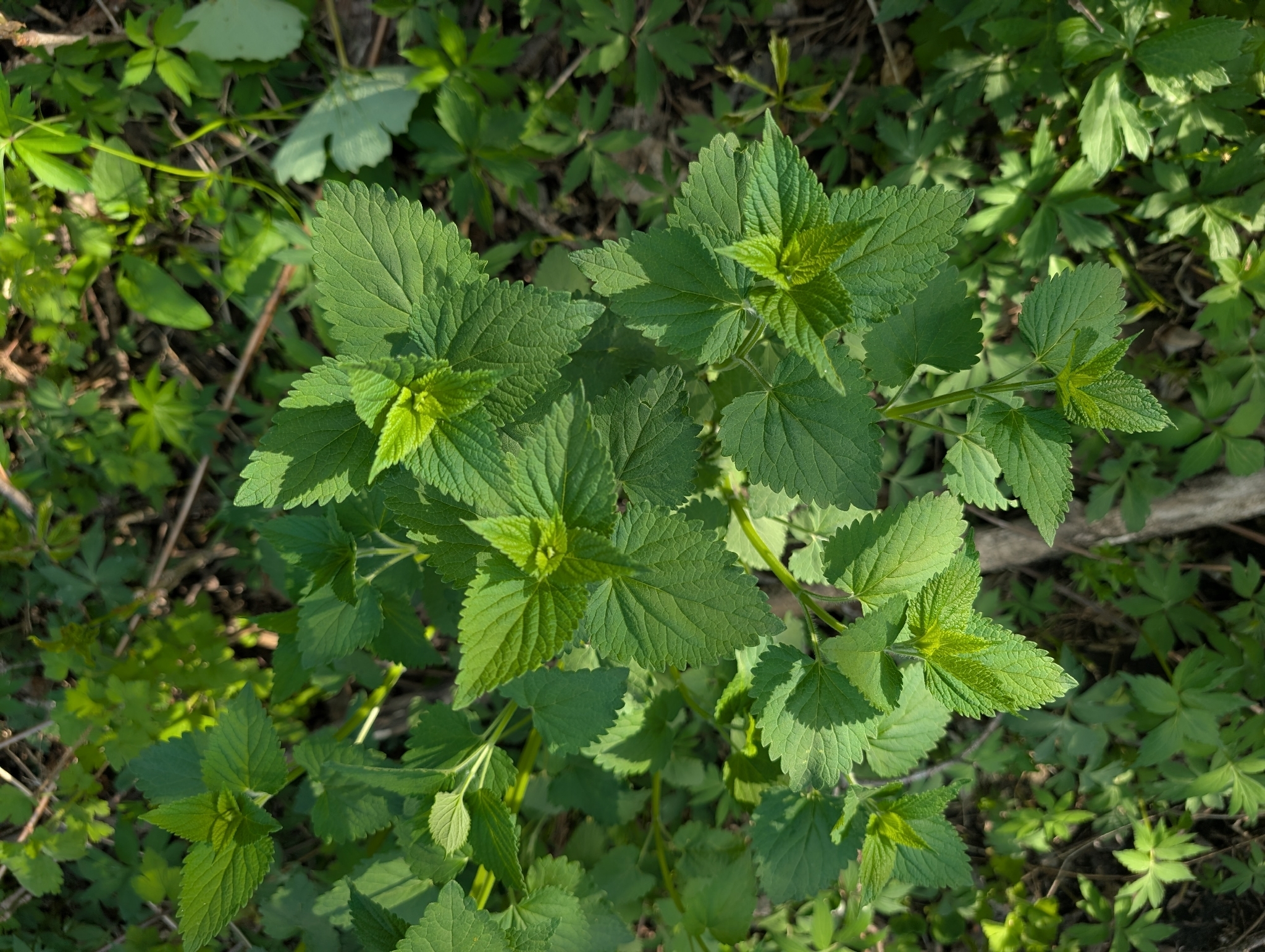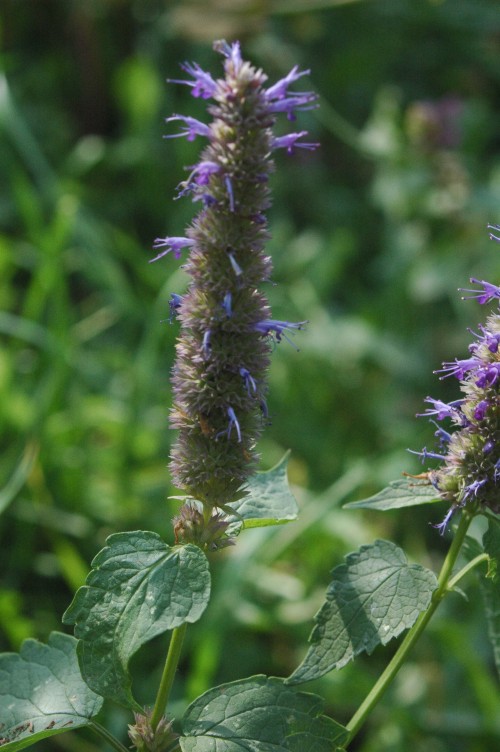
Korean mint (Agastache rugosa) is a clump-forming perennial in the mint family native to grassy slopes and stream banks across East Asia, including China, Korea, Japan, and eastern Russia. It produces erect, square stems crowned with dense terminal spikes of lavender-purple flowers that emit a distinct anise aroma when crushed.
Unlike true mints in the genus Mentha, this species develops a fibrous taproot system and does not spread by aggressive underground rhizomes. It thrives in full sun and fast-draining soil, remaining hardy across USDA zones 5 through 9.
Key Facts
- Light: Full sun to light partial shade
- Hardiness: USDA zones 5 through 9
- Soil: Fast-draining loam, sand, or rocky soil
- Height: 60–120 cm (24–47 in)
- Toxicity: Non-toxic to humans, dogs, and cats
Is Korean Mint Right for Your Garden?
Korean mint grows best in free-draining soil with at least 6 hours of direct sun daily. It suits perennial borders, herb gardens, and dry gravel beds where standing water does not accumulate during winter.
This plant forms tight basal clumps that expand slowly up to 60 cm (24 in) wide without invading adjacent plants. It performs reliably in temperate regions with summer temperatures between 18–30 °C (64–86 °F).
- Requires well-aerated soil to avoid winter root rot
- Attracts bumblebees, honeybees, and butterflies throughout summer
- Resists deer and rabbit grazing due to high essential oil content
What Does Agastache rugosa Look Like?
Agastache rugosa produces upright, four-angled green stems reaching 60 to 120 cm (24 to 47 in) tall with dense violet flowering spikes. The leaves are arranged oppositely along the stems, measuring 4.5–9 cm (1.8–3.5 in) long and 2–6 cm (0.8–2.4 in) wide.
Each leaf is broad-ovate with a heart-shaped base, coarsely serrated edges, and a textured, wrinkled upper surface. Small tubular blossoms measuring 8–10 mm (0.3–0.4 in) long pack tightly into cylindrical spikes that extend 5–15 cm (2–6 in) at the stem tips from July through September.
- Stems: Four-sided, hairless or slightly pubescent, branching near the top
- Foliage: Deep green above, paler beneath, strongly aromatic
- Inflorescence: Terminal spike containing hundreds of tiny two-lipped flowers
Agastache rugosa Native Range and Site Selection
The native range of Agastache rugosa spans East Asia, where it grows wild along valley streams, hillsides, and forest edges up to 1,600 m (5,200 ft) elevation. Plants perform best when positioned in open beds exposed to full sunlight.
In hot southern climates (USDA zones 8–9), positioning plants where they receive afternoon shade prevents leaf scorching during heatwaves over 32 °C (90 °F). Soil must remain permeable; clay soils should be amended with coarse grit or crushed gravel before planting.
- Native regions: China, Korea, Japan, Taiwan, and eastern Russia
- Sunlight requirement: Minimum 6 hours direct light
- Soil aeration: Requires porous substrate with high organic or mineral drainage
Sowing Agastache rugosa Seeds and Planting
Sow Agastache rugosa seeds on the surface of moist seed-starting mix 6 to 8 weeks before your average last spring frost date at 20 °C (68 °F). Do not cover the seeds with soil, as light is required for germination.
Germination occurs within 7 to 14 days. Harden off young seedlings outdoor over 7 days, then space individual plants 45 to 60 cm (18 to 24 in) apart once soil temperatures reach 13 °C (55 °F).
- Press seeds lightly into compost without burying them
- Maintain steady soil moisture using a spray bottle until emergence
- Transplant into outdoor beds after all frost danger passes
Watering and Fertilizing Chinese Giant Hyssop
Water established Chinese giant hyssop only when the top 5 cm (2 in) of soil has completely dried out. Overwatering causes rapid root degradation and stem collapse.
Apply water directly to the root zone rather than overhead to keep foliage dry. Supplementary fertilizer is rarely required; an annual spring layer of garden compost measuring 2.5 cm (1 in) provides sufficient nutrients without forcing floppy stem growth.
- Watering frequency: Every 7–10 days during dry summer spells
- Drought tolerance: High once root system completes its first season
- Fertilizer rule: Avoid high-nitrogen feeds that cause weak, leggy stems
Pruning and Deadheading Spikes
Cut back spent flower spikes by one-third in late summer to trigger a secondary bloom cycle before autumn. Pinching out top growth tips in late spring encourages a bushier habit with more flowering branches.
In cold-winter climates, leave the dead stems standing throughout autumn and winter. The dry flower heads provide seed for garden birds and protect the root crown from moisture buildup during snowmelt.
- Late spring: Pinch growing tips when plants reach 30 cm (12 in) tall
- Late summer: Deadhead faded flower spikes to prolong flowering
- Early spring: Cut old stems back to 5 cm (2 in) above ground level
How to Propagate Korean Mint
Propagate Korean mint by taking 8 cm (3 in) softwood stem cuttings in early summer or by dividing established root clumps in spring. Cuttings root within 14 to 21 days when kept under humid conditions.
Select non-flowering shoots for cuttings, strip the lower leaves, and insert the stems into a 50/50 mix of perlite and peat moss. For root division, dig up 3-year-old clumps in April, slice the root mass into 3 sections using a sharp spade, and replant immediately.
- Softwood cuttings: Take in June from healthy, non-blooming stems
- Root division: Perform every 3–4 years in spring as new growth emerges
- Self-seeding: Collect dry seed heads in autumn for direct sowing
Is Agastache rugosa Invasive? Pest and Disease Profile
Agastache rugosa is not an invasive species because it forms non-spreading taproots rather than creeping runner rhizomes. Plants may self-seed in exposed, open soil, but unwanted seedlings are easy to pull by hand.
The plant suffers few pest issues due to its aromatic foliage. Poor air movement or excessive humidity can induce powdery mildew, while saturated soils cause root rot.
- Self-seeding control: Deadhead flower spikes before seeds mature in autumn
- Powdery mildew: Space plants 60 cm (24 in) apart to maximize airflow
- Root rot: Avoid poorly draining clay or standing water
Winter Hardiness and Cold Protection
Korean mint survives winter temperatures down to -29 °C (-20 °F) in USDA zone 5 if the crown stays dry. Damp winter soil is the primary cause of plant loss during dormant months.
In wet or freezing regions, apply a 5 cm (2 in) layer of coarse grit or pea gravel around the stem bases to prevent standing water accumulation. Avoid heavy organic mulches like bark chips over the crown, which trap excess moisture.
- Hardy to USDA zones 5 through 9
- Requires dry soil conditions during winter dormancy
- Apply gravel mulch around crown roots in high-rainfall zones
Companion Plants for Korean Mint
Pair Korean mint with sun-loving perennials that share similar water requirements and bloom concurrently from mid-summer through autumn. Combine it with purple coneflower (Echinacea purpurea), woodland sage (Salvia nemorosa), and bee balm (Monarda didyma) for layered perennial borders.
Fine-textured shrubs like Russian sage (Salvia yangii) and ornamental grasses such as prairie dropseed (Sporobolus heterolepis) complement the coarse leaves and vertical violet spikes of Korean mint without competing for soil nutrients.
- Echinacea purpurea (purple coneflower)
- Salvia nemorosa (woodland sage)
- Monarda didyma (bee balm)
- Salvia yangii (Russian sage)
Frequently Asked Questions
Is Agastache rugosa invasive in garden beds?
No, Agastache rugosa is not invasive because it lacks aggressive underground runners. While it can drop seeds on exposed soil, unwanted seedlings are easily weeded out in spring.
What are the traditional benefits and uses of Agastache rugosa?
Traditionally used in East Asian herbal practices under the name Huoxiang, Korean mint leaves were dried to prepare herbal teas. The fresh, licorice-scented foliage is used as a culinary seasoning for savory pancakes, stews, and spice blends.
Is Korean mint safe for cats and dogs?
Yes, Korean mint is non-toxic to dogs and cats. Its strong essential oil aroma generally deters pets from chewing on the stems.
How do you tell Korean mint apart from anise hyssop?
Korean mint (Agastache rugosa) features wrinkled leaf surfaces with coarse teeth and dark violet flower spikes, while anise hyssop (Agastache foeniculum) has smoother leaves with pale, white-downy undersides and a sweeter licorice fragrance.
Does Agastache rugosa come back every year?
Yes, Agastache rugosa is a perennial that dies back to the ground in late autumn and re-emerges from its root crown each spring in USDA zones 5 to 9.
Information about traditional or historical uses is provided for educational interest only and is not medical advice. Do not use any plant to treat a condition without speaking to a qualified professional.
Sources & Verification
Taxonomy and distribution are checked against the databases below. Care guidance is written for cultivated species only and reviewed by our editor. How We Build Plant Profiles →
- Kew Plants of the World OnlineTaxonomic identity and distribution
- Royal Horticultural SocietyPlant characteristics and hardiness
- NC State University ExtensionCultivation data and toxicity profile
- Missouri Botanical GardenGrowing requirements and companion information
- GBIF — Global Biodiversity Information Facilitytaxonomy, synonyms, occurrence records
- Wikipediageneral reference