
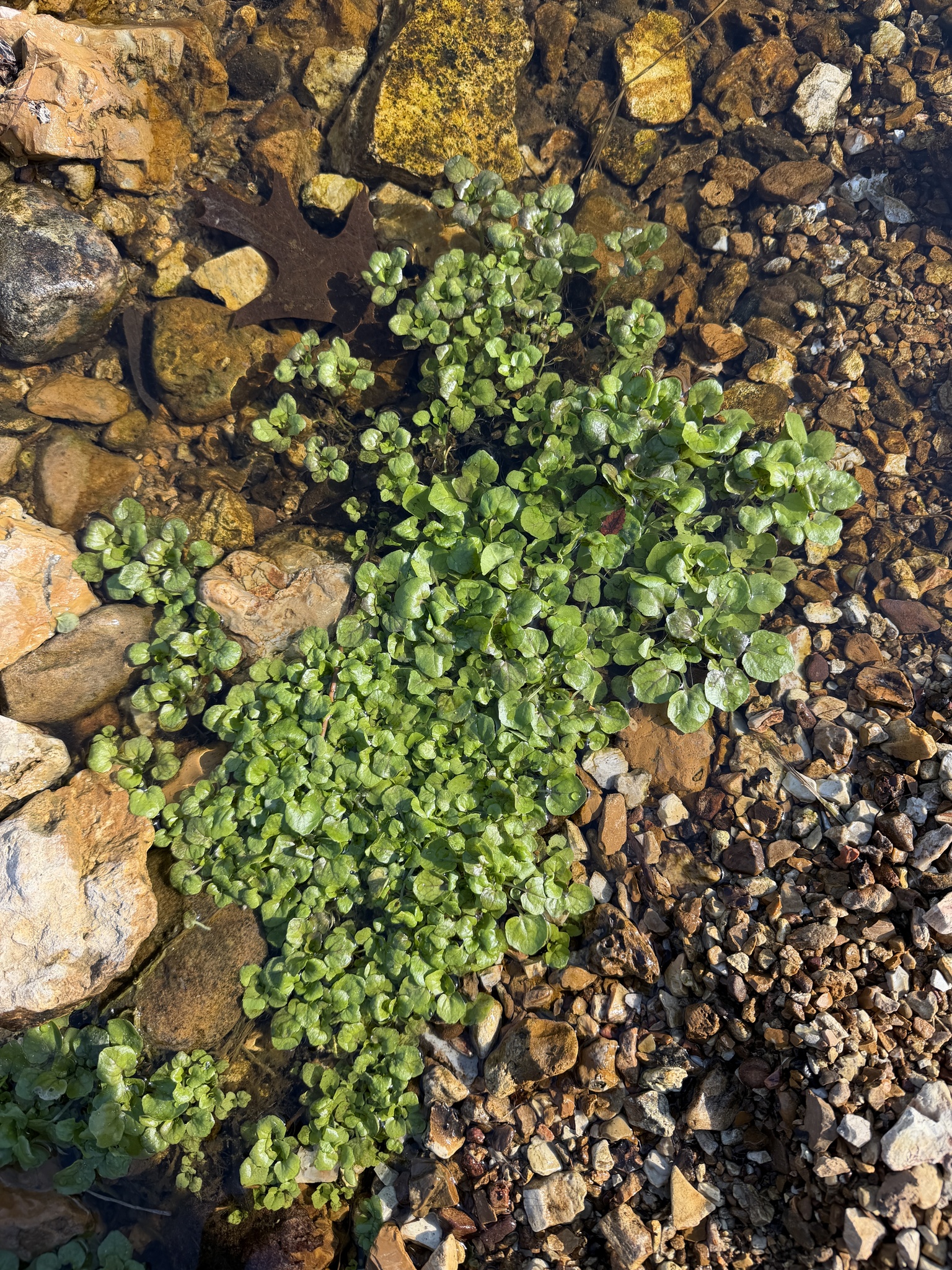
Watercress (Nasturtium officinale) is a fast-growing aquatic perennial native to Europe and Asia, recognized by its succulent green leaves and distinct peppery kick. It naturally thrives in slow-moving, mineral-rich streams and shallow springs where the water remains cool year-round.
You can grow this crop in a garden pond or a water-filled container, provided the water remains fresh and oxygenated. Unlike most garden herbs, it fails quickly if the growing medium dries out for even a few hours.
Key Facts
- Water: Keep roots submerged in clean, moving water.
- Temperature: Grows best in water between 10-15 °C (50-60 °F).
- Harvest: Snip stems when they reach 10-15 cm (4-6 in).
- Safety: Never eat wild watercress from areas near livestock.
- Soil: Needs nutrient-rich, slightly alkaline silt or compost.
Is Watercress Right for Your Garden?
You need a constant supply of water to grow watercress successfully. It is an ideal plant for the margins of a pond or a dedicated water feature where the roots can stay submerged. Unlike garden cress (Lepidium sativum), which grows in standard potting soil, this species requires a saturated environment to prevent wilting.
It suits growers who can commit to changing the water every 2-3 days in container setups to prevent stagnation. Because it spreads via creeping stems, it can quickly fill a small water feature or a gravel-lined trough. You should avoid growing it in areas where water might be contaminated by farm runoff.
Identifying Watercress: Leaves, Flowers, and Stems
Watercress features 3-11 rounded leaflets on each pinnate leaf, with the terminal leaflet being the largest. The stems are hollow and succulent, allowing the plant to float and spread across the water surface. It is often confused with the garden nasturtium (Tropaeolum majus), but the two are not closely related and have entirely different leaf shapes.
In summer, the plant produces clusters of small, four-petaled white flowers typical of the Brassicaceae family. The plant generally reaches a height of 10-30 cm (4-12 in), but its creeping stems can extend up to 1 m (3 ft) across a pond surface. The roots are white and fibrous, often emerging from the stem nodes to anchor the plant in silt.
Best Growing Conditions for Watercress
This herb requires full sun to partial shade and must be kept cool. In regions where air temperatures exceed 30 °C (86 °F), the plant should be moved to a shaded spot to prevent the leaves from scorching or becoming overly bitter. The water temperature is more important than the air temperature, with a target range of 10-15 °C (50-60 °F).
The water must be slightly alkaline, ideally with a pH between 6.5 and 7.5. It thrives in clear, slow-moving water that is rich in minerals, particularly calcium. If you are growing in a pot, use a loam-based compost and keep the pot sitting in a tray of water that is refreshed daily to maintain oxygen levels.
How to Grow Watercress from Seeds and Cuttings
You can start seeds indoors 6-8 weeks before the last frost. Sow them on the surface of damp, compost-filled pots and keep the pots sitting in 5 cm (2 in) of water. The seeds are very small and should not be covered with soil, as they require light to germinate within 7-14 days.
Alternatively, propagate the plant by placing supermarket cuttings in a glass of water. Roots usually appear within 7 days at the stem nodes. Once the seedlings or cuttings have developed a strong root system, they can be moved to their permanent water-filled home or a saturated garden bed.
- Sow seeds on the surface of wet compost.
- Keep the container in a tray of water at all times.
- Space plants 20 cm (8 in) apart.
- Use supermarket cuttings for a faster start.
Essential Care and Water Management
The most critical task is maintaining fresh, clean water. If you are growing in containers, flush the system daily to oxygenate the roots and discourage mosquitoes from breeding. Avoid using water from sources near sheep or cattle pastures to eliminate the risk of liver fluke contamination, a parasite that can infect humans.
If the leaves begin to turn pale or yellow, add a small amount of liquid seaweed fertilizer to the water. Be careful not to over-fertilize, as excess nutrients can cause algae blooms that deplete oxygen. Keep the area around the plants free of decaying leaves and debris to prevent the water from turning anaerobic and smelling like sulfur.
When and How to Harvest Watercress
Begin harvesting when the stems reach 10 cm (4 in) in length. Use sharp scissors to snip the top sections, leaving the bottom 5 cm (2 in) of the plant to regrow. Regular harvesting encourages the plant to branch out and produce more foliage, extending your yield throughout the season.
It is best to harvest in the morning when the leaves are most succulent and the peppery flavor is at its peak. Avoid harvesting once the white flowers appear, as the foliage becomes tough and excessively pungent. If you need to harvest a large amount, the plant can be cut back to 2 cm (1 in) above the water line, and it will usually recover within 3 weeks.
Culinary Uses and Nutritional Benefits
Watercress is traditionally used in soups, salads, and sandwiches to provide a sharp, mustard-like flavor. It was a staple of the Victorian working-class diet in the UK, where it was often eaten in bunches for breakfast. The leaves are rich in Vitamin K, Vitamin C, and beta-carotene, making it one of the most nutrient-dense leafy greens available.
In the past, it was traditionally used as a remedy for scurvy due to its high Vitamin C content. To make a classic watercress soup, sauté the greens with potatoes and onions before blending with vegetable stock. The heat reduces the peppery bite, resulting in a mild, earthy flavor.
- Add raw leaves to sandwiches for a peppery crunch.
- Blend into pestos or green smoothies.
- Garnish grilled fish or steak.
- Use in traditional pea and watercress soup.
Common Watercress Pests and Disease Problems
The most common pest is the mustard beetle (Phaedon cochleariae), which leaves small holes in the foliage. You can manage these by submerging the entire plant for one hour to drown the insects without using chemicals. Flea beetles may also attack the leaves in early summer, especially if the air is dry and the plants are not fully submerged.
If the water becomes stagnant, the roots may develop a foul-smelling bacterial rot. Always ensure the water is clear and replaced frequently to prevent this. Snails and slugs are also frequent visitors to watercress beds; they should be removed by hand to prevent them from consuming the young, tender growth.
How to Store Watercress to Keep It Fresh
Freshly cut watercress lasts for 4-5 days if stored correctly. Place the stems in a glass of water and cover the leaves loosely with a plastic bag before putting them in the refrigerator. This mimics its natural environment and prevents the succulent leaves from drying out in the fridge air.
Alternatively, wrap the damp stems in a paper towel and seal them in a reusable container. Do not wash the leaves until you are ready to use them, as excess surface moisture on the foliage leads to rapid wilting and yellowing. If the leaves start to turn yellow, they should be discarded as the flavor becomes unpleasantly bitter.
Year-Round Watercress Care
| Spring | Sow seeds indoors 6 weeks before frost or take cuttings from established plants. Move young plants to water features once air temperatures stay above 10 °C (50 °F). |
|---|---|
| Summer | Ensure water levels remain constant and flush container water every 2 days. Harvest regularly to prevent flowering and provide shade if temperatures exceed 30 °C (86 °F). |
| Autumn | Take final harvests before the first hard frost. Clear away any dead or decaying foliage from the water to prevent rot over the winter months. |
| Winter | Protect plants from freezing solid by moving containers to a frost-free shed or greenhouse. Growth will slow significantly when water temperatures drop below 5 °C (41 °F). |
Common Watercress Growing Problems
| What you see | Likely cause | What to do |
|---|---|---|
| Yellowing leaves | Nutrient deficiency | Add a small amount of liquid seaweed fertilizer to the water. |
| Small holes in leaves | Mustard beetle | Submerge the plant underwater for one hour to drown the beetles. |
| Bitter taste | Flowering or heat stress | Harvest earlier and ensure the water stays cool and shaded. |
| Slimy stems | Stagnant water | Flush the system with fresh water and remove any decaying matter. |
Popular Watercress Varieties
- ‘Aqua’ – standard commercial variety with large leaves
- ‘English Broadleaf’ – traditional variety with a strong peppery kick
Best Companion Plants for Watercress
Watercress grows well alongside other marginal pond plants that share its love for saturated soil. Brooklime (Veronica beccabunga) is a common companion in the wild, offering similar growth habits and blue flowers. Water mint (Mentha aquatica) can also be grown nearby, though its vigorous roots may need to be contained to prevent it from outcompeting the watercress.
Marsh marigold (Caltha palustris) provides a bright yellow contrast in early spring and enjoys the same slightly alkaline, wet conditions. If you are growing in a terrestrial bog garden, consider planting it near fiber optic grass (Isolepis cernua) or small sedges. These plants help stabilize the silt and provide a naturalistic look to your water feature.
- Brooklime (Veronica beccabunga)
- Water Mint (Mentha aquatica)
- Marsh Marigold (Caltha palustris)
- Fiber Optic Grass (Isolepis cernua)
Frequently Asked Questions
What are the benefits of eating watercress?
Watercress is exceptionally high in Vitamin K, Vitamin C, and Vitamin A, supporting bone health and immune function. It also contains antioxidants like beta-carotene and lutein.
Is wild watercress safe to eat?
Wild watercress can be dangerous if harvested near livestock, as it may carry the liver fluke parasite. Only eat wild plants if you are certain the water source is free from agricultural runoff and parasites.
Can you grow watercress in a pot?
Yes, you can grow it in a pot filled with compost that sits inside a larger, water-filled bucket. You must change the water every 2-3 days to keep it fresh and oxygenated.
What is the Watercress Line?
The Watercress Line is a heritage railway in Hampshire, England, named after the local area's history as a major center for watercress farming and transport.
Is this the same as the orange flowers in my garden?
No, garden nasturtiums are Tropaeolum majus, while true watercress is Nasturtium officinale; they share a name because of their similar peppery taste but are different species.
Is there a Watercress financial service?
This profile focuses on the aquatic herb; the name Watercress is also used by a financial services company, which is unrelated to the plant's biology.
Information about traditional or historical uses is provided for educational interest only and is not medical advice. Do not use any plant to treat a condition without speaking to a qualified professional.
Sources & Verification
Taxonomy and distribution are checked against the databases below. Care guidance is written for cultivated species only and reviewed by our editor. How We Build Plant Profiles →