
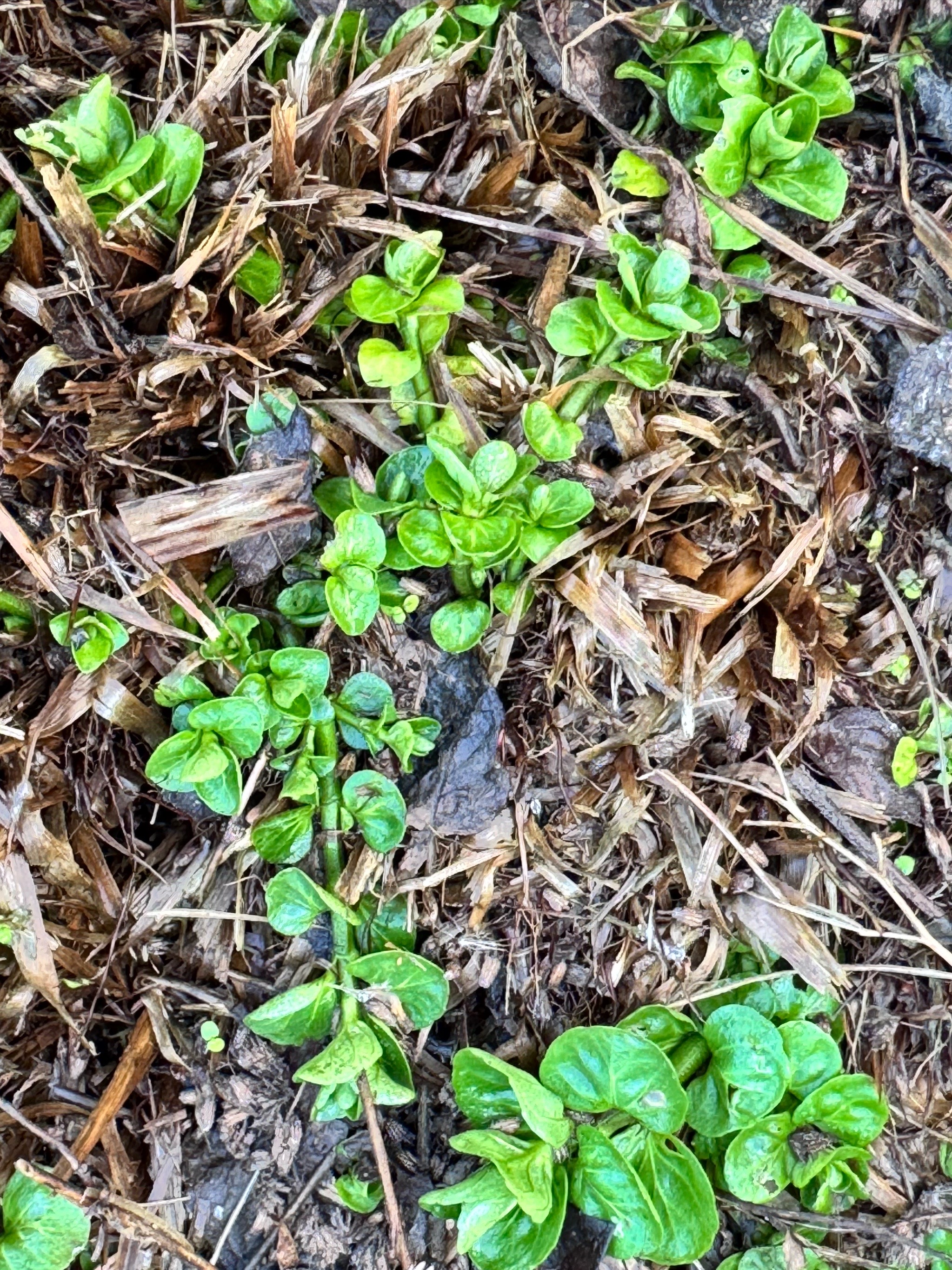
Water mint (Mentha aquatica) is a rhizomatous aquatic perennial native to wet habitats across Europe, northwest Africa, and southwest Asia. It features square purple-tinged stems, ovate aromatic leaves, and dense terminal clusters of lilac-pink flowers from July to October.
In garden ponds and bog beds, this mint spreads rapidly via underground stolons to clarify water and stabilize mud banks. Keep the roots contained in aquatic baskets to stop unchecked spreading into surrounding borders.
Key Facts
- Water: Constant moisture or submerged roots down to 10 cm (4 in)
- Light: Full sun to partial shade
- Hardiness: USDA zones 5 through 9
- Soil pH: 6.0 to 7.5
- Height: 30 to 90 cm (12 to 36 in)
- Spread: 40 to 100 cm (16 to 40 in)
Growing Water Mint in Gardens and Ponds
Water mint suits margins of garden ponds, wet bog gardens, and stream edges where soil remains perpetually wet. It forms dense mats of foliage that absorb nitrates from pond water, helping control algae growth.
This plant survives conditions from damp soil to shallow standing water. Compare it to related species like field mint (Mentha arvensis) or spearmint (Mentha spicata) which prefer drier garden borders.
- Spreads laterally by stolons up to 1 m (3.3 ft) per season.
- Thrives in standing water between 0 and 10 cm (0 and 4 in) deep.
- Requires aquatic planting baskets in smaller ponds to restrict root spread.
Water Mint Appearance and Botanical Characteristics
Water mint reaches heights of 30 to 90 cm (12 to 36 in) with erect, squarish purple stems. Leaves grow opposite in pairs, measuring 2 to 6 cm (0.8 to 2.4 in) long and 1 to 4 cm (0.4 to 1.6 in) wide with serrated margins and visible veining.
The plant emits a distinct menthol scent when handled, setting it apart from non-aromatic water plants. It is the wild parent of peppermint (Mentha × piperita).
- Crushed foliage releases a sharp peppermint aroma with herbal notes.
- Flowers gather in spherical terminal heads 1 to 2 cm (0.4 to 0.8 in) across.
- Petals display soft purple, pink, or lilac tones throughout mid-to-late summer.
Ideal Growing Conditions for Water Mint
Water mint requires constant moisture and performs best under 4 to 6 hours of direct sunlight daily. While it tolerates partial shade, full solar exposure encourages stronger stem development and higher essential oil content in the leaves.
The root system develops both aquatic fibrous roots and subterranean runners. Shallow clay or mud substrates provide optimal anchorage along water features.
- Substrate: Organic mud, clay, or aquatic soil mix rich in compost.
- Water depth: Sits happily in water depths from saturated soil to 10 cm (4 in) over the crown.
- Temperature range: Winter hardy down to -23 °C (-10 °F) in USDA zone 5.
Sowing Seeds and Setting Water Mint Planting Depth
Set young water mint containers at a planting depth of 0 to 10 cm (0 to 4 in) below the surface of the pond water. When starting from seed, sow indoors on surface layer soil at 18 to 21 °C (65 to 70 °F) in early spring.
Vegetative propagation yields faster results than seeds, which can show variable germination rates. Stem cuttings root in fresh water within 7 to 10 days.
- Press seeds into wet seed-starting mix without covering them, as light aids germination.
- Germination takes 14 to 21 days under constant soil moisture.
- Divide existing clumps in spring by slicing roots into 10 cm (4 in) sections with active growth nodes.
Watering and Maintenance Care for Mentha aquatica
Maintain saturated soil conditions at all times so that root crowns never dry out. Plants established directly in shallow water require no supplemental irrigation during normal summer weather.
Trim back spent flower stems in autumn to tidy pond edges. Removing excess biomass prevents decomposing plant matter from souring small water bodies.
- Prune aggressive runner stolons twice per season to prevent border invasion.
- Trim back dead stems to 5 cm (2 in) above water level in late autumn.
- Refrain from synthetic fertilizers in open ponds to protect aquatic life and stem excess growth.
How and When to Harvest Water Mint Leaves
Harvest fresh water mint leaves throughout spring and summer by cutting stem tips 10 cm (4 in) above ground level. Mornings after dew has dried yield leaves with the highest essential oil concentrations.
Regular harvesting prevents stems from becoming overly woody and encourages bushy new lateral growth. Use sharp shears to clean cuts without tearing stem tissue.
- Pick top foliage clusters before flower buds open for maximum aromatic punch.
- Never strip more than one-third of the total canopy foliage in a single cutting.
- Rinse harvested stems thoroughly under clean tap water to remove pond sediment.
Traditional Uses and Mentha aquatica Leaf Extract
Mentha aquatica leaf extract was traditionally used in herbal infusions to soothe digestion, clear headaches, and ease respiratory discomfort. Fresh leaves provide a peppery menthol flavor in teas, syrups, and herbal jellies.
Steam distillation of leaves yields an essential oil rich in menthol, menthofuran, and pulegone. Historical records document its use as a natural insect repellent and bath additive.
- Phenolic compounds and rosmarinic acid in leaf extracts exhibit mild antioxidant activity.
- Essential oils contain high levels of menthol, menthofuran, and pulegone.
- Compacts of crushed stems historically scented bath water and laundry rinse waters.
Common Water Mint Pests and Leaf Diseases
Mint rust (Puccinia menthae) is the main fungal issue affecting water mint foliage in summer. Inspect undersides of lower leaves for raised orange or rust-brown pustules.
Water-dwelling insects rarely cause severe damage, though aphids may attack soft tender tip growth. Maintain good air movement around plants to keep foliage fungal spores down.
- Mint rust: Cut affected stems down to soil level and dispose of infected top growth.
- Aphids: Hose off colonies using a strong jet of clean water.
- Spider mites: Occur on dry pond edges; increase local humidity and root wetness.
Drying and Storage of Leaves
Dry water mint by tying harvested stems in small bundles and hanging them in a dark room at 20 to 25 °C (68 to 77 °F) for 7 to 10 days. Crushed dried leaves retain flavor for up to 12 months in sealed glass jars.
Keep dried leaves intact until use to prevent volatile essential oils from evaporating prematurely. Discard any material showing mold spores from damp drying conditions.
- Strip dried leaves from woody stems once crispy to the touch.
- Store jars in a cool, dark cabinet away from direct stove heat.
- Freeze whole un-cut leaves in ice cube trays filled with water for fresh tea infusion.
Frequently Asked Questions
Is Mentha aquatica edible?
Yes, water mint (Mentha aquatica) leaves are edible and can be brewed into tea or used as a culinary seasoning. Consume it in moderate amounts due to naturally occurring menthofuran compounds.
How deep should I plant Mentha aquatica in a pond?
Plant water mint at a depth of 0 to 10 cm (0 to 4 in) of water over the top of its pot. It also grows well in saturated bog soils right at the water edge.
What is the difference between aromatic thyme and water mint?
Aromatic thyme belongs to the genus Thymus (such as common thyme, Thymus vulgaris, or creeping thyme, Thymus serpyllum) and requires dry, sandy soil. Water mint (Mentha aquatica) is a wetland species that demands constantly wet mud or standing water.
What are the traditional medicinal uses of Mentha aquatica?
Historically, water mint leaf extract was used in traditional folk medicine to relieve digestive upset, fevers, and minor aches. Modern herbalists primarily utilize its essential oils for aromatherapy and tea blends.
Does water mint spread aggressively in gardens?
Water mint spreads quickly via underground stolons if planted directly in wet soil. Containing the plant inside aquatic pots or baskets prevents unwanted spreading across pond banks.
Can Mentha aquatica grow in full shade?
Water mint tolerates partial shade but grows leggy and produces fewer flowers in deep shade. Place it in a spot receiving at least 4 to 6 hours of direct daylight for best growth.
Information about traditional or historical uses is provided for educational interest only and is not medical advice. Do not use any plant to treat a condition without speaking to a qualified professional.
Sources & Verification
Taxonomy and distribution are checked against the databases below. Care guidance is written for cultivated species only and reviewed by our editor. How We Build Plant Profiles →
More in Mentha

Pennyroyal
Mentha pulegium
☀️ Full Sun 💧 High

Spearmint
Mentha spicata
☀️ Full Sun 💧 Moderate

Apple Mint
Mentha suaveolens
☀️ Full Sun 💧 Moderate
Corsican Mint
Mentha requienii
☀️ Partial Shade 💧 High

Corn Mint
Mentha arvensis
☀️ Partial Sun 💧 Moderate

Peppermint
Mentha piperita
☀️ Full Sun 💧 Moderate