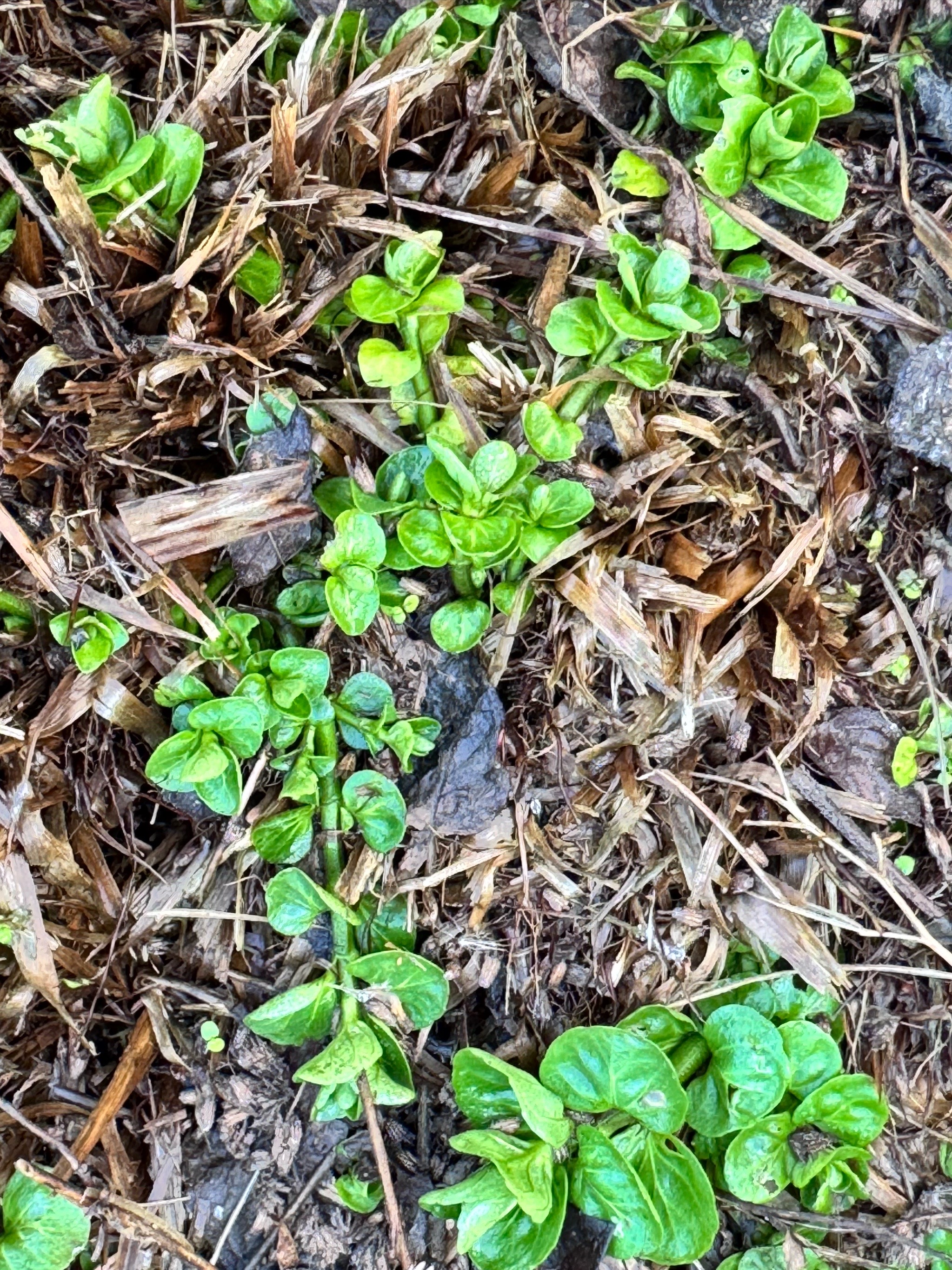
Corsican mint (Mentha requienii) is a dwarf perennial groundcover native to Corsica, Sardinia, and Montecristo Island. It forms a dense green mat reaching just 1-3 cm (0.4-1.2 in) in height with intense peppermint aroma when crushed.
This low-growing herb functions as a fragrant lawn substitute between stepping stones or in moist rock gardens. It requires consistent moisture and protection from extreme heat to prevent severe scorching.
Key Facts
- Hardiness: USDA Zones 6 through 9
- Height: 1-3 cm (0.4-1.2 in) tall
- Spread: 15-30 cm (6-12 in) per plant
- Light: Partial shade to bright indirect light
- Water: High moisture, never dry out
- Growth rate: Fast in moist conditions
Where Corsican Mint Fits in Your Garden
Corsican mint provides a fragrant alternative to traditional lawn turf in moist, sheltered microclimates. Its tight foliage tolerates light foot traffic, making it suitable for filling gaps between flagstones and patio pavers.
Pros and cons of planting Corsican mint as a groundcover include:
- Pros: Replaces grass in tight spaces; releases mint scent when stepped on; resists deer and rabbits.
- Cons: Cannot handle heavy sports or dog traffic; perishes in complete dry spells; can spread into damp lawn edges.
What Corsican Mint Looks Like
Corsican mint grows as a flat, moss-like carpet of tiny round green leaves measuring 2-7 mm (0.08-0.27 in) across. Stems creep along the soil surface, rooting at node intervals to create a seamless mat.
In summer, minute pale lilac or purple flowers measuring 2 mm (0.08 in) open across the surface. The foliage emits a strong peppermint scent due to volatile oils containing pulegone when bruised or walked upon.
Sun and Soil Requirements for Corsican Mint
Corsican mint thrives in partial shade with rich, moist soil having a pH between 6.0 and 7.5. In cooler northern climates of USDA Zone 6, full sun is tolerated if soil moisture remains high.
Environmental factors necessary for healthy growth include:
- Light exposure: 3-6 hours of morning sun or filtered light daily.
- Soil texture: Loamy or sandy soil rich in organic matter.
- Drainage: High water retention without standing surface water.
- Temperature tolerance: Hardy down to -15 °C (5 °F).
How to Plant Corsican Mint and Grow from Seed
Space plugs or divisions 15-20 cm (6-8 in) apart in spring to allow mats to merge within 6-8 weeks. Press seed lightly onto damp soil without covering, as light aids germination.
Follow these steps to establish new plants from seed:
- Sow seeds indoors 6-8 weeks before the last spring frost at 18-21 °C (64-70 °F).
- Keep the potting soil surface damp using a spray bottle spray.
- Transplant seedlings outdoors once roots anchor into cell trays.
- Water daily for 3 weeks until stems spread across bare earth.
Watering and Fertilizer Needs for Corsican Mint
Water Corsican mint whenever the top 1 cm (0.4 in) of soil dries out, providing 2.5 cm (1 in) of water per week. Drought causes foliage to brown and die back rapidly within 48 hours.
Apply a diluted balanced organic fertilizer at quarter-strength once in late spring. Excessive nitrogen encourages loose, leggy growth that reduces tread resistance along pathways.
Mowing and Trimming Maintenance
Corsican mint requires no routine mowing due to its maximum height of 3 cm (1.2 in). Trimming is only necessary if creeping stems extend into unwanted garden beds.
Edge path margins with a hand edger or sharp trowel in early summer. Removing stray stolons prevents unwanted spreading into neighboring rockery plants.
How to Propagate Corsican Mint
Propagate Corsican mint by dividing rooted stem sections in spring or autumn. Stem nodes naturally produce fine adventitious roots wherever they touch moist soil.
To divide an established patch:
- Slice a 5-10 cm (2-4 in) turf section using a flat knife.
- Lift the rooted soil layer intact from the parent mat.
- Replant into prepared moist soil at the same depth.
- Water thoroughly for 10 days to encourage rapid establishment.
Winter Care and Evergreen Status
Corsican mint remains evergreen in USDA Zones 7 through 9, retaining green leaves through mild winter freezes. In Zone 6, top growth dies back to root crowns during winter and returns in early spring.
Apply a thin 1 cm (0.4 in) layer of shredded leaf mulch over patches in Zone 6 before heavy winter frosts. Clear leaf litter in early spring so new shoots receive full sunlight.
Corsican Mint Flowers and Bloom Season
Flowers open from June to August across the green foliage canopy. The tiny blooms attract small bees and hovering pollinators while maintaining the carpet structure.
Deadheading is unnecessary because flowers fade cleanly into the foliage layer without leaving visible seed heads or brown debris.
Corsican Mint Invasiveness and Common Problems
Corsican mint spreads through self-seeding and stolons but is far less aggressive than larger mint species. It rarely dominates dry or shady garden spaces outside damp paths.
Monitor for these common issues:
- Fungal rust: Orange pustules appear under high humidity; thin thick patches to improve air circulation.
- Foliage scorch: Leaves turn brown when exposed to midday sun without sufficient soil water.
- Slugs and snails: Soft leaves may suffer minor chewing damage during wet spring months.
Best Companion Plants for Corsican Mint
Pair Corsican mint with low-growing plants requiring similar moisture and partial shade. Its flat habit creates structural contrast under taller perennials and dwarf shrubs.
Suitable garden companions include:
- Irish moss (Sagina subulata)
- Dwarf mondo grass (Ophiopogon japonicus)
- Blue star creeper (Isotoma fluviatilis)
- Creeping thyme (Thymus serpyllum)
Frequently Asked Questions
Is Corsican mint edible?
Corsican mint is non-toxic and edible in small quantities, famously used historically as a flavoring for Crème de Menthe. However, its strong concentration of aromatic oils means it is grown primarily as an ornamental groundcover rather than a culinary herb.
Is Corsican mint invasive?
Corsican mint is not considered invasive in standard garden soils, though it self-seeds freely in damp gravel or stone joints. Its shallow roots make unwanted runners easy to pull or scrape away.
Is Corsican mint evergreen?
Corsican mint is evergreen in mild climates within USDA Zones 7 to 9. In cold Zone 6 winters, the foliage dies back to ground level and regenerates in spring.
Can Corsican mint handle foot traffic?
Corsican mint tolerates light to moderate foot traffic such as stepping-stone paths. Heavy daily activity or sports usage will bruise stems and thin the mat.
Is Corsican mint toxic to dogs and cats?
Corsican mint is non-toxic to dogs and cats according to standard plant toxicity registries. Large ingestions of any mint foliage can occasionally cause minor stomach upset in pets.
Information about traditional or historical uses is provided for educational interest only and is not medical advice. Do not use any plant to treat a condition without speaking to a qualified professional.
Sources & Verification
Taxonomy and distribution are checked against the databases below. Care guidance is written for cultivated species only and reviewed by our editor. How We Build Plant Profiles →
- Kew Royal Botanic Gardens Plants of the World Onlinepowo.science.kew.org
- NC State Extension Gardener Plant Toolboxplants.ces.ncsu.edu
- Missouri Botanical Garden Plant Findermissouribotanicalgarden.org
- Royal Horticultural Societyrhs.org.uk
- GBIF — Global Biodiversity Information Facilitytaxonomy, synonyms, occurrence records
- Wikipediageneral reference