
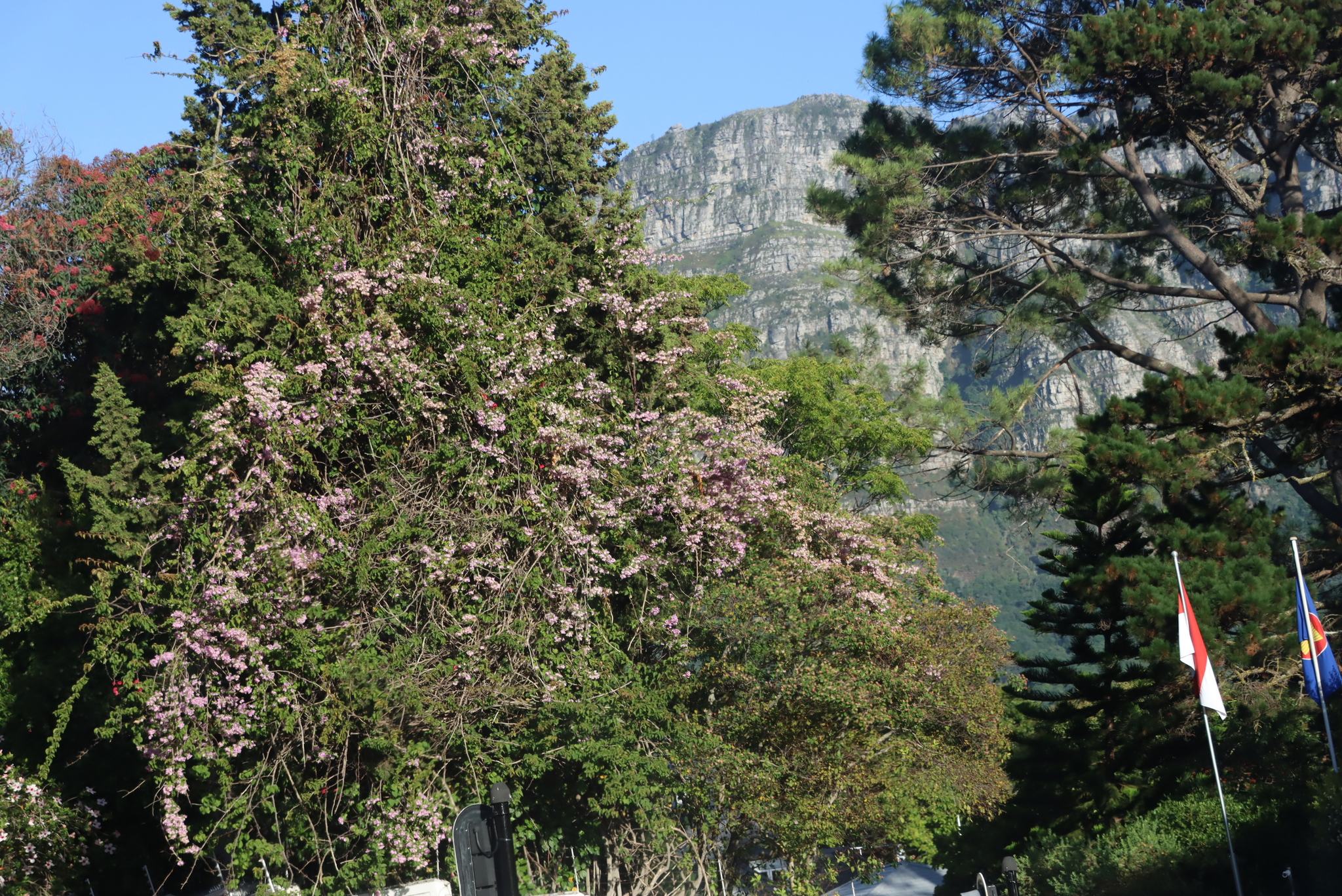
Pink trumpet vine (Podranea ricasoliana) is a woody evergreen climber native to South Africa, Malawi, Mozambique, and Zambia. It is widely grown in frost-free regions for its trumpet-shaped, pink flowers featuring darker red veins inside the throat.
You need a sturdy trellis or fence because this climber can reach lengths of 8 m (26 ft) in a single season if left unchecked. Protect it from hard freezes, as foliage damages when temperatures drop below -3 °C (26 °F).
Key Facts
- Light: Full sun to partial shade
- Water: Moderate, drought tolerant once established
- Soil: Well-drained, fertile loam
- Hardiness: USDA Zones 9 to 11
- Bloom Season: Late summer to autumn
Is Pink Trumpet Vine Right for Your Garden
Grow pink trumpet vine if you need rapid vertical coverage for a large wall, ugly fence, or sturdy arbor. This climber grows up to 8 m (26 ft) and suits gardeners in warm climates who want heavy seasonal blooms with minimal fuss once established.
Avoid planting it near delicate structures because its woody stems exert strong pressure as they thicken. It requires annual pruning to prevent it from smothering nearby shrubs or invading rooflines in frost-free regions.
What Pink Trumpet Vine Looks Like
Pink trumpet vine is identified by its opposite, pinnate leaves composed of 7 to 11 ovate, sharply toothed leaflets up to 5 cm (2 in) long. The stems are woody and hairless, featuring grayish-brown bark that peels slightly on older vines.
- Flowers: Funnel-shaped, 5 cm to 7 cm (2 to 3 in) across, pale pink with dark red penciling inside the throat.
- Foliage: Glossy dark green leaves that remain evergreen in warmer winter climates.
- Fruit: Long, linear capsules containing winged seeds, though these rarely form on heavily pruned garden specimens.
Where to Plant Pink Trumpet Vine
Plant your Port St Johns creeper in a location that receives at least 6 hours of direct sunlight daily to encourage heavy flowering. Shady spots result in lush green foliage but very few of the signature pink blooms.
- Choose a sheltered southern or western exposure to protect stems from freezing winter winds.
- Ensure the site has strong vertical supports like heavy wooden trellises, pergolas, or chain-link fences.
- Keep the vine away from subterranean utilities if planting near foundations, though its root system is generally well-behaved.
How to Plant Zimbabwe Creeper
Dig a hole twice as wide and just as deep as the nursery container, amending heavy clay with coarse sand to ensure drainage. Set the root ball level with the surrounding soil and tamp gently to remove large air pockets.
- Space multiple plants at least 3 m (10 ft) apart along a fence line to allow room for lateral spread.
- Water the root zone thoroughly immediately after planting to settle the soil around the roots.
- Apply a 7 cm (3 in) layer of organic mulch around the base, keeping it a few inches away from the main stems.
Watering and Feeding Schedule
Water young Zimbabwe creeper plants once a week during their first growing season to establish a deep root system. Established vines survive on natural rainfall except during extended summer droughts lasting longer than 3 weeks.
- Apply a balanced, slow-release granular fertilizer once in early spring as new shoot growth begins.
- Avoid high-nitrogen fertilizers, which cause the vine to produce excessive foliage at the expense of autumn flowers.
- Withhold fertilizer completely after mid-autumn to let existing stems harden off before winter temperatures drop.
How and When to Prune Pink Trumpet Vine
Prune your millonaria plant heavily in late winter or early spring just before new growth starts. Cut back the previous year’s flowering stems by at least half to encourage a dense flush of new flowering wood.
- Remove any dead, damaged, or crossing branches entirely to improve air circulation inside the canopy.
- Trim stray lateral shoots throughout the summer if the vine begins to outgrow its assigned vertical support.
- Wear durable gardening gloves, as older stems become surprisingly tough and woody.
How to Propagate Port St Johns Creeper
Propagate pink trumpet vine easily using semi-ripe stem cuttings taken during the mid-summer growing season. Select healthy 15 cm (6 in) shoots from the current year’s growth that snap cleanly when bent.
- Strip the lower leaves from each cutting, leaving only two small leaves at the top.
- Dip the cut base in rooting hormone powder and insert it into a 50-50 mix of perlite and peat moss.
- Enclose the pot in a clear plastic bag to retain humidity, keeping it at 21 °C (70 °F) until roots form in 6 weeks.
Common Problems and Millonaria Plant Care
Pink trumpet vine suffers from very few pests, though you might occasionally spot aphids or whiteflies on tender spring shoot tips. Spray infested tips with insecticidal soap or a strong jet of water from your garden hose to clear them.
- Watch for yellowing lower leaves, which usually indicates overwatering or poor soil drainage during heavy winter rains.
- Protect young plants from frost damage in USDA Zone 9 by draping frost cloth over the canopy during freezing nights.
- Prune back frost-damaged stems in spring once the threat of freezing weather has passed entirely.
Winter Care for Zimbabwe Creeper
Provide winter protection for vines grown near the cold limits of USDA Zone 9 by mulching heavily around the root crown. Cease all fertilizing by September so the plant does not push tender new growth into freezing weather.
- Expect some leaf drop if temperatures dip below 0 °C (32 °F); this is a normal survival response.
- Container-grown specimens should be moved indoors to a bright garage or greenhouse before the first hard freeze.
- Resume regular watering only when spring temperatures remain consistently above 10 °C (50 °F).
When Does Pink Trumpet Vine Bloom
Pink trumpet vine bursts into bloom from late summer through autumn, often providing color when other garden shrubs have faded. Peak flowering occurs between September and November depending on your local autumn temperature drop.
- Provide full sun exposure to maximize the density and color saturation of the trumpet-shaped flowers.
- Leave old flower clusters on the vine if you want to observe the decorative seed pods that follow.
- Deadhead spent clusters if you prefer a tidier appearance on formal garden arbors and entranceways.
Pink Trumpet Vine Through the Seasons
| Spring | Prune back old flowering stems by half, clear away winter debris, and apply a single dose of slow-release balanced fertilizer to jumpstart growth. |
|---|---|
| Summer | Tie wandering shoots to your trellis structure, monitor for aphids on tender tips, and provide supplemental water during dry spells. |
| Autumn | Enjoy the peak bloom period from September onwards, deadhead spent flower clusters if desired, and reduce watering frequency. |
| Winter | Withhold all fertilizer, protect plants from freezes in colder pockets of USDA Zone 9 with frost cloth, and let the vine rest. |
Pink Trumpet Vine Problems and Quick Diagnosis
| What you see | Likely cause | What to do |
|---|---|---|
| No flowers in autumn | Too much shade or excessive nitrogen fertilizer | Move the vine to a sun-niest spot and switch to a low-nitrogen, high-phosphorus fertilizer next spring. |
| Yellow leaves and leaf drop | Waterlogged soil or root rot | Improve garden bed drainage and let the top 5 cm (2 in) of soil dry out completely between watering sessions. |
| Stems dying back to the ground | Hard freeze below -3 °C (26 °F) | Prune away dead wood in spring once new shoots emerge from the protected underground root crown. |
| Sticky residue on foliage | Aphid or whitefly infestation | Spray affected leaves thoroughly with organic insecticidal soap every 5 days until pests disappear. |
Popular Pink Trumpet Vine Cultivars
- ‘Rosea’ – produces deeper pink flowers with darker crimson throats
- ‘Alba’ – rare selection featuring pure white trumpet-shaped blooms
Good Companion Plants for Podranea ricasoliana
Pair your pink trumpet vine with other sun-loving climbers or shrubs that share identical soil and moisture requirements. Choose contrasting flower colors like the deep purple blossoms of blue potato bush (Solanum laciniatum) or yellow bells (Tecoma stans).
- Plant trailing rosemary (Salvia rosmarinus) at the base of the vine to cover the woody lower stems.
- Combine it with bougainvillea (Bougainvillea spectabilis) along large masonry walls for a dramatic, overlapping tropical display.
- Integrate plumbago (Plumbago auriculata) nearby to echo the pastel color tones throughout the late summer garden.
Frequently Asked Questions
What is the common name for Podranea ricasoliana?
Podranea ricasoliana is commonly known as the pink trumpet vine, Port St Johns creeper, Zimbabwe creeper, or millonaria.
Is millonaria a toxic plant?
No, pink trumpet vine (millonaria) is non-toxic to both humans and domestic pets like dogs and cats.
What are the medicinal uses of Podranea ricasoliana?
Podranea ricasoliana has been traditionally used in southern African folk medicine, where various plant parts were prepared as washes or infusions for treating minor ailments.
Will pink trumpet vine grow in the UK?
Pink trumpet vine can survive outdoors in mild parts of the UK like Cornwall against a sunny wall, but it generally requires a frost-free greenhouse or conservatory protection over winter.
How fast does pink trumpet vine grow?
Pink trumpet vine is a fast grower that can easily add 3 m (10 ft) or more of woody vine growth in a single warm season.
Information about traditional or historical uses is provided for educational interest only and is not medical advice. Do not use any plant to treat a condition without speaking to a qualified professional.
Sources & Verification
Taxonomy and distribution are checked against the databases below. Care guidance is written for cultivated species only and reviewed by our editor. How We Build Plant Profiles →