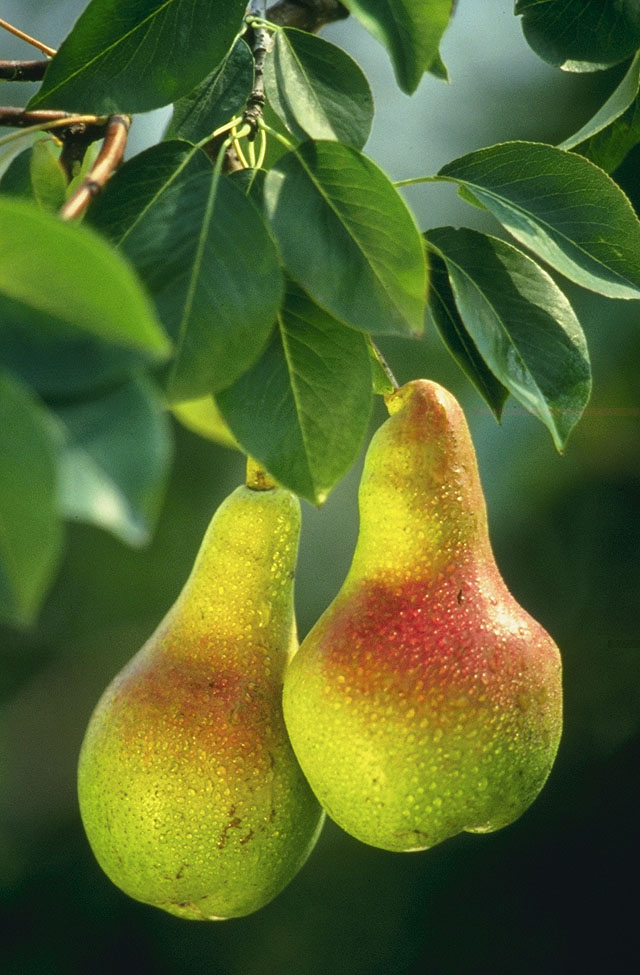
The Wild Pear (Pyrus pyraster) is a long-lived deciduous tree in the Rosaceae family, native to temperate regions across Europe and Western Asia. It is best known for its dense, thorny habit and small, hard fruits that serve as a critical food source for local wildlife.
You will find this tree growing in mixed woodland margins and hedgerows, where it is often distinguished from the common orchard pear by its smaller stature and more erratic branch structure. It is not a common garden ornamental and is rarely planted for fruit production.
Key Facts
- Scientific Name: Pyrus pyraster
- Plant Type: Deciduous tree
- Native Range: Europe and Western Asia
- Fruit: Small, hard, and astringent
- Habitat: Woodland edges and scrub
How to Identify Wild Pear
You can identify a Wild Pear by its characteristic thorny, spur-like lateral branches and small, rounded leaves that turn yellow or red in autumn. The tree typically reaches a height of 10-15 m (33-49 ft) with a rounded, dense crown that provides significant cover for nesting birds. In spring, it produces clusters of white, five-petaled flowers that precede the emergence of the foliage. The fruit is globose, measuring 2-4 cm (0.8-1.6 in) in diameter, and remains hard and green until ripening into a brownish-yellow colour.
Where Does Wild Pear Grow
The Wild Pear thrives in sunny, open woodland clearings, hedgerows, and on the fringes of deciduous forests. It is highly adaptable to various soil types, including heavy clays and rocky substrates, provided the area has adequate drainage. You will rarely find it growing in deep shade, as it requires high light levels to maintain its structure and fruit production. In its native range, it is often found alongside other scrub species like blackthorn (Prunus spinosa) and hawthorn (Crataegus monogyna).
Wild Pear Ecology and Wildlife Value
The Wild Pear serves as an essential ecological link by providing early-season nectar for bees and late-season forage for mammals and birds. Its flowers attract a wide range of pollinators, including solitary bees and hoverflies, which are vital for the tree’s reproductive success. Once the fruit ripens in late autumn, it becomes a food source for badgers, foxes, and various birds, which in turn aid in seed dispersal. The dense, thorny canopy also provides a secure habitat for small mammals and nesting birds, protecting them from larger predators.
Are Wild Pears Edible
While Wild Pears are technically edible, they are frequently too hard, gritty, and astringent to be enjoyed raw. Historically, they were gathered and allowed to blet—a process where the fruit is left to soften and ferment slightly after harvest—to improve the texture and sweetness. If you intend to use them, they are best suited for cooked applications such as jellies, preserves, or traditional fruit leathers. Because of their high tannin content, they are rarely consumed fresh, even when fully ripe.
Wild Pear vs Orchard Pear
It is easy to confuse the Wild Pear with the common orchard pear (Pyrus communis), but there are three clear differences. First, the wild species has distinct, sharp thorns on its branches, whereas the cultivated varieties lack these defensive structures. Second, the fruit of the wild tree is significantly smaller, usually less than 4 cm (1.6 in) wide, and much harder in texture. Finally, the leaves of the wild variant are often more rounded and serrated compared to the smoother, larger leaves found on commercial pear trees.
Conservation Status
The Wild Pear is considered a species of least concern globally, though its populations can be fragmented due to habitat loss and hybridization with cultivated pears. It is important to maintain the genetic integrity of wild populations by avoiding the planting of commercial pear cultivars in close proximity to native stands. This prevents cross-pollination, which can dilute the specific adaptations that allow the wild species to survive in harsh, unmanaged landscapes.
Frequently Asked Questions
Are wild pears safe to eat?
Yes, wild pears are safe to eat, though they are often very hard and tart.
How do you know when wild pears are ripe?
Wild pears are typically ripe when they soften slightly on the tree or fall to the ground in late autumn.
How can I cook wild pears?
You can cook them by boiling or baking them with sugar to balance their natural astringency and grit.
Is the wild pear tree the same as a prickly pear?
No, the wild pear is a deciduous tree in the Rosaceae family, while the prickly pear (Opuntia spp.) is a cactus.
Sources & Verification
Taxonomy and distribution are checked against the databases below. Care guidance is written for cultivated species only and reviewed by our editor. How We Build Plant Profiles →