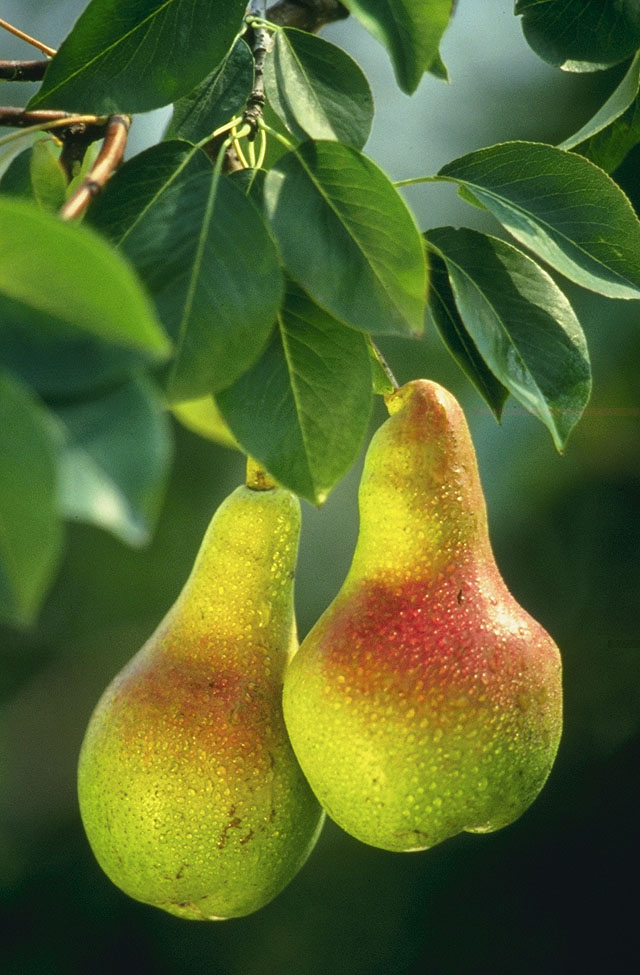
Callery pear (Pyrus calleryana) is a deciduous flowering tree native to China and Vietnam, marked by lustrous dark green foliage and dense clusters of snow-white spring flowers. Introduced to North America in 1909 as rootstock breeding material, it became one of the most widely planted urban street trees of the twentieth century.
Today, the species poses major land management challenges because cross-pollinated cultivars produce aggressive wild thickets armed with sharp thorns. Mature specimens also suffer catastrophic structural failures during wind and ice storms due to overcrowded branch unions.
Key Facts
- Mature height: 9–15 m (30–50 ft)
- Bloom scent: pungent amine odor reminiscent of rotting fish
- Lifespan: 15–25 years before structural failure
- Invasiveness: banned for sale in several US states
- Fruit: hard, inedible 1 cm (0.4 in) brown pomes
- Hardiness: USDA Zones 5 through 9
Living with Callery Pear: Landscape Reality
Callery pear provides fast shade and glossy foliage, but mature specimens present significant property hazards after 15 years of growth. The tree grows with upright, closely spaced branches that develop acute crotch angles with included bark. As trunks and scaffold branches expand, they press against each other instead of knitting solid wood.
Property owners frequently deal with two main complaints during the year:
- An intense, unpleasant bloom odor in early spring lasting roughly 7 to 14 days.
- Large limbs splitting cleanly off the central trunk during thunderstorms or moderate snowfall.
- Spontaneous seedling colonies sprouting across lawns, fence lines, and nearby natural areas.
If you have an existing tree, proactive canopy thinning delays breakage. If you are considering planting a new shade tree, arborists and forestry extensions advise planting native alternatives instead.
How to Identify Callery Pear Trees
You can identify Pyrus calleryana by its pyramidal to rounded crown, glossy ovate leaves with wavy margins, and 5-petaled white flowers. In early spring, blooms appear in dense corymbs before the foliage unfurls, blanketing the branches in pure white. Each individual flower measures 2–2.5 cm (0.8–1.0 in) across with pinkish-brown anthers.
Summer leaves are alternate, simple, and 4–8 cm (1.6–3.1 in) long with finely scalloped, wavy margins and distinct heart-shaped bases. They feel leathery and exhibit a mirror-like shine on the upper surface. In autumn, the canopy turns deep purplish-plum, bronze, or scarlet, often holding color well into late November.
Key diagnostic features include:
- Twigs and buds: stout, olive-brown twigs ending in large, woolly terminal buds measuring 10–15 mm (0.4–0.6 in) covered in silky gray hairs.
- Bark: smooth and gray-brown on young trees, developing shallow, rectangular blocky fissures as it ages.
- Thorns: wild seedlings develop sharp, modified branch spurs up to 5 cm (2 in) long, whereas cultivated landscape clones are unarmed.
- Fruit: round pomes measuring 1–1.5 cm (0.4–0.6 in) across, olive-green to tan with white flecks (lenticels).
Mature Size and Growth Rate
Callery pear grows at a rapid rate of 60–90 cm (24–36 in) per year under direct sunlight. Trees reach a typical mature height of 9–15 m (30–50 ft) with an umbrella or teardrop canopy spread of 6–11 m (20–35 ft). The cultivar ‘Bradford’ stays relatively compact for its first decade before ballooning outward, while ‘Chanticleer’ maintains an upright, columnar profile measuring 4–5 m (13–16 ft) wide.
This rapid vegetative growth is the root cause of the tree’s structural frailty. Fast-growing cell walls produce soft, brittle timber that fails to support the weight of heavy lateral foliage or seasonal fruit clusters.
Sunlight and Soil Conditions
Callery pear requires full sun with at least 6 hours of direct light each day to maintain dense branching and abundant flowering. Trees planted in partial shade develop leggy, asymmetrical limbs that seek out open light gaps, increasing the risk of early limb detachment.
Soil tolerance is exceptionally broad across temperate environments:
- pH range: thrives in acidic to moderately alkaline conditions between 5.0 and 7.5.
- Soil textures: tolerates heavy, compacted clays, road gravel, and sandy loams.
- Moisture tolerance: withstands both temporary standing water in spring and severe urban summer drought.
- Salinity: shows high tolerance to de-icing salt spray along motorways and urban streets.
Callery Pear Planting and Legal Restrictions
Check state agricultural regulations before purchasing or planting this tree, as multiple jurisdictions now ban the sale and distribution of Pyrus calleryana. States including Ohio, Pennsylvania, and South Carolina have enacted commercial bans due to the tree’s rapid colonization of native woodlands and agricultural pastures.
If you live outside restricted zones and have an existing container-grown tree to install, plant in autumn to reduce moisture stress. Dig a hole two to three times the width of the root ball and exactly level with the root flare. Water with 20 L (5 gal) at planting, and stake the young trunk for only the first six months to promote trunk taper.
Routine Watering and Feeding
Established Callery pear trees require no supplemental irrigation or fertilizer outside of prolonged hot dry spells. Young specimens benefit from 20–40 L (5–10 gal) of water applied every 10 to 14 days during their first two summers if rainfall drops below 2.5 cm (1 in) per week.
Avoid applying high-nitrogen lawn fertilizers around the drip line of this tree. Surplus nitrogen accelerates vertical shoot growth, aggravating the weak wood structure and increasing the tree’s susceptibility to fire blight bacteria.
How to Prune Callery Pear Trees
Prune Callery pear during dormancy in late winter to eliminate co-dominant stems and open up crowded branch clusters. The primary objective is correcting poor branching architecture before trunks split under their own weight.
Follow this step-by-step structural pruning protocol:
- Select one central vertical trunk and remove competing upright stems while the tree is young.
- Thin out crowded lateral limbs so that main scaffolding branches are spaced at least 30–45 cm (12–18 in) vertically apart along the trunk.
- Cut back secondary branches that form tight “V” angles narrower than 45 degrees, preserving broad “U”-shaped attachments.
- Remove water sprouts and basal root suckers flush to the parent branch or root collar using clean bypass loppers.
Never top a mature Callery pear. Topping triggers an explosion of weakly attached, vertical water sprouts that dramatically heighten future failure rates.
Winter Care and Ice Storm Hazards for Callery Pear
Callery pear survives winter temperatures down to -29 °C (-20 °F), but it remains one of the trees most vulnerable to catastrophic winter storm damage. Radial snow loading and ice glazes exceeding 6 mm (0.25 in) snap limbs and frequently split the central trunk completely to the ground line.
To protect property and manage trees through freezing weather, implement targeted cold-season measures:
- Crown thinning: reduce wind and snow drag by thinning 15–20% of redundant interior twigs during November or December.
- Support cabling: install flexible arborist cables between upper codominant leaders to distribute ice loads across multiple stems.
- Snow clearing: use a broom to gently push soft, accumulating snow upward off accessible low branches during blizzards; never strike frozen wood downward.
- Chemical management: winter is the best window for tree eradication; cut unwanted trees at the base and coat the fresh stump ring with concentrated triclopyr or glyphosate solution at temperatures above 4 °C (40 °F).
Examine branch forks after major freezes for hairline bark cracks. A split union that leaks sap or shifts in the wind requires professional removal before spring foliage adds weight.
Why Does the Callery Pear Tree Smell?
The tree’s blossom odor is caused by volatile chemical amines, primarily trimethylamine and dimethylamine, which produce a distinct scent resembling rotting fish or semen. Rather than relying on butterflies or solitary bees, the flowers emit these compounds to attract carrion flies and beetles as primary early-season pollinators.
The odor is strongest on warm, humid afternoons when spring temperatures exceed 18 °C (65 °F) and flower petals fully reflex. The smell dissipates completely within two weeks as petals drop and green fruit begins to develop.
Problems, Pests, and Invasive Spread
The central threat associated with Pyrus calleryana is its uncontrolled ecological invasion of open pastures, roadsides, and forest edges. While original cultivars like ‘Bradford’ were self-sterile clones, planting multiple cultivars (‘Aristocrat’, ‘Chanticleer’, ‘Redspire’) in close proximity enabled fertile cross-pollination. Birds ingest the small fruits and disperse viable seeds across the landscape, giving rise to wild populations that displace native plant communities.
The tree also faces common health issues:
- Fire blight: the bacterium Erwinia amylovora blackens shoot tips, causing branches to wilt into a characteristic “shepherd’s crook.”
- Entomosporium leaf spot: fungal spots marked by red rings that cause premature summer defoliation.
- Wood decay fungi: shelf mushrooms fruiting at narrow crotches signal advanced internal rot and imminent trunk failure.
Seasonal Maintenance for Callery Pear
| Spring | Inspect blossoms for fire blight wilting. Prune infected shoots 20–30 cm (8–12 in) below visible blackening using shears sanitized between cuts with 70% isopropyl alcohol. |
|---|---|
| Summer | Pull up or mow volunteer pear seedlings that sprout under the drip line. Water young trees with 30 L (8 gal) during dry spells lasting longer than three weeks. |
| Autumn | Rake up fallen leaf debris to suppress fungal spores. Inspect structural unions for separation or bark cracks before winter winds arrive. |
| Winter | Perform structural thinning on dormant branches to reduce wind and ice resistance. Cut down hazardous or poorly structured specimens and treat fresh stumps with herbicide to halt root sprouting. |
Callery Pear Problems and Structural Failures
| What you see | Likely cause | What to do |
|---|---|---|
| Main trunk splits down the center | Included bark and narrow crotch angle failure under wind or ice stress | Remove the failed tree section immediately; severe trunk splits require complete tree removal. |
| Blackened shoot tips curved like shepherd’s crooks | Fire blight bacterial infection (Erwinia amylovora) | Prune out affected twigs 20–30 cm (8–12 in) into healthy green wood and destroy the cuttings. |
| Small reddish-purple spots on summer foliage | Entomosporium leaf spot fungus | Rake and discard autumn leaves to reduce overwintering fungal inoculum. |
| Vigorous thorny shoots erupting from lawn or root zone | Basal suckering from rootstock or dispersed wild seedlings | Sever suckers flush at the root origin or apply a targeted systemic woody herbicide. |
Callery Pear Cultivars
- ‘Bradford’ – original cultivar with dense, brittle branching prone to splitting
- ‘Chanticleer’ (Cleveland Select) – narrow pyramidal form with stronger branch attachments
- ‘Aristocrat’ – more horizontal branching structure with higher fire blight susceptibility
- ‘Redspire’ – conical habit with yellow-orange fall foliage and moderate blight resistance
- ‘Autumn Blaze’ – rounded crown known for early, vibrant crimson autumn color
Frequently Asked Questions
What is the difference between Callery pear and Bradford pear?
Callery pear is the parent botanical species (Pyrus calleryana), whereas 'Bradford' is a specific commercial cultivar selected for its compact, symmetrical habit. All Bradford pears are Callery pears, but not all Callery pears are Bradford pears.
Is Callery pear fruit edible?
Callery pear fruit is technically non-toxic to humans, but it is unpalatable, dry, and bitter. The pea-sized pomes measure barely 1 cm (0.4 in) across, are rock-hard when fresh, and soften only after freezing, making them a food source strictly for wild birds.
What does a Callery pear smell like?
Callery pear flowers produce a strong, musky odor often compared to rotting fish, damp chlorine, or semen. The smell is produced by volatile amine compounds that evolved to attract carrion flies for pollination.
Why are Callery pear trees being banned in many states?
They are banned because cross-pollination between different cultivars creates fertile wild hybrids that invade pastures, native prairies, and roadsides. These wild thickets crowd out native tree saplings and form impenetrable stands armed with 5 cm (2 in) thorns.
What are good native alternatives to Callery pear?
Excellent North American alternatives with white spring flowers include downy serviceberry (Amelanchier arborea), flowering dogwood (Cornus florida), and eastern redbud (Cercis canadensis). For similar autumn foliage, consider black gum (Nyssa sylvatica).
Sources & Verification
Taxonomy and distribution are checked against the databases below. Care guidance is written for cultivated species only and reviewed by our editor. How We Build Plant Profiles →
- Kew Plants of the World OnlineTaxonomic baseline and native range
- Missouri Botanical GardenCultivar profiles and landscape characteristics
- NC State ExtensionIdentification, structural weaknesses, and weed risk
- USDA PLANTS DatabaseDistribution and invasive status records
- GBIF — Global Biodiversity Information Facilitytaxonomy, synonyms, occurrence records
- Wikipediageneral reference