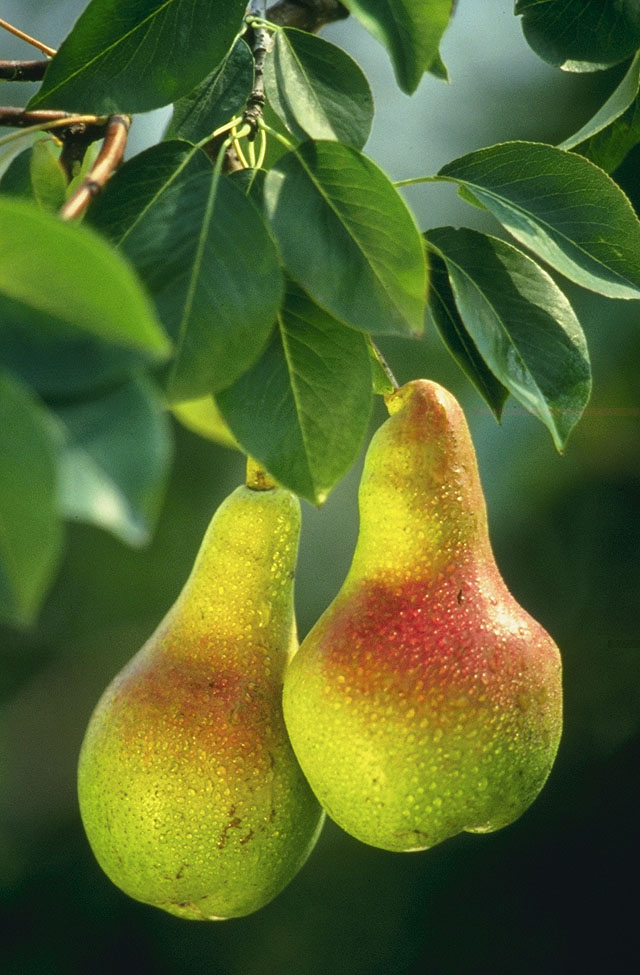
The almond-leaved pear (Pyrus spinosa) is a spiny, deciduous shrub or small tree native to dry scrublands across the northern Mediterranean region. It reaches heights of 3 to 6 m (10 to 20 ft) and bears narrow, almond-like foliage alongside dense spring blossoms.
This wild pear withstands extreme drought and rocky calcareous soils where domestic fruit trees fail. Its small, astringent fruits require bletting before consumption, while its sturdy root system makes it a practical rootstock for cultivated pears.
Key Facts
- Plant Type: Deciduous spiny shrub or small tree
- Native Range: Northern Mediterranean basin and Balkan Peninsula
- Height: 3 to 6 m (10 to 20 ft)
- Bloom Time: April to May
- Fruit Size: 2 to 3 cm (0.8 to 1.2 in) diameter
- Soil Preference: Dry, rocky, alkaline or calcareous soils
Where Almond-Leaved Pear Fits in Land Restoration
Almond-leaved pear thrives in arid, rocky Mediterranean conditions where summer precipitation drops below 400 mm (16 in) per year. It functions effectively in low-water shelterbelts, slope stabilization projects, and wild conservation plots across USDA hardiness zones 7 through 10.
Its sharp woody thorns create dense thickets that protect nesting birds and small mammals from predators. Because the root system anchors firmly into limestone fissures, land managers use the tree to curb soil erosion on exposed dry hillsides.
Identifying Pyrus spinosa in the Wild
You can identify almond-leaved pear by its narrow, lanceolate leaves measuring 3 to 7 cm (1.2 to 2.8 in) in length and distinct rigid stem spines. The leaf blades feature finely serrated margins and turn pale grey-green during midsummer droughts.
In April and May, 5-petaled white flowers bloom in clusters of 5 to 12 blossoms, each measuring 2 to 3 cm (0.8 to 1.2 in) across. The resulting fruits are small spherical pomes that ripen from pale green to dark yellowish-brown in late autumn.
- Leaves: Lance-shaped, 3–7 cm (1.2–2.8 in) long, resembling almond tree foliage
- Thorns: Short, stiff modified branches protruding along older stems
- Flowers: White, 5 petals, blooming April to May
- Fruit: Hard, spherical pomes measuring 2 to 3 cm (0.8 to 1.2 in) wide
- Bark: Greyish-brown, cracking into small rectangular plates with age
Native Habitat and Distribution of Almond-Leaved Pear
The endemic distribution of almond-leaved pear extends from Spain and southern France across Italy, Greece, Turkey, and the Balkan Peninsula. Botanical databases such as Acta Plantarum record its frequency in Mediterranean garrigue, maquis scrub, and dry oak woodlands.
It colonizes full-sun environments from sea level up to elevations of 1,500 m (4,920 ft). Known across southern Europe and documented extensively in native Greek flora (where it is recognized locally under regional Greek names), it survives in thin, nutrient-poor soils over limestone substrates.
Ecological Role and Wild Hybridization
Almond-leaved pear acts as a vital early-spring nectar source for wild solitary bees, honeybees, and hoverflies. The dense cluster of white flowers open simultaneously with early spring foliage growth.
In natural habitats where wild pear species overlap, almond-leaved pear hybridizes freely with European wild pear (Pyrus pyraster) and common pear (Pyrus communis). These natural hybrid trees exhibit intermediate leaf breadths and variable thorn production across Mediterranean pastures.
Conservation Status and Population Stability
The International Union for Conservation of Nature (IUCN) classifies almond-leaved pear as Least Concern (LC) due to broad wild distribution. Wild stands remain widespread throughout the Mediterranean basin.
Although local clearing for agricultural land reduces individual thickets, the tree regenerates easily from taproots following wild brush fires or intense livestock grazing. No current conservation bans restrict its wild management.
Uses for Rootstock, Bonsai, and Fruit
Growers utilize almond-leaved pear primarily as a drought-tolerant grafting rootstock (porte-greffe) and a specialized outdoor bonsai specimen. Orchardists graft scions of Pyrus communis onto its root system to enable fruit production in stony, high-pH soils.
Bonsai enthusiasts train container-grown trees for their small foliage scale, rough fissured bark, and seasonal floral display. Though the fresh raw fruit tastes extremely sour and tannin-heavy, it becomes edible (“commestibile”) after bletting—softening through winter frosts—or when simmered into traditional preserves and fruit syrups.
Distinguishing Almond-Leaved Pear from Similar Species
Almond-leaved pear differs from related wild pears by its exceptionally narrow leaves and sharp stem spines. Several Rosaceae trees share its native Mediterranean habitat.
Comparing key leaf and stem traits separates these species in the field:
- European wild pear (Pyrus pyraster): Leaves are broadly ovate or orbicular with fewer, weaker thorns.
- Common pear (Pyrus communis): Features larger thornless branches, broad glossy leaves, and sweet, fleshy fruit exceeding 5 cm (2 in) long.
- Willow-leaved pear (Pyrus salicifolia): Leaves are narrower, covered in silver-silky hairs, with weeping branch tips.
- Snow pear (Pyrus nivalis): Leaves feature persistent white woolly coating on the undersides during spring growth.
Frequently Asked Questions
Is Pyrus spinosa fruit edible?
Yes, the fruit of almond-leaved pear is edible after bletting. Freshly picked raw fruit is hard and astringent, but softening it through freezing temperatures or prolonged winter storage turns the flesh sweet enough for eating or jelly making.
Can almond-leaved pear be used as a pear rootstock?
Yes, almond-leaved pear is used as a rootstock (porte-greffe) for common cultivated pears. Its taproot provides strong resistance to severe drought, high alkalinity, and stony calcareous soils.
Can Pyrus spinosa be grown as bonsai?
Yes, almond-leaved pear can be cultivated as an outdoor bonsai specimen. It adapts well to container pruning, displaying naturally small leaves, spiny shoots, and white spring flowers.
What is the difference between Pyrus spinosa and Pyrus pyraster?
Almond-leaved pear has narrow, lanceolate leaves measuring 3 to 7 cm long and heavy branch thorns. European wild pear (Pyrus pyraster) has wider, rounded leaves and fewer thorns.
Why is Pyrus spinosa sometimes written as Pyrus spinosa Forssk.?
The author citation "Forssk." refers to Swedish naturalist Peter Forsskål, who first formally described the species. Adding his name clarifies the scientific nomenclature in botanical registries.
Sources & Verification
Taxonomy and distribution are checked against the databases below. Care guidance is written for cultivated species only and reviewed by our editor. How We Build Plant Profiles →