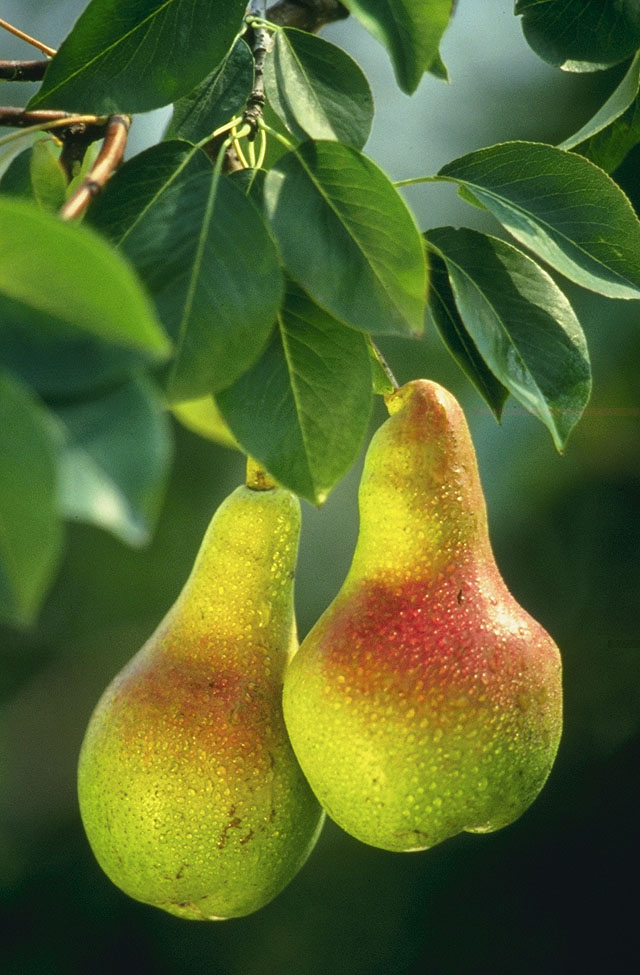
Asian pear (Pyrus pyrifolia) is a deciduous fruit tree native to East Asia, known for round, gritty-crisp pomes that carry flavours of melon and honey. Unlike European pears, the fruit ripens fully on the branch and retains a crisp texture comparable to an apple.
Home orchardists grow it for early spring floral displays and heavy late-summer harvests. Success hinges on planting two compatible cultivars within cross-pollination distance and diligently thinning the fruit clusters.
Key Facts
- Hardiness: USDA Zones 5 to 9
- Chill Hours: 300 to 500 hours below 7 °C (45 °F)
- Sunlight: Full sun, 6 to 8 hours daily
- Soil: Well-drained loam with a pH of 6.0 to 7.0
- Harvest: Late summer to mid-autumn when skin colour changes
Is Asian Pear Right for Your Garden?
Asian pear thrives in temperate regions with moderate winter chills and warm summers, requiring at least two compatible cultivars for reliable fruit set. It suits gardeners with sunny yard space in USDA Zones 5 to 9 who want orchard fruit without the complicated post-harvest ripening schedules of European pear (Pyrus communis).
Because blossoms open 7 to 14 days earlier than apple (Malus domestica), trees planted in frost-prone hollows may lose their crop to late spring freezes. If your garden is tight on space, you can train a single multi-grafted specimen as a flat espalier against a south-facing wall.
Identifying Asian Pear Foliage, Flowers, and Fruit
Asian pear is distinguished by its globose, russeted or yellow-green fruit and sharply serrate ovate foliage that shifts to bronze-red in late autumn. The deciduous canopy reaches a dense, upright to spreading habit with grey-brown furrowed bark on older wood.
In April, the tree produces clusters of pure white, 5-petaled flowers measuring 3 to 3.5 cm (1.2 to 1.4 in) across before or just as the leaves unfold. The alternating leaves are ovate-oblong, 7 to 12 cm (2.8 to 4.7 in) long, with bristle-tipped margins and glossy green upper surfaces.
The pomes measure 5 to 10 cm (2 to 4 in) in diameter, dotted with distinctive pale lenticels. Inside, the translucent white flesh is granular, firm, and saturated with juice surrounding a small seed cavity.
Mature Tree Size and Planting Spacing
On seedling rootstocks, a standard Asian pear reaches 6 to 9 m (20 to 30 ft) tall, while trees on semi-dwarfing rootstocks remain manageable at 3.5 to 4.5 m (12 to 15 ft). Standard trees require a spacing of 5 to 6 m (16 to 20 ft) between trunks, while semi-dwarf selections can be spaced 3 to 4 m (10 to 13 ft) apart.
Canopy width usually matches 75 to 100 percent of the tree’s height if left unpruned. When grown on horizontal wire espaliers, trees can be kept within a footprint 2 m (6.5 ft) high and 3 m (10 ft) wide.
Asian Pear Growing Conditions and Sun Requirements
Asian pear demands full sun with at least 6 to 8 hours of direct sunlight daily to produce high sugar concentrations and set flower buds. Ample solar exposure also hastens leaf drying after rain, suppressing foliar pathogens.
Plant on elevated ground or gentle slopes to allow cold air to drain away on frosty spring nights. The soil must drain freely to a depth of at least 90 cm (3 ft); poorly drained, standing water suffocates feeder roots and induces root rot.
Planting Bare-Root and Container-Grown Trees
Plant dormant bare-root trees in late winter or early spring before bud break occurs, or set out container specimens anytime from autumn to mid-spring. Proper planting depth is crucial for grafted trees to prevent the rootstock from dying or the scion from forming its own roots.
- Dig a planting hole twice the diameter of the root spread and equal to root depth.
- Position the graft union 5 to 8 cm (2 to 3 in) above the finished soil grade.
- Backfill using the native soil without adding high-potency synthetic fertilizers.
- Water with 20 litres (5 gallons) of water immediately to collapse air pockets.
- Spread a 7 cm (3 in) layer of wood chips around the base, keeping mulch 10 cm (4 in) from the trunk.
Watering, Feeding, and Fruit Thinning Routine
Supply established trees with 25 to 40 litres (7 to 10 gallons) of water weekly during periods without rain, focusing moisture around the drip line while fruit expands in midsummer. Extended dry spells cause premature fruit drop or thick, unpalatable skins.
Limit nitrogen fertilizer to prevent vigorous, soft shoot growth, which is susceptible to bacterial infection. Apply 200 g (7 oz) of a balanced 10-10-10 granular fertilizer per year of tree age each spring, capped at 2.3 kg (5 lb) per mature tree.
Fruit thinning is mandatory for healthy trees and high fruit quality: within 4 weeks of petal fall, thin each cluster down to a single fruitlet spaced 15 cm (6 in) apart to avoid branch snap and alternate-year bearing.
How to Prune for Maximum Fruit Yield
Prune your Asian pear during late winter dormancy, training branches to a modified central leader system with wide crotch angles of 45 to 60 degrees. Asian pears bear primarily on short spurs that develop on wood two years or older and persist for 5 to 8 seasons.
- Use wooden limb spreaders or weights on young 1-year-old upright branches to widen angles.
- Thin out crowded spur clusters to maintain sunlight throughout the interior canopy.
- Remove water sprouts, root suckers, and downward-growing shoots flush with the branch collar.
- Head back main scaffold branches by roughly one-quarter each winter to encourage new spur development.
Managing Common Pests and Diseases
The greatest threat to Asian pear trees is fire blight (Erwinia amylovora), a bacterial disease that enters through blooms and turns twigs black and curled like a shepherd’s crook. Plant resistant cultivars and prune blighted wood 30 cm (12 in) below the damage using tools disinfected in 70% alcohol between cuts.
- Codling moth (Cydia pomonella): Caterpillars bore into the fruit core; enclose individual fruitlets in paper bags in late spring.
- Pear rust (Gymnosporangium sabinae): Produces orange pustules on foliage; manage by removing alternate host junipers (Juniperus species) within 150 m (500 ft).
- Scale insects: Encrust bark and sap tree vitality; spray horticultural dormant oil in late winter before bud swell.
- Chlorosis: High-pH limestone soils induce iron deficiency; dress the soil with elemental sulfur to lower pH.
Winter Care and Chill Hours
Most Asian pear cultivars require 300 to 500 chill hours below 7 °C (45 °F) during winter to break dormancy and trigger uniform bud burst. In regions with insufficient chill hours, trees leaf out erratically and set sparse crops.
Fully dormant trees tolerate winter lows down to -26 °C (-15 °F) without injury. Coat young trunks with a 50/50 mixture of white latex paint and water in late autumn to prevent winter sunscald and bark splitting caused by fluctuating temperatures.
Asian Pear Harvest, Storage, and Culinary Uses
Harvest Asian pears when the green background colour turns completely bronze, gold, or creamy yellow, as fruit will not ripen further or develop sugar after picking. A ripe pear detaches smoothly when lifted horizontally with a slight twist.
Unblemished fruit stores at 0 to 1 °C (32 to 34 °F) with high humidity for 3 to 5 months. The crisp, sweet flesh is consumed fresh, sliced into raw slaws, or grated into marinades where its natural calpain-like enzymes act to tenderize beef and pork dishes.
Frequently Asked Questions
How many calories are in an Asian pear?
A medium Asian pear weighing 120 g (4.2 oz) contains approximately 50 calories. It is composed of over 85 percent water and supplies 4 grams of dietary fibre.
What are the health benefits of Asian pear?
Asian pears provide a good source of dietary fibre, potassium, and vitamin C to assist digestive regularity and cell function. In East Asian folk traditions, poached pear with honey was traditionally prepared to soothe dry coughs and ease throat irritation.
Do you need two Asian pear trees to get fruit?
Yes, nearly all Asian pear trees require cross-pollination from a genetically distinct Asian pear cultivar blooming at the same time. Although cultivars like 'Shinseiki' are partially self-fertile, yield and fruit size increase substantially with a cross-pollinator nearby.
What growing zone is best for Asian pear trees?
Asian pears grow successfully in USDA Hardiness Zones 5 through 9. They require a distinct winter cold period of 300 to 500 chill hours below 7 °C (45 °F) to break dormancy and set normal flower buds.
Can Asian pear cross-pollinate with European pear or apple?
Asian pears can cross-pollinate with early-blooming European pears (Pyrus communis) like 'Bartlett', but they cannot cross-pollinate with apples (Malus domestica). Planting two different Asian pear cultivars remains the most reliable strategy for heavy fruit set.
Information about traditional or historical uses is provided for educational interest only and is not medical advice. Do not use any plant to treat a condition without speaking to a qualified professional.
Sources & Verification
Taxonomy and distribution are checked against the databases below. Care guidance is written for cultivated species only and reviewed by our editor. How We Build Plant Profiles →