

Glacier Buttercup (Ranunculus glacialis) is a high-altitude perennial herb native to polar tundra and high mountain ranges across Europe, Greenland, and North America. It flowers in loose scree and rocky soils directly adjacent to melting snowfields and glacial moraines.
This species holds the altitude record for flowering plants in Northern Europe, surviving winter temperatures below -15 °C (5 °F) beneath deep snow cover. Its blooms shift in shade from bright white to dark magenta after successful pollination.
Key Facts
- Plant Type: High-alpine perennial herb
- Mature Height: 5–15 cm (2–6 in)
- Bloom Period: July to August near melting snow
- Flower Color: White changing to pink and red
- Native Habitat: Arctic tundra and alpine scree
- Toxicity: Toxic to humans and animals if eaten
Where Glacier Buttercup Fits in Alpine Ecosystems
Glacier Buttercup is an extreme alpine specialist adapted to the highest, coldest mountain environments across northern latitudes. It settles on exposed gravel slopes, damp granite scree, and unmasked glacial till where competing vegetation cannot survive.
The plant forms a thick root system that anchors firmly into shifting alpine rubble. Because it establishes on freshly exposed land left by retreating ice, researchers track its distribution to measure alpine climate shifts and soil development in polar zones.
How to Identify Glacier Buttercup
Glacier Buttercup grows 5–15 cm (2–6 in) tall, forming a compact basal tuft of dark green, fleshy leaves. Flowers appear individually or in small clusters on short stems above the foliage.
The leaves divide into three distinct, thick lobes that store small amounts of moisture during brief dry spells. Underneath the five broad petals, the protective sepals are covered in a layer of dark brown or reddish hairs that absorb thermal radiation.
- Leaves: Shiny, fleshy, deeply divided into three distinct leaflets
- Petals: 5 petals measuring 2–3 cm (0.8–1.2 in) wide, turning from white to red
- Sepals: 5 dense sepals beneath the petals, covered in dark brown hairs
- Stems: Thick, smooth, reddish-green, measuring 5–20 cm (2–8 in) long
Glacier Buttercup Distribution and Natural Habitat
The natural distribution of Ranunculus glacialis covers the Arctic tundra of Greenland and Scandinavia, extending south into the European Alps, Carpathians, and isolated mountain ranges of Alaska.
In Scandinavia, populations exist at elevations up to 2,370 m (7,775 ft), while in the Swiss Alps, specimens have been recorded above 4,000 m (13,120 ft). North American populations include the Alaskan glacier buttercup, which survives in restricted high-altitude snow beds.
- Moisture Source: Direct runoff from melting snowbanks and permafrost
- Substrate: Acidic, nutrient-poor granite and silicate gravel
- Exposure: Full sun on unsheltered mountain ridges and moraines
Alpine Ecology and Color-Changing Flowers
The flowers of Ranunculus glacialis change from pure white to reddish-pink as anthocyanin pigments accumulate following pollination. This color shift communicates to visiting insects that the nectar reward in that specific bloom has been depleted.
The parabolic cup shape of the petals acts as a solar collector, focusing sunlight directly onto the central reproductive organs. On sunny days, the interior of the flower stays up to 5 °C (9 °F) warmer than the surrounding air, attracting bumblebees and alpine flies seeking warmth.
Conservation Status and Climate Vulnerability
Globally listed as Least Concern on the IUCN Red List, Glacier Buttercup faces severe local threats from rising global temperatures. Because it occupies peak mountain habitats, it has no higher altitude to migrate to as lower-elevation species move upward.
In Alaska, regional wildlife bodies have conducted listing decision evaluations to monitor the stability of isolated mountain populations. Rapid loss of permanent snowfields deprives these plants of the continuous summer meltwater required for seed production.
Toxicity and Historical Plant Uses
Like all species in the family Ranunculaceae, Glacier Buttercup contains protoanemonin, an acrid oil that causes severe blistering to skin and mucous membranes. Fresh plant tissue is poisonous to mammals if ingested.
Grazing animals like reindeer and sheep naturally avoid fresh plants due to the bitter taste. Drying the plant breaks down the volatile chemical into non-toxic anemonin, though the species has never held significant agricultural or herbal trade value.
Similar Alpine Species and Lookalikes
Glacier Buttercup is distinguished from other high-altitude Ranunculus species by its brown-hairy sepals and white petals that turn magenta with age. Several related buttercups share its alpine range.
Snow buttercup (Ranunculus nivalis) grows in similar habitats but displays bright yellow petals. Pyrenean buttercup (Ranunculus pyrenaeus) features undivided grass-like leaves, while alpine buttercup (Ranunculus alpestris) has smooth, hairless sepals beneath pure white petals with notched edges. Water crowfoot (Ranunculus aquatilis) grows strictly submerged in lowland water bodies rather than rocky mountain scree.
Frequently Asked Questions
What does the name glacier buttercup mean?
The name reflects the plant's native habitat on high mountain slopes directly beside active glaciers and melting snowfields, combined with its botanical family, the buttercups.
Is the Alaskan glacier buttercup endangered?
The Alaskan glacier buttercup is considered a rare regional population under monitoring by conservation agencies, though the global species Ranunculus glacialis remains categorized as Least Concern.
How long do ranunculus flowers last?
Wild glacier buttercup flowers remain open on the stem for 7–12 days in cold alpine weather, whereas cut flowers from florist buttercup (Ranunculus asiaticus) last 7–10 days in a vase.
Why are ranunculus flowers so expensive in florist shops?
Florist ranunculus stems come from cultivated Ranunculus asiaticus varieties, which require intensive tuber harvesting, cool-climate greenhouse housing, and careful hand-sorting to avoid stem breakage.
Can you grow Glacier Buttercup from ranunculus glacialis seeds at home?
Growing Ranunculus glacialis from seed is extremely difficult outside an alpine greenhouse because the seeds require long cold stratification, low soil temperatures, and gravel-rich acidic media to germinate.
Sources & Verification
Taxonomy and distribution are checked against the databases below. Care guidance is written for cultivated species only and reviewed by our editor. How We Build Plant Profiles →
More in Ranunculus

Celery-Leaved Buttercup
Ranunculus sceleratus
☀️ Full Sun 💧 High
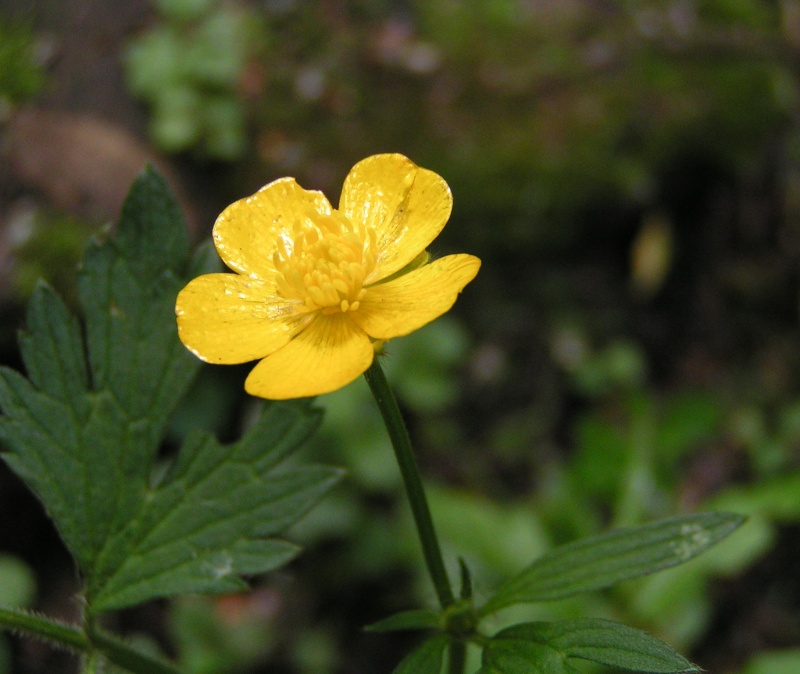
Creeping Buttercup
Ranunculus repens
☀️ Partial Sun 💧 High

Hairy Buttercup
Ranunculus sardous
Bulbous Buttercup
Ranunculus bulbosus
☀️ Full Sun 💧 Low
Common Water-Crowfoot
Ranunculus aquatilis
☀️ Full Sun 💧 Aquatic
Lesser Spearwort
Ranunculus flammula