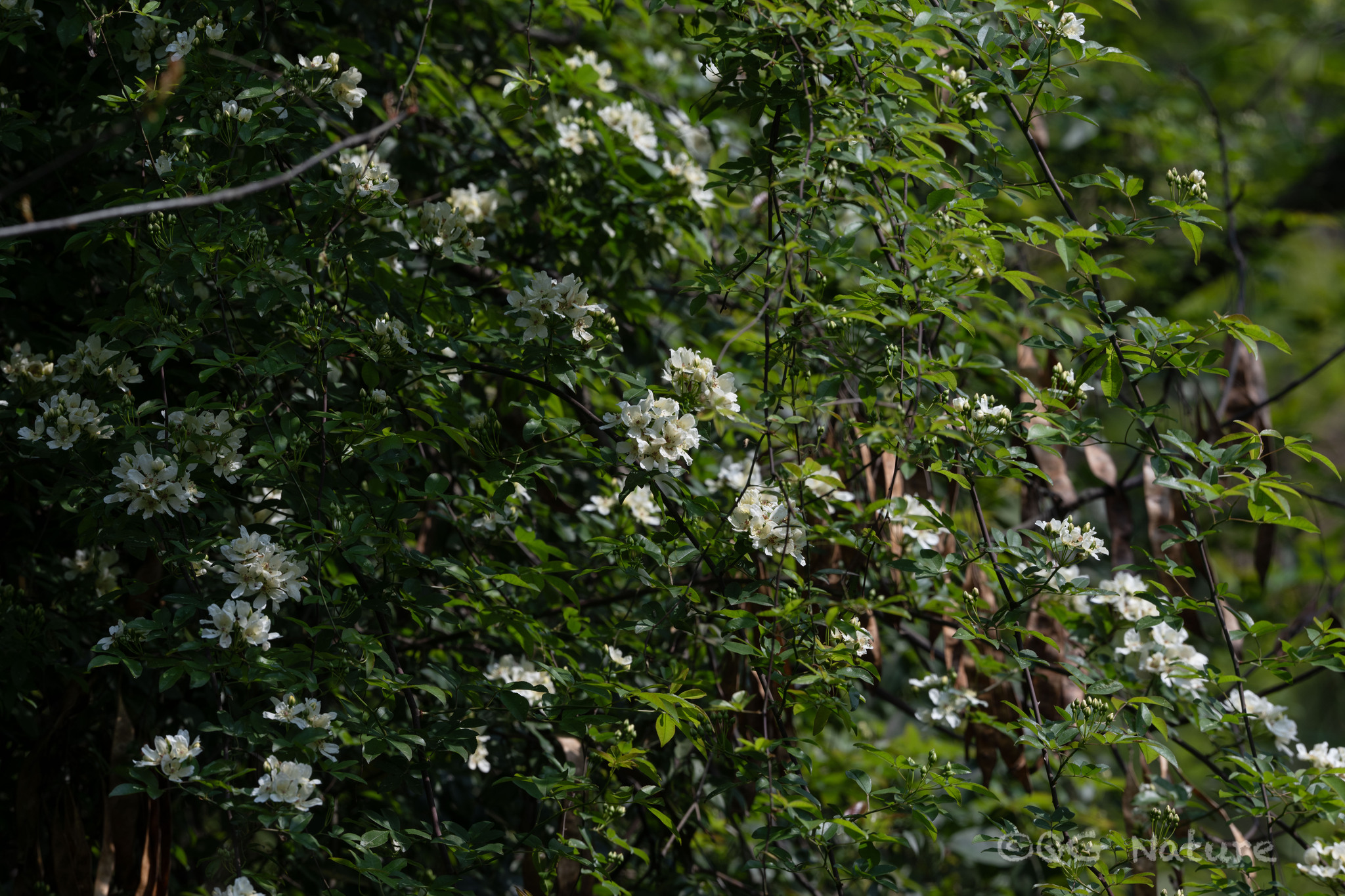
Small-leaved sweet-briar is a deciduous wild shrub native to Southern and Central Europe and the Caucasus, often found in rocky, alkaline environments. Known scientifically as Rosa agrestis, it is characterized by its small, glandular leaflets that release a faint fragrance when crushed.
While it resembles the common dog rose (Rosa canina), this species is distinguished by its smaller stature and the presence of resinous glands on the leaf undersides. It thrives in dry, sunny locations where other rose species might struggle due to poor soil quality.
Key Facts
- Water: requires no supplemental watering once established in the wild
- Soil: prefers alkaline, calcareous, or limestone-rich substrates
- Scent: leaves release a faint apple aroma when rubbed
- Wildlife: provides essential nectar for bees and hips for birds
- Size: typically reaches a height of 2 m (6.5 ft)
Is Small-Leaved Sweet-Briar Right for Your Garden?
Small-leaved sweet-briar is a wild shrub that suits low-intervention wildlife gardens or conservation hedges rather than formal rose beds. It reaches a height of 2 m (6.5 ft) and forms a dense, prickly thicket that provides excellent cover for small mammals and nesting birds. Unlike ornamental roses, it requires no deadheading, specialized pruning, or chemical treatments to remain healthy.
This species is most successful in open, sunny sites with chalky or limestone-based soils. It is a functional choice for stabilizing slopes or creating a boundary that deters intruders with its hooked prickles. Because it is a wild species, it integrates seamlessly into native woodland edges or meadow margins.
How to Identify Rosa agrestis Savi
You can identify Rosa agrestis by its small leaflets with resinous glands on the underside. These leaflets usually occur in groups of 5 to 7 and measure 1.5-2.5 cm (0.6-1 in) in length. When rubbed between the fingers, the glands release a faint apple scent, a feature it shares with the larger sweet-briar (Rosa rubiginosa).
The stems are armed with stout, hooked prickles that help the plant scramble through other vegetation. The flowers are solitary or appear in small clusters of two or three, featuring white or very pale pink petals and hairless stalks. Botanical databases like Acta Plantarum emphasize the narrow, pointed shape of the leaflets as a key diagnostic feature for this species.
Natural Habitat and Distribution
This rose is primarily found in Southern and Central Europe, extending into the Caucasus and occasionally North Africa. It colonizes dry scrubland, forest edges, and rocky slopes, particularly those with a high limestone content. In the United Kingdom, it is a rare find, mostly confined to the chalk downs of southern England.
It thrives at elevations from sea level up to 1,200 m (3,900 ft) in the Mediterranean region. The plant is well-adapted to Mediterranean-style climates with hot, dry summers and cool, wet winters. It often grows alongside other drought-tolerant shrubs like common juniper (Juniperus communis) and hawthorn (Crataegus monogyna).
Ecological Importance of the Field Briar
Small-leaved sweet-briar provides a vital food source for pollinators and birds throughout the year. The flowers, which open in June and July, attract solitary bees, hoverflies, and beetles seeking nectar and pollen. Because the flowers are single-petaled, the reproductive organs are easily accessible to a wide variety of insect species.
In autumn and winter, the smooth, red hips become a high-energy food source for thrushes, waxwings, and small rodents. The dense, thorny architecture of the shrub offers protected nesting sites for birds like the yellowhammer (Emberiza citrinella). By supporting these species, the field briar plays a functional role in maintaining local biodiversity in hedgerow ecosystems.
Conservation Status and Threats
While not globally threatened, Rosa agrestis is considered locally rare or vulnerable in many northern European territories. Habitat loss due to intensive agriculture and the removal of traditional field boundaries are the primary factors contributing to its decline. It is often included on regional “Red Lists” to encourage the preservation of remaining wild populations.
In some areas, it faces competition from more aggressive, non-native invasive species. Because it is easily confused with the more common dog rose, its specific conservation needs are sometimes overlooked during land management. Protecting limestone scrub habitats is the most effective way to ensure the long-term survival of this species.
Traditional Uses and Rosa agrestis Fruit
The fruit of the field briar was traditionally harvested for its high Vitamin C content and used to make syrups or herbal teas. The hips are typically 1-1.5 cm (0.4-0.6 in) long, oval-shaped, and turn a glossy red when they ripen in late autumn. While they are edible, the interior contains fine, irritating hairs that must be removed before consumption.
Historically, the leaves were sometimes dried and added to potpourri for their mild fragrance. In modern ecological restoration, the plant is used to stabilize thin soils on limestone banks where other vegetation fails to take root. It is also utilized in traditional hedging practices to create “stock-proof” barriers for livestock.
The Flowering and Fruiting Cycle of the Field Briar
The flowering period of the small-leaved sweet-briar is brief, lasting for 3-4 weeks in midsummer. Each flower is approximately 2-4 cm (0.8-1.5 in) wide and lasts only a few days before the petals drop. This short blooming window is timed to coincide with the peak activity of local pollinating insects.
Following pollination, the base of the flower swells to form the hip, which remains green throughout the summer. By September or October, the hips transition to a bright red color. They remain on the plant well into the winter months, providing a persistent food source for wildlife after other berries have been consumed.
Comparing Rosa agrestis and Similar Wild Roses
Identifying Rosa agrestis requires distinguishing it from the dog rose (Rosa canina), which has larger leaves and lacks the glandular scent. While both species have hooked prickles and pale flowers, the small-leaved sweet-briar is generally smaller in all its parts.
- The sweet-briar (Rosa rubiginosa) has much stronger apple-scented leaves and more numerous glands on the leaf surface.
- The field rose (Rosa arvensis) features styles that are fused into a central column, unlike the free styles of the small-leaved sweet-briar.
- The musk rose (Rosa moschata) is a climbing species with larger, more fragrant white flower clusters and different leaf architecture.
- The French rose (Rosa gallica) is much shorter and bears significantly larger, darker pink flowers.
Frequently Asked Questions
What is the difference between Rosa agrestis and Rosa canina?
The primary difference is that Rosa agrestis has small leaves with resinous glands on the underside that smell like apples, whereas Rosa canina has larger leaves without glands or scent. Additionally, Rosa agrestis is generally a smaller, more compact shrub.
Are Small-Leaved Sweet-Briar hips edible?
Yes, the hips are edible and high in Vitamin C, but they contain irritating hairs inside that must be carefully removed. They are traditionally used to make rosehip syrup, jelly, or tea rather than being eaten raw.
Where can I find Rosa agrestis in the wild?
It is most commonly found in Southern Europe on dry, sunny limestone slopes and scrubland. In the UK, it is a rare species primarily located in the chalk downlands of the southern counties.
Does the field briar have a scent?
The flowers have a very faint floral scent, but the most notable fragrance comes from the leaves. When crushed or rubbed, the glands on the underside of the leaflets release a mild aroma similar to green apples.
Is Rosa agrestis toxic to pets?
No, Rosa agrestis is considered non-toxic to dogs, cats, and horses. However, the sharp, hooked prickles on the stems can cause physical injury if an animal attempts to run through or chew on the shrub.
What is the difference between Rosa moschata and Rosa canina?
Rosa moschata is a climbing rose with large clusters of musk-scented white flowers that bloom from late spring into autumn, while Rosa canina is a self-supporting shrub with solitary or small groups of scentless flowers that bloom only once in early summer.
Information about traditional or historical uses is provided for educational interest only and is not medical advice. Do not use any plant to treat a condition without speaking to a qualified professional.
Sources & Verification
Taxonomy and distribution are checked against the databases below. Care guidance is written for cultivated species only and reviewed by our editor. How We Build Plant Profiles →