
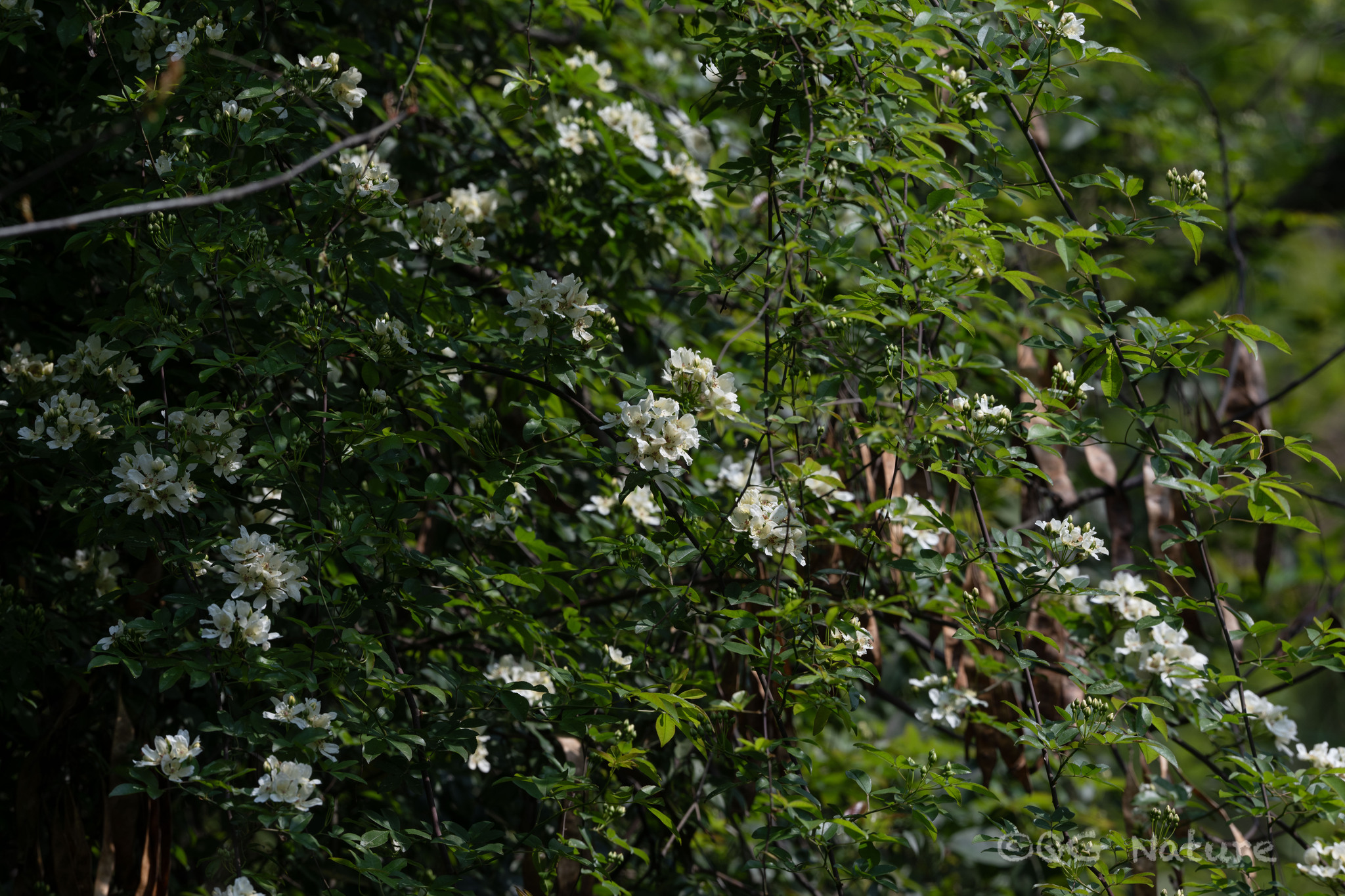
Rosa banksiae is a vigorous, mostly thornless climbing rose native to the mountainous regions of central and western China. It is famous for its early spring display, where it produces thousands of miniature flowers in dense clusters that often hide the foliage entirely.
This species is one of the largest roses in the world, with the famous ‘Tombstone Rose’ in Arizona covering over 740 square meters (8,000 square feet). It lacks the repeat-blooming habit of modern hybrids but compensates with a massive, once-a-year floral show and exceptional longevity.
Key Facts
- Water: Deeply once a week during summer heat
- Light: Full sun for at least 6-8 hours
- Pruning: Only immediately after the spring bloom ends
- Hardiness: USDA zones 7-10; heat tolerant in deserts
- Height: Rapidly reaches 6-15 m (20-50 ft)
- Thorns: Stems are smooth and mostly thornless
Is Lady Banks’ Rose Right for Your Garden?
Growing Lady Banks’ rose requires large, open spaces and very sturdy support structures. This is not a plant for a small trellis or a tiny patio. It is a long-lived, woody climber that quickly overwhelms fences and small trees. Because it is largely thornless, it is a safe choice for walkways or areas near seating where people might brush against the stems.
You should only plant this rose if you can commit to its vigorous growth and have a structure capable of holding hundreds of kilograms of wood and foliage. In desert climates like Arizona, it is a popular choice for its ability to withstand intense heat and low humidity once established. It is best suited for covering large pergolas, high walls, or even climbing into mature trees.
Identifying Lady Banks’ Rose: Flowers and Foliage
Lady Banks’ rose is distinguished by its miniature flowers that measure only 1.5-2.5 cm (0.6-1 in) across. These blooms appear in large clusters, often completely obscuring the foliage for 3-4 weeks in early spring. The leaves are small, lance-shaped, and usually consist of 3-5 leaflets with a glossy green finish.
- Stems are mostly smooth and lack the sharp prickles of hybrid tea roses.
- Flowers come in two main forms: double yellow (unscented) and double white (violet-scented).
- The bark on older stems becomes shredded and attractive over time.
- Foliage is semi-evergreen in warm climates but deciduous in colder zones.
Choosing the Best Planting Site
Position your Lady Banks’ rose in a spot that receives at least 6 hours of direct sunlight daily. While it can tolerate partial shade, the flower production will be significantly reduced and the plant may become leggy. In hot climates, some afternoon shade can prevent leaf scorch during the peak of summer, but the morning sun is vital for drying the leaves and preventing disease.
Ensure the location has excellent air circulation to prevent fungal issues like powdery mildew. Avoid planting too close to delicate structures, as the weight of a mature Lady Banks’ rose can cause gutters or light fences to collapse. The soil should be well-drained; this rose will fail in waterlogged ground or heavy clay that stays wet for long periods.
How to Plant Lady Banks’ Rose
Dig a hole twice as wide as the root ball and just as deep to allow the roots to spread easily. Mix the native soil with compost or well-rotted manure to improve drainage and nutrient content. If you are planting against a wall, place the rose at least 45 cm (18 in) away from the foundation to allow for root expansion and airflow.
- Space multiple plants at least 3-5 m (10-16 ft) apart to accommodate their eventual spread.
- Tease out the roots gently if the plant is pot-bound before placing it in the hole.
- Water the plant thoroughly immediately after backfilling the hole to remove air pockets.
- Provide a temporary support stake until the plant is tall enough to reach its permanent structure.
Watering and Feeding Requirements
Water your Lady Banks’ rose deeply once a week during the first two growing seasons to establish a strong root system. Mature plants are remarkably drought-tolerant but will look better with occasional deep soaking during dry spells. Avoid overhead watering, which can encourage fungal diseases on the foliage.
Use a balanced rose fertilizer (such as a 10-10-10 NPK) once in early spring before the first buds appear. Avoid high-nitrogen fertilizers in late summer, as this encourages tender new growth that can be damaged by frost. Traditionally, the roots and bark of this plant were used in Chinese medicine, though it is grown primarily as an ornamental in Western gardens.
How to Prune and Train Lady Banks’ Rose
You must prune Lady Banks’ rose immediately after it finishes flowering in late spring. Because this rose blooms on old wood produced the previous year, pruning in winter or early spring will remove all the flower buds. Use sharp bypass loppers to manage the fast-growing canes and maintain the desired shape.
- Remove dead, damaged, or diseased wood first to maintain plant health.
- Thin out one-third of the oldest canes every 2-3 years to encourage new growth from the base.
- Shorten side shoots to within 2-3 buds of the main structural branches.
- Tie in new long canes to your support structure using soft garden twine to guide the growth.
Propagating Lady Banks’ Rose from Cuttings
Propagate Lady Banks’ rose using semi-hardwood cuttings taken in late summer or early autumn. Select healthy stems that have recently finished flowering and are starting to turn woody. Cuttings should be 15-20 cm (6-8 in) long with the bottom leaves removed to prevent rot.
Dip the cut end in rooting hormone powder and insert it into a pot filled with a 50/50 mix of perlite and peat moss. Keep the soil moist and place the pot in a bright, indirect light location. Rooting typically occurs within 6-8 weeks, and the new plants can be moved to their permanent garden spot the following spring.
Common Lady Banks’ Rose Problems
The most common issue with Lady Banks’ rose is powdery mildew, which appears as a white dusty coating on new leaves. This usually happens during humid springs or if the plant lacks sufficient airflow. Aphids may also cluster on the tender new tips in early spring, though the plant is generally more pest-resistant than modern hybrids.
- Yellowing leaves often indicate iron chlorosis, common in highly alkaline soils.
- Lack of flowers is usually caused by pruning at the wrong time of year or excessive nitrogen.
- Rose rosette disease is rare but can occur; infected plants must be removed and destroyed.
- Spider mites can be a problem in very dry, dusty conditions.
Year-Round Care for Lady Banks' Rose
| Spring | Apply a balanced fertilizer before buds open. Monitor for aphids and powdery mildew on new growth. Enjoy the 3-4 week bloom period. |
|---|---|
| Summer | Prune immediately after the flowers fade. Water deeply once a week during heatwaves. Tie in new vigorous canes to the support structure. |
| Autumn | Clean up fallen leaves to prevent disease carryover. Apply 7 cm (3 in) of fresh mulch around the base. Stop fertilizing to allow the plant to harden off. |
| Winter | In colder zones, wrap the base or main trunks in burlap if temperatures drop below -10 °C (14 °F). Check supports for stability against winter winds. |
Lady Banks' Rose Problems: Quick Diagnosis
| What you see | Likely cause | What to do |
|---|---|---|
| White powder on leaves | Powdery mildew | Improve airflow and avoid overhead watering. |
| Yellow leaves with green veins | Iron deficiency (chlorosis) | Apply chelated iron to the soil around the base. |
| No flowers in spring | Winter pruning or lack of sun | Only prune after the bloom ends and ensure 6+ hours of sun. |
| Tiny green insects on tips | Aphids | Blast them off with a strong stream of water from a hose. |
Popular Lady Banks' Rose Colors and Varieties
- 'Lutea' – the most common double yellow variety, unscented.
- 'Alba Plena' – double white flowers with a strong violet scent.
- 'Normalis' – the wild-type variety with single white flowers.
- 'Lutescens' – a rarer variety featuring single yellow flowers.
Spring Bloom and Companion Plants
Pair Lady Banks’ rose with clematis or early-flowering shrubs that share its vigorous nature. Since this rose only blooms once, companions can provide color later in the season. Consider planting it alongside Chinese wisteria (Wisteria sinensis) for a simultaneous spring show, or use star jasmine (Trachelospermum jasminoides) to cover the base of the rose.
- Lilac (Syringa vulgaris) for contrasting flower shapes.
- Mock orange (Philadelphus coronarius) for additional spring fragrance.
- Japanese quince (Chaenomeles japonica) for early season color.
- Large-flowered clematis (Clematis viticella) to climb through the rose foliage in summer.
Frequently Asked Questions
How fast does Lady Banks' rose grow?
It is an extremely fast grower, often adding 3-5 m (10-16 ft) of new cane length in a single season once established.
Is Lady Banks' rose evergreen?
It is semi-evergreen, meaning it stays green year-round in warm climates like USDA zone 9 but drops its leaves in colder zones.
Does Lady Banks' rose have thorns?
Most varieties, especially 'Lutea', are nearly or entirely thornless, making them much easier to handle than other climbing roses.
Why is my Lady Banks' rose not blooming?
The most common reason is pruning in winter or early spring, which removes the wood where the flower buds were formed the previous year.
Is Lady Banks' rose toxic to dogs?
No, Lady Banks' rose is considered non-toxic to dogs, cats, and horses according to the ASPCA.
Information about traditional or historical uses is provided for educational interest only and is not medical advice. Do not use any plant to treat a condition without speaking to a qualified professional.
Sources & Verification
Taxonomy and distribution are checked against the databases below. Care guidance is written for cultivated species only and reviewed by our editor. How We Build Plant Profiles →


