
The redleaf rose (Rosa glauca) is a deciduous shrub native to the mountainous regions of central and southern Europe. It is widely grown in gardens for its distinctive, glaucous foliage that takes on a deep, metallic purple hue throughout the growing season.
You will find this shrub performs best when given space to display its arching habit, though it requires minimal intervention compared to many hybrid tea roses. It is particularly valued for its tolerance of cooler climates and its ability to thrive in poor, rocky soils.
Key Facts
- Light: Full sun to partial shade
- Water: Moderate; drought-tolerant once established
- Height: Up to 2.2 m (7 ft)
- Spread: Up to 1.5 m (5 ft)
- Soil: Well-drained, neutral to slightly alkaline
- Hardiness: USDA zones 5-8
Why Grow a Redleaf Rose
You should choose a redleaf rose if you want a low-maintenance shrub that provides seasonal colour contrast without the constant need for deadheading. It acts as an excellent backdrop for lighter-coloured perennials, as its foliage remains dark and moody from spring through autumn.
Unlike many garden roses, this species is not grown for its flower size but for its overall architectural presence. It fits well in informal woodland gardens or as a structural element in a mixed border where its metallic leaves can stand out against green-foliaged neighbours.
How to Identify Redleaf Rose
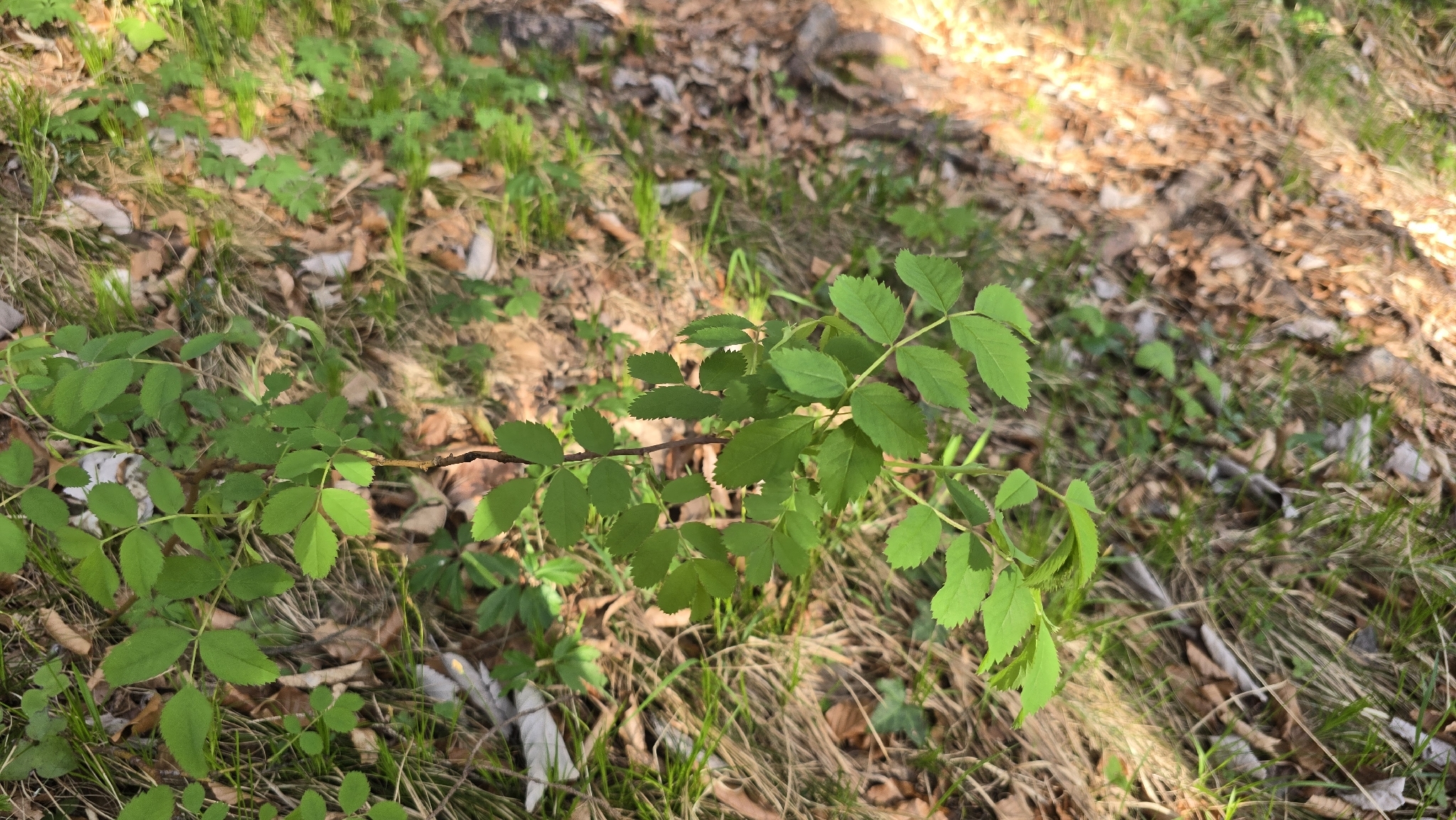
You can identify Rosa glauca by its distinctive glaucous, purple-tinted leaves that are often described as having a metallic sheen. The stems are relatively thin, arching, and carry few thorns compared to other rose species.
- Leaves are elliptical, 3-5 cm (1-2 in) long, with a serrated margin.
- Flowers are small, 3-4 cm (1-1.5 in) across, appearing in clusters.
- Petals are a soft, pale pink with a white centre.
- Fruit consists of small, rounded, bright red rose hips in autumn.
- Mature habit is an arching, rounded shrub reaching 2.2 m (7 ft).
Best Site for Redleaf Rose
The redleaf rose thrives best in a position that receives at least 6 hours of direct sunlight each day. While it tolerates partial shade, the foliage colour is significantly more intense when the plant is exposed to bright, full sun.
Ensure the planting site has well-drained soil, as this shrub dislikes sitting in waterlogged ground during winter. It is surprisingly tolerant of poor, rocky soils and can adapt to a variety of pH levels, though it prefers neutral to slightly alkaline conditions.
How to Plant Your Rose
You should plant your redleaf rose in early spring or late autumn when the soil is workable but not frozen. Dig a hole twice the width of the root ball and ensure the graft union, if present, is level with the soil surface.
- Incorporate organic compost into the bottom of the planting hole.
- Space multiple plants at least 1.5 m (5 ft) apart for proper air circulation.
- Water thoroughly immediately after planting to settle the soil.
- Apply a 5 cm (2 in) layer of mulch to retain moisture.
Watering and Feeding Requirements
Once established, the redleaf rose is remarkably drought-tolerant and requires supplemental water only during prolonged dry spells. During the first two years after planting, aim to water it once a week during the summer to encourage deep root growth.
You do not need to fertilize this species heavily, as it is adapted to thinner soils. A light application of a balanced, slow-release granular fertilizer in early spring is sufficient to support healthy growth and flowering.
Pruning and Maintenance
Pruning is minimal for this species, as you should only remove dead, damaged, or crossing branches in late winter. Because it flowers on the previous year’s wood, avoid heavy pruning in early spring, or you will lose the season’s blossoms.
- Use sharp, clean secateurs to make angled cuts just above a bud.
- Remove one-third of the oldest stems every three years to rejuvenate the shrub.
- Maintain an open, vase-like shape to allow light into the centre.
- Always clear away fallen leaves from the base in late autumn to prevent fungal issues.
Common Problems and Pests
The redleaf rose is generally resistant to common rose diseases like black spot, though it can occasionally suffer from aphids or powdery mildew in poor conditions. You can manage these issues by ensuring proper spacing and airflow between plants.
- Aphids: Wash off clusters with a strong jet of water.
- Powdery Mildew: Improve air circulation and avoid overhead watering.
- Rust: Remove and destroy affected leaves immediately to stop the spread.
- Dieback: Prune back to healthy, green tissue if stems turn black.
Winter Care for Redleaf Rose
This rose is fully hardy in USDA zones 5-8 and requires no special winter protection in these regions. As a deciduous shrub, it will naturally drop its leaves in late autumn, entering a period of winter dormancy.
You can leave the bright red hips on the branches throughout the winter, as they provide a food source for birds and add interest to the garden. If you live in an area with heavy snowfall, ensure the branches are not weighed down excessively to prevent breakage.
Redleaf Rose Through the Year
| Spring | Apply a light layer of mulch and a balanced fertilizer. Monitor for early signs of aphids on new growth. |
|---|---|
| Summer | Water during extended dry periods. Enjoy the pink flowers and the deep purple foliage colour. |
| Autumn | Allow the red hips to ripen fully. Clear away any fallen debris from the base of the shrub. |
| Winter | Prune out dead or crossing wood while the plant is dormant. Ensure the base remains free of standing water. |
What Is Wrong With My Redleaf Rose
| What you see | Likely cause | What to do |
|---|---|---|
| Pale or yellowing leaves | Nutrient deficiency or poor drainage | Check soil drainage and apply a light top-dressing of compost. |
| White powdery coating on leaves | Powdery mildew | Increase airflow and avoid wetting the foliage when watering. |
| Stunted growth | Insufficient sunlight | Move the shrub to a location with at least 6 hours of direct sun. |
Frequently Asked Questions
Is Rosa glauca the same as Rosa rubrifolia?
Yes, Rosa rubrifolia is a synonym for Rosa glauca; they are the same plant.
How large does a redleaf rose grow?
It typically reaches a height of 1.5-2.2 m (5-7 ft) with a similar spread.
Does this rose need to be deadheaded?
No, deadheading is not required, and leaving the flowers allows the plant to produce decorative red hips.
Is the redleaf rose toxic to cats or dogs?
No, Rosa glauca is not considered toxic to pets.
Sources & Verification
Taxonomy and distribution are checked against the databases below. Care guidance is written for cultivated species only and reviewed by our editor. How We Build Plant Profiles →
More in Rosa

Small-Leaved Sweet-Briar
Rosa agrestis
☀️ Full Sun 💧 Low
Alpine Rose
Rosa pendulina
☀️ Partial Sun 💧 Moderate
Harsh Downy-Rose
Rosa tomentosa
☀️ Full Sun 💧 Moderate

Chestnut Rose
Rosa roxburghii
☀️ Full Sun 💧 Moderate
Corymb Rose
Rosa corymbifera
☀️ Full Sun 💧 Moderate

Northern Downy Rose
Rosa sherardii
☀️ Full Sun 💧 Moderate