

Field rose (Rosa arvensis) is a deciduous rambling wild briar native to Western, Central, and Southern Europe. It spreads along ancient woodland margins and old hedgerows on arching, purplish-green trailing stems.
Unlike the upright dog rose, this species trails along the ground or climbs through scrub up to 2 m (6.6 ft). It thrives on heavy clay soils where its creeping stems root at the tips.
Key Facts
- Native range: Western, Central, and Southern Europe
- Growth habit: Trailing or climbing deciduous shrub
- Flowering period: June to July
- Distinguishing mark: Styles fused into a central column
- Fruit: Small, rounded scarlet hips without sepals
Living with Field Rose in Native Spaces
Field rose behaves as an aggressive, ground-scrambling briar that excels in wild boundary hedges and woodland reclamation. It requires substantial horizontal space because stems readily root wherever they touch moist soil, forming broad, impenetrable thickets.
This plant suits conservation meadows, woodland borders, and native farm hedgerows rather than neat cottage borders. It tolerates deep shade better than almost any other native European rose species, scrambling beneath mature oak and ash canopies.
Management involves periodic cutting back every 3 to 4 years to keep paths clear. Left unchecked, trailing shoots reach across turf and tangle through neighboring native shrubs.
Field Rose Identification and Botanical Features
You can identify Rosa arvensis immediately by its columnar, fused styles that project prominently from the center of each flat, creamy-white flower. Dog roses and other briars feature free, unfused styles clustered flat inside the blossom cup.
Key diagnostic features include:
- Flowers: Scentless, five-petalled, milky white with yellow stamens, measuring 3-5 cm (1.2-2.0 in) across, blooming in clusters of 1 to 6.
- Stems: Slender, trailing, often tinted deep red or purple, armed with sparse, slightly curved prickles.
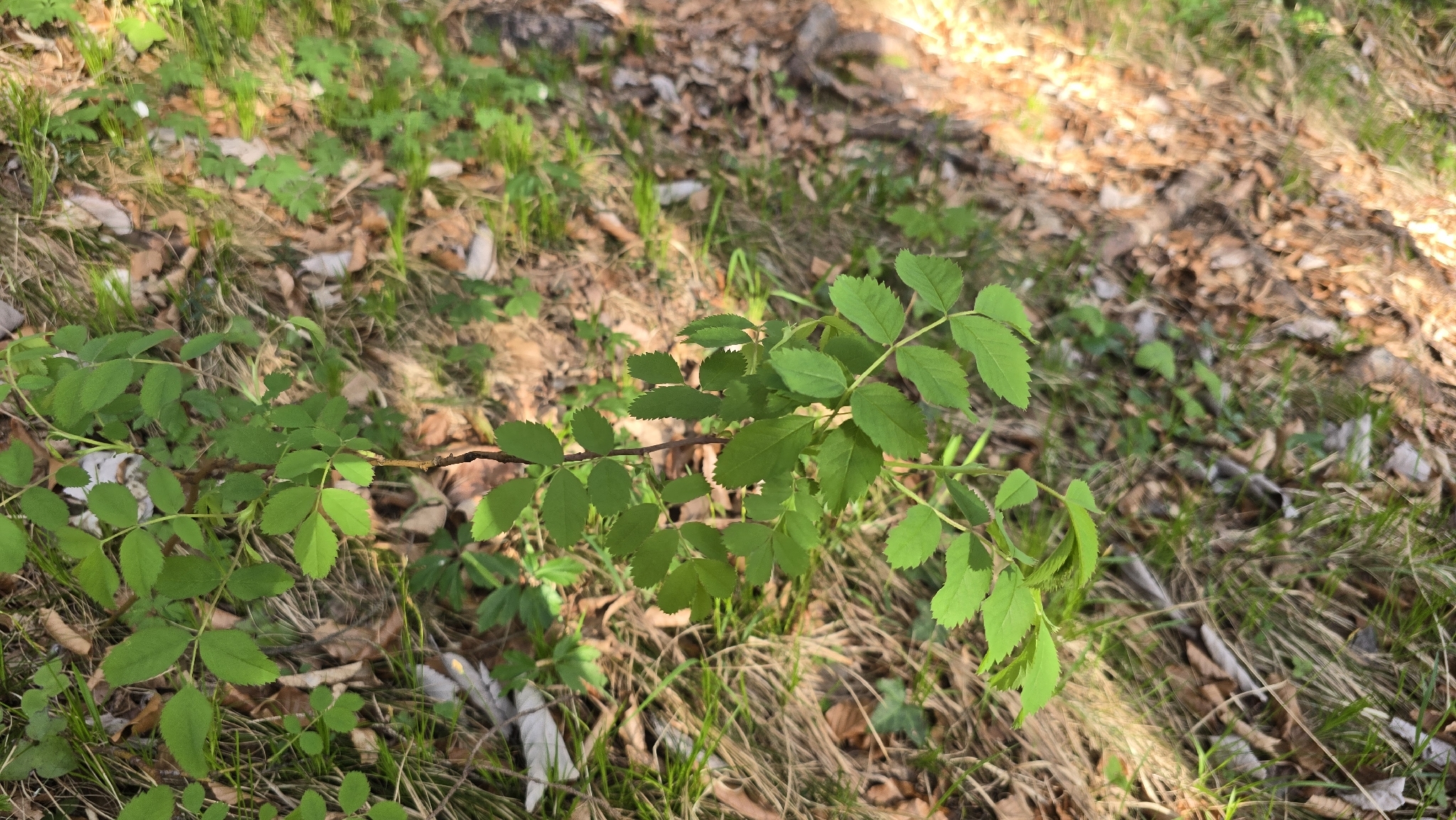
- Foliage: Alternate, pinnate leaves with 5 to 7 dull green, ovate leaflets showing coarsely serrated margins.
- Fruit: Globular or subglobose red hips, 1-1.5 cm (0.4-0.6 in) long, which drop their reflexed sepals early as they ripen.
The stems routinely extend 2-3 m (6.6-9.8 ft) along the ground, creating a low carpet before ascending host trees or shrubs.
Natural Habitat and Soil Preference
Field rose grows naturally in ancient woodlands, scrub margins, and heavy hedgerows across lowland Britain and continental Europe. It serves as an indicator species for ancient, undisturbed woods in lowland England, particularly on damp, calcareous clay.
The root system anchors firmly in heavy soils that stay cool throughout summer drought. While it tolerates chalk and limestone substrates, it avoids waterlogged bogs, extremely acidic heathlands, and sterile sands.
Its European range spans north from the Mediterranean through the British Isles, declining sharply in the far north of Scotland and coastal Scandinavia where harsh winters cut back thin trailing stems.
Ecological Value and Wildlife Associations
The solitary, open flowers provide accessible pollen stores for hoverflies, solitary bees, and bumblebees during peak summer. Because the bloom produces no nectar, insect visitors collect its yellow pollen grains in large volumes.
The ecological role of the briar extends across multiple seasons:
- Larval food source: Foliage feeds caterpillars of species such as the streamer moth (Anticlea derivata) and common emerald (Hemithea aestivaria).
- Nesting shelter: Dense, spiny ground tangles protect ground-nesting birds such as willow warblers from predatory mammals.
- Winter food: Small, round hips provide winter nutrition for blackbirds, song thrushes, and wood mice.
- Galls: Stems frequently host robin’s pincushion galls caused by the gall wasp (Diplolepis rosae).
Conservation Status and Distribution
Field rose holds a status of Least Concern (LC) across Europe and maintains stable populations throughout England, Wales, and Western Europe. It is widespread in the southern half of the British Isles, becoming scarce northwards into northern England and southern Scotland.
Threats to wild colonies stem primarily from intensive hedge flailing and boundary removal in modern agricultural landscapes. Mechanised flailing cuts young shoots before they flower and fruit, diminishing self-seeding along field margins.
Ancient woodland sites preserve the densest native clones, where the sprawling habit forms stable, long-lived communities beneath canopy gaps.
Traditional and Modern Uses
Field rose is historically valued as a tough hedging barrier and a component of natural livestock fencing. Landowners planted it alongside hawthorn (Crataegus monogyna) to knit the lower base of hedgerows where sheep and cattle could otherwise push through.
The globular hips were traditionally gathered in rural communities to brew herbal teas or boiled into syrups rich in vitamin C. Foragers avoid eating the raw inner seeds, which carry stiff irritant hairs that cause sharp throat discomfort.
Modern native landscape restoration projects utilize the shrub for slope stabilization and wildlife corridor plantings, where its rooting stems prevent topsoil erosion on clay banks.
Field Rose vs Dog Rose and Similar Species
You can tell field rose apart from dog rose (Rosa canina) by examining the styles and growth habit: field rose trails horizontally with fused styles, while dog rose forms an upright, arching bush with separated styles.
Look-alike species found in similar European habitats include:
- Dog rose (Rosa canina): Pale pink to white flowers, solitary styles clustered flat, oval elongated hips, and vigorous arching stems up to 3 m (10 ft) tall.
- Sweet briar (Rosa rubiginosa): Foliage releases a sharp apple scent when crushed; flowers are rich pink, and stems carry mixed glandular bristles and curved prickles.
- Burnet rose (Rosa spinosissima): Low-growing coastal briar with stems densely covered in straight needle prickles, bearing distinct black-purple hips.
- Downy rose (Rosa mollis): Features soft, grey-downy leaves, deep pink blooms, and hips covered in small glandular bristles.
Frequently Asked Questions
What is the main difference between field rose and dog rose?
Field rose trails along the ground and possesses fused styles that stick out in a central column, whereas dog rose forms an upright bush with free, unfused styles sitting flat inside the blossom.
Where does field rose grow in the UK?
It is widespread across lowland England and Wales, common along ancient woodland paths, scrub edges, and traditional clay hedgerows, but grows much less frequently in Scotland.
Do field rose flowers have a fragrance?
No, field rose blossoms are completely scentless, relying on bright white petals and rich pollen displays to attract hoverflies and bees.
Are field rose hips edible?
Yes, the outer flesh of the red hips is edible and traditionally used for teas and syrups, but you must remove the bristly inner seeds before consumption.
Can you grow field rose from cuttings?
Yes, hardwood cuttings taken in late autumn root readily, or you can detach sections of trailing stem that have already rooted into the ground naturally.
Information about traditional or historical uses is provided for educational interest only and is not medical advice. Do not use any plant to treat a condition without speaking to a qualified professional.
Sources & Verification
Taxonomy and distribution are checked against the databases below. Care guidance is written for cultivated species only and reviewed by our editor. How We Build Plant Profiles →
More in Rosa
Redleaf Rose
Rosa glauca
☀️ Full Sun 💧 Moderate

Smooth Rose
Rosa blanda
☀️ Full Sun 💧 Moderate

Cabbage Rose
Rosa centifolia
☀️ Full Sun 💧 Moderate

Northern Downy Rose
Rosa sherardii
☀️ Full Sun 💧 Moderate

Burnet Rose
Rosa spinosissima
☀️ Full Sun 💧 Low
Alpine Rose
Rosa pendulina
☀️ Partial Sun 💧 Moderate