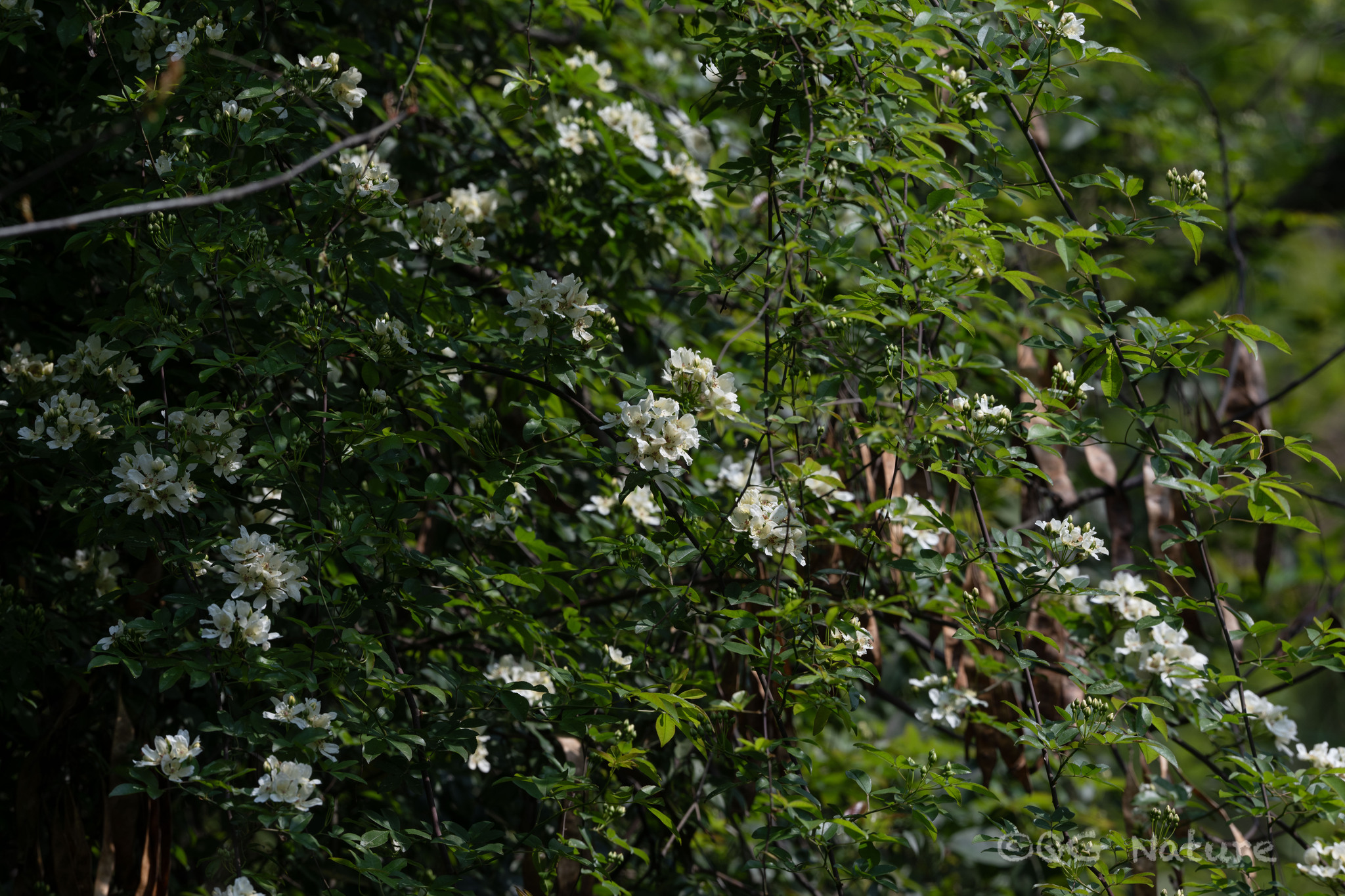
Smooth Rose is a deciduous shrub native to North America, specifically the central and eastern regions of Canada and the northern United States, and is scientifically known as Rosa blanda. It is recognized for its nearly thornless stems, which distinguish it from many other wild rose species.
This species forms colonies through underground rhizomes, making it useful for stabilizing slopes or filling large naturalized areas. Unlike many hybrid tea roses, it thrives in lean soils and requires minimal intervention once established.
Key Facts
- Light: Full sun to partial shade
- Height: 100–150 cm (3–5 ft)
- Spread: 100–200 cm (3–6.5 ft)
- Native Range: Ontario, Quebec, and Northern USA
- Hardiness: USDA zones 2 to 7
Fitting Smooth Rose into Your Landscape
Smooth Rose is best suited for naturalized areas, hedgerows, or erosion control on banks and slopes. Because it spreads through underground runners to form dense thickets, it is not recommended for small, formal flower beds where its movement would be restricted. It provides a structural element in native gardens that requires very little maintenance compared to ornamental hybrids.
You should choose this plant if you want a rose that is safe to handle, as the upper stems are generally smooth and lack the sharp prickles found on most Rosa species. It works well at the back of a border or as a boundary marker in a large garden. Its ability to thrive in poor, rocky soil makes it a candidate for difficult sites where other shrubs might struggle.
How to Identify Rosa blanda
You can identify Smooth Rose by its smooth reddish-brown upper stems and the absence of prickles on all but the very base of the plant. The shrub typically reaches a height of 1 m (3 ft) but can grow taller in ideal conditions. The leaves are alternate and pinnately compound, usually consisting of 5 to 7 leaflets that are oval with serrated edges.
The flowers are 5–7 cm (2–3 in) wide, featuring five light pink petals and a cluster of yellow stamens in the center. These blooms appear in June or July, often in small clusters or singly at the ends of the branches. After flowering, the plant produces round, bright red hips that measure approximately 1 cm (0.4 in) in diameter and persist through the winter months.
The Best Site for Northern Rose
Smooth Rose performs best in full sun with at least 6 hours of direct light daily to ensure maximum flowering and disease resistance. While it can tolerate partial shade, the growth will be less dense and the flower production will decrease. In its native Ontario habitat, it is often found in clearings, meadows, and along the edges of forests.
The soil should be well-drained, though the Northern Rose is quite adaptable to different textures. It grows successfully in sandy, loamy, or even gravelly soils. It prefers a slightly acidic to neutral pH between 5.5 and 7.0. Avoid planting it in areas with standing water, as saturated roots will lead to rot in this species.
Planting and Spacing Smooth Rose
When planting, space individual shrubs 100 to 150 cm (3 to 5 ft) apart to allow for their natural colonial spread. If you are creating a hedge or a thicket for wildlife, you can decrease this spacing to 60 cm (2 ft) to encourage the plants to knit together more quickly. Spring is the ideal time for planting, just as the buds begin to swell.
- Dig a hole twice as wide as the root ball.
- Set the plant at the same depth it was in the nursery container.
- Backfill with native soil without adding heavy fertilizers.
- Water deeply immediately after planting to settle the soil.
- Apply a 5 cm (2 in) layer of mulch to retain moisture.
Watering and Feeding Northern Rose
Provide 2.5 cm (1 in) of water per week during the first growing season to help the root system establish. Once the Northern Rose is established, it is notably drought-tolerant and usually survives on natural rainfall alone. Supplemental watering is only necessary during prolonged periods of extreme heat or drought in the summer.
This species does not require heavy fertilization and can actually suffer from too much nitrogen, which promotes foliage at the expense of flowers. If your soil is particularly poor, you can apply a balanced, slow-release fertilizer in early spring. Avoid feeding the plant after mid-summer, as this can stimulate soft new growth that will not survive the winter frosts.
Pruning Smooth Rose for Shape
Prune the Smooth Rose in late winter or early spring while the plant is still dormant. Start by removing any dead, damaged, or diseased wood to maintain plant health. Since this rose blooms on the previous year’s wood, heavy pruning in the spring will reduce the number of flowers for that season.
To manage the size of the colony, you can use a sharp spade to cut through the underground rhizomes and remove unwanted suckers. Every 3 to 4 years, consider removing one-third of the oldest canes at ground level to encourage the growth of vigorous new stems. This renewal pruning keeps the shrub from becoming overly woody and ensures a higher density of blooms.
Common Problems and Pests
The most frequent issues for this plant include black spot and powdery mildew, though it is more resistant than many commercial cultivars. To minimize fungal problems, always water at the base of the plant rather than over the foliage. Ensure there is adequate air circulation by not overcrowding the plants or surrounding them with dense tall grass.
- Rose Slugs: These sawfly larvae skeletonize leaves; remove by hand or use insecticidal soap.
- Japanese Beetles: They feed on flowers and leaves in mid-summer; hand-pick in the early morning.
- Rust: Look for orange pustules on the undersides of leaves; prune and destroy affected parts.
- Aphids: Small green insects on new growth; usually controlled by native predatory insects.
Winter Care and Hardiness
Smooth Rose is exceptionally hardy, surviving temperatures as low as -45 °C (-50 °F) without significant dieback. In USDA zones 2 and 3, it requires no winter protection, as it is naturally adapted to the harsh climates of Northern Ontario and the Canadian prairies. The red hips stay on the plant throughout the winter, providing a food source for birds.
The plant enters dormancy in late autumn, often turning shades of yellow or dark red before the leaves drop. You do not need to mulch heavily for winter protection, but a thin layer of wood chips can help protect the shallow rhizomes from extreme temperature fluctuations. Avoid any pruning in the autumn, as open wounds can make the plant more susceptible to winter desiccation.
Year-Round Maintenance for Smooth Rose
| Spring | Prune out dead wood and remove one-third of the oldest canes. Apply a thin layer of compost or balanced fertilizer if soil is poor. |
|---|---|
| Summer | Monitor for Japanese beetles and rose slugs. Provide supplemental water only if the soil is dry 5 cm (2 in) deep during droughts. |
| Autumn | Leave the red hips on the plant for winter interest and wildlife. Clean up fallen leaves to reduce the risk of black spot next year. |
| Winter | Check for rabbit or deer damage on the lower stems. Plan any colony management or rhizome cutting for the coming spring. |
Smooth Rose Health Diagnosis
| What you see | Likely cause | What to do |
|---|---|---|
| Leaves turning yellow and falling early | Black spot fungus | Improve air circulation and avoid overhead watering. |
| White powdery coating on leaves | Powdery mildew | Move to a sunnier location with better airflow. |
| Holes in leaves with only veins remaining | Rose slugs (sawfly larvae) | Spray the undersides of leaves with a strong jet of water or insecticidal soap. |
Best Companion Plants for Rosa blanda
Pair Smooth Rose with other sun-loving North American natives that can compete with its spreading habit. Since it blooms in early summer, choose companions that provide interest later in the season. Tall grasses and late-blooming perennials create a balanced prairie-style aesthetic while providing diverse habitats for local pollinators.
- New England Aster (Symphyotrichum novae-angliae)
- Wild Bergamot (Monarda fistulosa)
- Little Bluestem (Schizachyrium scoparium)
- Black-eyed Susan (Rudbeckia hirta)
- Common Milkweed (Asclepias syriaca)
Frequently Asked Questions
How can I tell Rosa blanda vs Rosa carolina apart?
The main difference is that Smooth Rose (Rosa blanda) has smooth upper stems with prickles only at the base, whereas Pasture Rose (Rosa carolina) has prickles all along its stems. Additionally, Rosa blanda has sepals that remain on the fruit, while Rosa carolina sepals usually fall off.
How tall does the Smooth Rose grow?
It typically reaches a height of 1 m (3 ft), though in nutrient-rich, moist soil, it can occasionally grow up to 1.5 m (5 ft).
Is Smooth Rose native to Ontario?
Yes, it is native to Ontario and is one of the most common wild roses found throughout the province in meadows and along shorelines.
Are there any medicinal uses for Smooth Rose?
Historically, various indigenous groups traditionally used the roots and hips of Rosa blanda to make teas for treating stomach ailments or skin inflammations, though these are not modern medical treatments.
Does Smooth Rose have thorns?
It is nearly thornless, especially on the new growth and upper branches; however, you will usually find a few small prickles near the base of the older stems.
Information about traditional or historical uses is provided for educational interest only and is not medical advice. Do not use any plant to treat a condition without speaking to a qualified professional.
Sources & Verification
Taxonomy and distribution are checked against the databases below. Care guidance is written for cultivated species only and reviewed by our editor. How We Build Plant Profiles →