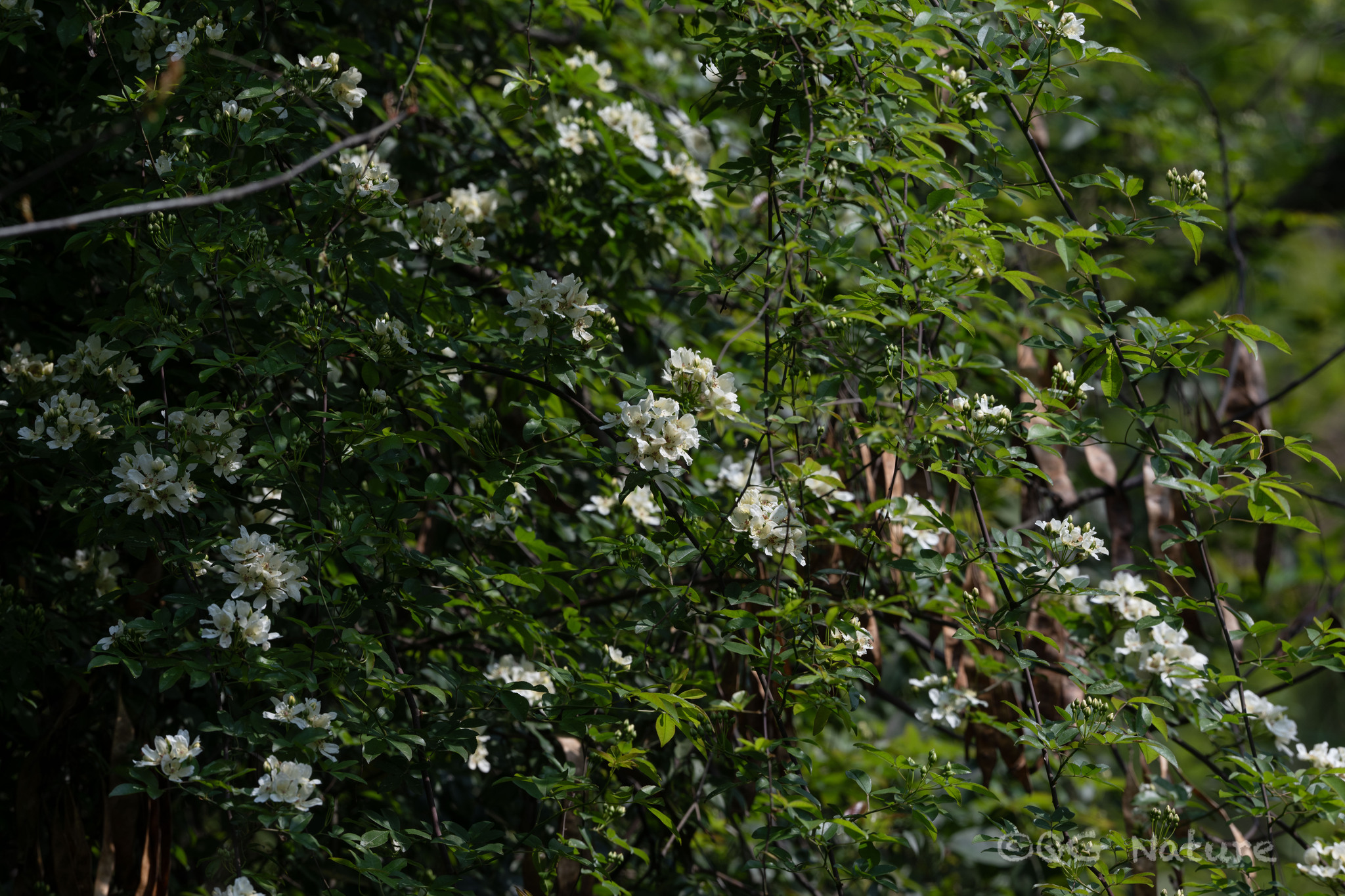
Burnet Rose (Rosa spinosissima, syn. Rosa pimpinellifolia) is a low-growing native shrub found across coastal sand dunes and limestone hillsides of Europe and northwestern Africa. It reaches 20–100 cm (8–40 in) in height and spreads through underground runners to form dense thickets.
This species tolerates poor, dry soils and salt spray where other garden roses fail. Its glossy black-to-purple autumn hips produce dark red juices used in traditional syrups and cordials.
Key Facts
- Planting Location: Full sun with well-draining soil
- Height: 20–100 cm (8–40 in) tall
- Light: Minimum 6 hours direct sunlight daily
- Hardiness: USDA Zones 3 through 8
- Water: Low; drought-tolerant once established
- Toxicity: Non-toxic to humans and household pets
Where Burnet Rose Fits in Your Garden
Burnet Rose suits coastal borders, informal hedges, and rock gardens where low maintenance is required. It acts as a ground-stabilizing shrub along sandy banks and exposed slopes.
Its low profile makes it practical under taller woody plants or as a low barrier hedge along garden footpaths. Because it spreads by underground suckers, plant it where its lateral growth can be accommodated or contained by lawn borders.
Identifying Burnet Rose Stems, Leaves, and Hips
Burnet Rose is identified by its dense straight prickles intermingled with fine bristles covering every main stem. Wild forms bear single white-to-cream flowers measuring 2–5 cm (0.8–2 in) across in May and June.
The foliage consists of 7 to 11 small, rounded leaflets per pinnate leaf, each measuring 5–15 mm (0.2–0.6 in) long with serrated margins. In autumn, round hips measuring 10–15 mm (0.4–0.6 in) ripen from dark maroon to glossy black, unlike the red hips of most wild roses.
Light and Soil Requirements for Burnet Rose
Position Scotch Rose in full sun with at least 6 hours of direct light daily to ensure heavy blooming. Shade causes stems to stretch and thins out flower production.
It grows successfully in thin, chalky, sandy, or neutral soils with a pH between 5.5 and 7.5. Good drainage is essential, as waterlogged roots cause root decay during winter dormancy.
How to Plant Rosa spinosissima
Plant bare-root specimens between November and March during plant dormancy, or potted specimens at any point from spring through autumn. Space individual plants 60–90 cm (24–36 in) apart for continuous hedging.
Follow these steps when establishing new shrubs in your garden:
- Dig a planting hole twice as wide as the root ball and equal in depth.
- Backfill with native soil, avoiding rich organic composts that encourage floppy growth.
- Water with 10 liters (2.6 gal) of water immediately after planting to settle the soil.
- Apply a 5 cm (2 in) layer of coarse bark mulch, keeping it 5 cm (2 in) clear of the main stems.
Watering and Feeding Burnet Rose
Water newly planted shrubs with 5 liters (1.3 gal) of water weekly during their first growing season. Once established, natural rainfall is sufficient except during extended dry spells exceeding 4 weeks.
Fertilizer is generally unnecessary for wild-type plants. An annual application of balanced slow-release fertilizer at 30 g/m² (1 oz/sq yd) in early April benefits heavy double-flowering cultivars like ‘Stanwell Perpetual’.
How and When to Prune Burnet Rose
Prune Scotch Rose in late winter or early spring before fresh shoots emerge. Because flowers develop on wood formed the previous year, heavy pruning reduces summer flowering.
Maintain plant health and shape using these basic steps:
- Remove dead, damaged, or diseased canes at ground level with sharp bypass secateurs.
- Cut back one-fifth of the oldest stems to ground level every 3 years to stimulate fresh basal growth.
- Sever unwanted underground suckers with a sharp spade to control lateral spread.
Propagating Scotch Rose from Suckers
The simplest way to propagate this shrub is by dividing rooted suckers during late autumn or early spring. Softwood cuttings taken in June also root within 4 to 6 weeks.
Lift suckers with a section of connected root, detach them from the mother plant using shears, and pot them into equal parts potting soil and coarse grit. Keep young cuttings moist in light shade until new leaves form.
Common Burnet Rose Pests and Diseases
Burnet Rose exhibits stronger natural resistance to black spot and powdery mildew than modern hybrid roses. Pests occasionally affect young foliage in spring.
- Rose Aphids: Clusters on spring buds; spray off with a firm jet of water.
- Rose Sawfly Larvae: Caterpillars eating leaf margins; hand-pick in early summer.
- Rust (Phragmidium sp.): Orange pustules on leaf undersides; remove and burn infected leaves.
Overwintering Burnet Rose
Burnet Rose withstands temperatures down to -35 °C (-31 °F) without winter protection. Hard frosts do not damage its woody stems or basal buds in USDA Zone 3.
In container plantings, protect roots from freezing cycles by wrapping pots in bubble wrap or moving them against a sheltered building wall from December to February.
Burnet Rose Flowering and Edible Hips
Flowers open in late May to June, followed by dark purple-black hips that ripen by September. The species typically blooms once per season over a 3 to 4 week window.
The fleshy outer walls of ripe black hips are edible once the hard inner seeds and irritating hairs are completely removed. Historically, the hip juice was boiled with sugar to make tart jellies and traditional syrups rich in vitamin C.
Best Companion Plants for Burnet Rose
Pair Burnet Rose with sun-loving perennial plants that thrive in lean, well-drained soils. Its spring flowering period aligns with early summer perennials and grasses.
Effective companion plants include:
- bloody cranesbill (Geranium sanguineum)
- sea holly (Eryngium maritimum)
- common lavender (Lavandula angustifolia)
- rugosa rose (Rosa rugosa)
- dog rose (Rosa canina)
Frequently Asked Questions
Is burnet rose edible?
Yes, the outer flesh of ripe Burnet Rose hips is edible and traditionally processed into jellies and cordials. You must remove all seeds and fine irritating hairs from inside the hip before consumption.
Are burnet rose hips edible?
Burnet rose hips are non-toxic and edible when fully ripe and dark purple-black in autumn. Strain cooked hips through fine muslin to ensure no internal hairs remain in syrup or jelly.
What is the difference between burnet rose and dog rose?
Burnet Rose (Rosa spinosissima) stays lower under 1 m (3 ft), has dark purple-black round hips, and leaves with 7 to 11 small leaflets. Dog rose (Rosa canina) grows into a tall scrambling shrub up to 3 m (10 ft) with bright red oval hips and 5 to 7 leaflets.
What is burnet rose lipstick?
Burnet Rose lipstick is a cosmetic lip color named after the pinkish-red tones of rose blossoms. It is not derived from or related to the botanical plant.
Does Burnet Rose spread aggressively in lawns?
Burnet Rose spreads laterally through underground suckers, which can extend 30–60 cm (12–24 in) annually in sandy soils. Regular mowing around the perimeter of the shrub keeps suckers contained within garden boundaries.
Information about traditional or historical uses is provided for educational interest only and is not medical advice. Do not use any plant to treat a condition without speaking to a qualified professional.
Sources & Verification
Taxonomy and distribution are checked against the databases below. Care guidance is written for cultivated species only and reviewed by our editor. How We Build Plant Profiles →