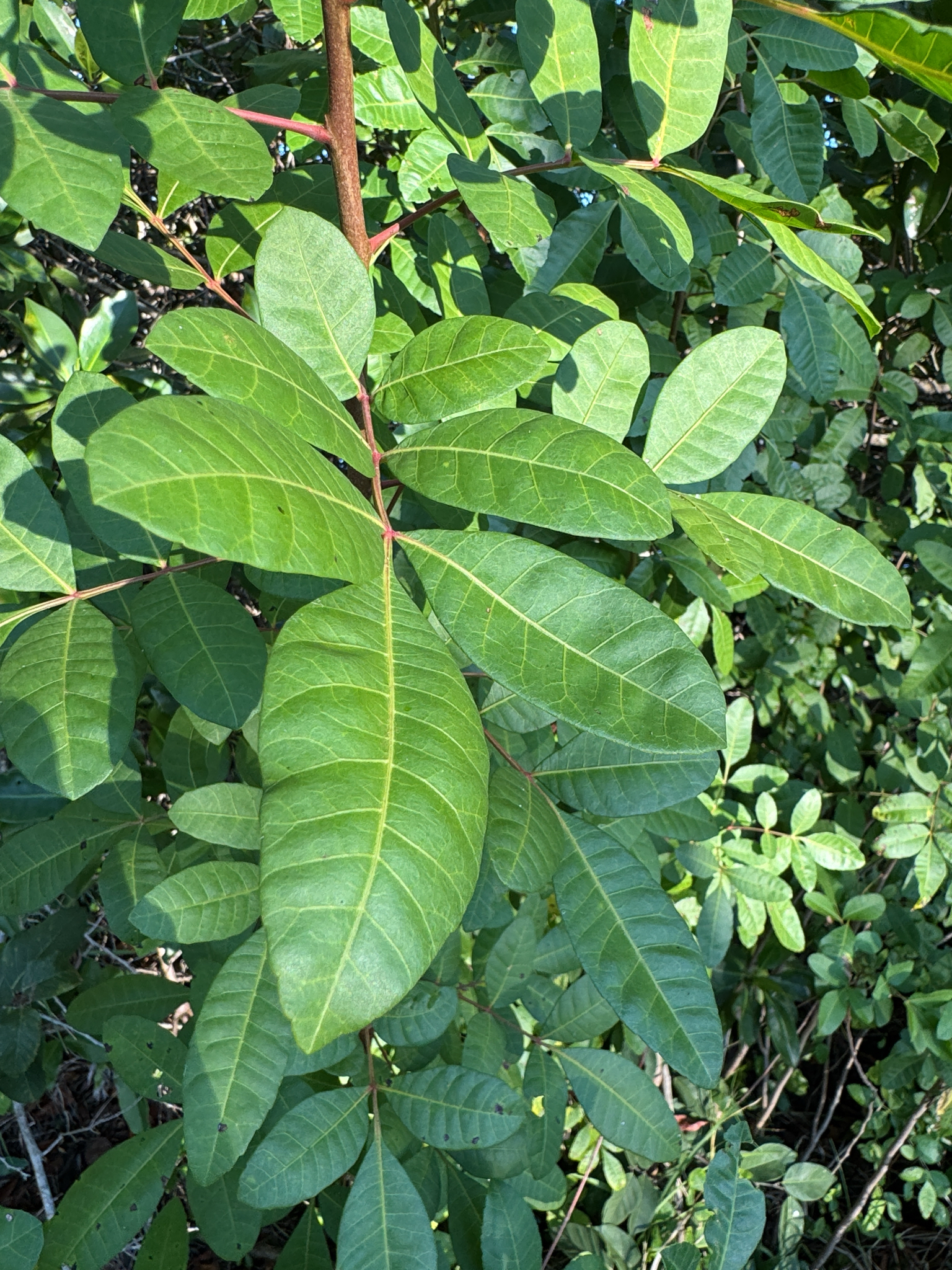
The Peruvian pepper tree (Schinus molle) is a drought-tolerant evergreen tree native to the high deserts of the Andes and southern Brazil, recognized by its drooping, feathery leaves and clusters of rose-colored berries. It reaches 15 m (50 ft) quickly, making it a common sight in California and Australia where it thrives in dry heat.
While the berries are sold as pink peppercorns, they belong to the cashew family and can cause allergic reactions in sensitive individuals. This species is often selected for its shade but requires significant space to accommodate its wide, weeping canopy.
Key Facts
- Growth Rate: fast, often 1 m (3 ft) per year
- Hardiness: USDA zones 8 to 11
- Mature Height: up to 15 m (50 ft)
- Soil: thrives in poor, well-drained rocky ground
- Water: very low once established
Is the Peruvian Pepper Tree Right for Your Garden?
The Peruvian pepper tree requires a large, open space with full sun and excellent drainage to thrive. It is an ideal choice for dry, Mediterranean-style landscapes where water conservation is a priority. You should avoid planting it near foundations or sidewalks, as the aggressive root system can lift pavement over time.
This tree produces a significant amount of litter, shedding leaves, twigs, and berries throughout the year. If you prefer a pristine lawn or have a small courtyard, the constant cleanup may be a drawback. It is highly resistant to drought and can survive on minimal rainfall once the root system is established after the first two years.
- Best for large rural or suburban lots
- Requires at least 10 m (33 ft) of clearance from structures
- Tolerates poor, salty, or alkaline soils
- Provides dense, year-round shade
How to Identify Peruvian Pepper Tree
You can identify the Peruvian pepper tree by its weeping, pinnate leaves that reach 8-25 cm (3-10 in) in length. Each leaf consists of 19 to 41 narrow, lance-shaped leaflets that release a strong, peppery aroma when crushed. The bark is another key identifier, appearing grayish-brown and becoming deeply fissured and peeling on older specimens.
In spring and summer, the tree produces small, yellowish-white flowers on drooping panicles. These are followed by heavy clusters of spherical fruits, 5-8 mm (0.2-0.3 in) in diameter. The fruits turn from green to a distinct rose-pink or red as they ripen in late summer and autumn.
- Leaflets are linear, 2-5 cm (0.8-2 in) long
- Branches have a distinct “weeping willow” habit
- Berries persist on the tree through winter
- Bark often shows reddish sap when damaged
Expected Size and Growth Rate
The Peruvian pepper tree typically reaches a height of 12-15 m (40-50 ft) with an equal or greater spread. In ideal conditions, young trees are known to grow 60-100 cm (2-3 ft) per year. This rapid growth allows it to provide shade quickly, but it also results in somewhat brittle wood that can break in high winds.
The trunk can grow quite thick, often reaching 60-90 cm (2-3 ft) in diameter. Because the canopy is so wide and dense, few plants can grow directly beneath it. The tree usually reaches its full mature height within 15 to 20 years depending on the availability of groundwater.
Best Soil and Sunlight Conditions
This tree must be planted in full sun to maintain its dense foliage and produce a heavy crop of berries. It is highly adaptable to various soil types, including sandy, loamy, and rocky ground. While it prefers a pH between 6.0 and 8.0, it is notably tolerant of highly alkaline soils where other trees might struggle.
Good drainage is the only non-negotiable soil requirement for the Peruvian pepper tree. If the roots sit in waterlogged soil, the tree is prone to root rot and fungal infections. It is a frequent choice for erosion control on dry hillsides because its roots can penetrate deep into compacted or poor soil layers.
Planting Your Peppertree
The best time to plant is in early spring, allowing the roots to establish before the peak summer heat. Dig a hole twice as wide as the root ball but no deeper than the nursery container. Ensure the flare at the base of the trunk is visible at the soil line to prevent rot.
Backfill the hole with the native soil without adding heavy fertilizers or organic amendments, as this tree prefers lean conditions. Stake young trees for the first year to protect the flexible trunk from wind damage. Space multiple trees at least 12 m (40 ft) apart to allow the canopies to expand without crowding.
- Water deeply once a week after planting
- Apply a 5 cm (2 in) layer of mulch, keeping it away from the trunk
- Avoid high-nitrogen fertilizers which cause weak, leggy growth
- Check for circling roots before placing in the hole
Watering and Feeding Requirements
Established trees require very little supplemental water, even in regions with long, dry summers. During the first two growing seasons, you should water deeply once every 10-14 days. Once the tree reaches 3 m (10 ft) in height, it can usually rely on natural rainfall unless an extreme drought occurs.
Overwatering is a common cause of failure, leading to yellowing leaves and a weakened root system. You generally do not need to fertilize a Peruvian pepper tree. If the growth seems stunted, a light application of balanced slow-release fertilizer in early spring is sufficient, but avoid over-feeding as it reduces the concentration of aromatic oils in the berries.
Pruning for a Weeping Shape
Pruning should be done in late winter while the tree is semi-dormant to maintain a strong structure. Focus on removing “water sprouts”—the thin, vertical shoots that grow from the trunk or main branches. You should also thin out the interior of the canopy to improve air circulation and light penetration.
Because the branches naturally droop, you may need to prune the lowest limbs to provide clearance for walking or mowing. Always use sharp, sterilized tools, as the tree is susceptible to heart rot if large wounds are left jagged. Limit pruning to no more than 20% of the canopy in a single year to avoid stressing the tree.
- Remove crossing branches that rub together
- Cut back dead or diseased wood immediately
- Avoid “topping” the tree, which ruins the weeping form
- Wear gloves to protect against the sticky, irritating sap
Common Problems and Pests
The most frequent pest is the peppertree psyllid, which causes small, pimple-like galls on the leaves. While unsightly, these galls rarely kill the tree and are mostly a cosmetic issue. In some regions, the pepper-tree moth (Bombycomorpha bifascia) may defoliate branches, though the tree usually recovers quickly.
Root rot (Phytophthora) is the most serious disease, typically caused by overwatering or planting in heavy clay. If you notice the canopy thinning and branches dying back, check the soil moisture levels immediately. The tree is also a host for the scale insect, which can lead to sooty mold on the leaves.
- Galls: tiny bumps on leaf surfaces
- Verticillium wilt: sudden wilting of individual branches
- Sooty mold: black, sticky film on foliage
- Armillaria root rot: mushroom growth at the base
Culinary and Traditional Uses
The pink berries are the source of pink peppercorns, which have a mild, sweet, and peppery flavor. You can harvest them when they are fully pink and the outer husks are brittle. After picking, dry them in a single layer in a warm, airy spot before storing them in airtight containers.
In traditional Andean culture, the tree was used for various medicinal purposes. The leaves were traditionally prepared in infusions for wound healing, and the resin, known as American mastic, was used as a purgative. In modern times, the tree is primarily valued for its oil, which is used in perfumes and soaps for its spicy, woody scent.
Year-Round Care for Peruvian Pepper Tree
| Spring | Plant new trees after the last frost. Apply a light layer of mulch around the base and inspect for the first signs of psyllid galls on new growth. |
|---|---|
| Summer | Water young trees deeply during heatwaves. Harvest ripe pink berries for culinary use once the skins become papery and red-pink. |
| Autumn | Rake up fallen leaf and berry litter to prevent it from smothering lawn grass. Reduce watering as temperatures drop and growth slows. |
| Winter | Perform structural pruning in late winter. Protect young saplings from hard freezes if temperatures are expected to drop below -5 °C (23 °F). |
Common Peruvian Pepper Tree Problems Explained
| What you see | Likely cause | What to do |
|---|---|---|
| Small bumps on leaves | Peppertree psyllid | Usually cosmetic; prune affected tips if the infestation is heavy. |
| Yellowing leaves and dieback | Overwatering or poor drainage | Reduce watering frequency and ensure soil is not waterlogged. |
| Sticky black film on leaves | Sooty mold from scale insects | Treat the underlying scale infestation with neem oil or horticultural soap. |
| Brittle branches snapping | Fast growth or wind stress | Thin the canopy to reduce wind resistance and avoid high-nitrogen fertilizers. |
Frequently Asked Questions
Is the Peruvian pepper tree edible?
Yes, the pink berries are edible and used as pink peppercorns, but they should be consumed in moderation as they can cause stomach upset in some people. They are unrelated to true black pepper.
How long do Peruvian pepper trees live?
These trees are moderately long-lived, typically reaching ages of 50 to 150 years depending on soil quality and water availability.
What is the difference between Peruvian and Brazilian pepper trees?
The Peruvian pepper tree (Schinus molle) has weeping branches and narrow, feathery leaflets, whereas the Brazilian pepper tree (Schinus terebinthifolia) is more upright with broader, oval-shaped leaflets.
Is the Peruvian pepper tree invasive?
Yes, it is considered invasive in parts of California, Australia, and South Africa because it spreads easily via bird-dispersed seeds and outcompetes native vegetation.
Is Peruvian pepper tree poisonous to dogs?
It is considered mildly toxic to dogs; eating the berries or foliage can cause vomiting, diarrhea, or mucosal irritation due to the volatile oils.
Information about traditional or historical uses is provided for educational interest only and is not medical advice. Do not use any plant to treat a condition without speaking to a qualified professional.
Sources & Verification
Taxonomy and distribution are checked against the databases below. Care guidance is written for cultivated species only and reviewed by our editor. How We Build Plant Profiles →