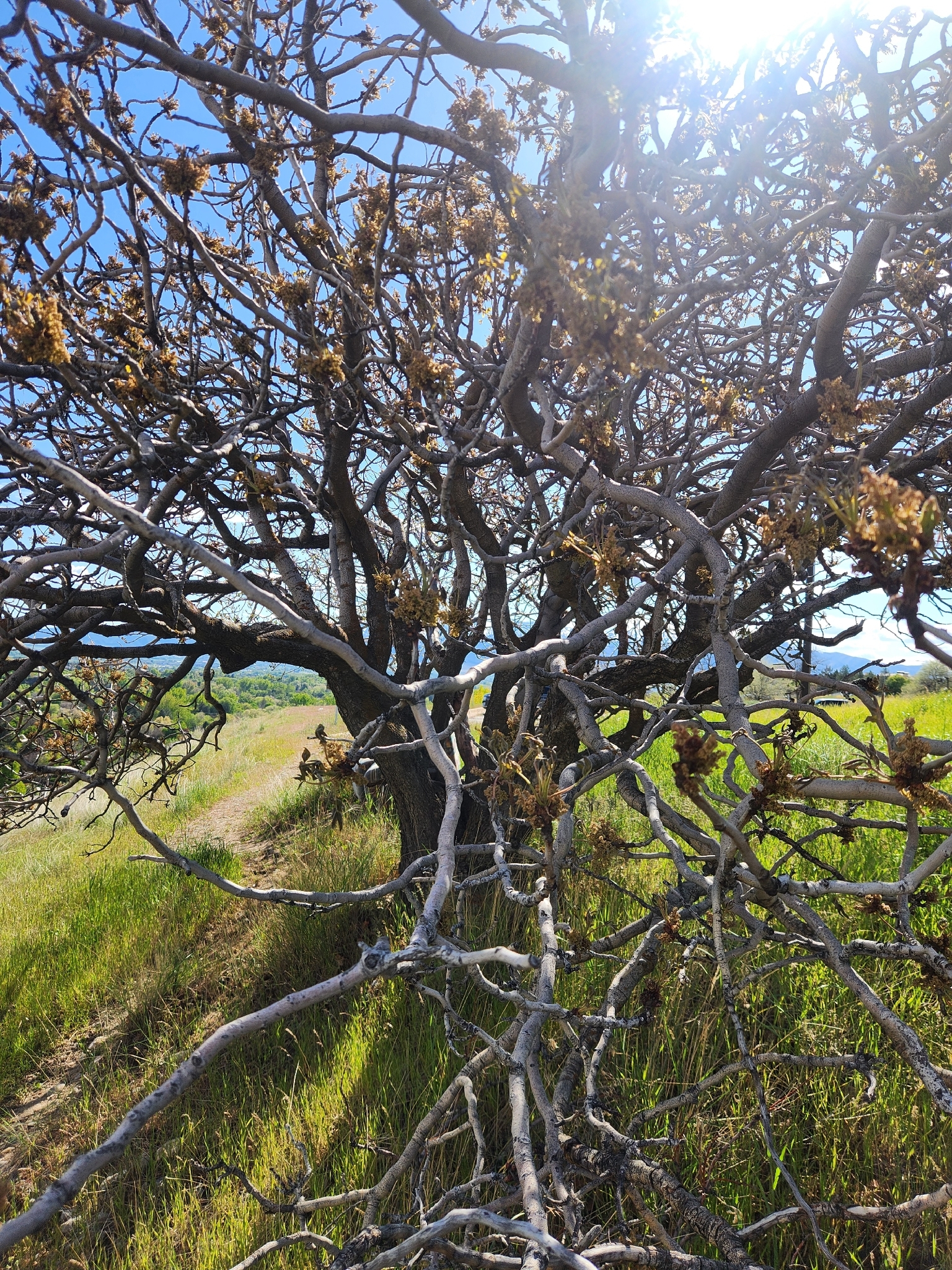
Mastic (Pistacia lentiscus) is an evergreen dioecious shrub or small tree originating from the Mediterranean Basin. It is widely recognized for producing an aromatic resin when the bark is deliberately wounded.
You can expect this woody plant to tolerate heavy coastal winds and prolonged summer drought once established. It requires full sun and exceptionally well-drained soil to prevent root rot.
Key Facts
- Type: Evergreen shrub or small tree
- Light: Full sun
- Water: Low once established
- Hardiness: USDA Zones 9 to 11
- Height: Up to 4 m (13 ft)
What It Is Like to Grow Mastic
Mastic fits dry Mediterranean gardens and coastal landscapes where other shrubs fail due to salt spray and arid conditions. You will find this plant remarkably low-maintenance provided it gets enough sun and zero standing water. It forms a dense, bushy screen that acts as an effective windbreak.
- Tolerates poor, rocky soils without skipping a beat
- Withstands maritime exposure and salty gales
- Grows at a slow pace, needing minimal intervention
The shrub develops a gnarled, multi-stemmed habit that adds year-round structure. It suits xeriscaping projects and slope stabilization in frost-free regions. Avoid heavy clay or damp borders, as stagnant moisture destroys the root system quickly.
Identifying the Leaves, Flowers, and Bark
Mastic is readily identified by its compound, leathery leaves featuring 4 to 12 oblong leaflets and a winged leaf stalk. The evergreen foliage releases a resinous, pine-like scent when crushed between your fingers.
- Leaves: Dark green, glossy above, measuring 2 to 5 cm (0.8 to 2 in) long
- Flowers: Tiny, petalless clusters appearing in spring, separate male and female flowers on different plants
- Fruit: Small globose drupes, starting red and maturing to black in autumn
- Bark: Smooth and grey on young stems, turning rough and furrowed on older trunks
Female plants produce the decorative berries that attract local birds. The overall canopy is dense and rounded, rarely exceeding 4 m (13 ft) in height or spread under cultivation.
How Big Does Mastic Get
Mastic typically reaches a mature height of 1.5 to 4 m (5 to 13 ft) with an equal or greater spread. Growth is notably slow, adding only 10 to 20 cm (4 to 8 in) per year under ideal conditions.
- Container-grown specimens usually cap at 1.5 m (5 ft)
- Unpruned garden shrubs form broad, mounded thickets up to 4 m (13 ft) across
- Root systems extend laterally to search for moisture in rocky crevices
Space individual plants at least 2 m (6.5 ft) apart if you are establishing an unclipped hedge. Closer spacing of 1 m (3.3 ft) works if you plan to shear them into a formal barrier.
Choosing the Right Site for Mastic
Mastic demands a planting site with full sun exposure and absolute protection from freezing winter temperatures below -7 °C (19 °F). Shady locations cause leggy growth and significantly reduce resin production.
- Select a spot with south-facing exposure in cooler temperate zones
- Ensure the site receives at least 6 hours of direct sunlight daily
- Avoid low-lying frost pockets where cold air settles
Air circulation is vital to prevent fungal issues on the dense foliage. Slopes and elevated garden beds provide the natural air drainage this species prefers.
How to Plant Mastic
Plant mastic in spring or early autumn to let roots establish before extreme seasonal temperatures hit. Dig a hole twice as wide as the root ball but no deeper than the container it came in.
- Amend heavy garden earth with coarse sand or grit to improve drainage
- Set the top of the root ball level with the surrounding soil grade
- Water thoroughly immediately after planting to settle the soil around roots
Apply a 5 cm (2 in) layer of gravel or bark mulch around the base to suppress weeds. Keep the mulch a few inches away from the trunk to prevent moisture buildup against the bark.
Watering and Feeding Mastic
Mastic requires regular water during its first growing season, but mature plants need almost no supplemental irrigation. Overwatering is the single fastest way to kill this drought-adapted shrub.
- Water newly planted shrubs every 10 to 14 days during their first dry summer
- Withhold water entirely from established plants once they survive two years in the ground
- Fertilizer is rarely necessary and can cause weak, sappy growth
If you grow mastic in a container, water only when the top 5 cm (2 in) of soil is completely dry. Feed container specimens once in spring with a balanced, slow-release organic fertilizer at half strength.
Pruning and Shaping Mastic
Mastic accepts hard pruning and is easily shaped into hedges, topiaries, or single-trunk small trees. Prune in late winter before spring growth flushes out.
- Remove dead, damaged, or crossing branches first with sterilized shears
- Shear formal hedges after the main spring growth hardens
- Thin the interior canopy every three years to improve light penetration
Wear gloves when pruning, as the resin is sticky and difficult to wash off skin. Clean your blade with rubbing alcohol between cuts to prevent spreading plant pathogens.
Common Mastic Pests and Problems
Mastic is generally trouble-free, though root rot and scale insects occasionally appear. Improve soil drainage immediately if you notice yellowing leaves and twig dieback.
- Root Rot: Caused by heavy, waterlogged soil; fix by amending with grit and reducing water
- Scale Insects: Appear as small bumps on stems; treat with horticultural neem oil
- Leaf Spot: Triggered by excessive humidity and poor airflow; prune dense centers to ventilate
Monitor the undersides of leaves during humid spring weather for early signs of sap-sucking pests. Strong blasts of water from a hose often dislodge minor infestations.
Overwintering Mastic
Mastic survives brief frosts down to -7 °C (19 °F) in USDA Zone 9, but freezing winds can scorch leaf tips. Move potted specimens indoors before the first hard freeze if you live in colder climates.
- Provide a cool, bright indoor spot like an unheated conservatory or greenhouse
- Reduce indoor watering to once a month during winter dormancy
- Wrap outdoor ground-planted shrubs in burlap if severe polar vortex winds threaten
Avoid placing container-grown plants near active heating vents or radiators indoors. Keep indoor winter temperatures around 5 to 12 °C (41 to 54 °F) for best results.
Traditional Uses and Resin Harvest
Mastic has been cultivated for millennia on islands like Chios for its translucent resin, known as mastic gum. Harvesting involves scoring the bark in late summer to let the resin bleed and harden into droplets.
- Resin drops, called tears, are collected off the ground or scraped from trunks after drying
- Traditional uses include flavoring liqueurs, confectioneries, and chewing gum
- Wood is dense and burns slowly, historically used for local firewood
The resin was traditionally used in folk medicine for digestive complaints and oral hygiene. Modern applications also include varnishes, dental fillings, and cosmetics like mastic care lotions.
Mastic Care Through the Seasons
| Spring | Inspect the shrub for winter damage and prune out dead wood. Apply a light top-dressing of compost around the base if grown in poor soil. |
|---|---|
| Summer | Provide deep irrigation only to young, newly planted specimens during prolonged dry spells. Score bark in late summer if you intend to harvest resin. |
| Autumn | Gather fallen seeds or ripe black berries if propagating. Clear away fallen debris from around the base to discourage fungal spores. |
| Winter | Withhold all supplemental watering. Move potted shrubs into a frost-free shelter before freezing temperatures arrive. |
Diagnosing Mastic Problems and Failures
| What you see | Likely cause | What to do |
|---|---|---|
| Yellowing lower leaves and mushy stems | Overwatering or poorly draining soil | Stop watering immediately and amend the soil with coarse horticultural grit to speed drainage. |
| Sticky residue on leaves and small brown bumps | Scale insect infestation | Wipe affected stems with horticultural oil or insecticidal soap. |
| Brown, scorched leaf tips after winter | Cold wind damage or frost exposure | Prune away damaged tips in spring after all danger of frost has passed. |
| Leggy growth and sparse foliage | Insufficient sunlight | Relocate the plant or prune surrounding trees to provide at least 6 hours of direct sun. |
Popular Mastic Cultivars and Types
- ‘Chia’ – primary cultivar selected for high resin yield on Chios
- ‘Lentisk’ – standard wild-type species with dense, dark green foliage
Frequently Asked Questions
What is mastic gum and how is it harvested?
Mastic gum is the aromatic resin tapped from the trunk and branches of Pistacia lentiscus. Farmers make small shallow cuts in the bark during summer, allowing the resin to ooze out and harden into brittle crystals known as tears.
How to mastic like a pro around a bath or tiles?
If you are searching for silicone sealant or tile grout instructions, 'mastic' refers to a construction adhesive rather than the tree. For bathroom sealing, clean the joint thoroughly, apply a smooth bead of silicone, and tool it with a soapy finger or dedicated profiling tool.
What are the benefits of masticare body lotion and skin care?
Cosmetic products utilizing mastic extract are traditionally used to hydrate skin and provide antioxidant properties. They leverage the natural antibacterial compounds found in the tree's resin.
Is mastic toxic to cats and dogs?
No, mastic is non-toxic to domestic pets and humans. However, eating large amounts of raw resin or leaves can cause mild gastrointestinal upset.
Can mastic grow in pots?
Yes, mastic adapts well to containers provided you use a fast-draining cactus or Mediterranean potting mix. Keep the pot in a sunny spot and water only when the soil dries out entirely.
Information about traditional or historical uses is provided for educational interest only and is not medical advice. Do not use any plant to treat a condition without speaking to a qualified professional.
Sources & Verification
Taxonomy and distribution are checked against the databases below. Care guidance is written for cultivated species only and reviewed by our editor. How We Build Plant Profiles →