
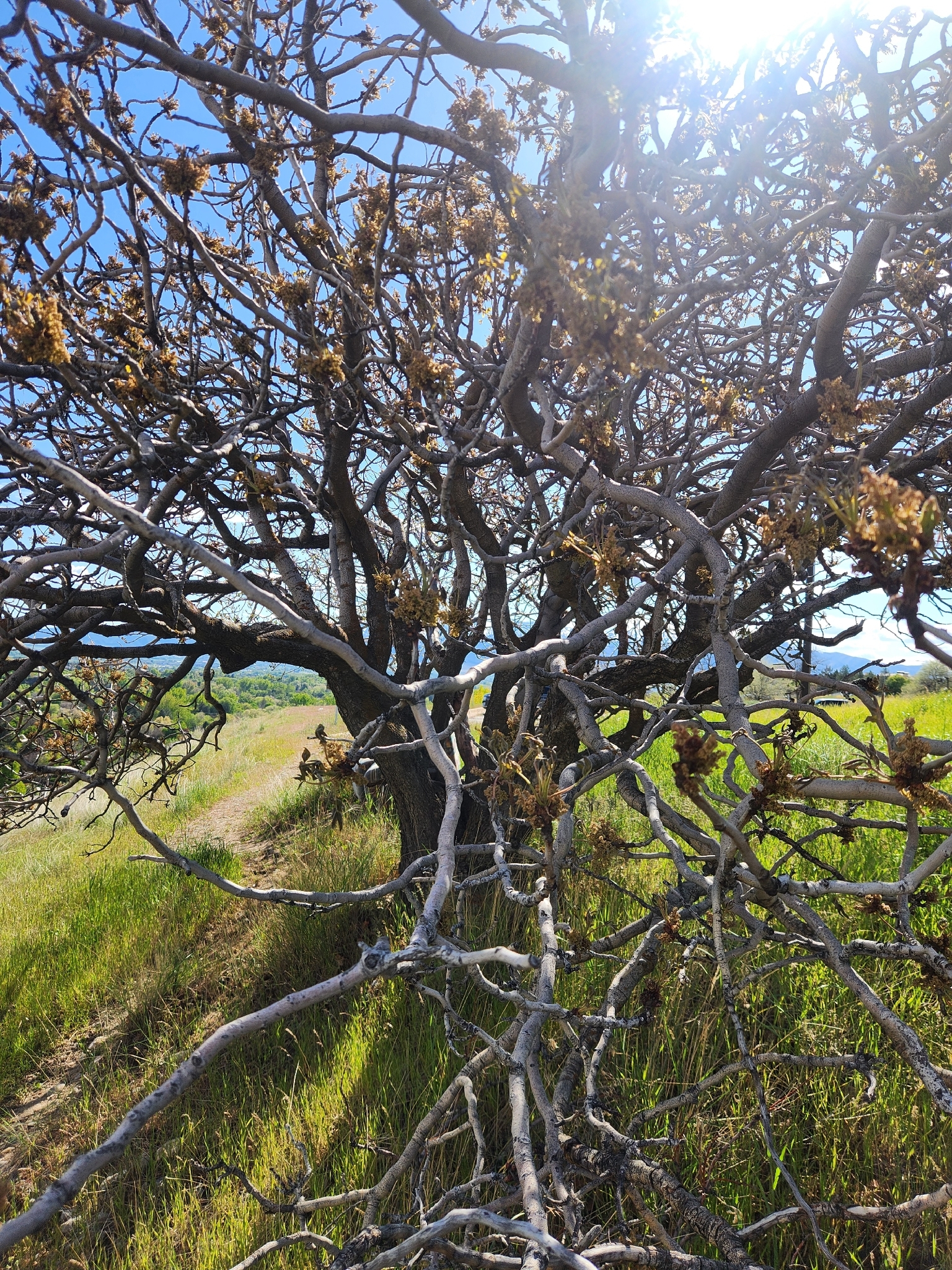
Pistachio (Pistacia vera) is a small, deciduous desert tree native to Central Asia that produces edible, pale-shelled nuts with emerald-green kernels. It belongs to the cashew family (Anacardiaceae) and thrives under long, hot, dry summers.
You must plant both male and female trees for wind pollination, and trees require 7 to 10 years to produce significant nut yields. High humidity and soggy root zones will rapidly trigger root rot or fungal blight.
Key Facts
- Pollination: Dioecious; plant one male for every 8–10 female trees
- Sunlight: Minimum 8 hours of full, direct sun daily
- Soil drainage: Requires deep, loose, sharply draining sandy-loam soil
- Chill hours: Needs 700 to 1,000 chilling hours below 7 °C (45 °F)
- Bearing age: First light harvest at 5 years; full yield at 10–12 years
- Hardiness: USDA zones 8 to 11
Is a Pistachio Tree Right for Your Garden?
A pistachio tree is suited exclusively to gardeners in hot, arid climates with long summers and distinct, chilly winters.
Because the species is dioecious, solitary specimens cannot produce nuts on their own. You need room to plant at least two trees—one male pollinator upwind and at least one female nut producer.
Commercial production thrives in California’s San Joaquin Valley, Iran, and Mediterranean regions. If your climate experiences rainy summers or tropical humidity, the tree will suffer foliar fungal collapse before it bears crops.
Botanical Description and How Pistachios Look
A mature pistachio forms a spreading, multi-stemmed canopy with rough, fissured grey bark reaching 5 to 10 m (16 to 33 ft) across.
The compound leaves are pinnate, bearing 3 to 5 thick, leathery, oval leaflets that emerge bronze-tinted before turning grey-green. Flowers appear in early spring before leaf emergence on leafless panicles: male inflorescences are dense and compact, while female clusters are loose and wind-receptive.
The fruits develop in dense clusters resembling grape bunches: each drupe contains an outer fleshy hull (epicarp) that turns pinkish-blush at maturity, encasing the beige, hard shell and the green seed.
Mature Size and Growth Rate
Pistachio trees grow at a slow pace of 20 to 35 cm (8 to 14 in) per year, eventually reaching 6 to 10 m (20 to 33 ft) in height.
In home orchards, growers routinely manage the canopy at 4 to 6 m (13 to 20 ft) tall to facilitate mechanical or hand harvesting. The lateral root system spreads two to three times wider than the dripline, anchoring deep taproots that seek moisture in dry subsoils.
- Year 1 to 3: Slender sapling under 2 m (6.5 ft) tall
- Year 5: Early flowering, modest framework, 3 m (10 ft) height
- Year 8 to 12: Full mature canopy and commercial cropping volume
- Lifespan: Productive life exceeds 100 to 300 years in arid soils
Where to Site Pistachio Trees
Plant your trees in an exposed, sunny location that receives at least 8 hours of unfiltered sunlight daily.
Airflow is critical for two reasons: pistachio flowers rely entirely on wind for cross-pollination, and open breezes dry the foliage to deter fungal blight. Position the male tree directly upwind of the female trees according to your area’s prevailing spring wind patterns.
Avoid low frost pockets where stagnant cold air settles in late spring, as freezing temperatures after bud break kill emerging flower panicles.
How to Plant Pistachio
Plant dormant bare-root pistachio trees in late winter to early spring, setting the root flare flush with the natural soil surface.
Most cultivated trees are budded onto vigorous, disease-resistant rootstocks such as UCB-1 (a hybrid with Mt. Atlas mastic tree, Pistacia atlantica) or Chinese pistachio (Pistacia chinensis). Never bury the bud union below ground level.
- Dig a planting hole twice the diameter of the root spread, keeping the base firm to prevent settling
- Arrange roots radially outward without bending or circling the taproot
- Backfill using native soil without heavy organic amendments, which disrupt water drainage
- Space female trees 5 to 6 m (16 to 20 ft) apart, planting the male within 15 m (50 ft)
- Tamp down lightly and soak deeply with 40 L (10 gal) of water to eliminate air pockets
Pistachio Tree Care: Watering and Feeding
Water young trees deeply every 10 to 14 days during their first two summers, scaling back once taproots reach deep subsoil.
Established trees tolerate severe drought, but consistent irrigation between May and August is required for high nut yields and complete shell splitting. Apply water deeply around the root zone using drip emitters or a soaker hose, keeping the trunk base bone dry to prevent crown rot.
Feed mature trees with nitrogen split across early spring and early summer, applying 450 g (1 lb) of actual nitrogen per mature tree annually. Avoid applying high nitrogen after midsummer, which stimulates soft growth vulnerable to early autumn frost.
How to Prune a Pistachio Tree
Prune your pistachio in late winter while the tree remains fully dormant, training it to an open-center modified central leader.
During years one and two, head the primary whip back to 90 to 100 cm (35 to 40 in) to stimulate 3 to 4 strong scaffold branches spaced evenly around the trunk. Once the primary architecture is established, restrict pruning to removing water sprouts, broken limbs, and crossed interior branches.
Pistachios bear nuts laterally on one-year-old wood. Heavy heading back of mature branches eliminates fruiting wood and reduces the current season’s crop volume.
Pistachio Tree Problems and Diseases
The primary threat to pistachios is Panicle and shoot blight (Botryosphaeria dothidea), which causes entire nut clusters to turn black and die in humid weather.
Root zones are also sensitive to Verticillium wilt, a soil-borne fungus that blocks vascular water transport, turning leaves yellow and dry on one side of the canopy. Avoid planting pistachios where solanaceous crops like tomatoes or cotton have recently grown.
- Blank nuts: Caused by poor pollination, high summer heat waves, or boron deficiency
- Leaf scorch: Often caused by high soil salinity or irregular deep watering cycles
- Stink bug feeding: Causes dark necrotic spots and bitter kernel damage inside the developing shell
- Crown rot (Phytophthora): Occurs when sprinklers strike the trunk collar directly
Winter Care and Chilling Requirements
Pistachio trees require 700 to 1,000 chill hours between 0 and 7 °C (32 and 45 °F) to break winter dormancy properly.
If winter chilling is inadequate, trees exhibit delayed foliation, poor leaf cover, and scattered, uneven bloom, which ruins synchronization between male and female trees. Dormant trees withstand winter cold down to -10 °C (14 °F) without branch injury.
Apply a 7 cm (3 in) layer of coarse wood chip mulch over the root zone before freezing weather arrives, keeping it pulled 15 cm (6 in) away from the trunk bark.
Culinary Uses and How to Harvest Pistachios
Harvest pistachios in late summer or early autumn when hulls turn translucent pink and separate easily from the hard shell.
Spread tarps beneath the tree and gently shake the limbs; ripe nuts drop readily with their shells naturally split open. You must hull (de-husk) the harvested nuts within 24 hours to prevent moisture and tannins from staining the inner beige shell, then dry the kernels until moisture drops below 7%.
- Culinary baking: Ground into rich pistachio paste for baklava, macarons, and cannoli fillings
- Confections: Mixed with chocolate, nougat, halva, and Turkish delight
- Ice cream and gelato: Steeped or pureed for traditional Sicilian-style pistachio gelato
- Savory cooking: Crusted onto lamb cutlets, blended into mortadella, or tossed in pilafs
Year-Round Pistachio Tree Care
| Spring | Apply the first dose of balanced nitrogen fertilizer as green buds break. Check bloom synchronization between male and female trees, and spray for early fungal blight if spring rains persist. |
|---|---|
| Summer | Maintain deep drip irrigation every 10–14 days during shell expansion and kernel filling. Monitor foliage for spider mites and shield developing nut clusters from sprinkler overspray. |
| Autumn | Harvest mature clusters by shaking branches onto clean tarps in late August or September. Remove the soft outer hulls within 24 hours of harvest and dry nuts thoroughly before storage. |
| Winter | Prune out dead, damaged, or crossing branches while the tree is dormant. Clear fallen leaves and mummified nut hulls from the orchard floor to destroy overwintering fungus spores. |
Pistachio Tree Growing Problems Explained
| What you see | Likely cause | What to do |
|---|---|---|
| Blackened nut clusters and withered twigs in midsummer | Panicle and shoot blight fungus triggered by high humidity or overhead water | Prune infected branches 10 cm below affected tissue and switch exclusively to ground drip irrigation. |
| Hulls are full size but the inner shell is empty (blank nut) | Inadequate wind pollination or extreme heat during spring fertilization | Plant an additional male pollinator upwind and ensure consistent soil moisture during flowering. |
| One major scaffold branch turns yellow, wilts, and dies suddenly | Verticillium wilt infection in the vascular wood | Prune out dead limbs, avoid soil disturbance, and ensure trees are budded onto resistant rootstocks like UCB-1. |
| Delayed spring leaf-out and poor flower set | Insufficient winter chilling hours below 7 °C | Paint trunks white to keep bark cooler in late winter or select low-chill cultivars suited to warm winter regions. |
Pistachio Tree Cultivars and Pollinators
- ‘Kerman’ – standard heavy-bearing female cultivar with large nuts and high split rates
- ‘Peters’ – industry standard male pollinator producing abundant viable pollen
- ‘Golden Hills’ – early-harvesting female cultivar that ripens two weeks before Kerman
- ‘Lost Hills’ – large-seeded female cultivar with early harvest and reduced shell staining
- ‘Randy’ – early-blooming male bred specifically to pollinate Golden Hills and Lost Hills
Frequently Asked Questions
How do pistachios grow?
Pistachios grow in heavy grape-like clusters on female deciduous trees, pollinated by wind-blown pollen from separate male trees. The green nut develops within a hard beige shell, which is enclosed by a fleshy outer hull that changes from green to pink as it ripens.
How do pistachios open naturally?
Pistachios split their shells on the tree as the edible kernel swells rapidly during late summer, physically forcing the hard shell seam apart before harvest. Nuts that fail to open naturally are termed closed-shell nuts, usually caused by drought stress or late kernel growth.
Do you need two pistachio trees to get nuts?
Yes, you need at least two trees because pistachios are dioecious, carrying male and female flowers on separate trees. One male tree produces enough pollen to fertilize up to 8 to 10 female nut-bearing trees.
How do you make pistachio paste?
Blanch shelled pistachio kernels in boiling water for one minute, peel off the papery skins to reveal the bright green meat, and process the dry kernels in a heavy-duty food processor until natural oils release and turn the nuts into a smooth paste.
What traditional health benefits are associated with pistachios?
Pistachios were traditionally used in folk medicine across the Mediterranean and Middle East as a digestive tonic and liver restorative. Modern nutritional profiles show they are rich in monounsaturated fats, dietary fiber, and lutein.
Information about traditional or historical uses is provided for educational interest only and is not medical advice. Do not use any plant to treat a condition without speaking to a qualified professional.
Sources & Verification
Taxonomy and distribution are checked against the databases below. Care guidance is written for cultivated species only and reviewed by our editor. How We Build Plant Profiles →
- University of California Agriculture and Natural Resources (UC ANR)Commercial and home orchard pistachio production and pathology
- Kew Plants of the World OnlineTaxonomic confirmation and native range data for Pistacia vera
- ASPCA Animal Poison ControlTree nut toxicity and pancreatitis warnings for domestic pets
- GBIF — Global Biodiversity Information Facilitytaxonomy, synonyms, occurrence records
- Wikipediageneral reference
