
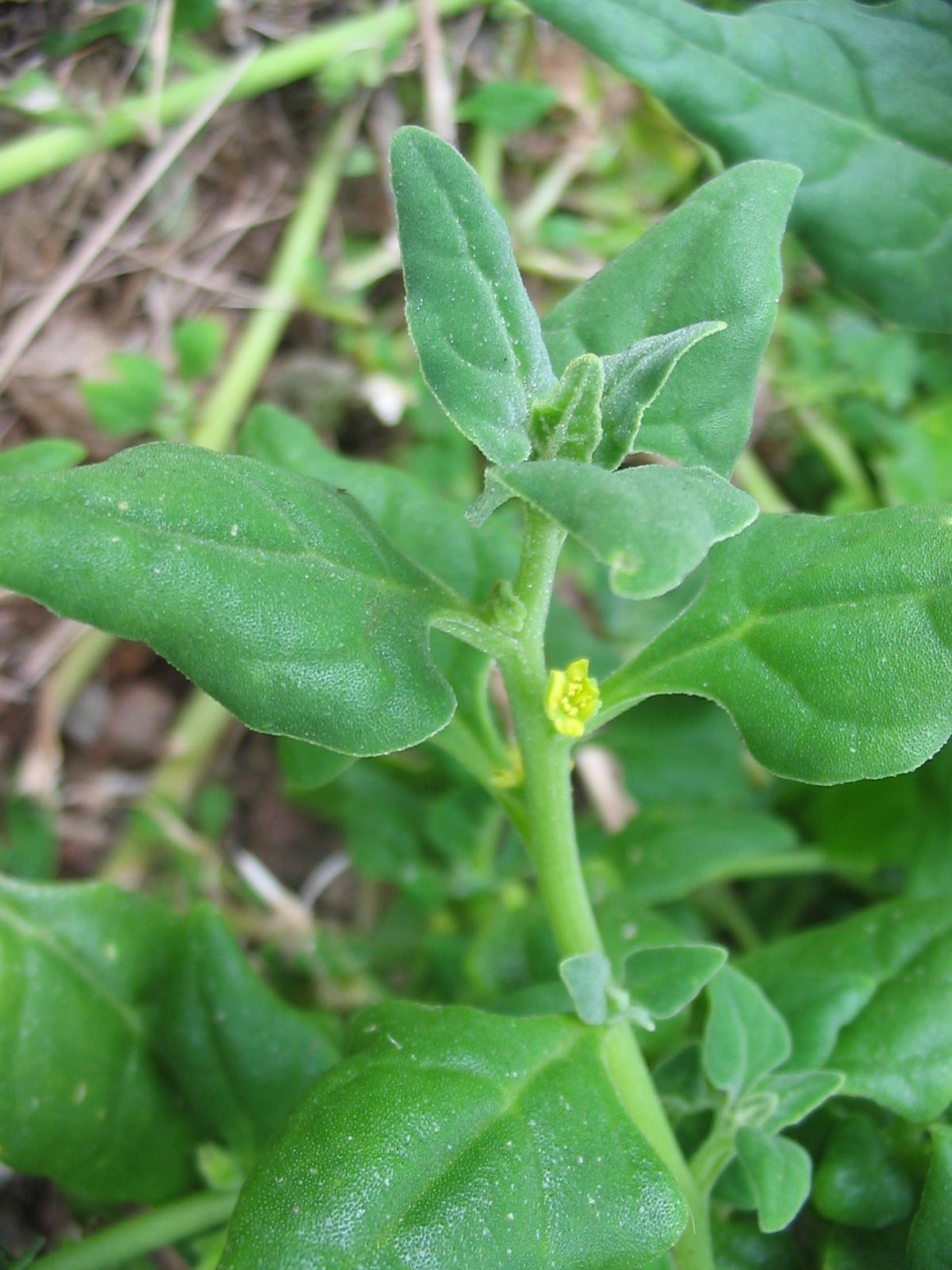
New Zealand spinach (Tetragonia tetragonioides) is a sprawling, succulent groundcover native to the coastlines of Australasia and East Asia. It produces triangular, fleshy green leaves with crystalline water droplets visible across the foliage.
Unlike true spinach (Spinacia oleracea), which bolts into bitter seed stalks at 20 °C (68 °F), this plant thrives through midsummer heat up to 35 °C (95 °F). It requires blanching before consumption due to high soluble oxalate levels.
Key Facts
- Growth habit: spreading succulent green reaching 1 m (3.3 ft) across
- Temperature range: optimal growth occurs between 18–30 °C (65–86 °F)
- Watering: water weekly once top 4 cm (1.5 in) dries
- Light: full sun to partial shade (4–8 hours direct light)
- Preparation: blanch leaves for 2 minutes to reduce oxalates
- Life cycle: tender perennial grown as an annual in frost zones
Is New Zealand Spinach Right for Your Garden?
New Zealand spinach suits growers who want fresh greens throughout July and August when cool-season salad crops fail. It demands minimal pest management and acts as a vigorous living mulch across empty vegetable beds.
Because it is a tender perennial native to coastal dunes, a single plant spreads over 1 m (3.3 ft) in a matter of weeks. You will need roughly 1 m² (10 sq ft) of bed space per specimen, making it unsuitable for small, crowded salad boxes.
- Produces continuously until the first killing frost of autumn
- Provides high yields from only 2–3 plants for a typical household
- Tolerates salty coastal spray and poor sandy soils without wilting
- Self-seeds prolifically in mild temperate climates
How to Identify New Zealand Spinach
New Zealand spinach forms a prostrate, branching mat 20–40 cm (8–16 in) tall with triangular to rhomboid succulent leaves. The leaves measure 3–10 cm (1.2–4 in) long, held on thick, fleshy stems that root where nodes touch moist soil.
Both the stems and the undersides of leaves are covered in distinct glandular papillae, which look like tiny crushed ice crystals or dew drops. The solitary, inconspicuous flowers appear in leaf axils from midsummer onwards, measuring 3–5 mm (0.1–0.2 in) across with 3–5 yellowish-green petal-like sepals.
Following flowering, the plant forms hard, angular, horned seed pods measuring 5–10 mm (0.2–0.4 in) that turn woody and brown as they mature. Each seed capsule contains between 3 and 8 true embryos encased within a tough, fibrous shell.
New Zealand Spinach Growing Conditions
Give the crop at least 6 hours of direct sun and soil that drains excess moisture within an hour of rainfall. While the plant produces thicker stems in full sun, it yields tenderer leaves in light afternoon shade where temperatures exceed 32 °C (90 °F).
USDA hardiness zones 8 through 11 support it as an evergreen perennial, whereas growers in zones 3 through 7 must treat it as an annual crop. Soil pH should remain between 6.5 and 7.5. Sandy or loamy garden dirt amended with well-rotted garden compost produces the fastest vegetative growth.
- Optimal air temperatures for active leaf production: 18–30 °C (65–86 °F)
- Frost tolerance: foliage dies back when temperatures reach 0 °C (32 °F)
- Drought tolerance: high, though regular watering keeps leaf tissue succulent
- Salinity tolerance: high, tolerating brackish winds in coastal sites
Sowing and Planting Instructions
Soak the hard seed pods in warm water for 12–24 hours before planting to crack dormancy and hasten germination. Unsoaked seeds can take up to 28 days to emerge, whereas soaked capsules typically sprout within 7–14 days at soil temperatures of 20 °C (68 °F).
Sow seeds indoors 4–6 weeks before the last expected spring frost date, burying capsules 1–1.5 cm (0.4–0.6 in) deep in seed-starting mix. Because each woody capsule houses multiple seeds, thin each emerging cluster down to the single most vigorous seedling once the first true leaves expand.
- Direct sow outdoors 2 weeks after all frost danger passes
- Plant spacing: set transplants 45–60 cm (18–24 in) apart
- Row spacing: leave 90–120 cm (36–48 in) between rows
- Germination soil temperature: 15–24 °C (60–75 °F)
New Zealand Spinach Care and Watering
Water deeply once every 7–10 days during dry weather to prevent the leaves from turning fibrous and tough. The succulent root system stores moisture effectively, but providing 25 mm (1 in) of water per week sustains rapid shoot development.
Apply a 5 cm (2 in) layer of shredded bark or straw around the base of the plant to suppress weeds and reduce soil evaporation. Avoid high-nitrogen synthetic fertilizers, which encourage excessive soluble oxalate accumulation in the foliage; an application of balanced compost at transplanting provides adequate nutrition.
For companion planting, place it alongside taller crops that appreciate summer soil shade, such as sweetcorn (Zea mays) or climbing beans (Phaseolus vulgaris). Avoid planting it next to creeping herbs like thyme (Thymus vulgaris), which it quickly overruns.
Harvesting Leaves and Growth Stages
Begin harvesting leaves 50–70 days after germination, once stems reach roughly 30 cm (12 in) in length. Snip the tender growing tips, taking the terminal 7–10 cm (3–4 in) along with the top 4–6 leaves.
Harvesting the shoot tips encourages lateral branching, which causes the plant to become bushier and produce more harvest points. Avoid pulling whole branches off by hand, as this strips the fibrous skin and exposes the vascular core to fungal pathogens.
- Use clean kitchen shears or pruning snips to cut stems cleanly
- Harvest in the cool morning hours to maintain maximum leaf turgor
- Pick regularly every 3–5 days to prevent stems from becoming woody
- Halt major harvests 3 weeks before the first autumn frost to gather seeds
Taste, Nutrition, and How to Cook It
New Zealand spinach has a mild, earthy, slightly salty flavour with a crisp, succulent bite that closely mirrors true spinach. It provides useful amounts of vitamin A, vitamin C, iron, and dietary fibre per 100 g portion.
The raw leaves contain concentrated soluble oxalates that can trigger mouth tingling and inhibit calcium absorption in people prone to kidney stones. For safety, blanch the leaves in boiling water for 2 minutes, drain thoroughly, and discard the cooking liquid to strip away the majority of the oxalates before preparing recipes.
- Sauté blanched greens with garlic and olive oil as a side dish
- Stir blanched leaves into quiches, frittatas, or pasta sauces
- Blend blanched greens into curries such as saag paneer
- Use cooked leaves as a direct substitute in traditional spanakopita recipes
Common Problems and Pests
The plant suffers far fewer pest attacks than standard brassicas or lettuces, but poorly drained soil leads quickly to fungal root rot. Ensure your planting bed drains water within an hour of heavy rain to protect the underground crowns.
Snails and slugs occasionally chew irregular holes in young seedlings during wet spring weather. Hand-pick them at dusk or surround young crowns with organic iron phosphate bait pellets until the stems develop their thick, crystalline skin.
- Leaf yellowing: overwatering or waterlogged soil suffocating roots
- Leggy, pale stems: insufficient sunlight (needs 6+ hours)
- Stunted shoot growth: cold soil temperatures below 15 °C (59 °F)
- Aphid colonies on shoot tips: rinse foliage with a sharp spray of water
How to Store New Zealand Spinach
Freshly harvested tips remain crisp for up to 5 days when stored in a ventilated plastic bag inside the vegetable crisper drawer at 4 °C (39 °F). Do not wash the leaves prior to chilling, as surface moisture accelerates leaf collapse and rot.
For long-term preservation, blanch trimmed leaves in rolling boiling water for 2 minutes, transfer immediately to an ice bath for 2 minutes to halt cooking, and squeeze out excess moisture. Pack the squeezed portions into airtight freezer bags, press flat, and freeze at -18 °C (0 °F) for up to 10 months.
Frequently Asked Questions
Is New Zealand spinach a perennial?
It is a tender perennial in frost-free climates (USDA zones 8–11) but is grown as a warm-season annual in cold-winter regions. In zones with freezing winters, frost kills the top growth at 0 °C (32 °F), though dropped seed capsules readily self-sow for the next spring.
Can you eat New Zealand spinach raw?
Small amounts of young, tender leaves can be eaten raw, but blanching is strongly advised due to high soluble oxalate concentrations. Boiling the leaves for 2 minutes and discarding the water significantly reduces oxalate levels and removes the astringent chalky mouthfeel.
What is the difference between New Zealand spinach and true spinach?
New Zealand spinach (Tetragonia tetragonioides) belongs to the ice plant family (Aizoaceae), grows on spreading vines, and thrives in summer heat up to 35 °C (95 °F). True spinach (Spinacia oleracea) belongs to the amaranth family (Amaranthaceae), forms compact rosettes, and bolts to seed when temperatures exceed 20 °C (68 °F).
Why are my New Zealand spinach seeds taking so long to germinate?
The seed capsule has a hard, woody outer shell that blocks water absorption, often delaying germination for 3 to 4 weeks. Soak seed capsules in warm water for 12 to 24 hours prior to sowing to soften the seed coat and cut emergence time down to 7–14 days.
Does New Zealand spinach take over the garden?
A single plant can sprawl across a 1.2 m (4 ft) radius, but it is not aggressively invasive because it roots relatively shallowly and pulls up easily. You can keep plants confined to their allotted beds by regular harvesting of the tip stems.
Sources & Verification
Taxonomy and distribution are checked against the databases below. Care guidance is written for cultivated species only and reviewed by our editor. How We Build Plant Profiles →
- Kew Plants of the World OnlineTaxonomy, distribution, and native habitat
- RHS GardeningCultivation and harvesting guidance
- NC State ExtensionPlant characteristics, hardiness, and culinary handling
- GBIF — Global Biodiversity Information Facilitytaxonomy, synonyms, occurrence records
- Wikipediageneral reference