Plants Native to Vietnam
28 plant profiles · A list of plants native to Vietnam, covering tropical trees, fruits, herbs and ornamentals, with identification notes and growing conditions for each.
Vietnam's flora spans USDA hardiness zones 8 through 13, driven by tropical monsoons in the south and temperate montane elevations in the north. The region spans coastal mangrove swamps, limestone karsts, and high-altitude pine forests above 1,500 m (4,920 ft). Growing native Vietnamese species requires matching their original elevation and moisture needs, as high-altitude plants tolerate winter frost down to -10 °C (14 °F), while lowland tropical species require constant warmth above 15 °C (59 °F).
When selecting species for your landscape or home, group plants by light and growth habit:
- Indoor and shade plants: Lady palm (Rhapis excelsa) and creeping fig (Ficus pumila) thrive under indirect light and high humidity.
- Fragrant flowering shrubs: Cape jasmine (Gardenia jasmine) and Japanese apricot (Prunus mume) produce seasonal blooms in well-draining acidic soil.
- Canopy trees: Camphor tree (Cinnamomum camphora) and Benguet pine (Pinus kesiya) require full sun and substantial root space.
- Groundcovers and fruiting plants: Mondo grass (Ophiopogon japonicus) fills shaded borders, while wampee (Clausena lansium) provides edible citrus-like fruit.
Soil moisture management is essential across all Vietnamese species. Monsoonal origins mean most plants expect wet summers and drier winter rest periods. Check specific cold tolerances before planting outdoors, as high-elevation species tolerate frost while lowland natives freeze below 0 °C (32 °F).

Autumn Monkshood
Aconitum carmichaelii
☀️ Partial Shade 💧 Moderate

Benguet Pine
Pinus kesiya
☀️ Full Sun 💧 Moderate

Callery Pear
Pyrus calleryana
☀️ Full Sun 💧 Moderate

Camphor Tree
Cinnamomum camphora
☀️ Full Sun 💧 Low

Cape Jasmine
Gardenia jasminoides
☀️ Bright Indirect 💧 Moderate

Capillary Wormwood
Artemisia capillaris
☀️ Full Sun 💧 Low
Chinese Abelia
Abelia chinensis
☀️ Full Sun 💧 Moderate

Chinese Elm
Ulmus parvifolia
☀️ Full Sun 💧 Moderate

Chinese Lobelia
Lobelia chinensis
☀️ Partial Sun 💧 High

Chinese Privet
Ligustrum sinense
☀️ Partial Sun 💧 Moderate

Chinese Tulip Tree
Liriodendron chinense
☀️ Full Sun 💧 Moderate

Creeping Fig
Ficus pumila
☀️ Bright Indirect 💧 Moderate

Happy Tree
Camptotheca acuminata
☀️ Full Sun 💧 High

Haritaki
Terminalia chebula
☀️ Full Sun 💧 Moderate

Himalayan Yew
Taxus wallichiana

Japanese Apricot
Prunus mume
☀️ Full Sun 💧 Moderate

Japanese Fig
Ficus erecta
☀️ Full Sun 💧 High

Japanese Holly Fern
Cyrtomium falcatum
☀️ Partial Shade 💧 Moderate
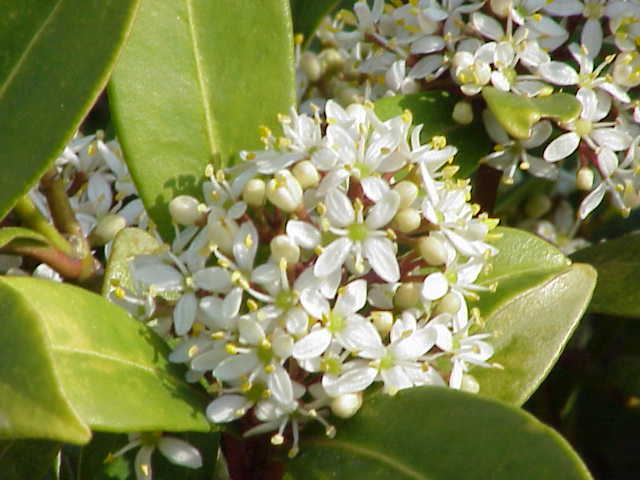
Japanese Skimmia
Skimmia japonica
☀️ Partial Shade 💧 Moderate

Lady Palm
Rhapis excelsa
☀️ Bright Indirect 💧 Moderate

Mondo Grass
Ophiopogon japonicus
☀️ Partial Shade 💧 Moderate

Primrose Jasmine
Jasminum mesnyi
☀️ Full Sun 💧 Moderate
Pygmy Date Palm
Phoenix roebelenii
☀️ Bright Indirect 💧 Moderate

Rangoon Creeper
Combretum indicum
☀️ Full Sun 💧 Moderate
Common Questions
Can plants native to Vietnam survive frost?
Montane species from northern Vietnam tolerate frost down to -10 °C (14 °F), while lowland species die below 0 °C (32 °F). Species like Benguet pine and Japanese apricot handle sub-zero winters, whereas lady palm requires indoor shelter in cold climates.
What soil type do Vietnamese native plants prefer?
Most Vietnamese plants require acidic to neutral soil with a pH between 5.5 and 6.5. Subtropical forest natives like Cape jasmine demand rich organic matter, whereas limestone cliff species prefer sharp drainage and neutral pH.
Are plants native to Vietnam suitable for growing indoors?
Low-light tropical understory plants from Vietnam perform reliably as indoor houseplants. Lady palm and creeping fig adapt well to indoor container culture when kept above 15 °C (59 °F) with ambient humidity over 50 percent.
How much water do Vietnamese plants need?
Water thoroughly during the spring and summer active growing season, then reduce watering in winter. Vietnamese native plants reflect monsoon cycles, preferring consistently moist soil during summer heat and drier conditions during cool winter dormant periods.