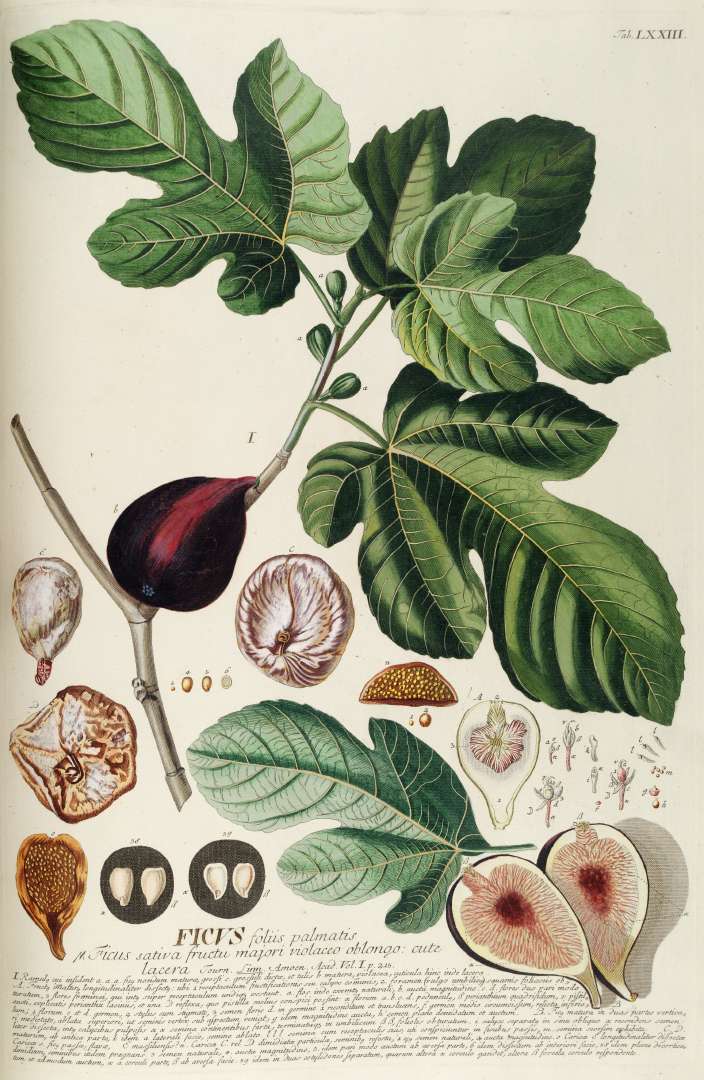
The Japanese Fig is a deciduous member of the mulberry family native to the riverbanks and coastal forests of Japan, Taiwan, and South China. You can distinguish Ficus erecta from its more common relatives by its slender, upright growth habit and its preference for consistently damp, riparian environments.
Unlike the common fig (Ficus carica), this species is dioecious, meaning you need both male and female specimens to produce viable seeds. It is a frequent choice for temperate bonsai because it responds well to root confinement and develops a textured, greyish bark as it matures.
Key Facts
- Water: Keep soil consistently moist throughout the growing season
- Light: Prefers full sun to partial shade for fruit development
- Hardiness: Best suited for USDA zones 8 to 11
- Fruit: Produces edible, sweet figs 1.0 to 2.5 cm (0.4-1 in) wide
- Growth: Typically reaches 2 to 7 m (6.5-23 ft) in height
Is Japanese Fig Right for Your Garden?
The Japanese Fig is an ideal choice for gardens that feature natural water sources or damp, low-lying areas. It thrives in conditions that mimic its native stream-side habitats across East Asia, where it often grows alongside running water. You should choose this species if you have a spot near a pond or a large container that you can keep consistently moist, as it will struggle in dry, arid landscapes.
Because it is deciduous, it offers a different aesthetic than the evergreen figs often seen in tropical regions. It is particularly suited for enthusiasts of East Asian flora who want a fruiting shrub that is more cold-tolerant than the weeping fig (Ficus benjamina). Its upright form makes it a space-efficient addition to smaller gardens or woodland edges.
- Best for rain gardens or pond margins
- Suits temperate climates with mild winters
- Excellent for container growing and bonsai
- Provides seasonal interest with autumn leaf drop
Identifying Ficus erecta by Leaf and Bark
You can identify the Japanese Fig by its slender branches and distinctive obovate leaves that measure 10 to 20 cm (4-8 in) in length. The leaves are typically bright green with a smooth upper surface and a slightly paler underside, featuring prominent veins that branch toward the margins. Unlike the deeply lobed leaves of the common fig, these are usually entire or only slightly wavy.
The bark of the Japanese Fig is smooth and greyish-brown when young, gradually developing a fine, fissured texture as the trunk thickens. When a leaf or stem is broken, the plant exudes a thick, white milky latex, a characteristic trait of the Ficus genus. The fruit appears in the leaf axils, turning from a pale green to a deep purple or black as it ripens during the late summer months.
How Big Does the Japanese Fig Grow?
In its natural habitat, the Japanese Fig typically reaches a height of 2 to 7 m (6.5 to 23 ft). When grown in a garden setting, it often stays at the lower end of this range, functioning more as a large shrub than a full tree. If you are growing it as a bonsai, you can maintain it at a height of 30 to 60 cm (1-2 ft) through regular root and branch pruning.
The spread of the Japanese Fig is usually about two-thirds of its height, creating a narrow, elegant silhouette that does not overwhelm nearby plantings. In the wild, specimens growing near streams may develop a more sprawling habit as they reach for light. Gardeners should plan for a footprint of at least 2 m (6.5 ft) to allow the branches to extend naturally without heavy shearing.
Choosing the Best Site for Your Fig Tree
This species requires full sun to partial shade and a location that never completely dries out during the summer heat. While it can tolerate full sun in temperate zones, it benefits from afternoon shade in regions with intense summer temperatures. You should provide a site protected from harsh, drying winds which can scorch the relatively thin leaves and cause premature defoliation.
The soil should be rich in organic matter and capable of retaining moisture without becoming stagnant or anaerobic. In its native Japan and Taiwan, it often grows in rocky soil near water, suggesting that it appreciates good drainage despite its high water needs. Avoid planting it in heavy, compacted clay unless you have amended the area with plenty of compost and leaf mould.
Planting Your Fairy Fig
Plant your Japanese Fig during the early spring just as the buds begin to swell but before the new leaves fully emerge. Dig a hole twice as wide as the root ball and exactly the same depth to ensure the crown sits level with the surrounding soil surface. If you are planting multiple specimens for a screen, space them at least 3 m (10 ft) apart to ensure adequate air circulation.
After placing the plant in the hole, backfill with a mix of native soil and organic compost, tamping down lightly to remove large air pockets. Water the area deeply immediately after planting to settle the soil around the roots. For young trees, applying a 5-10 cm (2-4 in) layer of wood chip mulch will help retain the high moisture levels this species demands while suppressing competing weeds.
Watering and Feeding for Healthy Growth
You must keep the soil consistently moist, especially during the active growing months from April through September. The Japanese Fig is not drought-tolerant and will quickly drop its leaves if the root zone dries out completely. If you are growing it in a container, you may need to water it daily during the peak of summer to prevent stress.
Apply a balanced, slow-release fertilizer in early spring to support the development of new foliage and fruits. For bonsai or container-grown plants, a diluted liquid fertilizer applied every four weeks during the growing season is more effective. Stop all fertilizing by late summer to allow the new wood to harden off before the winter dormancy begins.
Pruning and Bonsai Training Techniques
Prune your Japanese Fig in late winter or very early spring while the plant is still dormant to minimize sap loss. This species is highly valued in bonsai for its flexible young branches, which can be easily shaped with wire. You should remove any dead, damaged, or crossing branches annually to maintain an open canopy that allows light to reach the inner leaves.
When pruning, always wear gloves to protect your skin from the milky latex, which can cause contact dermatitis in sensitive individuals. For garden specimens, you can encourage a more tree-like form by removing the lower suckers and branches to expose the grey trunk. If you want a bushier shrub, pinch back the growing tips in early summer to stimulate lateral branching.
Common Japanese Fig Pests and Diseases
The most common issue for the Japanese Fig is root rot caused by poorly drained, waterlogged soil. While it loves moisture, the roots require oxygen, so ensure your pots have large drainage holes and your garden soil is not compacted. Watch for scale insects and mealybugs, which tend to congregate on the undersides of the leaves or in the crevices where the leaves meet the stems.
If you notice yellowing leaves in mid-summer, it is usually a sign of inconsistent watering or a sudden drop in ambient humidity. Spider mites can also be a problem in dry indoor environments or during prolonged droughts; misting the foliage can help deter these pests. Fungal leaf spot may occur during exceptionally wet springs, but this is rarely fatal and can be managed by improving air circulation around the plant.
Winter Protection and Hardiness
In colder climates, the Japanese Fig requires protection when temperatures are forecast to drop below -5 °C (23 °F). Because it is a deciduous species, it is significantly more cold-hardy than tropical figs like the fiddle-leaf fig (Ficus lyrata). However, young wood and container-grown specimens are still vulnerable to freezing and may suffer significant dieback if left exposed.
Apply a thick layer of organic mulch, such as straw or bark, around the base of the tree in late autumn to insulate the root system. For plants in pots, move them to an unheated garage, shed, or cold frame once they have dropped their leaves for the winter. This period of cold dormancy is essential for the plant’s natural life cycle and ensures vigorous growth the following spring.
Year-Round Care for Japanese Fig
| Spring | Prune while dormant in early March. Apply a balanced fertilizer and increase watering as new buds appear. |
|---|---|
| Summer | Water daily during heatwaves to keep soil moist. Monitor for scale insects and mealybugs on new growth. |
| Autumn | Reduce watering as leaves begin to yellow and drop. Apply a fresh layer of mulch to protect roots. |
| Winter | Protect from hard freezes below -5 °C (23 °F). Keep soil barely moist for dormant or sheltered plants. |
Japanese Fig Problems Explained
| What you see | Likely cause | What to do |
|---|---|---|
| Sudden leaf drop in summer | Soil dried out completely | Water immediately and maintain a more consistent moisture schedule. |
| White cottony spots on stems | Mealybugs | Wipe pests away with a cotton swab dipped in rubbing alcohol. |
| Yellowing lower leaves | Overwatering or poor drainage | Check that the soil is not waterlogged and improve drainage if necessary. |
| No fruit on a mature plant | Isolation or lack of pollinators | Ensure you have both male and female plants and a local population of fig wasps. |
Popular Ficus erecta Varieties
- ‘Beecheyana’ – features hairy stems and leaves
- ‘Erecta’ – the standard upright wild form
Similar Figs and Garden Companions
The Japanese Fig is often compared to the common fig (Ficus carica), but it is smaller, more moisture-loving, and has non-lobed leaves. Another similar species is the creeping fig (Ficus pumila), which shares the same East Asian origin but has a climbing, vining habit rather than an upright one. In a garden setting, it pairs well with other plants that enjoy damp soil and partial shade.
- Japanese maple (Acer palmatum) for contrasting foliage texture
- Common box (Buxus sempervirens) as a structured evergreen backdrop
- Hosta species (Hosta spp.) to fill the moist ground beneath the canopy
- Japanese forest grass (Hakonechloa macra) for a soft, flowing understory
Frequently Asked Questions
Is Ficus erecta edible?
Yes, the Japanese Fig produces small, sweet fruits that are traditionally eaten in its native range. The figs are 1.0 to 2.5 cm in diameter and turn purple-black when they are fully ripe.
Can Japanese Fig be grown as a bonsai?
Yes, it is a popular choice for bonsai due to its flexible branches and textured bark. It is more cold-tolerant than many tropical figs, making it easier to maintain in temperate climates.
Are figs good for erectile dysfunction?
There is no scientific evidence that Japanese Fig or any other Ficus species treats erectile dysfunction. This is a common misconception likely arising from the plant's scientific name, Ficus erecta, which refers to its upright growth habit.
What does the name Ficus erecta mean?
In botany, the term 'erecta' means upright or vertical. This name describes the plant's natural growth habit, which is more straight and slender compared to the spreading canopy of other fig trees.
How hardy is the Japanese Fig?
It is hardy to approximately -5 °C (23 °F), which corresponds to USDA zones 8-11. In colder regions, it must be grown in a container and moved indoors or to a sheltered spot during the winter.
Information about traditional or historical uses is provided for educational interest only and is not medical advice. Do not use any plant to treat a condition without speaking to a qualified professional.
Sources & Verification
Taxonomy and distribution are checked against the databases below. Care guidance is written for cultivated species only and reviewed by our editor. How We Build Plant Profiles →