
A massive, spreading tree native to Africa and the Middle East, Ficus sycomorus is recognizable by its yellowish-green bark and clusters of fruit that grow directly from the trunk and main branches. It has been cultivated for over 5,000 years, notably in ancient Egypt where its timber was used for sarcophagi.
This species requires a frost-free climate and significant space to reach its full potential. While it produces edible fruit, the figs are often smaller and less sweet than those of the common fig (Ficus carica).
Key Facts
- Hardiness: USDA zones 10-11; survives no frost
- Light: Needs full sun for fruit production
- Water: High demand during establishment; drought-tolerant later
- Size: Reaches up to 20 m (65 ft) in height
- Fruit: Figs grow in dense clusters on the trunk
Is the Sycamore Fig Right for Your Landscape
The sycamore fig requires a minimum area of 20 m (65 ft) in diameter to accommodate its massive, spreading canopy and aggressive root system. It is best suited for large estates, parks, or rural properties where its roots will not interfere with foundations, pipes, or pavements. Because it is a tropical species, it will only survive in regions where temperatures remain above freezing year-round.
You should consider the following before planting:
- Proximity to buildings: Roots can travel 30 m (100 ft) or more in search of water.
- Litter: Falling fruit and large leaves create significant debris on lawns and paths.
- Climate: It thrives in heat and high humidity but can adapt to dry areas if groundwater is available.
- Wildlife: The fruit attracts many birds and bats, which may be noisy or messy.
Identifying Ficus sycomorus
The sycamore fig is identified by its yellowish-green or orange bark that often peels in papery strips and its heart-shaped leaves. The leaves measure 10-20 cm (4-8 in) long and have a rough, sandpaper-like texture on both surfaces. Unlike many other trees, the fruit grows in dense, heavy clusters directly on the trunk and older branches, a trait known as cauliflory.
Key botanical features include:
- Leaves: Broadly ovate with a blunt tip and slightly wavy margins.
- Bark: Smooth on young trees, becoming deeply flaked and yellowish on mature specimens.
- Fruit: Figs are 2-3 cm (0.8-1.2 in) wide, turning from green to yellow or pale pink when ripe.
- Sap: Thick, white milky latex is present in all parts of the tree.
How Big Does a Sycamore Fig Get
A mature sycamore fig typically reaches a height of 15-20 m (50-65 ft) with a crown that can be twice as wide as the tree is tall. The trunk can grow to a diameter of 2 m (6.5 ft), often developing buttress roots at the base in older age. In its native African riverine habitats, it can form massive, dense canopies that provide deep shade for humans and livestock.
Ideal Planting Site and Conditions
This tree requires full sun and deep, fertile soil to support its extensive root network and heavy fruit production. While it prefers loamy soil near water sources, it can grow in sandy or rocky areas if the water table is accessible. It is highly tolerant of alkaline soils with a pH up to 8.0 but fails in waterlogged or heavy clay soils that lack drainage.
Site requirements include:
- Light: At least 8 hours of direct sunlight daily.
- Soil: Deep alluvial soil is ideal; avoid shallow bedrock.
- Space: Keep at least 15 m (50 ft) away from septic tanks and swimming pools.
- Wind: The wood is relatively strong, but the broad canopy acts as a sail in high winds.
Planting and Establishment
The best time to plant a sycamore fig is in early spring, just before the primary growth surge. Dig a hole twice the width of the root ball and just as deep, ensuring the soil at the bottom is loosened to encourage downward root growth. Water the sapling immediately after planting and maintain consistent moisture for the first 24 months until the taproot is established.
Steps for successful planting:
- Remove any circling roots from the container-grown sapling.
- Set the tree at the same depth it was in the nursery pot.
- Apply a 10 cm (4 in) layer of organic mulch, keeping it away from the trunk.
- Stake the tree only if it is in a high-wind area, removing ties after one year.
Watering and Feeding Requirements
Young trees need 20-30 liters (5-8 gallons) of water twice weekly during their first two summers. Once the tree is established, it is remarkably drought-tolerant, though fruit production will decrease significantly during dry spells. In urban landscapes, deep watering once a month during the dry season is sufficient to maintain foliage density.
Fertilizing is rarely necessary for mature trees in native or naturalized soils. However, a balanced slow-release fertilizer can be applied in spring to young trees to encourage faster growth. Avoid high-nitrogen fertilizers near the end of summer, as this can stimulate soft growth that is more susceptible to pests.
Pruning for Health and Shape
Pruning should be limited to late winter while the tree is relatively dormant to minimize the loss of milky sap. Remove dead, diseased, or crossing branches to maintain a strong central structure and improve airflow through the dense canopy. Because the fruit grows on the trunk, avoid scraping or damaging the bark of the main branches during maintenance.
- Thinning: Remove up to 15% of the inner canopy to reduce wind resistance.
- Safety: Prune lower branches to a height of 2-3 m (6-10 ft) if the tree is near a walkway.
- Sanitation: Always clean tools with alcohol between cuts to prevent the spread of fungal pathogens.
Common Pests and Diseases
The most common problem for the sycamore fig is the fig wasp (Ceratosolen arabicus), which is necessary for pollination but can cause the fruit to be unappealing for human consumption. Leaf-spot fungi can occur during exceptionally wet seasons, appearing as brown or black lesions on the foliage. Nematodes may attack the roots in sandy soils, leading to stunted growth and yellowing leaves.
Watch for these symptoms:
- Holes in fruit: Indicates the presence of pollinating or parasitic wasps.
- Sticky leaves: A sign of aphids or scale insects secreting honeydew.
- Premature fruit drop: Often caused by sudden changes in soil moisture.
- Sooty mold: A black fungus that grows on the honeydew of sap-sucking insects.
Traditional and Modern Uses
The sycamore fig was traditionally used for its timber, fruit, and medicinal properties throughout Ancient Egypt and the Levant. The wood is exceptionally durable under water and was used for well-linings and coffins. The fruit is eaten fresh, dried, or used in preserves, though it is often gashed with a knife before ripening to encourage the exit of insects and stimulate sweetness.
Medicinal and practical uses include:
- Skin care: The milky latex was traditionally applied to treat warts and skin irritations.
- Digestive aid: Bark decoctions were used in various cultures for stomach ailments.
- Fodder: The leaves provide high-protein nutrition for livestock in arid regions.
- Shade: Its wide canopy creates a microclimate significantly cooler than the surrounding air.
Year-Round Maintenance for Sycamore Fig
| Spring | Apply a balanced fertilizer to young trees. Monitor for aphids as new leaves emerge. This is the best time for planting new saplings. |
|---|---|
| Summer | Provide deep watering during heatwaves. Harvest ripe figs daily to prevent excessive ground litter and wasp attraction. |
| Autumn | Reduce watering frequency as growth slows. Clear fallen leaves and rotting fruit from the base of the tree to prevent fungal issues. |
| Winter | Prune for shape and remove dead wood. Protect young saplings with frost blankets if temperatures are predicted to drop near 0 °C (32 °F). |
Common Sycamore Fig Problems and Fixes
| What you see | Likely cause | What to do |
|---|---|---|
| Yellowing leaves and slow growth | Nutrient deficiency or root nematodes | Apply a balanced fertilizer and check soil for root galls. |
| Fruit dropping while still green | Inconsistent watering or lack of pollination | Ensure deep, regular watering during the fruiting cycle. |
| White milky sap leaking from bark | Physical damage or boring insects | Seal large wounds and inspect for exit holes of wood-boring beetles. |
Subspecies of Ficus sycomorus
- Ficus sycomorus subsp. sycomorus – The standard wild and cultivated form found throughout Africa.
- Ficus sycomorus subsp. gnaphalocarpa – Features more hairy leaves and fruits, often found in West Africa.
Frequently Asked Questions
Is the sycamore fig the same as the American sycamore?
No, they are entirely different species; the American sycamore (Platanus occidentalis) is a deciduous hardwood, while the sycamore fig is a member of the mulberry family.
Can you eat the fruit of Ficus sycomorus?
Yes, the figs are edible and have been consumed for millennia, though they are often less flavorful than the common fig and frequently contain small wasps.
How fast does a sycamore fig tree grow?
It has a moderate growth rate, often growing 60-90 cm (2-3 ft) per year when young if provided with ample water and full sun.
Is the sycamore fig invasive?
In some regions like Florida or parts of Australia, it can be aggressive due to its massive root system and prolific seeding, though it is not widely classified as a major invasive weed.
Why is it called a sycamore?
The name comes from the Greek 'sykomoros', which literally translates to 'fig-mulberry', referring to the tree's fig-like fruit and mulberry-like leaves.
Information about traditional or historical uses is provided for educational interest only and is not medical advice. Do not use any plant to treat a condition without speaking to a qualified professional.
Sources & Verification
Taxonomy and distribution are checked against the databases below. Care guidance is written for cultivated species only and reviewed by our editor. How We Build Plant Profiles →
More in Ficus

Creeping Fig
Ficus pumila
☀️ Bright Indirect 💧 Moderate

Fiddle-Leaf Fig
Ficus lyrata
☀️ Bright Indirect 💧 Moderate
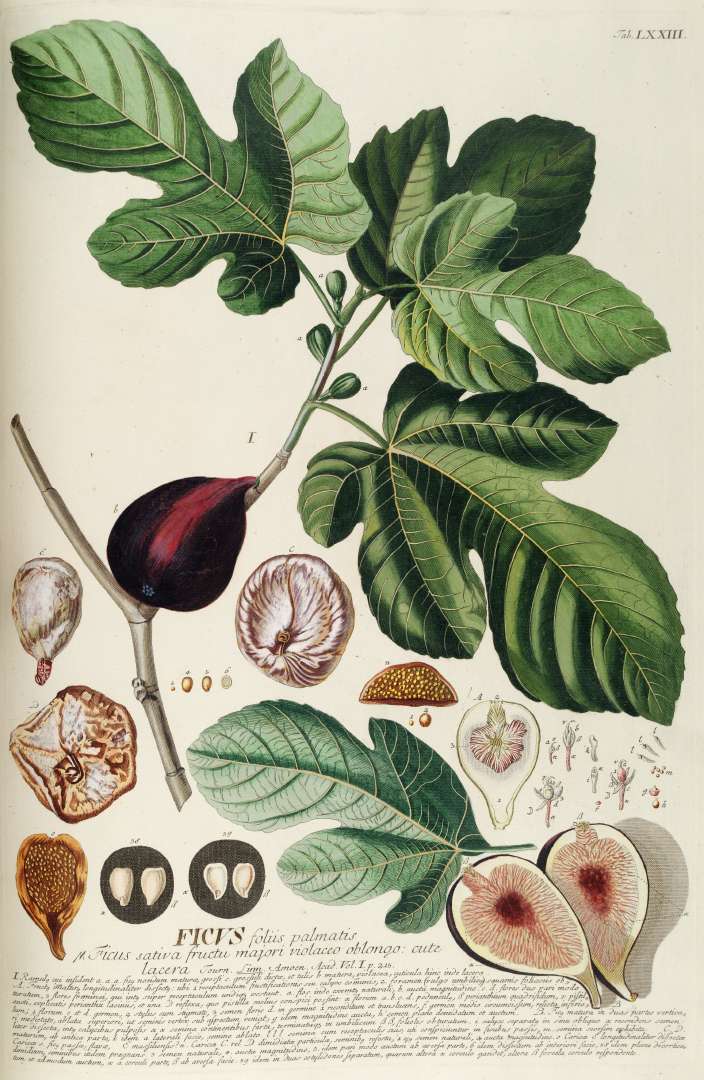
Common Fig
Ficus carica
☀️ Full Sun 💧 Moderate

Cluster Fig
Ficus racemosa
☀️ Full Sun 💧 Moderate

Japanese Fig
Ficus erecta
☀️ Full Sun 💧 High

Florida Strangler Fig
Ficus aurea
☀️ Full Sun 💧 Moderate