
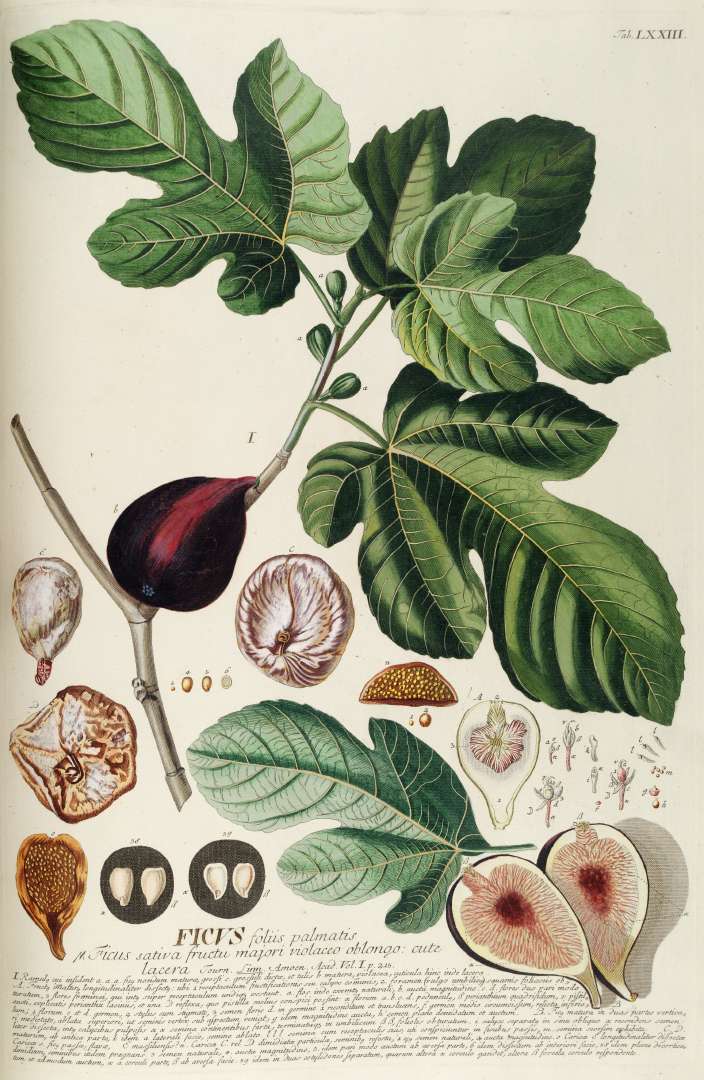
The common fig is a deciduous tree or large shrub from the Ficus carica species, native to the Mediterranean and Western Asia. It is recognized for its unique, multi-lobed leaves and the sweet, pear-shaped fruit it produces twice a year in warm climates.
You need 8 hours of direct sunlight daily to ensure the fruit develops enough sugar to be palatable. In temperate regions, the tree thrives best when its roots are restricted by a pot or a brick-lined pit, which prevents excessive leaf growth and encourages a higher fruit yield.
Key Facts
- Sun: Full sun (8+ hours daily)
- Height: 3-10 m (10-33 ft)
- Hardiness: USDA zones 7-11
- Soil: Well-drained, pH 6.0-7.5
- Water: Consistent moisture during fruiting
Is the Common Fig Right for Your Garden?
A common fig tree suits any sunny space where you can manage its vigorous root system. These plants produce a heavy crop of fruit that requires daily harvesting in late summer to prevent attracting wasps and ants.
Because they are native to warm climates, they require a sheltered spot in temperate zones to survive winter. Planting them near other Mediterranean species like the olive (Olea europaea) or pomegranate (Punica granatum) creates a microclimate that traps heat.
- Requires a warm, south-facing wall in cooler regions
- Roots can damage foundations if planted closer than 4 m (13 ft)
- Suits large containers to restrict growth and encourage fruiting
How to Identify a Common Fig Tree
The common fig is a deciduous woody plant characterized by its deeply lobed, palmate leaves that grow up to 25 cm (10 in) in length. The foliage is rough to the touch on the upper side and slightly hairy underneath, arranged alternately along thick, grey-green stems.
Unlike most fruit trees, the flowers are not visible; they are contained within the hollow green syconium. As the fruit matures, it turns from a hard green to a soft purple or brownish-yellow, depending on the specific cultivar.
- Flowers are invisible, contained within the hollow green “fruit”
- Bark is smooth and light grey, often becoming silver with age
- Twigs are stout and contain a sticky, white latex sap
- Mature fruit ranges from 3 cm to 5 cm (1.2-2 in) in diameter
How Big Does a Common Fig Tree Get?
A mature common fig tree typically reaches a height of 3 m to 10 m (10-33 ft) with a spread that often equals its height. While wild specimens in the Mediterranean can grow quite large, garden varieties are frequently maintained as 3 m (10 ft) shrubs for easier harvesting.
The growth rate is moderate, with healthy trees adding 30-60 cm (1-2 ft) of new wood each year. If the roots are not restricted by heavy soil or a container, the canopy can become quite dense, casting deep shade over anything planted beneath it.
- Standard trees develop a trunk diameter of 15-30 cm (6-12 in)
- Dwarf varieties like ‘Little Miss Figgy’ rarely exceed 1.8 m (6 ft)
- Roots can spread 15 m (50 ft) horizontally in search of water
Choosing the Best Site for Ficus carica
Plant your common fig in a position that receives full sun and is protected from cold northerly winds. In USDA zones 7 and 8, a south-facing brick wall acts as a radiator, releasing heat at night to speed up fruit ripening before the first frost.
Soil drainage is more important than fertility for this species. It thrives in alkaline soils with a pH up to 7.8, but it will struggle in heavy clay that stays waterlogged during the winter months.
- Avoid low-lying frost pockets that kill new spring growth
- Allow 5-6 m (16-20 ft) of space from other large trees
- Ensure at least 8 hours of direct, unobstructed sunlight
Planting and Establishing Your Fig Tree
The best time to plant a common fig is in late winter or early spring while the tree is still dormant. Dig a hole twice as wide as the root ball but no deeper, ensuring the soil line matches the level it was at in the nursery pot.
To prevent the tree from becoming too large and to encourage fruit over foliage, many growers line the planting hole with paving slabs or bricks. This root restriction stresses the plant just enough to trigger a heavy crop of figs.
- Line planting holes with bricks in rich soil to restrict roots
- Add a 5 cm (2 in) layer of organic mulch after planting
- Stake young trees for the first 2 years in windy sites
Watering and Feeding for Maximum Fruit
Provide 2.5 cm (1 in) of water per week during the summer to ensure the fruit does not shrivel and drop prematurely. Common fig trees are efficient at finding water, but consistent moisture is required when the fruit is in its final swelling stage in July or August.
Over-fertilizing is a common mistake that leads to lush green leaves but zero fruit. Use a balanced fertilizer in early spring, then switch to a high-potassium feed once the first tiny figs appear on the stems.
- Avoid high-nitrogen fertilizers which stimulate only leaf growth
- Use a liquid tomato feed every 2 weeks once small figs appear
- Mulch with well-rotted manure in spring to retain soil moisture
Pruning Common Fig Trees for Shape and Yield
Prune your common fig in mid-to-late winter when the sap is not flowing to avoid excessive bleeding. Remove any “suckers” growing from the base and thin out the center of the tree to allow light to reach the ripening fruit inside the canopy.
In early summer, you should also perform “pinching out,” which involves removing the growing tip of every other new shoot. This redirects the tree’s energy into the developing figs rather than creating more stem length.
- Cut back one-third of the previous year’s growth in winter
- Wear gloves to protect skin from the irritating latex sap
- Remove any “mummy” fruits left over from the previous season
Common Fig Tree Problems and Diseases
The most frequent issue is birds eating the ripening fruit just as it reaches peak sweetness. You may also notice Fig Mosaic Virus, which creates yellow mottling on leaves; while it looks concerning, it rarely impacts the overall health or fruit production of the tree.
In humid climates, Fig Rust can cause leaves to develop brown spots and drop early. Improving air circulation through pruning and removing fallen leaves from the base of the tree will help manage this fungal problem.
- Install bird netting once fruit begins to change color
- Treat Fig Rust with copper-based fungicides in humid weather
- Watch for scale insects on the undersides of large leaves
Winter Protection and Dormancy
Young fig trees need protection when temperatures drop below -10 °C (14 °F) to prevent stem dieback. Wrap the main trunk in burlap or straw, and mulch the base heavily with 10 cm (4 in) of wood chips to protect the root system from freezing.
If your tree does suffer winter kill, do not remove it immediately in spring. Common figs often regrow from the roots even if the entire upper structure has been killed by a hard freeze.
- Container-grown figs should move to an unheated garage in winter
- Stop fertilizing in late summer to allow wood to harden
- Expect leaves to turn yellow and drop after the first hard frost
Traditional and Modern Uses of Figs
The common fig is primarily grown for its sweet, fiber-rich fruit, which can be eaten fresh, dried, or preserved. Historically, the leaves were used in Mediterranean cooking to wrap meat or fish, imparting a subtle coconut-like aroma when heated.
The milky sap of the tree was traditionally used in folk medicine as a topical application for skin warts, though this can cause severe blistering on sensitive skin. Today, the wood is occasionally used for small decorative carvings, though it is generally too soft for construction.
- High levels of calcium, potassium, and magnesium in fruit
- Sap contains the enzyme ficin, used historically to curdle milk
- Leaves are used in modern perfumery for their green, earthy scent
Year-Round Care for Your Common Fig
| Spring | Apply a balanced fertilizer and a 5 cm (2 in) layer of mulch. Remove winter protection once the risk of hard frost has passed. |
|---|---|
| Summer | Water twice weekly during dry spells. Pinch out the tips of new growth in June to encourage fruit development. |
| Autumn | Harvest ripe fruit daily. Clean up fallen leaves to prevent the spread of fig rust and other fungal spores. |
| Winter | Prune for shape and size in January or February. Wrap trunks of young trees if temperatures are forecast below -10 °C (14 °F). |
Common Fig Tree Problems Explained
| What you see | Likely cause | What to do |
|---|---|---|
| Fruit dropping before ripe | Drought stress | Water deeply and regularly during the summer fruit-swelling stage. |
| Yellow mottled leaves | Fig Mosaic Virus | No cure exists; maintain tree health with water and mulch to minimize impact. |
| Sticky residue on leaves | Scale insects | Apply horticultural oil or neem oil to the stems and leaf undersides. |
Common Fig Varieties for Home Gardens
- 'Brown Turkey' – reliable, hardy variety for cooler climates
- 'Chicago Hardy' – extremely cold tolerant, survives zone 6
- 'Celeste' – small, very sweet fruit often called sugar fig
- 'Black Mission' – large, dark purple fruit with pink flesh
- 'Little Miss Figgy' – dwarf variety reaching only 1.8 m (6 ft)
Frequently Asked Questions
How long until a common fig tree produces fruit?
Most common fig trees will begin producing fruit 2 to 3 years after planting if they receive full sun. Container-grown trees often fruit sooner than those planted in the ground due to root restriction.
Are common fig leaves poisonous?
The leaves themselves are not highly toxic, but the white milky sap they contain is a skin irritant to humans and is toxic to dogs and cats if ingested. Always wear gloves when pruning to avoid 'fig dermatitis'.
Do common figs need a second tree for pollination?
Most common fig cultivars grown in gardens are self-fertile and do not require a second tree or the fig wasp for pollination. These varieties produce fruit through parthenocarpy, meaning the fruit develops without fertilization.
What is the difference between a common fig and a common figwort?
Common fig (Ficus carica) is a woody tree with large lobed leaves and edible fruit. Common figwort (Scrophularia nodosa) is a perennial wildflower with square stems and tiny, brownish-purple flowers that is not related to the fig tree.
Why are my figs not ripening?
Figs usually fail to ripen due to a lack of summer heat or insufficient sunlight. In cooler climates, ensure the tree is against a south-facing wall and thin out the leaves to allow sun to reach the fruit.
Information about traditional or historical uses is provided for educational interest only and is not medical advice. Do not use any plant to treat a condition without speaking to a qualified professional.
Sources & Verification
Taxonomy and distribution are checked against the databases below. Care guidance is written for cultivated species only and reviewed by our editor. How We Build Plant Profiles →
More in Ficus

Port Jackson Fig
Ficus rubiginosa
☀️ Full Sun 💧 Moderate

Sandpaper Tree
Ficus exasperata
☀️ Full Sun 💧 Moderate

Dye Fig
Ficus tinctoria
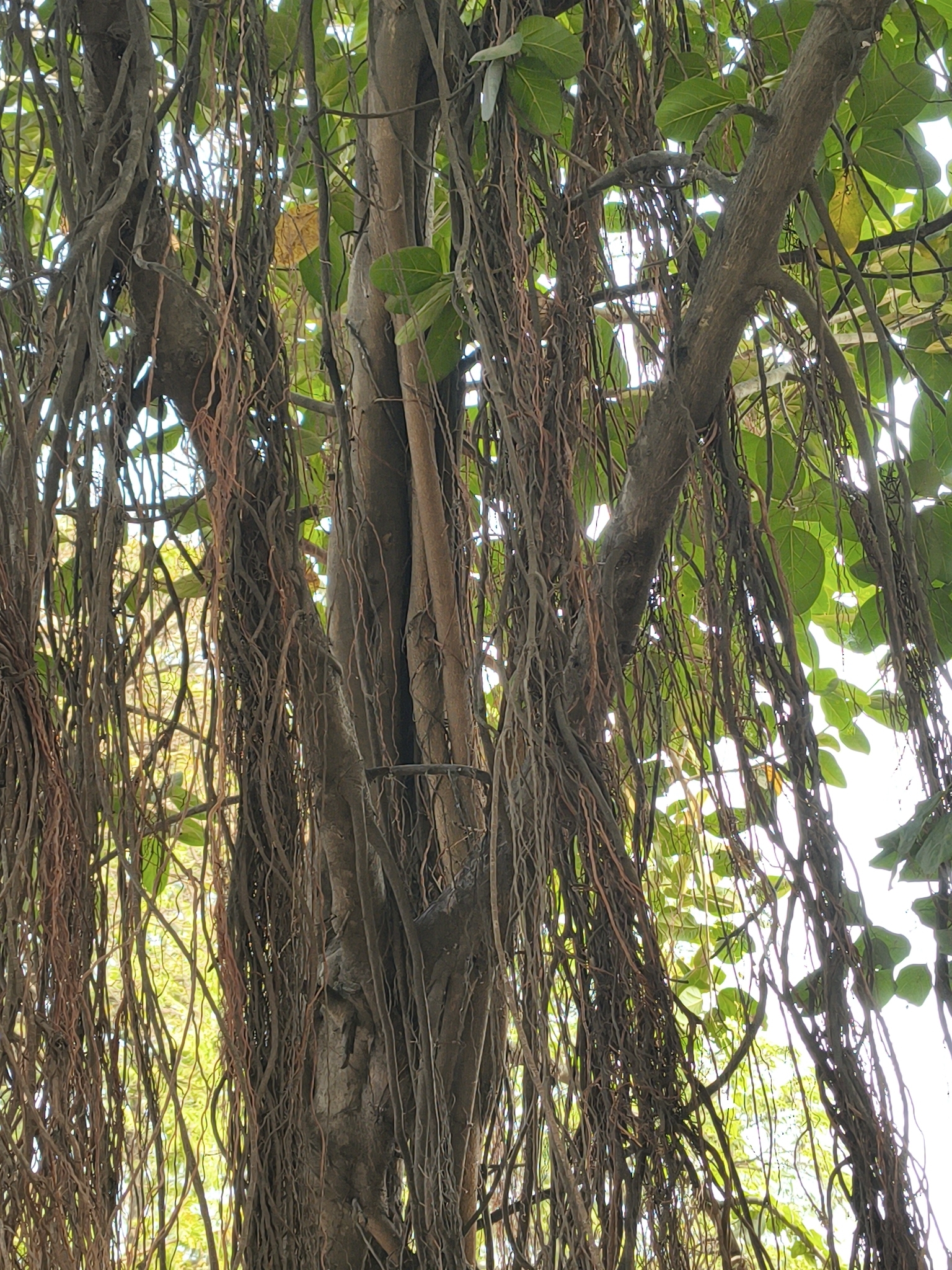
Indian Banyan
Ficus benghalensis
☀️ Bright Indirect 💧 Moderate
Weeping Fig
Ficus benjamina
☀️ Bright Indirect 💧 Moderate
Chinese Banyan
Ficus microcarpa
☀️ Bright Indirect 💧 Moderate