

The sandpaper tree is a deciduous, dioecious fig species native to tropical Africa and Southern Asia, belonging to the mulberry family Ficus exasperata. It is most recognized for its extremely rough, scabrous leaves that function as a natural abrasive due to high silica content.
Unlike many other figs, this species thrives in both rainforests and drier savannah regions, often reaching heights of 20 m (65 ft). It serves as a vital source of traditional medicine and organic polishing material in its native range.
Key Facts
- Scientific Name: Ficus exasperata Vahl
- Leaf Texture: Extremely rough and abrasive (sandpaper-like)
- Native Range: Tropical Africa and Southern Asia
- Height: Mature trees reach 20 m (65 ft)
- Pollination: Reliant on the wasp Kradibia cowani
Where the Sandpaper Tree Fits in the Landscape
The sandpaper tree is a pioneer species that thrives in disturbed areas, forest edges, and along riverbanks. It is not a common garden ornamental but is a vital ecological component in tropical Africa and Southern Asia. Its ability to grow quickly in open, sunny spots makes it an excellent tree for natural reforestation projects and soil stabilization in its native range.
Because it is deciduous, it can withstand seasonal dry spells better than many evergreen rainforest figs. It is often found growing alongside other pioneer trees such as the umbrella tree (Musanga cecrepioides) in secondary forest growth.
How to Identify Ficus exasperata
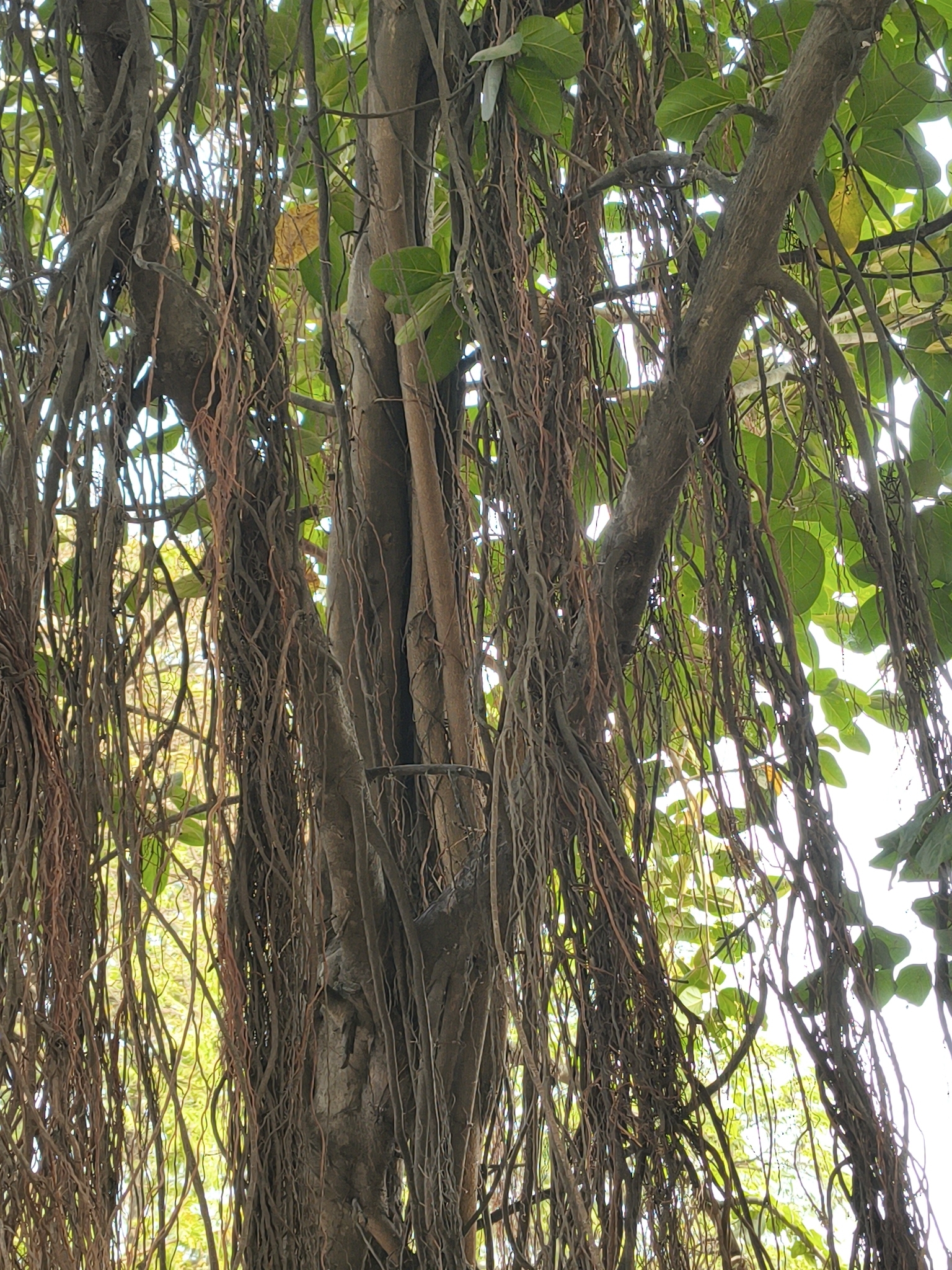
You can identify Ficus exasperata by its rough, sandpaper-like foliage and its smooth, greyish-green bark. Mature specimens reach heights of 15-20 m (50-65 ft) with a spreading canopy that provides significant shade. Its leaves are alternate, usually ovate or elliptical, and feel distinctly abrasive to the touch on both sides due to calcified hairs.
- Leaf size: 7-20 cm (3-8 in) long and 4-12 cm (1.5-5 in) wide
- Bark: Pale grey to green, often smooth but becoming slightly fissured with age
- Fruit: Small, globose figs about 1-1.5 cm (0.4-0.6 in) in diameter, turning yellow or red when ripe
- Leaf margins: Often serrated or dentate, especially on younger growth
Natural Habitat and Distribution
This species is primarily found in tropical rainforests and savannah woodlands across Africa and Asia. It is highly adaptable, growing in elevations from sea level up to 1,500 m (4,900 ft). In Africa, it is widespread from Senegal to Ethiopia and south to Angola, while in Asia, it is commonly found in India and Sri Lanka, often near watercourses where the soil remains moist.
It prefers well-drained loamy soils but can tolerate seasonal flooding. The tree is frequently found in gallery forests, which are the strips of vegetation that follow river paths through otherwise dry landscapes.
Ecological Role and Pollination
The sandpaper tree is dioecious, meaning individual trees are either male or female, and it relies on a specific wasp for pollination. The wasp Kradibia cowani enters the syconium (the fig fruit) to lay eggs, a specialized symbiotic relationship common to the Ficus genus. In the wild, the fruits are a food source for various birds and fruit bats, which help disperse the seeds across the forest floor.
The tree also provides habitat for diverse insect populations. Its rapid growth in clearings helps establish a canopy that allows more shade-tolerant species to germinate beneath it.
Conservation Status and Threats
This species is currently listed as Least Concern (LC) by the IUCN because of its expansive range and adaptable nature. It remains common throughout West Africa, from Senegal to Angola, and across the Indian subcontinent. While it faces some pressure from urban expansion and the collection of bark for traditional medicine, its fast growth rate allows it to maintain stable populations in most regions.
Local populations are sometimes managed as part of agroforestry systems. Farmers may leave the tree standing when clearing land because of its value for shade and traditional medicine.
Traditional Medicinal Uses and Health Benefits
Traditionally, various parts of Ficus exasperata were used for treating respiratory and digestive issues in West African herbalism. The leaves were often prepared as a decoction or infusion to address symptoms of hypertension, coughs, and hemorrhoids. In some regions, the sap was applied topically to treat fungal skin infections or to promote the healing of small wounds.
- Antimicrobial properties: Studied for effects against certain bacteria and fungi
- Hypertension: Traditionally used as a hypotensive agent in Nigerian folk medicine
- Anti-inflammatory: Leaf extracts were applied to reduce swelling and joint pain
Practical and Utilitarian Uses for the Sandpaper Tree
The wood of the sandpaper tree is soft and easy to work, making it a common choice for carving light domestic items. In Ghana and Nigeria, the timber is used for making stools, kitchen utensils, and tool handles. Because the wood is not highly durable against termites, it is rarely used for permanent construction but remains a staple for temporary structures and fuel.
The most famous use remains the leaves as a natural abrasive. They are harvested and dried to sand down wooden furniture, gourds, and even metal cookware before painting or finishing.
Sandpaper Tree vs Other Fig Species
The sandpaper tree is easily distinguished from its relatives by its unique leaf texture. The common fig (Ficus carica) has much larger, deeply lobed leaves that lack the abrasive grit of the sandpaper tree. The cluster fig (Ficus racemosa) produces much larger fruit clusters directly on the trunk (cauliflory), whereas Ficus exasperata fruits primarily on the younger branches.
- Common fig (Ficus carica): Edible large fruits, smooth or fuzzy lobed leaves
- Cluster fig (Ficus racemosa): Large red fruit clusters on the trunk
- Cape fig (Ficus sur): Larger, smoother leaves and much larger edible fruits
Frequently Asked Questions
What does the name "eseses" or "esese" mean?
"Esese" is a common name for Ficus exasperata in certain West African languages, referring to its utility and presence in the local landscape. It is sometimes used interchangeably with the name "epin" in Yoruba.
What are the health benefits of Ficus exasperata leaves?
Traditionally, the leaves have been used to manage blood pressure, treat coughs, and soothe skin irritations. Modern pharmacological studies have explored their antioxidant and anti-inflammatory properties, though they are not a substitute for medical treatment.
Are the fruits of the sandpaper tree edible?
The small fruits are technically edible but are generally considered unpalatable to humans due to their dry, gritty texture. They are primarily consumed by wildlife, such as birds and bats, rather than being harvested as a food crop.
Why is it called the sandpaper tree?
It earned this name because its leaves contain high amounts of silica, making them feel exactly like commercial sandpaper. People in its native range use the dried leaves to sand down wood and clean household items.
How tall does Ficus exasperata grow?
This tree typically reaches a height of 15-20 m (50-65 ft) at maturity. In ideal rainforest conditions, some specimens have been recorded slightly taller, though they usually maintain a medium-sized stature.
Information about traditional or historical uses is provided for educational interest only and is not medical advice. Do not use any plant to treat a condition without speaking to a qualified professional.
Sources & Verification
Taxonomy and distribution are checked against the databases below. Care guidance is written for cultivated species only and reviewed by our editor. How We Build Plant Profiles →
More in Ficus

Broom Cluster Fig
Ficus sur
☀️ Full Sun 💧 High
Indian Banyan
Ficus benghalensis
☀️ Bright Indirect 💧 Moderate
Weeping Fig
Ficus benjamina
☀️ Bright Indirect 💧 Moderate

Sweet Sandpaper Fig
Ficus opposita

Rubber Plant
Ficus elastica
☀️ Bright Indirect 💧 Moderate
Sycamore Fig
Ficus sycomorus
☀️ Full Sun 💧 Moderate