

Fiddle-leaf fig (Ficus lyrata) is a broadleaf evergreen tree native to the lowland tropical rainforests of western Africa, notable for heavily veined, violin-shaped foliage. Indoors, it grows as a prominent structural focal point that demands stable positioning and copious ambient light.
It drops foliage rapidly when moved between rooms or exposed to cold drafts. Success relies on consistent watering rhythms and unfiltered sun filtered only by standard window glass.
Key Facts
- Light: 4 to 6 hours filtered, direct morning or bright indirect sun
- Water: soak thoroughly when the top 5 cm (2 in) dries
- Temperature: 16–27 °C (60–80 °F); avoid drafts below 12 °C (55 °F)
- Soil: loose, well-draining peat or coir mix with perlite
- Toxicity: toxic to cats and dogs due to insoluble calcium oxalates
- Feed: balanced liquid fertilizer once monthly during active spring-summer growth
Is Fiddle-Leaf Fig Easy to Care For?
Fiddle-leaf fig requires consistent indoor environmental conditions and will react quickly to erratic care or frequent relocation. It suits growers with dedicated, sunny floor space who monitor soil moisture on a regular schedule rather than watering by calendar habit.
You can purchase it trained either as an upright single-stem standard with a distinct upper canopy or as a multi-stem bushy specimen clothed in foliage down to the pot rim. Indoors, sudden drops in ambient humidity or temperatures below 12 °C (55 °F) prompt rapid leaf shedding. If you keep the plant in a fixed position shielded from air-conditioning vents, maintenance narrows down to weekly checks and leaf cleaning.
Fiddle-Leaf Fig Botanical Description
A healthy fiddle-leaf fig produces dull-to-glossy obovate leaves up to 45 cm (18 in) long with wavy margins and prominent pale cream-green venation. In domestic spaces, specimens average 2 to 3 m (6.5 to 10 ft) in height, whereas wild rainforest trees reach heights of 12 to 15 m (40 to 50 ft).
Key diagnostic features include:
- Foliage structure: leathery blades constricted near the base, resembling a violin or lyre
- Stem morphology: greyish-brown woody bark marked with dry, papery stipule remnants
- Growth habit: upright and vertical; standard forms have a bare trunk while bush forms branch low
- Sap: viscous, milky latex that bleeds freely whenever petiole or stem tissue is punctured
How Much Light Does Ficus lyrata Need?
Fiddle-leaf fig requires at least 6 hours of bright indirect light per day alongside 1 to 2 hours of direct early morning sun. Place the pot directly in front of an unobstructed east-facing or south-facing window fitted with a sheer curtain to prevent leaf scorch.
Insufficient light reduces leaf production, lengthens the internodes, and initiates leaf drop from the bottom upward. Rotate the container by a quarter turn every two weeks so all sides receive balanced exposure and the central stem remains vertical. If natural illumination is inadequate, position a full-spectrum LED grow light 30 to 60 cm (12 to 24 in) above the highest leaves for 12 hours daily.
How Often to Water Fiddle-Leaf Fig
Water thoroughly only when the top 5 cm (2 in) of potting mix feels dry to the touch. Drench the root ball until excess moisture runs out of the drainage holes, then empty the collection saucer after 20 minutes to prevent standing water.
Under indoor conditions, watering occurs roughly every 7 to 10 days in warm weather, tapering to every 14 to 21 days during winter. Red freckling across young leaves (edema) signals uneven root moisture uptake rather than insect infestation. Consistent moisture deficits manifest as brittle leaf margins that curl inward and turn uniformly tan.
The Right Soil and Potting Mix
Use a porous, coarse potting medium with a pH range of 5.5 to 6.5 that lets water percolate freely while retaining moderate moisture. Heavy garden soil suffocates the roots and promotes bacterial rot.
Blend this custom soil recipe for container culture:
- 2 parts chunky peat moss or well-rinsed coco coir
- 1 part horticultural perlite or coarse pumice
- 1 part pine bark fines or orchid bark chips
Select a container that features bottom drainage perforations and is no more than 5 to 7 cm (2 to 3 in) wider in diameter than the existing root ball.
Temperature and Humidity Demands
Maintain room temperatures between 18 and 24 °C (65–75 °F) with relative humidity levels at or above 50 percent. Exposure to temperatures lower than 12 °C (55 °F) damages tender tissue and induces leaf loss.
Winter indoor heating often reduces ambient humidity to 20 or 30 percent, which causes the edges of the leaves to turn crisp. Run a cool-mist ultrasonic humidifier nearby to maintain proper moisture levels in the air. Wipe down the large leaf blades with a damp cloth every month to clear airborne dust that blocks light absorption and harbors common pests.
Fertilizing Fiddle-Leaf Fig
Apply a liquid balanced houseplant fertilizer with an N-P-K ratio of 3-1-2 or 20-20-20 diluted to half-strength once every four weeks. Only feed during the active growth period running from April through September.
Always moisten the root zone with plain water before applying liquid feed to avoid chemical burns to root hairs. Suspend all fertilization from late autumn through mid-winter when reduced daylight pauses root and shoot expansion. White salt crumbles crusting on the soil surface point to mineral fertilizer accumulation, which requires a complete flush with clear water.
How to Propagate Ficus lyrata
Propagate fiddle-leaf fig using semi-hardwood stem tip cuttings in late spring when metabolic activity is high. Individual leaf cuttings without an attached node may generate roots in water, but they lack meristematic tissue and will never produce a new upright shoot.
Follow this propagation process:
- Cut: slice a 15 to 20 cm (6 to 8 in) apical stem section just beneath a node using sterile shears
- Prep: leave one or two leaves on the stem and rinse the milky sap off the base with cool water
- Root: submerge the node in a jar of clean water, changing it every 4 to 5 days, or insert it directly into damp perlite
- Establish: when roots reach 5 cm (2 in) in length, pot the cutting into well-aerated potting mix
Is Fiddle-Leaf Fig Toxic to Cats and Dogs?
Fiddle-leaf fig is toxic to cats, dogs, and horses according to veterinary poison control databases. The entire plant holds caustic latex enriched with insoluble calcium oxalate crystals and proteolytic enzymes.
Chewing foliage or breaking branches releases microscopic sharp crystals that penetrate oral mucous membranes. Typical symptoms include excessive drooling, mouth pawing, oral pain, reduced appetite, and bouts of vomiting. Topical exposure to leaking white sap causes localized skin redness and contact dermatitis in pets and sensitive humans.
Will a Fiddle-Leaf Fig Flower or Fruit Indoors?
Potted fiddle-leaf figs do not produce flowers or fruit indoors because domestic spaces lack their sole obligate pollinator wasp. Outdoors in frost-free subtropical habitats, wild trees produce non-showy green syconia up to 3 cm (1.2 in) across.
The flowers develop entirely inside these hollow, rounded green figs. In native West African forests, a specialised fig wasp from the family Agaonidae enters through an apical ostiole to carry out cross-pollination. The resulting woody, seeded fig fruits hold no commercial culinary value and are consumed mainly by wild birds and fruit bats.
Fiddle-Leaf Fig Seasonal Care Schedule
| Spring | Inspect root system and repot if bound into a container 5 cm (2 in) wider. Resume monthly half-strength feedings and wipe accumulated dust from both sides of all leaves. |
|---|---|
| Summer | Check soil moisture every 5 to 7 days as growth accelerates. Shield leaves from intense afternoon sunlight through unshaded glass and rotate the pot 90 degrees every fortnight. |
| Autumn | Taper watering frequency as daylight hours decrease. Move plants away from drafty exterior doors or cooling vents and discontinue all fertilizer applications by October. |
| Winter | Water only when the top 5 to 8 cm (2 to 3 in) of substrate turns dry. Operate a cool-mist humidifier nearby to combat furnace air and keep temperatures above 15 °C (60 °F). |
Fiddle-Leaf Fig Leaf and Growth Problems
| What you see | Likely cause | What to do |
|---|---|---|
| Brown patches spreading from leaf margins and centers | Root rot caused by overwatering or compacted soil | Allow the potting mix to dry out, inspect roots for dark decay, prune rotting sections, and repot in fresh, porous soil. |
| Crisp, dry tan leaf tips and margins | Under-watering or low relative humidity below 40% | Soak the root zone thoroughly until water drains from the base and set up an ultrasonic room humidifier. |
| Tiny reddish or dark brown spots on new unfolding leaves | Edema from irregular watering pressure | Establish a consistent watering routine so roots take in moisture evenly; the spots fade as the leaf matures. |
| Rapid drop of green, undamaged lower leaves | Sudden environmental shock or cold drafts | Relocate the container away from exterior doors, radiators, and air conditioners to maintain a constant temperature. |
| Fine webbing under leaves paired with dull, stippled surfaces | Spider mite infestation encouraged by dry air | Wash the foliage down with lukewarm water and treat weekly with insecticidal soap or horticultural oil. |
Fiddle-Leaf Fig Cultivars and Growth Forms
- ‘Bambino’ – compact dwarf cultivar reaching 1 to 1.5 m with thick, closely spaced leaves
- ‘Variegata’ – rare selection displaying irregular creamy-white borders
- ‘Compacta’ – dense form with smaller leaves and shorter internodes than the wild type
Frequently Asked Questions
Why are my fiddle-leaf fig leaves dropping off?
Leaf drop is triggered by sudden environmental change, inadequate light, or cold drafts below 12 °C (55 °F). Relocating the plant or allowing roots to sit in cold, saturated potting mix causes stress that results in leaf shedding.
What is the difference between a fiddle-leaf fig bush and a standard?
A standard has its lower branches pruned away to train a single bare trunk topped by a rounded canopy, whereas a bush retains multiple stems with foliage growing near soil level. Both share identical botanical genetics and general light requirements.
How do you tell Ficus lyrata apart from Ficus elastica?
Fiddle-leaf fig has broad, dull-to-glossy leaves shaped like a violin with pronounced wavy margins. In contrast, the rubber plant (Ficus elastica) features stiffer, oval leaves with smooth edges and emerges from deep pink or red stipule sheaths.
What are the benefits of keeping a fiddle-leaf fig indoors?
Its architectural scale and broad leaf surface area provide distinct interior structure. Like other broadleaf foliage plants, it increases ambient indoor transpiration and creates a natural visual aesthetic.
How can I make my fiddle-leaf fig branch out?
Prune or notch the central stem just above a leaf node during active spring growth using clean shears. Removing apical dominance triggers dormant auxiliary buds along the upper trunk to produce lateral branches.
Sources & Verification
Taxonomy and distribution are checked against the databases below. Care guidance is written for cultivated species only and reviewed by our editor. How We Build Plant Profiles →
- Kew Plants of the World OnlineTaxonomic baseline, distribution, and synonymy
- University of Florida IFAS ExtensionCultural requirements and interior foliage maintenance
- ASPCA Animal Poison ControlToxicity assessment for domestic dogs and cats
- Missouri Botanical GardenBotanical traits and cultivation details
- GBIF — Global Biodiversity Information Facilitytaxonomy, synonyms, occurrence records
- Wikipediageneral reference
More in Ficus

Creeping Fig
Ficus pumila
☀️ Bright Indirect 💧 Moderate

Japanese Fig
Ficus erecta
☀️ Full Sun 💧 High

Broom Cluster Fig
Ficus sur
☀️ Full Sun 💧 High

Florida Strangler Fig
Ficus aurea
☀️ Full Sun 💧 Moderate
Sycamore Fig
Ficus sycomorus
☀️ Full Sun 💧 Moderate
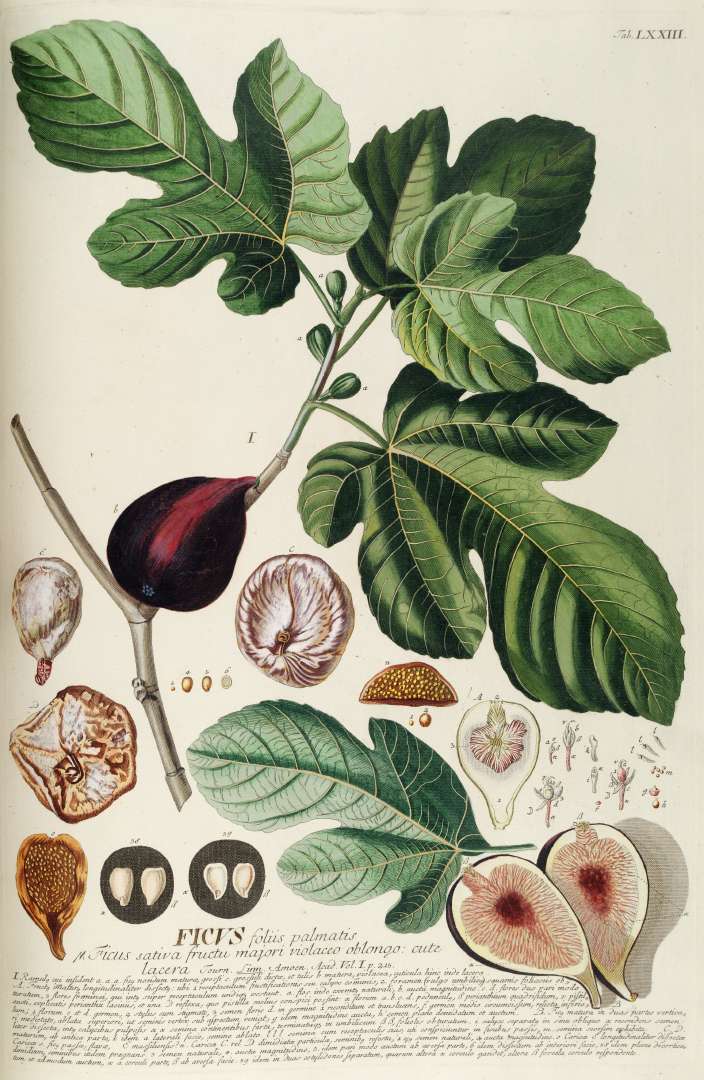
Common Fig
Ficus carica
☀️ Full Sun 💧 Moderate