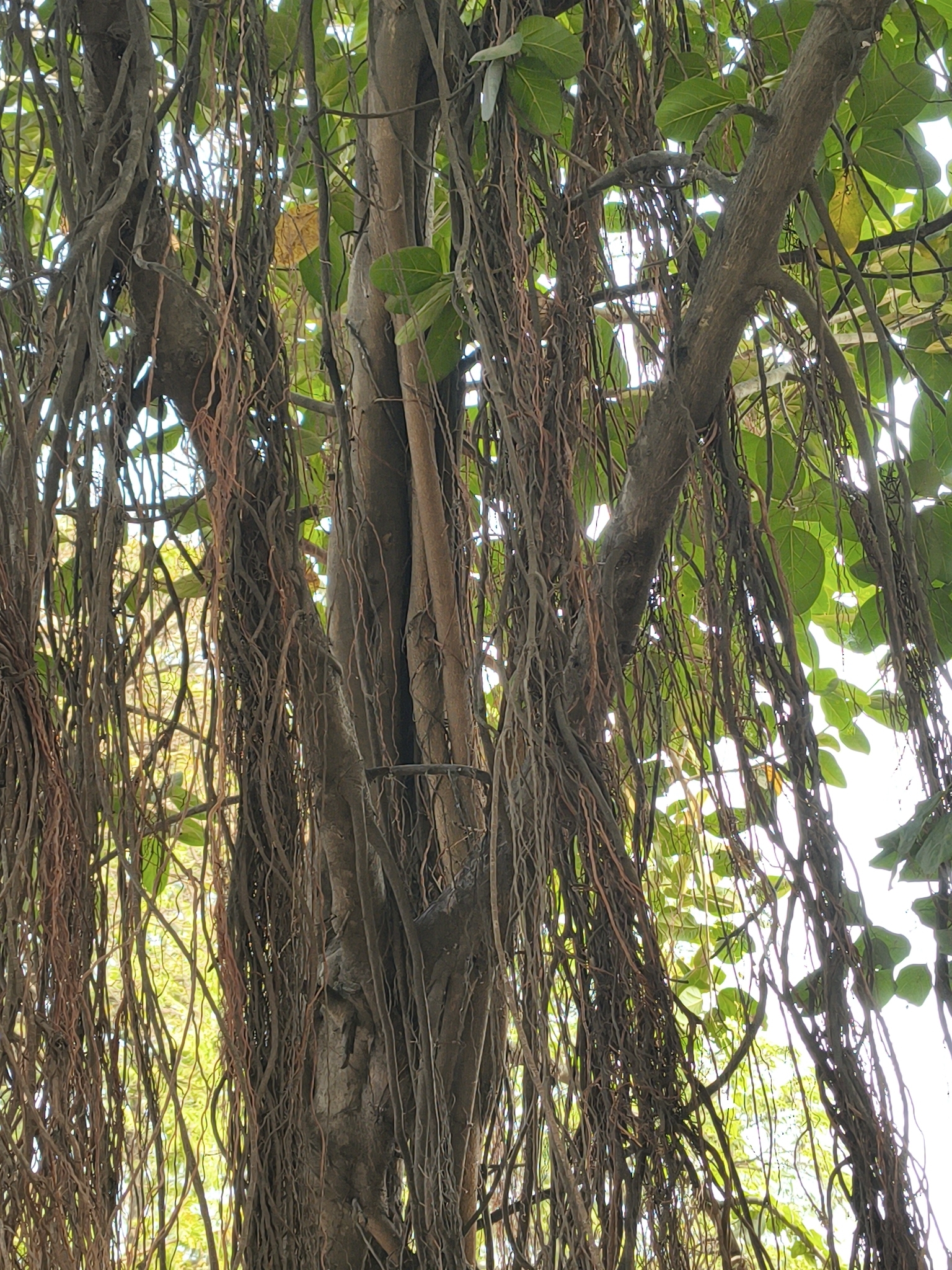
The Florida Strangler Fig, known scientifically as Ficus aurea, is a fast-growing tree native to Florida, the Caribbean, and Central America. It is most recognized for its hemiepiphytic growth habit, where it begins life as a small plant in the canopy of a host tree before sending roots down to the ground.
While it is a vital keystone species in the Everglades, this fig requires significant space in a landscape to accommodate its massive spread and aggressive root system. It is also a frequent choice for tropical bonsai enthusiasts due to its ability to develop dramatic aerial roots and small, leathery leaves.
Key Facts
- Hardiness: Best suited for USDA zones 9b through 11
- Growth Habit: Hemiepiphytic tree with expansive aerial root systems
- Mature Height: Reaches up to 20 m (65 ft) in the wild
- Light: Prefers full sun but tolerates partial shade
- Fruit: Produces small yellow to red figs roughly 1 cm wide
Is the Florida Strangler Fig Right for Your Landscape?
The Florida Strangler Fig is best suited for large properties where it has at least 10-15 m (33-50 ft) of clearance from any buildings or underground utilities. Because its roots are famously aggressive, they can easily lift sidewalks or invade septic lines if planted too close to infrastructure. This species is not a typical garden tree; it is an expansive giant that eventually creates a dense, broad canopy that provides deep shade.
For those with smaller spaces, this fig is a primary candidate for bonsai. Its natural tendency to produce aerial roots allows growers to create “banyan-style” miniatures that mimic the look of ancient tropical forests. It is highly resistant to salt spray, making it a functional choice for coastal Florida gardens where other trees might struggle.
Identifying Ficus aurea Leaves and Growth Habit
You can identify Ficus aurea by its thick, leathery, elliptic leaves that typically measure 5-15 cm (2-6 in) in length. The leaves are smooth and dark green on both sides, arranged alternately along the stems. Unlike the similar Shortleaf Fig (Ficus citrifolia), the fruit of the Florida Strangler Fig is sessile, meaning it grows directly on the stem without a stalk.
The growth habit is the plant’s most distinct feature. In the wild, seeds dropped by birds germinate in the crotch of a host tree, such as a cabbage palm (Sabal palmetto). The young fig sends down long, rope-like aerial roots that eventually reach the soil and thicken, encircling the host tree until the host eventually dies and decays, leaving a hollow-cored fig tree behind.
Mature Size and Spread of the Golden Fig
A mature Florida Strangler Fig can reach heights of 20 m (65 ft) with a canopy spread that often exceeds its height. In optimal conditions in South Florida or the Keys, the tree develops a massive trunk composed of fused aerial roots. These roots can spread horizontally for great distances, occasionally dropping new vertical supports to create a colony-like appearance.
- Height: 15-20 m (50-65 ft)
- Canopy Spread: 10-25 m (33-82 ft)
- Trunk Diameter: Highly variable due to fused root structures
- Growth Rate: Up to 1 m (3 ft) per year when young
Selecting the Best Site for Planting
This tree requires a site with full sun to partial shade and plenty of room for both the canopy and the root system to expand. It is highly adaptable to different soil types, including the limestone-heavy soils of the Miami Ridge and the sandy coastal soils of the Caribbean. While it tolerates occasional flooding, it performs best in well-drained locations where it can establish a deep root base.
Avoid planting the Golden Fig near swimming pools, driveways, or house foundations. The roots are opportunistic and will find any crack in a pipe or structure to expand. If you are growing it as a shade tree, ensure it is the focal point of a large lawn or a naturalized woodland area where its debris, such as falling figs and leaves, won’t be a maintenance nuisance.
How to Plant and Establish Young Trees
When planting a container-grown Florida Strangler Fig, dig a hole two to three times wider than the root ball but no deeper. This encourages the roots to spread horizontally into the surrounding soil, which provides better stability against high winds. Ensure the top of the root ball is level with or slightly above the surrounding soil grade to prevent crown rot.
Backfill the hole with native soil without adding heavy fertilizers, as this species is adapted to nutrient-poor environments. Water the tree immediately after planting and maintain a consistent watering schedule for the first year. Mulching with a 5-10 cm (2-4 in) layer of organic material will help retain moisture, but keep the mulch away from the actual trunk to avoid fungal issues.
Watering and Fertilizing Your Strangler Fig
Established trees are highly drought-tolerant, but young trees need 25 mm (1 in) of water per week during the growing season. Once the tree has developed a significant root system, it rarely requires supplemental irrigation except during extreme droughts. Overwatering can lead to root rot, especially in heavy clay soils that do not drain quickly.
Fertilization is rarely necessary for landscape trees, but you can apply a balanced, slow-release fertilizer in early spring to encourage faster growth. For bonsai specimens, regular feeding with a high-nitrogen liquid fertilizer every two weeks during the summer is standard practice. If the leaves appear pale or yellow, it may indicate a magnesium deficiency, which is common in alkaline Florida soils.
Pruning and Training for Bonsai
Pruning should be performed in late winter or early spring before the primary growth flush begins. Because the tree produces a sticky, milky latex sap when cut, you should wear gloves to avoid skin irritation. Removing lower branches can help define a single trunk, while thinning the interior canopy improves airflow and reduces the risk of pest infestations.
For bonsai training, Ficus aurea responds well to aggressive pruning and wiring. You can encourage aerial root development by increasing local humidity around the trunk using a clear plastic wrap or a misting system. The tree handles “defoliation” well, a technique used by bonsai artists to reduce leaf size and increase ramification in the branches.
Common Pests and Ficus Whitefly Problems
The most significant threat to this tree in recent years is the Ficus Whitefly (Singhiella simplex), which causes rapid leaf drop and branch dieback. You may notice a sticky substance called honeydew on the leaves, followed by the growth of black sooty mold. While large, healthy trees usually recover, repeated infestations can weaken the specimen significantly.
- Ficus Whitefly: Look for small white insects on leaf undersides; treat with systemic insecticides
- Cuban Laurel Thrips: Causes leaves to curl and develop purplish spots
- Scale Insects: Appear as small bumps on stems; can be managed with horticultural oil
- Sooty Mold: A secondary fungus that grows on pest excretions; wash leaves with water
Winter Care and Temperature Tolerance
Ficus aurea is a tropical species that begins to suffer damage when temperatures drop below 0 °C (32 °F). While a mature tree can survive short periods of light frost, young saplings and bonsai specimens must be protected. If a freeze is predicted, deeply water the tree 24 hours in advance, as moist soil retains more heat than dry soil.
In the northern parts of its range (Zone 9b), the tree may lose its leaves during a cold snap but will typically flush new growth once temperatures stabilize in the spring. For container-grown plants, move them indoors or into a greenhouse when night temperatures consistently fall below 10 °C (50 °F). Avoid placing indoor plants near cold drafts or heating vents, which can cause sudden leaf drop.
Wildlife Value and Ficus aurea Fruit
The Florida Strangler Fig is a keystone species because it produces fruit multiple times per year, providing a reliable food source for birds, mammals, and reptiles when other plants are dormant. The small figs turn from yellow to a dark red or purple when ripe. While technically edible for humans, they are often described as dry and flavorless compared to the common edible fig (Ficus carica).
The tree has a fascinating symbiotic relationship with the fig wasp Pegoscapus mexicanus. This specific wasp is the only insect capable of pollinating the flowers, which are hidden inside the hollow fruit. In exchange, the wasp uses the fig as a nursery for its larvae. This complex interaction ensures the survival of both species and supports a wide array of Florida wildlife, including Gopher tortoises and Cedar waxwings.
Year-Round Care for Florida Strangler Fig
| Spring | Apply a balanced slow-release fertilizer if growth is slow. Prune to shape before the summer rains begin. Monitor for the first signs of whitefly activity. |
|---|---|
| Summer | Ensure young trees receive at least 25 mm of water weekly. For bonsai, feed every 14 days and maintain high humidity to encourage aerial roots. |
| Autumn | Reduce fertilizer applications as growth slows. Clean up fallen fruit and leaves to prevent pest nesting and fungal growth near the base. |
| Winter | Protect young plants from frost with burlap or move containers indoors. Prune dead or damaged wood after the risk of frost has passed. |
Common Ficus aurea Problems and Solutions
| What you see | Likely cause | What to do |
|---|---|---|
| Rapid leaf drop and sticky residue | Ficus Whitefly infestation | Apply a systemic insecticide containing imidacloprid to the soil. |
| Leaves curling and turning purple | Cuban Laurel Thrips | Prune away infested leaf tips and apply horticultural oil. |
| Yellowing leaves with green veins | Magnesium deficiency | Apply Epsom salts (magnesium sulfate) to the soil around the drip line. |
Frequently Asked Questions
Can you eat the fruit of Ficus aurea?
Yes, the figs are edible, but they are generally small, dry, and lack the sweetness of commercial figs. They are far more valuable as a food source for local bird populations than for human consumption.
What is the difference between Ficus aurea and Ficus benghalensis?
Ficus aurea has smooth, hairless leaves that are usually 5-15 cm long, whereas Ficus benghalensis (the Indian Banyan) has much larger leaves (up to 25 cm) with a velvety or hairy texture on the underside.
Is the Florida Strangler Fig the same as the Figuier Blanc d'Argenteuil?
No, Ficus aurea is a wild tropical tree, while 'Blanche d'Argenteuil' is a specific cultivar of the common edible fig (Ficus carica) grown in temperate climates for its high-quality fruit.
How do you grow Ficus aurea from seeds?
Seeds require light to germinate and should be surface-sown on a moist, well-draining peat mix. In nature, they often germinate in the canopy of palms where they have access to bright light and consistent humidity.
Why is it called a 'Strangler' fig?
The name comes from its growth habit of growing roots around a host tree's trunk, eventually outcompeting it for sunlight and nutrients until the host dies and rots away.
Information about traditional or historical uses is provided for educational interest only and is not medical advice. Do not use any plant to treat a condition without speaking to a qualified professional.
Sources & Verification
Taxonomy and distribution are checked against the databases below. Care guidance is written for cultivated species only and reviewed by our editor. How We Build Plant Profiles →