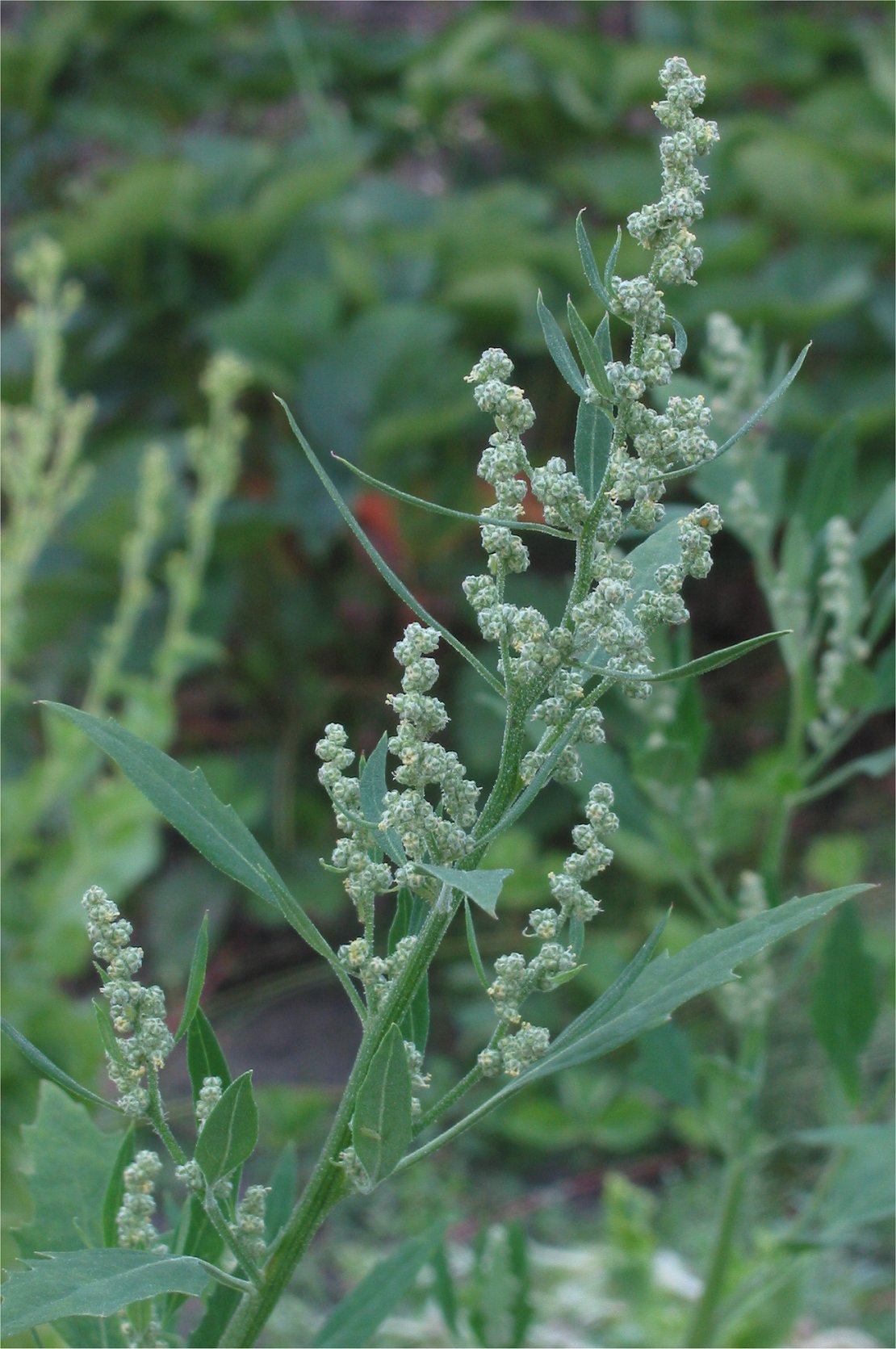
Pitseed Goosefoot (Chenopodium berlandieri) is a fast-growing annual herb native to North America, ranging from Canada to Mexico. It belongs to the same genus as quinoa (Chenopodium quinoa) and is primarily recognized by its edible, protein-rich seeds and diamond-shaped, mealy leaves.
This species was a staple crop for Indigenous peoples in the Eastern Agricultural Complex long before maize became dominant. While often dismissed as a weed in modern landscapes, it remains a significant gourmet crop in Mexico, where it is cultivated as Huauzontle for its edible immature flower clusters.
Key Facts
- Light: Full sun for at least 6 hours
- Height: 10 cm to 3 m (4 in to 10 ft)
- Soil: Well-drained, nitrogen-rich loams
- Edible: Leaves, stems, and seeds are all consumable
- Hardiness: Annual plant grown in zones 3 to 11
Is Pitseed Goosefoot Right for Your Garden
Pitseed Goosefoot is a high-yield crop that requires minimal maintenance once the seedlings are established. It is an ideal choice for gardeners interested in ancient grains or Mexican cuisine, as it provides both leafy greens and heavy seed heads. Unlike many garden vegetables, it thrives in disturbed soils and can tolerate periods of moderate drought without wilting.
Because it is a prolific self-seeder, you must manage the harvest carefully to prevent it from spreading beyond its intended bed. One plant can produce over 50,000 seeds in a single season. It is best suited for open garden beds or large containers where its height, which can reach 2 m (6.5 ft) in domestic varieties, will not shade out smaller neighbors.
How to Identify Chenopodium berlandieri
You can identify Pitseed Goosefoot by its honeycomb-pitted seeds, which require a hand lens to see clearly. The plant grows with an erect, often branching habit and stems that frequently show reddish or purple stripes at the leaf axils. The leaves are alternate and vary in shape from lance-like at the top to broadly triangular or rhombic at the base, often measuring 3-10 cm (1.2-4 in) long.
The foliage has a distinctive “mealy” or waxy white coating on the underside, which is composed of tiny salt-secreting glands. The flowers are inconspicuous, green, and clustered in dense spikes called glomerules. Key identification features include:
- Diamond-shaped leaves with irregularly toothed margins
- Stems that are angular or grooved rather than perfectly round
- Seeds with a dull, black, and distinctly pitted surface
- A height range typically between 50 cm and 1.5 m (1.6-5 ft) in wild stands
Best Growing Conditions for Pitseed Goosefoot
Pitseed Goosefoot requires full sun and nitrogen-rich soil to reach its maximum height and seed production. While it can survive in poor, sandy soils, the leaves will remain small and the plant may bolt prematurely if nutrients are lacking. It prefers a soil pH between 6.0 and 7.5, which is typical for most vegetable garden plots.
Temperature plays a significant role in its development, as seeds germinate most reliably when soil temperatures reach 15-25 °C (60-77 °F). It is highly adaptable to different moisture levels but produces the most tender greens when kept consistently moist. In very hot climates, the plant may require afternoon shade to prevent the leaves from becoming overly bitter or tough.
Sowing and Planting Your Seeds
Sow seeds directly into the garden in late spring after the danger of hard frost has passed. Plant the seeds at a depth of 0.5 cm (0.2 in), as they require only a light covering of soil to germinate. Space the rows 30-45 cm (12-18 in) apart to allow for the broad branching habit of mature plants.
Seedlings usually emerge within 7 to 14 days depending on the moisture levels. Thin the young plants to a final spacing of 20-30 cm (8-12 in) once they reach 10 cm (4 in) in height. You can eat the thinned seedlings as microgreens or pot herbs. If you are growing the ‘Huauzontle’ variety, provide more space between plants to encourage the development of large, edible flower heads.
Caring for Your Goosefoot Crop
Success with Pitseed Goosefoot depends on controlling competition from weeds during the first four weeks of growth. Once the plant reaches 30 cm (12 in), its canopy usually shades out smaller weeds, reducing the need for cultivation. Apply a light mulch of straw or dried grass to retain soil moisture and keep the roots cool during peak summer heat.
Water the base of the plant once the top 2.5 cm (1 in) of soil feels dry to the touch. Avoid overhead watering late in the day, as this can encourage downy mildew on the dense foliage. If the soil was well-amended with compost at planting, additional fertilizer is rarely necessary, though a high-nitrogen liquid feed can boost leaf production in mid-summer.
Harvesting Greens and Seeds
Harvest young leaves and tender stem tips when the plant is 20-40 cm (8-16 in) tall for the best flavor. For those growing the plant for its flower clusters (Huauzontle), harvest the heads while the buds are still green and tightly closed. If you wait until the flowers turn yellow or red, the stems become too woody to eat comfortably.
For seed production, allow the plant to turn brown and dry on the stalk in late autumn. You can test for ripeness by rubbing a seed cluster between your fingers; if the black seeds fall out easily, they are ready. Follow these steps for a clean seed harvest:
- Cut the entire seed head and place it in a large paper bag
- Shake or beat the bag to dislodge the seeds from the chaff
- Winnow the seeds by pouring them between two containers in a light breeze
- Dry the cleaned seeds in a single layer for 48 hours before storage
Culinary and Traditional Uses
Pitseed Goosefoot is traditionally used as a leaf vegetable and a grain, similar to its relative spinach (Spinacia oleracea). In Mexico, the immature flower heads are battered and fried, often stuffed with cheese. The seeds can be ground into a gluten-free flour or boiled like quinoa, though they benefit from rinsing to remove bitter saponins.
Historically, this species was part of the Indigenous agricultural system in the Mississippi Valley. The variety Chenopodium berlandieri var. jonesianum was specifically bred for thinner seed coats and larger harvests. The leaves are high in vitamins A and C, calcium, and protein, making them a nutritionally dense addition to soups and sautés.
Pitseed Goosefoot vs Lamb’s Quarters
The primary difference between Chenopodium berlandieri and the common lamb’s quarters (Chenopodium album) is the texture of the seed coat. Pitseed Goosefoot has a distinct honeycomb-like pitting on the seed surface, whereas C. album has seeds that are smooth or only faintly marked. This distinction is vital for botanists but less critical for foragers, as both are edible.
In terms of growth, Pitseed Goosefoot often features more pronounced lobes at the base of the lower leaves, giving them a “goosefoot” shape. C. album tends to have leaves that are more consistently ovate or lanceolate. Additionally, the native range of Pitseed Goosefoot is strictly the Americas, while C. album is a European introduction that has naturalized globally.
Year-Round Care for Pitseed Goosefoot
| Spring | Sow seeds 0.5 cm deep in late spring once soil reaches 15 °C. Thin seedlings to 20 cm apart and eat the thinnings as greens. |
|---|---|
| Summer | Apply 5 cm of mulch to retain moisture. Harvest terminal leaf clusters regularly to encourage branching and prevent early bolting. |
| Autumn | Stop watering as the plant browns to help seeds dry. Harvest seed heads before the first heavy rains to prevent molding. |
| Winter | Clear dead stalks to reduce pest overwintering. Store dried seeds in airtight containers in a cool, dark location. |
Common Pitseed Goosefoot Problems and Fixes
| What you see | Likely cause | What to do |
|---|---|---|
| Yellowing lower leaves | Nitrogen deficiency | Apply a high-nitrogen organic fertilizer or compost tea. |
| White fuzzy patches on leaf undersides | Downy mildew | Improve air circulation and avoid overhead watering. |
| Small tunnels inside leaves | Leaf miners | Remove affected leaves immediately and destroy them. |
| Stunted growth in high heat | Heat stress | Increase watering frequency and provide temporary afternoon shade. |
Pitseed Goosefoot Varieties Worth Knowing
- ‘Huauzontle’ – Cultivated for large, edible flower clusters.
- var. jonesianum – Ancient domesticated variety with thin seed coats.
- var. boscianum – A common wild variety with smaller, narrower leaves.
- var. macrocalycium – Known for its larger floral calyx, found in coastal areas.
Frequently Asked Questions
Is Chenopodium berlandieri edible?
Yes, the leaves, stems, and seeds are all edible and highly nutritious. The leaves should be cooked or eaten in moderation raw due to their oxalic acid content, similar to spinach.
How do I tell Pitseed Goosefoot from Chenopodium album?
The most reliable method is checking the seeds under a magnifying glass; Pitseed Goosefoot has a pitted, honeycomb texture, while common lamb's quarters (C. album) is smooth.
Can I grow Pitseed Goosefoot in a pot?
Yes, you can grow it in a container that holds at least 15 liters (4 gallons) of soil. Ensure the pot has excellent drainage and is placed in a spot that receives full sun.
What is the native range of Chenopodium berlandieri?
It is native to North America, spanning from Alaska and Canada through the United States and down into central Mexico.
When should I harvest the seeds?
Harvest the seeds in late autumn once the plant has turned brown and the seeds fall away easily when rubbed between your fingers.
Sources & Verification
Taxonomy and distribution are checked against the databases below. Care guidance is written for cultivated species only and reviewed by our editor. How We Build Plant Profiles →