
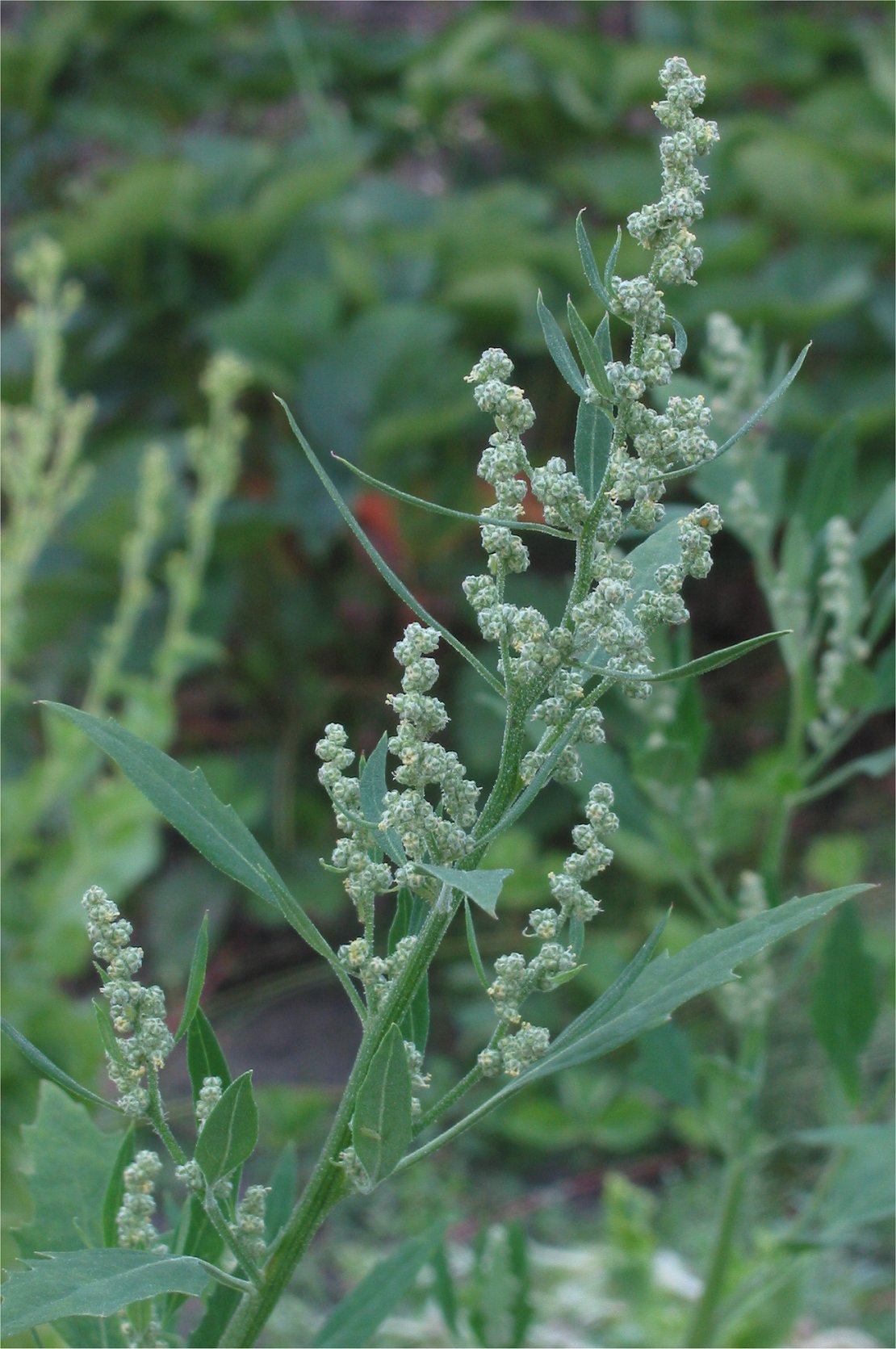
Lamb’s quarters (Chenopodium album) is an upright annual herb native to Eurasia, known for its goosefoot-shaped leaves dusted with a mealy white powder. It grows rapidly up to 1.5 m (5 ft) tall in disturbed soil and sunny gardens.
While often treated as a garden weed in North America and Western Europe, it is cultivated across Northern India as the leafy crop known as bathua. Sown in cool weather, a single plant produces over 70,000 viable seeds per season.
Key Facts
- Light: Full sun to partial shade
- Soil: Well-draining, rich in nitrogen
- Temperature: 10–25 °C (50–77 °F)
- Harvest: 30–40 days after germination
- Toxicity: Non-toxic to humans; contains nitrates
Growing Lamb’s Quarters in the Garden
Lamb’s quarters is an adaptable crop that thrives in full sun and nitrogen-rich soil. It matures in 30 to 40 days from seed germination, making it one of the quickest leafy greens to harvest.
This species tolerates poor soils better than cultivated spinach (Spinacia oleracea), but it requires containment to prevent unintended self-seeding across vegetable beds.
- Growth Habit: Upright branch structure reaching 30–150 cm (12–60 in) high.
- Best Setting: Raised beds, dedicated greens patches, or container gardens.
- Soil Preference: Loose loam with a pH of 6.0 to 7.5.
How to Identify Lamb’s Quarters
Lamb’s quarters is distinguished by its rhombic-ovate, goosefoot-shaped leaves coated in a powdery white coating called farina on the undersides. Stems feature distinct reddish or purple longitudinal stripes along mature ridges.
The alternate leaves measure 2–7 cm (0.8–2.8 in) long with coarsely toothed margins toward the base. Small greenish flowers form dense spike-like clusters at the branch tips between July and September.
- Leaf Texture: Water-repellent due to microscopic wax-coated hairs.
- Lookalike Check: Redroot pigweed (Amaranthus retroflexus) lacks the white mealy dust and has hairy stems.
- Seed Form: Shiny black seeds measuring 1–1.5 mm (0.04–0.06 in) in diameter enclosed in a papery husk.
Soil and Climate Conditions
Lamb’s quarters grows best in temperatures between 10 °C and 25 °C (50–77 °F) and tolerates light spring frosts down to -2 °C (28 °F). It requires a location receiving at least 6 hours of direct sunlight daily.
Excessive shade leads to leggy growth and reduced leaf production. Soils high in organic matter yield larger, tender leaves, though plants can grow in compacted or gravelly sites.
- Sunlight: 6 to 8 hours of direct sun per day.
- Soil Type: Well-drained sandy loam or compost-amended garden soil.
- Germination Temp: Seeds germinate promptly at 15–20 °C (59–68 °F).
How to Sow Lamb’s Quarters Seeds
Sow seeds 0.5 cm (0.2 in) deep directly outdoors in early spring, spaced 20–30 cm (8–12 in) apart after thinning. Germination typically occurs within 7 to 14 days.
Because seeds require light to trigger break of dormancy, cover them lightly with fine soil or compost. Space rows 45 cm (18 in) apart for commercial leaf harvesting.
- Sowing Depth: 0.3–0.5 cm (0.1–0.2 in).
- Plant Spacing: Thin seedlings to 20 cm (8 in) for greens or 40 cm (16 in) for seed production.
- Succession Timing: Sow every 3 weeks from April through June for continuous harvests.
Plant Care and Moisture Management
Provide 2.5 cm (1 in) of water per week during dry spells to maintain leaf quality and delay bolting. Regular harvesting of terminal tips encourages lateral branching and increases leaf yield.
Fertiliser is rarely necessary in garden soil, as excess nitrogen accumulates as nitrates in the foliage. Pinching out flower buds as they appear keeps the plant producing tender leaves longer into summer.
- Watering Schedule: Deep soak once per week during spells without rainfall.
- Pinching Strategy: Snip central growing shoots when stems reach 20 cm (8 in) high.
- Weed Control: Shallow hoeing around young seedlings prevents root competition.
How to Harvest Leaves and Seeds
Harvest tender young leaves when stems reach 15–20 cm (6–8 in) in height by clipping upper shoots. Collect ripe seeds in autumn when flowering stalks turn brown and dry out.
For culinary greens, pick before flowers open, as older leaves develop a fibrous texture and higher oxalic acid content. Shake mature seed stalks into a deep bucket to collect the tiny black grain.
- Greens Harvest: Cut top 5–10 cm (2–4 in) of growth using clean shears.
- Seed Harvest: Strip seed spikes when brown; winnow away chaff outdoors.
- Yield Potential: Up to 500 g (1.1 lb) of greens per plant in fertile soil.
Culinary Uses and Preparation
Prepare lamb’s quarters by steaming or boiling leaves for 2 to 4 minutes to soften texture and reduce oxalic acid levels. It functions as a direct substitute for spinach in soups, saag dishes, and savoury pastries.
The young shoots may be eaten raw in salads. Dried seeds can be ground into flour or cooked like quinoa (Chenopodium quinoa) to create a protein-rich grain dish.
- Nutritional Value: Contains vitamins A and C, calcium, iron, and potassium.
- Cooking Method: Sauté with garlic and olive oil or boil briefly in salted water.
- Seed Preparation: Rub seeds in water to remove surface saponins before cooking.
Managing Weeds and Pests
Control unwanted lamb’s quarters spread by removing flower stalks before seed sets in late summer. The plant acts as a host for beet leafminers and aphids.
Downy mildew caused by Peronospora farinosa can affect overcrowded plants during humid weather. Thinning stands improves airflow and minimises leaf spotting.
- Leafminers: Remove leaves displaying serpentine white tunnels.
- Aphids: Wash off colonies with a spray of water or apply insecticidal soap.
- Seed Bank Prevention: Mulch garden beds with 5 cm (2 in) of straw to block seed emergence.
Storing Fresh Greens and Seeds
Store fresh lamb’s quarters leaves in a sealed bag in the refrigerator at 1–4 °C (34–39 °F) for up to 5 days. Cleaned, dried seeds stored in airtight glass containers retain viability for over 10 years.
Blanch leaves in boiling water for 2 minutes and submerge in ice water before freezing. Packed in freezer bags, blanched greens remain usable for up to 12 months.
- Fresh Storage: Unwashed leaves wrapped in paper towels inside sealed containers.
- Freezing Method: Blanch 2 minutes, shock in ice water, drain thoroughly, and freeze.
- Seed Storage: Cool, dark location below 15 °C (59 °F) with low humidity.
Frequently Asked Questions
Is lamb's quarters edible?
Yes, lamb's quarters is edible and yields tender leaves and nutrient-dense seeds. Leaves are cooked similarly to spinach, while seeds can be boiled as a grain or ground into flour.
Is lamb's quarters poisonous?
Lamb's quarters is non-toxic to humans, but it contains oxalic acid and can accumulate soil nitrates. Boiling the leaves reduces oxalic acid, making them safe for human consumption.
How do you tell lamb's quarters and purslane apart?
Lamb's quarters grows upright up to 1.5 m (5 ft) with thin, goosefoot-shaped leaves dusted in white powder. Purslane (Portulaca oleracea) is a low-growing prostrate succulent with thick, smooth, teardrop-shaped leaves and reddish stems.
What are the health benefits of lamb's quarters?
Lamb's quarters leaves provide high amounts of vitamins A, C, and K, as well as minerals including calcium, magnesium, and iron. Traditionally, cooked greens have been used to support dietary iron intake.
Can lamb's quarters cause pollen allergies?
Yes, wind-pollinated flower clusters of lamb's quarters release fine airborne pollen in late summer that can trigger seasonal hay fever symptoms in sensitive individuals.
Can you eat raw lamb's quarters?
Young, tender shoots can be eaten raw in small amounts in salads. Older leaves are best cooked to neutralize oxalic acid and remove the gritty texture of the powdery coating.
Information about traditional or historical uses is provided for educational interest only and is not medical advice. Do not use any plant to treat a condition without speaking to a qualified professional.
Sources & Verification
Taxonomy and distribution are checked against the databases below. Care guidance is written for cultivated species only and reviewed by our editor. How We Build Plant Profiles →
