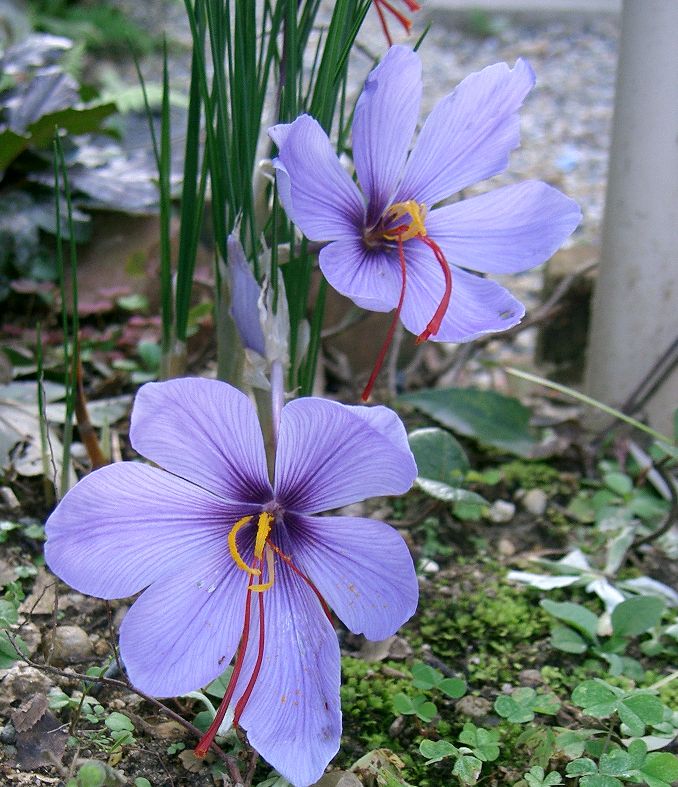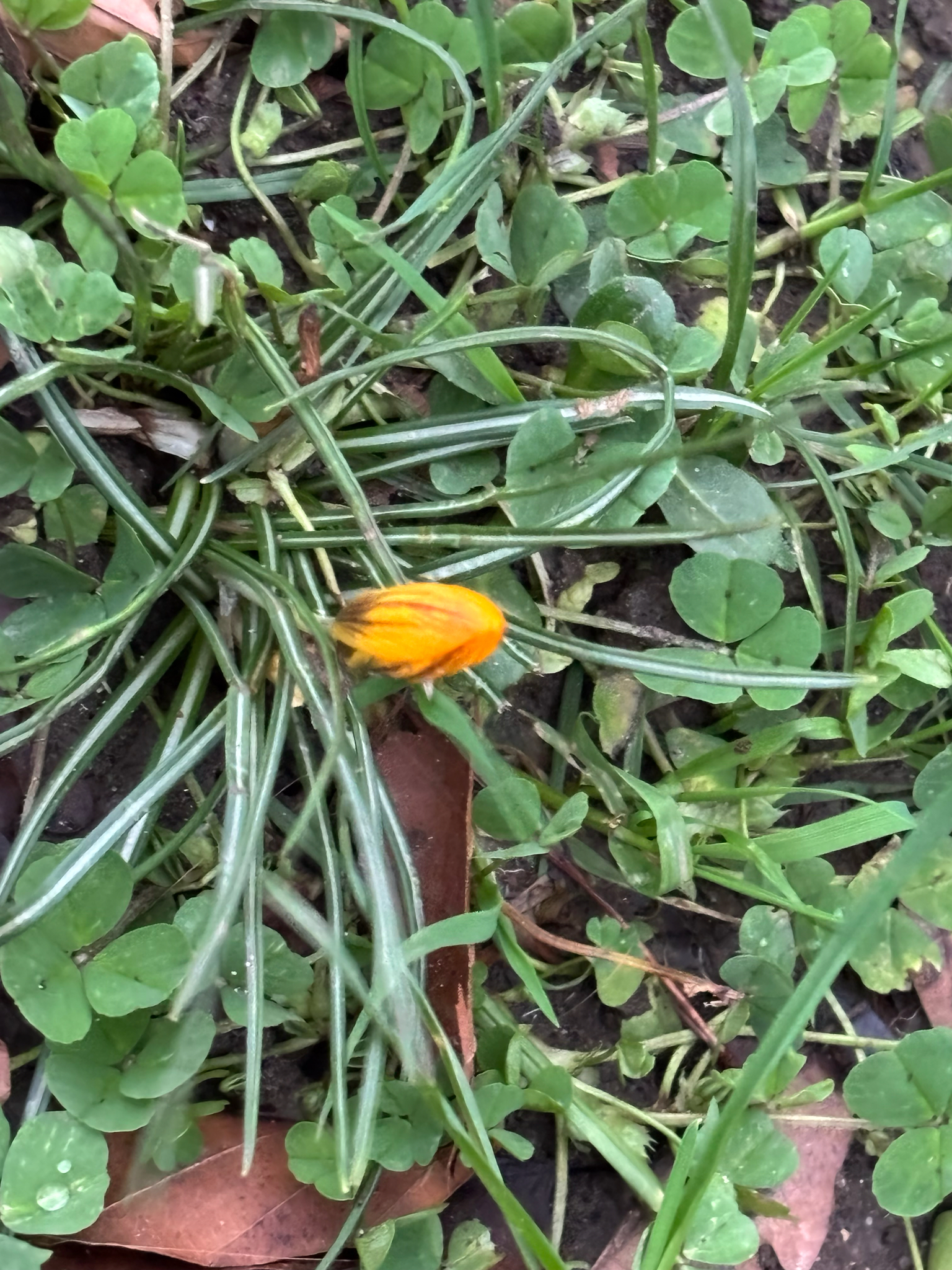
Golden crocus (Crocus chrysanthus) is a small perennial corm native to Southeastern Europe and Turkey known for blooming through snow cover in late winter. It produces bowl-shaped yellow flowers that open fully under direct sunlight.
Unlike spring-blooming Dutch crocuses, this species flowers up to two weeks earlier and requires sharply draining soil to prevent corm rot during summer dormancy.
Key Facts
- Hardiness: USDA Zones 3–8
- Planting Depth: 7.5–10 cm (3–4 in)
- Soil pH: 6.0–7.5
- Bloom Time: Late winter to early spring
- Sunlight: Full sun to partial shade
Fitting Golden Crocus into Your Garden Layout
Golden crocus performs best in rock gardens, gravel beds, lawn borders, and beneath deciduous trees where early sunlight reaches the soil. This dwarf corm naturalises readily in turf without overwhelming surrounding alpines or spring perennials.
Because the foliage dies back completely by late spring, you can plant corms under early-season perennials that fill out later in May. Planting in clusters of 15 to 25 corms creates distinct color drifts rather than scattered single stems.
Identifying Golden Crocus: Leaves, Flowers, and Size
Golden crocus produces bowl-shaped, deep yellow to orange flowers reaching 7.5–10 cm (3–4 in) in height with narrow, grass-like leaves featuring a central silver stripe. Wild specimens display rich golden-yellow tepals, often with dark brown or purple striping on the exterior bases.
The stems remain hidden underground; the flower tube arises directly from the subterranean corm wrapped in a fibrous tunic. Leaves emerge simultaneously with or slightly after the flowers, measuring 1–2 mm (0.04–0.08 in) wide.
Best Sun Exposure and Soil for Snow Crocus
Snow crocus requires full sun exposure for at least 4 to 6 hours daily and gritty, sharply draining soil with a pH between 6.0 and 7.5. Flowers remain tightly closed on overcast days and fully open only when direct solar heat warms the perianth.
Heavy clay soils trap moisture around dormant corms in summer, causing fungal decay. Incorporate coarse horticultural sand or pea gravel into the top 15 cm (6 in) of planting beds before establishing new corms.
How to Plant Golden Crocus Corms
Plant golden crocus corms 7.5–10 cm (3–4 in) deep with the pointed tip facing upward during September or October. Autumn soil temperatures below 15 °C (60 °F) encourage root establishment before winter frosts set in.
- Space corms 5–8 cm (2–3 in) apart in groups of 10–25.
- Set pointed growth tips facing upward; flat base resting on soil.
- Mix coarse sand into heavy clay beds to improve drainage.
- Water thoroughly once immediately after autumn planting.
Watering and Feeding Golden Crocus
Golden crocus requires low moisture during winter growth and zero water during summer dormancy, paired with an optional light dose of high-potassium fertilizer in early spring. Excess summer moisture rots subterranean corms while they rest underground.
Apply a low-nitrogen top-dressing as leaves break ground in February to promote strong corm formation for the following season. Stop all watering once leaves turn yellow in May.
Managing Foliage and Pruning Snow Crocus
Leave snow crocus foliage completely intact for 6 weeks after flowering until leaves turn entirely yellow and wither naturally. Premature cutting starves the corm of carbohydrates needed for next year’s bloom cycle.
If naturalised in lawn turf, delay your first grass mowing until late May when crocus foliage breaks down completely. Deadheading faded blooms is unnecessary unless you wish to prevent self-seeding.
Propagating and Dividing Golden Crocus
Divide established golden crocus clumps every 3 to 4 years in late spring by lifting dormant corms and separating side offsets. New cormlets grow attached to the parent corm and can be detached once the foliage turns yellow.
Replant separated corms immediately at a depth of 7.5 cm (3 in). Seeds sown in autumn take 3 to 4 years to produce flowering plants.
Preventing Pests and Diseases in Golden Crocus
Rodent damage from squirrels and mice digging up corms represents the primary threat to golden crocus plantings. Damp, poorly drained soil causes Fusarium oxysporum corm rot.
- Lay hardware cloth over bulbs before topping with soil to deter squirrels.
- Plant corms inside mesh bulb baskets in sandy beds.
- Discard soft, discolored, or mouldy corms before autumn planting.
Winter Care and Cold Hardiness for Snow Crocus
Golden crocus requires 8 to 10 weeks of soil temperatures below 7 °C (45 °F) to break dormancy, surviving winter cold down to USDA Zone 3. Snow cover provides natural insulation during severe sub-zero cold spells.
In cold northern regions without snow, apply a 5 cm (2 in) mulch of shredded leaves over planting beds in late November, removing it in early February before shoots emerge.
Snow Crocus Bloom Times and Flower Response
Snow crocus blooms in late February to early March, opening its flowers wide in direct sunlight and closing tightly at night or during rainfall. Flowering lasts 2 to 3 weeks depending on ambient daytime temperatures.
Unusually warm spring weather above 18 °C (65 °F) shortens the overall flowering period, while cool, sunny days prolong individual bloom longevity.
Year-Round Care for Golden Crocus
| Spring | Apply a low-nitrogen fertilizer as shoots emerge in February. Allow leaves to yellow naturally over 6 weeks before trimming or mowing. |
|---|---|
| Summer | Withhold all supplemental irrigation while corms remain dormant underground. Keep soil dry to prevent corm rot. |
| Autumn | Plant new corms 7.5–10 cm (3–4 in) deep from September through October. Water thoroughly once upon planting. |
| Winter | Apply a light leaf mulch in USDA Zones 3–4 if snow cover is absent. Remove mulch in early February. |
Golden Crocus Problems: Symptoms and Solutions
| What you see | Likely cause | What to do |
|---|---|---|
| Corms missing or dug up | Squirrels or field mice digging autumn beds | Cover planting areas with wire mesh or plant corms inside wire baskets. |
| Flowers fail to open fully | Insufficient direct sun or cool, overcast days | Relocate corms to an open south-facing location. |
| Soft, rotting corms in spring | Waterlogged soil causing fungal infection | Amend soil with coarse sand or grit to restore drainage. |
| Sparse flowers and thin leaves | Overcrowding in established corm clumps | Lift and divide corm clusters in late spring after foliage turns yellow. |
Popular Cultivars of Crocus chrysanthus
- ‘Cream Beauty’ – pale creamy-yellow tepals with bronze base
- ‘Advance’ – bi-color petals with yellow interior and plum exterior
- ‘Romance’ – butter-yellow flowers with lemon interior
- ‘Blue Pearl’ – soft lavender-blue exterior with creamy yellow throat
- ‘Herald’ – rich yellow petals with deep violet outer stripes
- ‘Dorothy’ – clear yellow flowers with purple feathered backs
Companion Plants for Snow Crocus
Snow crocus pairs with early spring bulbs such as snowdrop (Galanthus nivalis), winter aconite (Eranthis hyemalis), netted iris (Iris reticulata), and spring cyclamen (Cyclamen coum). These companion species share identical light and drainage demands in late winter border displays.
Interplanting with miniature daffodils like Narcissus triandrus creates contrasting yellow and white height layers across rock gardens and borders.
Frequently Asked Questions
What is Crocus chrysanthus extract used for in cosmetics?
Crocus chrysanthus corm extract is used in skin care products to stimulate cell-to-cell communication and boost collagen matrix synthesis.
What do golden crocuses symbolise?
Golden crocuses symbolise cheerfulness, hope, rebirth, and youthfulness because they bloom early at winter's end.
Is the Golden Crocus Inn a real place?
No, the Golden Crocus Inn is a fictional dining location in the World of Frozen area at Hong Kong Disneyland.
Is golden crocus toxic to dogs and cats?
Golden crocus is mildly toxic to dogs and cats, causing mild gastrointestinal upset or mouth irritation if corms are ingested in quantity.
How does Crocus chrysanthus differ from autumn crocus?
Golden crocus flowers in late winter from true corms, while autumn crocus (Colchicum autumnale) blooms in fall and contains toxic colchicine.
Information about traditional or historical uses is provided for educational interest only and is not medical advice. Do not use any plant to treat a condition without speaking to a qualified professional.
Sources & Verification
Taxonomy and distribution are checked against the databases below. Care guidance is written for cultivated species only and reviewed by our editor. How We Build Plant Profiles →