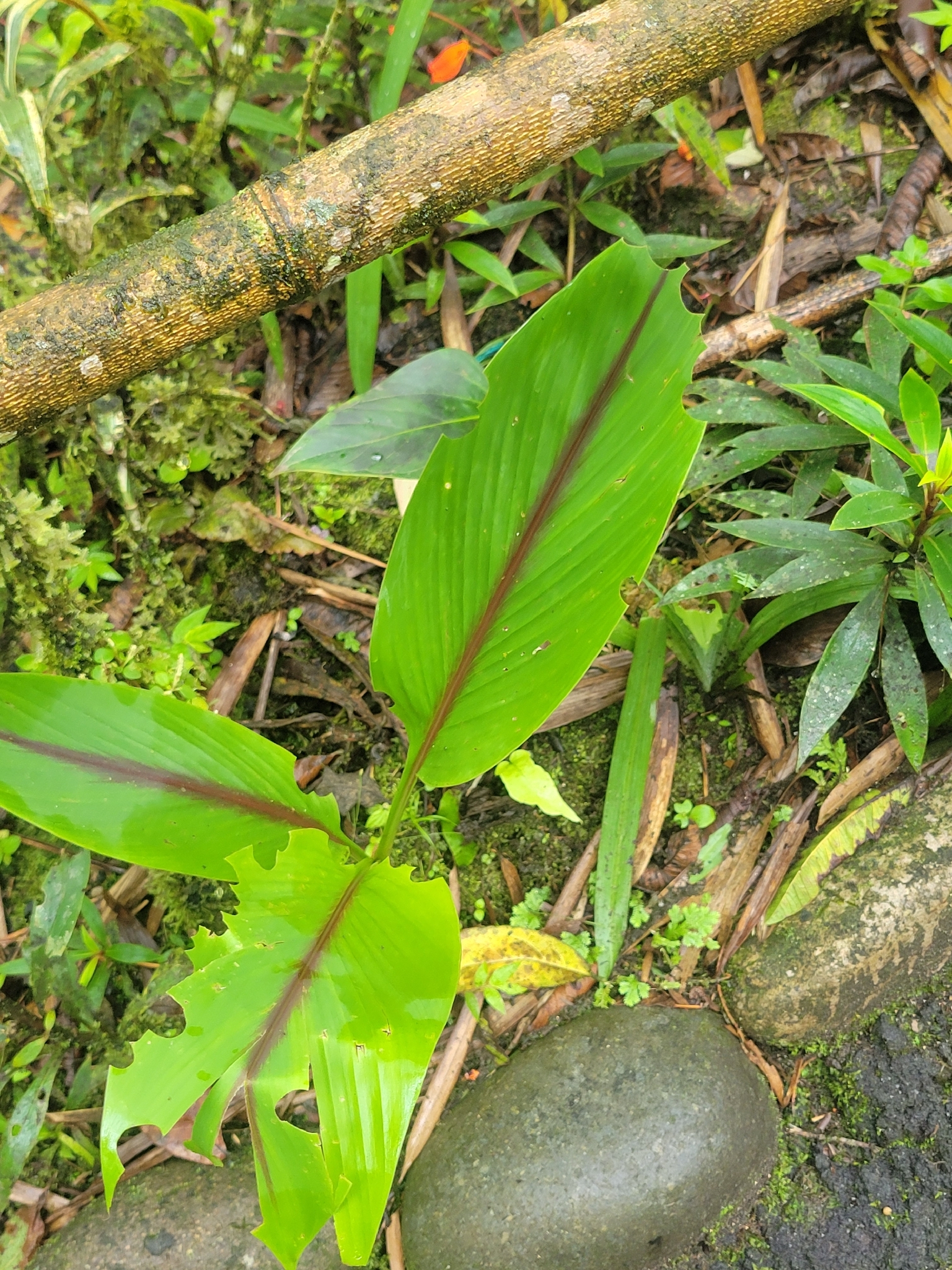
Black turmeric (Curcuma caesia) is an upright perennial herb native to northeast and central India, distinguished by its blue-black rhizome interior and purple-striped leaves.
The plant requires an uninterrupted warm growing season of 8 to 9 months to produce harvestable rhizomes, failing quickly if soil temperatures dip below 15 °C (59 °F).
Key Facts
- Rhizome colour: Deep bluish-purple to greyish-black core
- Maturity time: 240 to 270 days from spring planting
- Sun needs: Morning sun with dappled afternoon shade
- Water: 25 to 40 mm (1 to 1.5 in) per week during active growth
- Hardiness: USDA Zones 9 to 11
Growing Black Turmeric in Containers and Beds
Black turmeric succeeds outdoors in frost-free climates and performs reliably in large pots measuring at least 40 cm (16 in) wide in cooler regions.
Because the foliage dies back completely in late autumn, you can relocate potted containers indoors to a frost-free garage or basement maintained around 10–15 °C (50–59 °F) while the tubers rest.
If your garden sits north of USDA Zone 9, container culture prevents saturated winter soil from rotting dormant underground tubers before spring revival.
How to Identify the Black Turmeric Plant
You can identify Curcuma caesia by the prominent reddish-purple midrib that runs straight down the centre of its broad green leaves.
The plant produces broad, lance-shaped leaves measuring 30–60 cm (12–24 in) in length and 10–15 cm (4–6 in) across. While common turmeric (Curcuma longa) features solid green foliage, black turmeric retains this distinct pigment band throughout the growing period.
- Rhizome interior: Flesh ranges from steel-blue to deep violet-black when cut, surrounded by light brown skin.
- Foliage: Pseudostems rise 0.8–1.2 m (2.6–4 ft) tall with alternating, smooth-edged leaves.
- Flowers: A dense terminal spike displays pale yellow fertile corollas topped by bright pinkish-magenta sterile bracts in July or August.
- Aroma: Sliced roots emit a sharp, camphoraceous scent far sharper than standard culinary ginger (Zingiber officinale).
Sun and Soil Conditions for Curcuma caesia
Black turmeric requires partial shade with 4 to 6 hours of indirect or morning sunlight and loose, humus-rich soil.
Intense midday sun scorches the foliage edges, turning them brown and parchment-dry. For outdoor ground planting, choose a position filtered by deciduous trees or shielded by an eastern wall.
The root system suffocates in dense clay. Blend equal parts aged compost, coarse river sand, and loamy topsoil to hit a target pH of 6.0 to 7.0 with high drainage capacity.
How to Plant Black Turmeric Rhizomes
Plant rhizome segments 5 to 8 cm (2 to 3 in) deep once soil temperatures reach a minimum of 20 °C (68 °F) in late spring.
Select plump mother or secondary rhizomes weighing 40–60 g (1.4–2.1 oz) that carry at least two visible dormant buds (eyes). Commercial ‘seeds’ offered online are almost always root cuttings, as the plant rarely sets viable botanical seed in domestic cultivation.
- Soak dry seed rhizomes in lukewarm water for 2 to 4 hours prior to planting to stimulate dormancy break.
- Position the rhizome horizontally in the planting trench with the eye buds facing upward.
- Space individual plants 30 to 45 cm (12 to 18 in) apart in rows spaced 60 cm (24 in) apart.
- Apply a 5 cm (2 in) mulch of shredded leaves or straw to preserve soil moisture until sprouts appear in 2 to 4 weeks.
Watering and Feeding Black Turmeric
Keep the soil evenly moist during summer growth, supplying 25 to 40 mm (1 to 1.5 in) of water every seven days.
Never allow the soil mix to turn bone dry between June and September while the root system swells. Reduce watering by half in October as leaf tips turn yellow, and cease moisture completely once the stems collapse flat to the soil surface.
Top-dress the root zone with well-rotted manure or apply a balanced organic liquid feed with equal parts nitrogen, phosphorus, and potassium every 21 days until late summer flowering finishes.
When and How to Harvest Black Turmeric
Harvest black turmeric 8 to 9 months after planting, once all above-ground foliage turns brown and withers completely in early winter.
Withhold water for 10 to 14 days before harvest to firm the rhizome skin. Loosen the soil 30 cm (12 in) away from the stem base using a garden fork to prevent piercing the valuable blue-violet core.
- Gently lift the entire clump out of the bed by grasping the base of the dried pseudostems.
- Shake off loose dirt and wash the root clusters under a gentle stream of running tap water.
- Snap off the thick fibrous roots and discard the original withered mother seed piece.
- Expect a yield of 400 to 800 g (0.9 to 1.8 lb) of fresh rhizomes from a single vigorous plant.
Traditional Uses, Consumption, and Skin Applications
Black turmeric is traditionally consumed in quarter-teaspoon powdered doses or sliced and infused into warm water, milk, or honey syrups.
The root contains high levels of essential oils, camphor, and ar-turmerone, producing a sharp, bitter, medicinal taste rather than the warm culinary profile of common turmeric or white turmeric (Curcuma zedoaria). In Indian folk and Ayurvedic traditions, practitioners historically applied crushed root pastes topically to sprains, bruises, and skin rashes to relieve swelling.
For cosmetic skin care, dried powder is mixed with yogurt, rosewater, or aloe vera to form facial pastes. Due to its potent natural dye pigments, testing a small patch prevents temporary skin staining.
Common Growing Problems and Pests
Fungal rhizome rot caused by excess soil moisture in cool temperatures is the primary cause of plant loss.
If stems become water-soaked at soil level and produce a foul smell, dig up the clump immediately and cut away soft brown sections before replanting into sharp sand. You may also notice chewing insects on young shoots.
- Shoot borers: Caterpillars drill into young shoots, causing the central leaf to wilt; hand-pick larvae or apply targeted Bacillus thuringiensis.
- Red spider mites: Tiny arachnids create fine webbing under leaf blades during dry spells; mist foliage undersides and wash with insecticidal soap.
- Leaf spot: Brown circles with yellow haloes appear during humid weather; prune damaged foliage and maintain spacing to improve airflow.
How to Store Black Turmeric Rhizomes and Powder
Store unwashed fresh rhizomes in dry peat moss or sawdust at 12 to 15 °C (54 to 59 °F) to keep them viable for planting next spring.
Rhizomes meant for consumption should be washed, air-dried for 24 hours, and kept in a ventilated paper bag in the vegetable crisper drawer for up to 3 weeks.
To make long-lasting powder, slice fresh rhizomes into 3 mm (0.1 in) coins, dehydrate them at 45 °C (113 °F) until crisp, and pulverize them in a spice grinder. Seal the dark grey-blue powder in airtight amber glass jars away from direct light, where it maintains potency for 12 months.
Frequently Asked Questions
What does black turmeric do?
Black turmeric rhizomes contain high concentrations of curcuminoids, camphor, and bioactive essential oils that have traditionally been used for digestive discomfort, respiratory conditions, and topical joint swelling.
Is black turmeric good for weight loss?
There is no verified clinical evidence that black turmeric causes weight loss, though its bioactive compounds are currently studied for potential metabolic effects.
Can you eat black turmeric raw?
Yes, you can eat thin slices of fresh black turmeric raw, but the flavour is extremely bitter and intensely pungent with distinct camphor notes.
How do you tell black turmeric from regular turmeric?
Cut into the rhizome: black turmeric has a blue-violet to dark slate-grey interior and a camphor aroma, whereas standard turmeric (Curcuma longa) is bright yellow-orange with a mild, earthy fragrance.
Can you grow black turmeric from seeds?
Cultivated black turmeric rarely produces viable true botanical seeds, so gardeners grow it by planting dormant underground rhizome cuttings.
Information about traditional or historical uses is provided for educational interest only and is not medical advice. Do not use any plant to treat a condition without speaking to a qualified professional.
Sources & Verification
Taxonomy and distribution are checked against the databases below. Care guidance is written for cultivated species only and reviewed by our editor. How We Build Plant Profiles →