
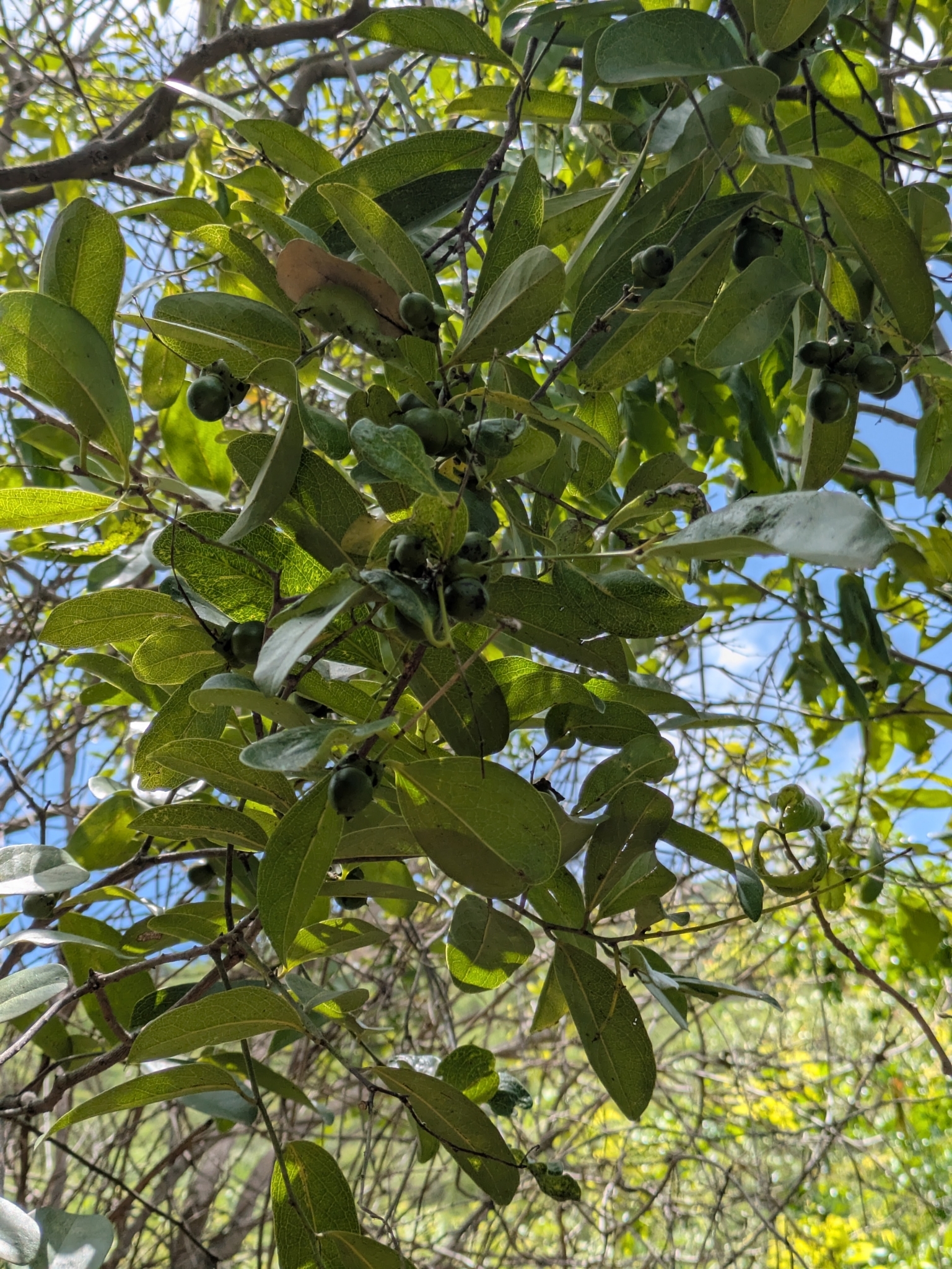
Diospyros ebenum is a medium-sized evergreen tree native to the dry zone forests of Sri Lanka and southern India, famously producing the world’s most valuable jet-black heartwood. It is a member of the Ebenaceae family and is distinguished by its charcoal-coloured bark and the fact that its timber is dense enough to sink in water.
While often confused with the tea plant due to the name “Ceylon,” this species is a hardwood tree and not the source of Ceylon black tea (Camellia sinensis). It requires a tropical climate and decades of patience, as the characteristic black wood takes over 60 years to develop within the trunk.
Key Facts
- Growth Rate: Extremely slow, often less than 20 cm (8 in) annually
- Hardiness: Tropical only, strictly USDA zones 10 to 12
- Wood Property: High density heartwood that sinks in water
- Light: Full sun to partial shade for optimal health
- Soil: Prefers well-drained, rocky or sandy loams
Fitting Ceylon Ebony into Your Landscape
You should only plant Ceylon ebony if you have a tropical climate and a multi-generational gardening perspective. This tree is not suited for small residential gardens or temperate zones, as it eventually reaches massive proportions and grows too slowly to provide immediate privacy or shade. It is an ideal specimen for large estates, botanical collections, or reforestation projects in its native South Asian range.
- Requires a minimum year-round temperature of 10 °C (50 °F).
- Suits large open spaces where its 15-metre (50-foot) spread won’t interfere with structures.
- Provides a permanent, dark green canopy that stays lush through the dry season.
- Best for patient growers who value long-term ecological contribution over quick results.
Identifying Ceylon Ebony Trees
Look for a tree with charcoal-grey to black bark that features deep, irregular fissures resembling alligator skin on mature specimens. The leaves of the Ceylon ebony are alternate, simple, and leathery, typically measuring 5 to 15 centimetres (2 to 6 inches) in length with a glossy dark green upper surface. Unlike the related Persimmon (Diospyros kaki), the fruit of this species is a small, globose berry about 2 centimetres (0.8 inches) in diameter.
- Bark is distinctively dark and rough, peeling in small rectangular flakes.
- Flowers are small, greenish-white, and often hidden beneath the foliage.
- The heartwood is hidden; only the pale yellowish-white sapwood is visible if the bark is nicked.
- Younger twigs are smooth and green before maturing into the dark, woody bark.
Mature Size and Growth Rate
A mature tree typically reaches a height of 20 to 30 metres (65 to 100 feet) with a trunk diameter of up to 1 metre (3 feet). You can expect a growth rate of roughly 15 to 20 centimetres (6 to 8 inches) per year, making it one of the slowest-growing hardwoods in the tropical forest. Because the black heartwood only begins to form after several decades, trees are rarely harvested for timber until they are at least 60 to 100 years old.
- Reaches 2 metres (6.5 feet) in height only after 5 to 7 years of growth.
- Trunk girth increases by less than 1 centimetre (0.4 inches) annually.
- Canopy spread can reach 15 metres (50 feet) in mature wild specimens.
- Maximum height is often limited by soil depth and available groundwater.
Ideal Planting Site and Conditions
Select a site with full sun and deep soil to accommodate the tree’s extensive and vigorous taproot system. While it is native to dry zone forests, it thrives best in locations that receive 1,000 to 1,500 mm (40 to 60 inches) of annual rainfall, provided the soil does not become waterlogged. It is highly tolerant of rocky and poor soils, which is where it often grows in the wild across the scrub jungles of Sri Lanka.
- Avoid heavy clay soils that retain water during monsoon seasons.
- Requires protection from strong, salty sea winds if planted near coasts.
- Thrives in pH-neutral to slightly alkaline soils (pH 6.5 to 7.5).
- Needs a site free from underground utilities due to its deep root architecture.
Planting Your Ebony Tree from Seed
Sow fresh seeds 2 centimetres (0.8 inches) deep in a well-draining nursery mix immediately after extraction from the fruit. Seeds lose viability quickly and should not be dried out; soaking them in room-temperature water for 24 hours prior to planting can improve the erratic germination rate. Once the seedling reaches 30 centimetres (12 inches) in height, it can be transplanted to its permanent location during the start of the rainy season.
- Use deep pots to prevent the taproot from circling or becoming stunted.
- Germination typically takes 4 to 8 weeks depending on soil temperature.
- Space multiple trees at least 10 metres (33 feet) apart to allow for canopy expansion.
- Mulch heavily after planting to retain moisture around the young root ball.
Ongoing Care and Maintenance
Provide weekly deep watering during the first three years of the tree’s life to ensure it survives the dry season. Once established, the tree is remarkably drought-tolerant, but supplemental water during extreme heatwaves will prevent leaf drop and maintain the health of the sapwood. Fertilization is generally unnecessary in native soils, though a balanced organic compost applied annually in spring can support the slow growth of young specimens.
- Clear a 1-metre (3-foot) radius of weeds around the trunk to reduce competition.
- Apply a 5-centimetre (2-inch) layer of wood chip mulch to regulate soil temperature.
- Monitor for scale insects which can occasionally infest the leathery leaves.
- Avoid high-nitrogen fertilizers which may encourage weak, lanky growth.
Pruning and Training for Health
Limit pruning to the removal of dead, damaged, or diseased wood during the late winter or early spring. Because the tree grows so slowly, any significant pruning can set back its development by several years and should be avoided unless necessary for safety. If you are growing the tree for timber potential, remove lower lateral branches early in its life to encourage a straight, clear bole (trunk).
- Use sharp, sterilized bypass pruners to prevent tearing the tough bark.
- Never remove more than 10% of the canopy in a single year.
- Train a single central leader to ensure the tree maintains a balanced, upright habit.
- Seal large wounds in humid climates to prevent fungal pathogens from entering the heartwood.
Common Pests and Tree Problems
Watch for yellowing leaves, which usually indicate iron chlorosis or poor drainage rather than a specific pest. The tree is generally resistant to most insects due to the high tannin content in its bark and leaves, but it can fall victim to root rot if the site remains saturated for extended periods. In its native range, leaf-cutting insects may occasionally defoliate young saplings during the monsoon season.
- Sooty mould may appear if aphids or scale insects are present on the foliage.
- Borers can target stressed or older trees, leaving small holes in the bark.
- Sudden leaf drop is a common response to temperatures falling below 10 °C (50 °F).
- Stunted growth is often the result of a cramped root system or compacted soil.
Surviving Winter and Cold Spells
Protect young trees from any temperature drop below 10 °C (50 °F) using frost blankets or temporary shelters. While mature trees may survive brief dips toward freezing, they are not frost-hardy and will suffer significant dieback or death if exposed to ice or snow. If you are growing a sapling in a container in a marginal climate, it must be moved indoors to a greenhouse or bright sunroom before the first autumn frost.
- Young bark is susceptible to cracking if temperatures fluctuate wildly.
- Reduce watering significantly during the cooler winter months to prevent root chill.
- Move containerized plants away from drafty windows or doors.
- Ensure the tree receives at least 6 hours of bright light even in winter.
Wood Quality and Traditional Uses
The heartwood of this species is one of the densest and blackest timbers in existence, famously used for piano keys and violin pegs. Because of its extreme density and fine texture, it takes a high polish and was traditionally used for royal furniture and intricate carvings in India and Sri Lanka. Note that this tree is not related to Ceylon tea; the name refers only to its geographic origin on the island formerly known as Ceylon.
- Heartwood is naturally resistant to termites and fungal decay.
- The wood is so heavy it has a specific gravity greater than 1.0, causing it to sink.
- Traditionally used in the past for medicinal bark decoctions in local folk practices.
- Featured in digital media and games like Minecraft as a rare, high-tier crafting material.
Year-Round Care for Ceylon Ebony
| Spring | Apply a layer of organic compost and prune any dead wood from the winter. Monitor for new growth and greenish-white flowers. |
|---|---|
| Summer | Provide deep watering twice a week during heatwaves. Check for scale insects or aphids on the undersides of the leathery leaves. |
| Autumn | Reduce supplemental watering as the weather cools. Prepare frost protection for young trees if you are in a marginal hardiness zone. |
| Winter | Keep the tree as warm as possible, ensuring it stays above 10 °C (50 °F). Water only when the soil is dry to a depth of 5 cm (2 in). |
Common Ceylon Ebony Growing Problems
| What you see | Likely cause | What to do |
|---|---|---|
| Leaves turning yellow between veins | Iron deficiency or alkaline soil | Apply a chelated iron supplement and check soil pH. |
| Sudden leaf drop in winter | Cold stress | Move the plant to a warmer location or wrap the trunk for insulation. |
| Wilting despite wet soil | Root rot from overwatering | Stop watering immediately and improve the soil drainage. |
| Slow growth (less than 5cm per year) | Insufficient light or nutrients | Move to a full sun position and provide organic mulch. |
Types of Ebony Trees
- Diospyros ebenum ‘Standard’ – the wild type grown for high-quality black heartwood.
- Diospyros ebenum var. glaberrima – a regional variant noted for smoother leaf surfaces.
Frequently Asked Questions
Is Ceylon black tea made from this tree?
No, Ceylon black tea is made from the leaves of the tea bush (Camellia sinensis), whereas Ceylon Ebony is a large hardwood tree harvested for timber.
How long does it take for ebony wood to turn black?
The heartwood of the tree typically begins to turn black after 60 to 100 years of growth, depending on the environmental conditions.
Can you grow Ceylon ebony as a houseplant?
While you can grow a young sapling in a pot for a few years, its deep taproot and high light requirements make it unsuitable for long-term indoor growth.
Is Ceylon ebony wood legal to buy?
Trade is highly regulated and often restricted due to the tree's endangered status in the wild; always look for FSC-certified sources.
Why does ebony wood sink in water?
The wood is incredibly dense, with a specific gravity of about 1.12 to 1.20, which is higher than the density of water.
Information about traditional or historical uses is provided for educational interest only and is not medical advice. Do not use any plant to treat a condition without speaking to a qualified professional.
Sources & Verification
Taxonomy and distribution are checked against the databases below. Care guidance is written for cultivated species only and reviewed by our editor. How We Build Plant Profiles →


