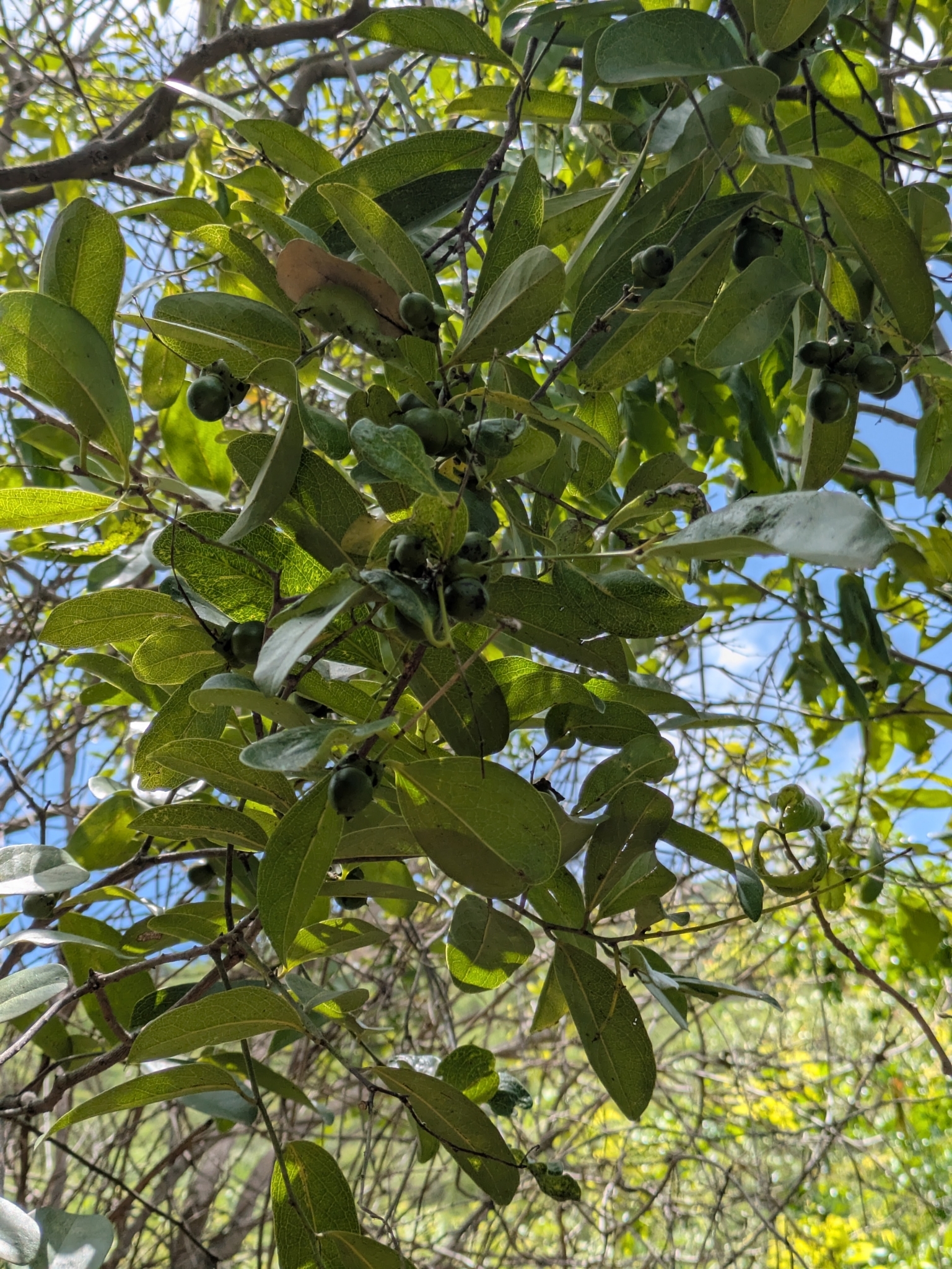
Velvet apple (Diospyros blancoi) is a tropical evergreen tree native to the rainforests of the Philippines and Taiwan, famous for its reddish-brown furry fruits and ultra-dense dark wood. The tree belongs to the ebony family Ebenaceae and produces pinkish flesh with a peach-like aroma.
Trees grown from seed take 6 to 7 years to begin fruiting, whereas grafted saplings yield fruit within 3 to 4 years. The velvety coat of the fruit contains skin-irritating hairs that must be brushed off thoroughly before eating raw.
Key Facts
- Light: Full sun, minimum 6 hours daily
- Water: 2.5 cm (1 in) weekly during active growth
- Soil: Deep, well-drained loamy soil, pH 6.0-7.5
- Hardiness: USDA zones 10 to 12
- Spacing: 8 to 10 m (26 to 33 ft) between trees
Growing Velvet Apple in Your Garden
Growing velvet apple requires tropical or frost-free warm humid conditions where temperatures remain consistently above 15 °C (59 °F). This species suits large coastal or lowland gardens with ample space for a wide canopy.
You will need a location that receives full sun for most of the day. The tree develops a deep taproot system that requires deep soil without restrictive rock strata or high water tables.
Velvet Apple Tree Identification and Appearance
You can identify Diospyros blancoi by its oblong, leathery leaves that measure 15 to 25 cm (6 to 10 in) long and feature a dark shiny green upper surface with a silky, silvery underside. The trunk bark is smooth and greyish-black.
The tree produces small, four-petaled cream flowers in spring, followed by round or oblate fruits measuring 8 to 10 cm (3 to 4 in) across. Key botanical traits include:
- Foliage: Alternate, oblong-lanceolate leaves with fine hair underneath
- Fruit surface: Dense reddish-brown reddish velvety pubescence
- Fruit pulp: Firm, whitish-pink creamy flesh containing 4 to 8 seeds
- Trunk: Dark, heavy iron-like wood known as kamagong
Mature Size and Growth Rate
Velvet apple trees reach a mature height of 8 to 18 m (26 to 59 ft) with a crown spread of 6 to 10 m (20 to 33 ft). Seedlings grow at a moderate rate of 30 to 60 cm (12 to 24 in) annually under humid tropical conditions.
In ideal equatorial regions like Southern India, Malaya, and the Philippines, trees can reach 10 m (33 ft) within 12 years. Regular pruning keeps cultivated trees lower for easier hand harvesting of mature fruit.
Butter Fruit Growing Conditions and Site Selection
The tree thrives best in rich loamy soil with a pH between 6.0 and 7.5 and full overhead sunlight exposure. High atmospheric humidity above 60% accelerates shoot elongation and fruit set.
Avoid planting in low-lying clay hollows subject to standing water. Key site choices include:
- Light level: Full sun (minimum 6 hours of direct solar exposure)
- Wind shelter: Protect young trees from heavy oceanic gales
- Soil depth: Minimum 1.5 m (5 ft) of permeable topsoil
Butter Fruit Planting Guide and Spacing
Plant saplings using a minimum spacing distance of 8 to 10 m (26 to 33 ft) between rows to allow full canopy expansion. Prepare planting holes measuring 60x60x60 cm (24x24x24 in) enriched with well-rotted manure.
Follow these step-by-step planting guidelines:
- 1. Dig: Excavate a hole twice as wide as the nursery container.
- 2. Mix: Combine native soil with 10 kg (22 lb) of aged compost.
- 3. Position: Set the root collar flush with the surrounding soil level.
- 4. Water: Saturate with 20 L (5 gal) of water to settle soil voids.
- 5. Mulch: Apply a 10 cm (4 in) organic mulch ring kept clear of the trunk base.
Velvet Apple Care and Watering Schedule
Water young trees with 20 litres (5 gallons) of water twice weekly during their first dry season. Established trees require watering only during dry spells lasting longer than 3 weeks.
Feed mature trees twice a year, once at the start of the monsoon season and again after fruit harvest. Apply 500 g (1.1 lb) of balanced NPK 10-10-10 fertilizer per tree year of age, up to a maximum cap of 5 kg (11 lb) annually.
Pruning Mabolo Trees for Fruit Production
Prune young mabolo trees annually in late winter to maintain a central leader with 3 to 4 main scaffold branches spaced 30 cm (12 in) apart. Remove low-hanging lateral shoots below 1.5 m (5 ft) to permit mower and harvester access.
Thin dense inner foliage after harvesting to improve air movement and reduce fungal leaf spot. Always cut back dead or diseased branches to healthy green wood using sanitized pruning shears.
Butter Fruit Tree Problems and Pests
Fruit flies attack ripening fruit, causing premature dropping and pulp rot if left unmanaged. Scale insects and mealybugs can collect on the undersides of leaves during warm dry periods.
Implement these pest control measures:
- Fruit fly control: Bag young fruits in paper sacks 4 weeks after flower drop.
- Scale insect removal: Spray infected leaves with 1% horticultural oil.
- Fungal leaf spot: Avoid overhead irrigation and apply copper fungicide during wet weather.
Cold Tolerance and Winter Protection
Velvet apple foliage suffers severe damage when temperatures drop below 0 °C (32 °F), and mature trees die if exposed to sustained frost below -3 °C (27 °F).
In marginal subtropical zones, wrap the trunks of young saplings with frost cloth during cold snaps. Provide deep root mulching with wood chips to retain soil thermal energy during cool winter nights.
Mabolo Timber and Culinary Uses
The dark heartwood of the tree, called kamagong or Philippine ebony, is extremely hard and fine-grained, used traditionally for carving, tool handles, and furniture. The fruit pulp is eaten raw or blended into beverages.
Prepare velvet apple pulp by scraping off the furry outer skin using a cloth under running water. Blend peeled fruit pulp with milk, condensed milk, and ice to make butter fruit milkshake or juice shakes.
Velvet Apple Care Through the Seasons
| Spring | Apply 250g of NPK balanced fertilizer per year of tree age. Water weekly if spring rains lag below 2.5 cm (1 in). |
|---|---|
| Summer | Bag developing fruit clusters to prevent fruit fly infestation. Ensure deep weekly soakings during summer heat spikes above 35 °C (95 °F). |
| Autumn | Harvest ripe reddish-brown fruits by clipping fruit stems. Prune interior water sprouts and dead wood after harvest completion. |
| Winter | Replenish organic mulch around the tree base to a depth of 10 cm (4 in). Protect young trunks with burlap if cold dips threaten. |
Diagnosing Velvet Apple Tree Problems
| What you see | Likely cause | What to do |
|---|---|---|
| Soft, worm-eaten fallen fruit | Fruit fly infestation | Enclose developing fruit clusters in protective paper or mesh bags. |
| Yellowing leaves with white cottony patches | Mealybug infestation | Spray canopy with insecticidal soap or 1% neem oil mixture. |
| Brown circular leaf spots | Anthracnose or leaf spot fungus | Apply copper oxide fungicide and prune internal dense branches. |
| Leaf drop and twig dieback in winter | Cold stress or frost injury | Wrap trunk with insulating cloth before seasonal frost events. |
Velvet Apple Cultivars and Forms
- Seedless Mabolo – Select cultivar producing seedless fruits with sweet aroma
- Red Mabolo – Standard variety with dark reddish-brown furry skin and firm pulp
- Green Mabolo – Rare form with yellowish-green skin at full maturity
Frequently Asked Questions
Is butter fruit the same as avocado?
No, while avocado (Persea americana) is commonly referred to as butter fruit in parts of India, Diospyros blancoi is the true velvet apple or mabolo tree, which belongs to the ebony family.
How long does a butter fruit tree take to fruit?
A seed-grown velvet apple tree takes 6 to 7 years to bear fruit, whereas grafted trees produce fruit within 3 to 4 years.
What does velvet apple taste like?
The firm, creamy pinkish flesh has a sweet taste and aromatic fragrance similar to a peach or apple persimmon.
How do you make butter fruit juice or milkshake?
Rub off the fuzzy outer skin under running water, peel the skin, remove seeds, and blend the creamy pulp with chilled milk, sugar, and crushed ice.
How far apart should you plant butter fruit trees?
Space trees 8 to 10 m (26 to 33 ft) apart to accommodate their full spread of up to 10 m (33 ft).
Sources & Verification
Taxonomy and distribution are checked against the databases below. Care guidance is written for cultivated species only and reviewed by our editor. How We Build Plant Profiles →