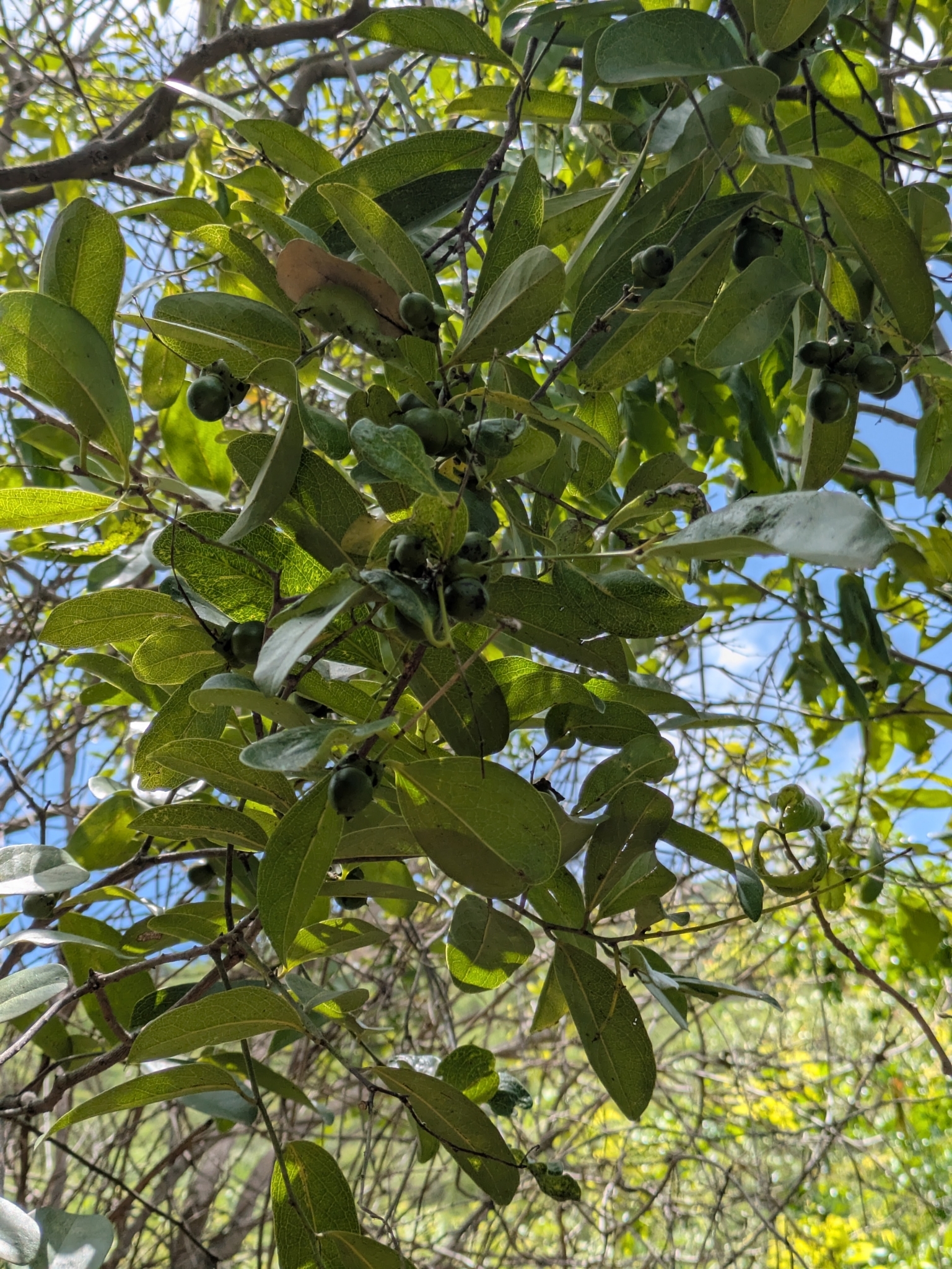
The black sapote (Diospyros nigra) is a tropical evergreen fruit tree in the Ebenaceae family, reaching heights of up to 25 m (82 ft) in its native range. It is most recognised for its round, olive-green fruits that reveal a dark brown, custard-like interior when ripe.
You will need a frost-free climate to grow this tree, as it suffers damage below 0 °C (32 °F). It is a rewarding choice if you have space and can provide consistent moisture and warmth.
Key Facts
- Light: Full sun for best fruit production
- Water: Keep soil consistently moist but never waterlogged
- Temperature: Requires warm conditions above 10 °C (50 °F)
- Soil: Prefers deep, fertile, well-draining soil
- Height: Typically 5-10 m (16-33 ft) in home gardens
Is the Black Sapote Right for Your Garden
Growing a black sapote is best suited for gardeners in frost-free, tropical or subtropical regions who have ample space for a large, spreading tree. It fits well into food forests or as a large specimen tree that provides year-round evergreen shade.
You should only plant this if you have the patience to wait 3 to 4 years for your first fruit harvest. It is a low-maintenance tree once established, provided you avoid locations prone to standing water or freezing winds.
How to Identify Black Sapote
You can identify the black sapote by its glossy, dark green, elliptical leaves that grow up to 20 cm (8 in) long. The tree maintains a dense, rounded crown that casts heavy shade throughout the year.
- Leaves are alternate and leathery in texture.
- Flowers are small, white, and appear in the leaf axils.
- Fruit is spherical, 5-12 cm (2-5 in) in diameter.
- Skin turns from olive-green to a dull, muddy green when ripe.
Site Selection and Planting
Select a site that receives at least 6-8 hours of direct sunlight daily for healthy growth and fruit set. The tree demands deep soil to accommodate its taproot, so avoid areas with high water tables or heavy clay that retains too much moisture.
When planting, dig a hole twice the width of the root ball and ensure the top of the root system is level with the soil surface. Space trees at least 6 m (20 ft) apart to allow for the natural spread of the canopy.
Watering and Feeding Needs
Your black sapote requires regular, deep watering to maintain soil moisture, especially during the fruit development phase. While somewhat tolerant of short dry spells once mature, consistent moisture prevents fruit drop and ensures the pulp develops its characteristic texture.
- Water young trees at least twice weekly during the first year.
- Apply a balanced, slow-release fertilizer 3 times per year.
- Mulch around the base to retain moisture, keeping it away from the trunk.
- Reduce watering slightly during the cooler winter months.
Pruning and Tree Maintenance
You should prune your black sapote annually after the harvest to keep the tree at a manageable height and improve airflow through the canopy. Removing crossing or dead branches helps prevent fungal issues in the dense foliage.
Keep the tree structure open to sunlight, as this encourages more uniform fruit ripening throughout the crown. Always use clean, sharp tools to make clean cuts, which allows the tree to heal quickly and prevents disease entry.
How to Harvest and Ripen Fruit
Harvest your fruit when the skin transitions from a shiny green to a dull, olive-brown colour. If you harvest too early, the fruit will remain hard and astringent, even after sitting on your kitchen counter.
Place the harvested fruit in a cool, dark place to ripen for 3 to 7 days. You will know it is ready to eat when the fruit feels soft to the touch, similar to a ripe avocado, and the inside pulp turns a rich, dark chocolate colour.
Common Problems and Troubleshooting
Most issues with black sapote arise from improper soil drainage or extreme temperature fluctuations. If you notice yellowing leaves, check your watering schedule first, as it is often a sign of waterlogged roots.
- Leaf drop: Often caused by sudden cold snaps or drought.
- Fruit drop: Usually triggered by irregular watering or extreme heat.
- Sooty mold: Often follows an aphid or scale insect infestation.
- Poor fruit set: May occur if the tree is not receiving enough sunlight.
Black Sapote Uses and Culinary Notes
The black sapote is traditionally used in desserts, where its mild, sweet flavour and creamy texture mimic chocolate pudding. It is frequently blended into smoothies, baked into cakes, or eaten raw with a dash of lime juice.
The fruit is a good source of vitamin C and dietary fibre. It should be consumed when fully soft, as the unripe fruit contains tannins that make the texture unpleasant and the flavour astringent.
Black Sapote Through the Year
| Spring | Apply a balanced fertilizer as new growth begins. Monitor for early flowering and ensure consistent watering. |
|---|---|
| Summer | Deep water during dry spells to support fruit development. Apply a layer of mulch to conserve ground moisture. |
| Autumn | Begin harvesting mature fruit as it changes colour. Reduce fertilizer applications as the tree prepares for slower growth. |
| Winter | Protect young trees from frost using horticultural fleece. Prune dead wood after the final harvest is collected. |
What Is Wrong With My Black Sapote
| What you see | Likely cause | What to do |
|---|---|---|
| Yellowing leaves | Poor drainage or overwatering | Improve soil drainage and allow the top 5 cm of soil to dry before watering again. |
| Fruit dropping prematurely | Irregular watering | Maintain consistent soil moisture throughout the fruit development period. |
| Sooty mold on leaves | Sap-sucking insects | Identify and treat for aphids or scale using insecticidal soap. |
Frequently Asked Questions
What does black sapote taste like?
It is widely described as having a sweet, mild flavour and a creamy, custard-like texture that resembles chocolate pudding.
How can you tell if a black sapote is ripe?
The skin will change from a glossy olive-green to a dull, earthy brown and the fruit will feel very soft to the touch.
Is black sapote related to white sapote?
No, black sapote (Diospyros nigra) is a member of the Ebenaceae family, while white sapote (Casimiroa edulis) belongs to the Rutaceae family.
Can you grow black sapote from seed?
Yes, you can grow it from fresh seeds, though they must be planted immediately as they lose viability quickly. Germination typically occurs within 2 to 4 weeks in warm, moist conditions.
Information about traditional or historical uses is provided for educational interest only and is not medical advice. Do not use any plant to treat a condition without speaking to a qualified professional.
Sources & Verification
Taxonomy and distribution are checked against the databases below. Care guidance is written for cultivated species only and reviewed by our editor. How We Build Plant Profiles →