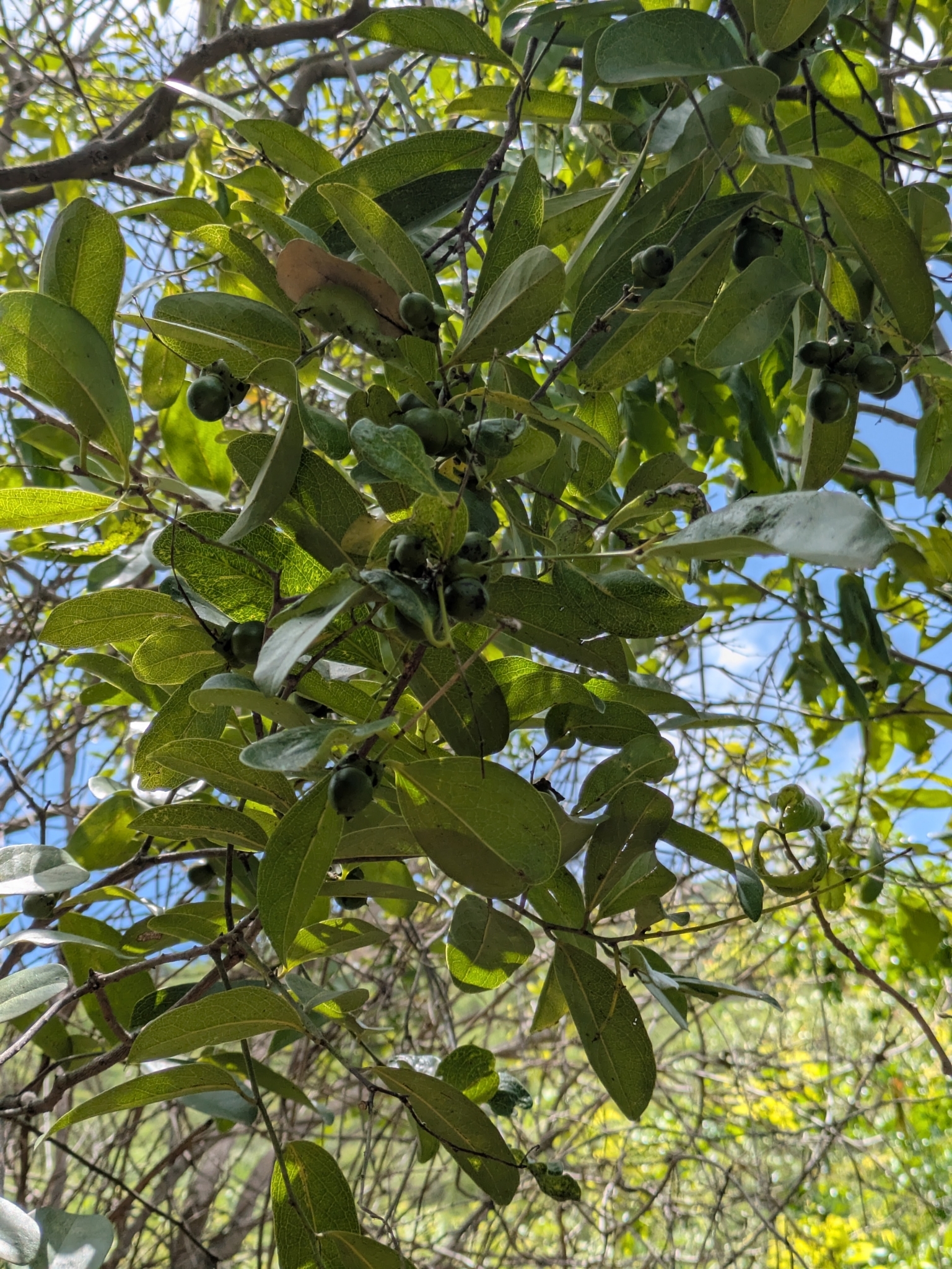
The American persimmon (Diospyros virginiana) is a hardy, deciduous tree native to the eastern United States, known for its small, orange-hued fruits that ripen in late autumn. It belongs to the Ebenaceae family and is typically dioecious, meaning you need both male and female trees to produce a harvest.
This tree suits growers with ample space who want a reliable native producer that thrives in diverse soil conditions. Success hinges on planting both sexes within proximity to ensure pollination.
Key Facts
- Light: Prefers full sun for best fruit production
- Hardiness: Thrives in USDA zones 4 through 9
- Pollination: Dioecious; requires both male and female trees
- Height: Typically reaches 10-18 m (35-60 ft)
- Fruit: Ripens from September to November
Why Grow an American Persimmon
Growing an American persimmon is rewarding for those who value native species that provide both shade and a unique seasonal harvest. Unlike many ornamental trees, this species supports local pollinators during its late spring bloom and provides food for wildlife in the autumn.
You will find this tree fits well in larger landscapes where its deep taproot can establish without interference. It is an excellent choice if you want a low-maintenance specimen that survives occasional drought once mature.
How to Identify American Persimmon
You can identify an American persimmon by its distinctive, dark grey bark that breaks into small, square, blocky plates as the tree matures. The leaves are simple, alternate, and ovate, typically measuring 7-15 cm (3-6 in) in length with smooth margins.
- Leaves turn a yellow to reddish-purple colour in autumn.
- Flowers are small, inconspicuous, and appear in late spring.
- Fruit is a round, orange-to-purplish berry, 2-5 cm (1-2 in) in diameter.
- The tree exhibits a rounded, spreading crown in open settings.
American Persimmon Tree Size
An American persimmon will usually reach a mature height of 10-18 m (35-60 ft) in ideal woodland conditions. In open garden settings, trees often remain on the smaller end of this scale, typically topping out around 12 m (40 ft).
The canopy spread is generally 6-10 m (20-35 ft) wide, so ensure you provide adequate spacing during planting. Its deep taproot makes it difficult to transplant once it has been in the ground for more than two years.
Site Selection and Planting
Choose a site that receives at least 6-8 hours of direct sunlight daily to ensure maximum fruit yield. While the tree is adaptable to various soil types, it performs best in well-drained, loamy soil with a pH between 5.5 and 7.5.
- Clear a planting area 3 times the width of the root ball.
- Plant in early spring to allow roots to establish before summer heat.
- Ensure you have at least one male tree for every 5-8 female trees.
- Avoid low-lying areas that remain waterlogged, as this can lead to root rot.
Caring for Your Persimmon Tree
Providing consistent care is essential during the first 3 years while the tree establishes its deep root system. Water young trees weekly during dry spells, applying 20-30 litres (5-8 gallons) of water per session.
Once established, the tree is quite drought-tolerant and requires minimal intervention. You may apply a balanced, slow-release fertiliser in early spring if growth appears stunted, but avoid over-fertilising, which can reduce fruit production.
Pruning American Persimmon
Pruning is best performed in late winter while the tree is dormant to shape the crown and remove dead or diseased wood. Focus on creating a strong central leader to support the weight of future fruit crops.
- Remove any suckers growing from the base of the trunk.
- Thin out crowded branches to improve light penetration into the canopy.
- Never remove more than 25% of the total canopy in a single season.
- Use clean, sharp shears to make flush cuts just outside the branch collar.
Managing Common Problems
The most common issues for American persimmon are leaf spot diseases and occasional pest infestations like scale or mealybugs. These rarely kill the tree but can impact the quality of your fruit harvest.
- Leaf spot: Improve air circulation through thinning and remove fallen leaves.
- Scale insects: Treat with horticultural oil in late winter before buds break.
- Fruit drop: Ensure consistent moisture during the summer fruit-sizing phase.
- Wilting: Check for root rot if the soil remains constantly saturated.
Winter Care for Persimmon
Winter care is minimal because the tree is fully dormant and highly cold-hardy down to USDA zone 4. The primary task is to protect young, thin-barked trees from sunscald by wrapping the trunk with white tree guard or light-coloured latex paint.
You should also ensure the mulch layer around the base is refreshed to 5-8 cm (2-3 in) thick to insulate the root zone. Avoid heavy pruning during late autumn, as this can stimulate tender growth that will be damaged by the first hard frost.
Uses for American Persimmon
The fruit of the American persimmon is traditionally used in puddings, breads, and preserves once it has fully ripened and lost its astringency. The wood is extremely dense and has historically been used for golf club heads and fine furniture due to its hardness.
Beyond human consumption, the tree is a valuable source of food for possums, raccoons, and wild turkeys in the autumn. Its ability to thrive in poor, rocky soil also makes it a useful species for erosion control on hillsides.
American Persimmon Through the Year
| Spring | Apply a balanced fertiliser if growth is slow. Monitor for new leaf growth and ensure young trees receive 25 mm (1 in) of water weekly. |
|---|---|
| Summer | Keep the area around the base clear of weeds. Provide supplemental water during extended dry periods to prevent premature fruit drop. |
| Autumn | Harvest fruit when it turns deep orange and feels soft to the touch. Clear away fallen fruit to avoid attracting unwanted wildlife to the immediate area. |
| Winter | Prune to remove dead wood and shape the tree. Apply a layer of mulch to protect the roots and wrap young trunks to prevent sunscald. |
What Is Wrong With My American Persimmon
| What you see | Likely cause | What to do |
|---|---|---|
| Fruit is extremely astringent | Fruit is not fully ripe | Wait until the fruit is soft and has dropped from the tree or harvest after the first frost. |
| No fruit production | Lack of pollination | Ensure you have both a male and female tree planted within 15-30 m (50-100 ft) of each other. |
| Dark spots on leaves | Fungal leaf spot | Rake and dispose of all fallen leaves in autumn to prevent spores from overwintering. |
Frequently Asked Questions
How do I eat American persimmon?
You should only eat the fruit when it is very soft and fully ripe, as unripe fruit contains high levels of tannins that cause a bitter, puckering sensation. Once soft, you can scoop out the pulp to use in baking or eat it fresh.
How can I tell if my persimmon tree is male or female?
You can identify the sex by looking at the flowers in late spring; male trees produce clusters of small flowers, while female trees produce larger, solitary flowers that have a small, undeveloped fruit at the base.
Can I grow American persimmon from seed?
Yes, you can grow them from seed, but you must stratify the seeds in a refrigerator for 60-90 days before planting to break dormancy. Note that seedlings may take 7-10 years to begin producing fruit.
What is the difference between American persimmon and Japanese persimmon (<em>Diospyros kaki</em>)?
The American persimmon is smaller, hardier, and has a more complex, honey-like flavour, whereas the Japanese persimmon is larger, less cold-hardy, and often produces fruit that is less astringent when firm.
Sources & Verification
Taxonomy and distribution are checked against the databases below. Care guidance is written for cultivated species only and reviewed by our editor. How We Build Plant Profiles →
- USDA PLANTS DatabaseDistribution and botanical information
- NC State ExtensionCultivation and care details
- Missouri Botanical GardenIdentification and growth habits
- GBIF — Global Biodiversity Information Facilitytaxonomy, synonyms, occurrence records
- Plants of the World Online (Kew)accepted name, native range
- Wikipediageneral reference