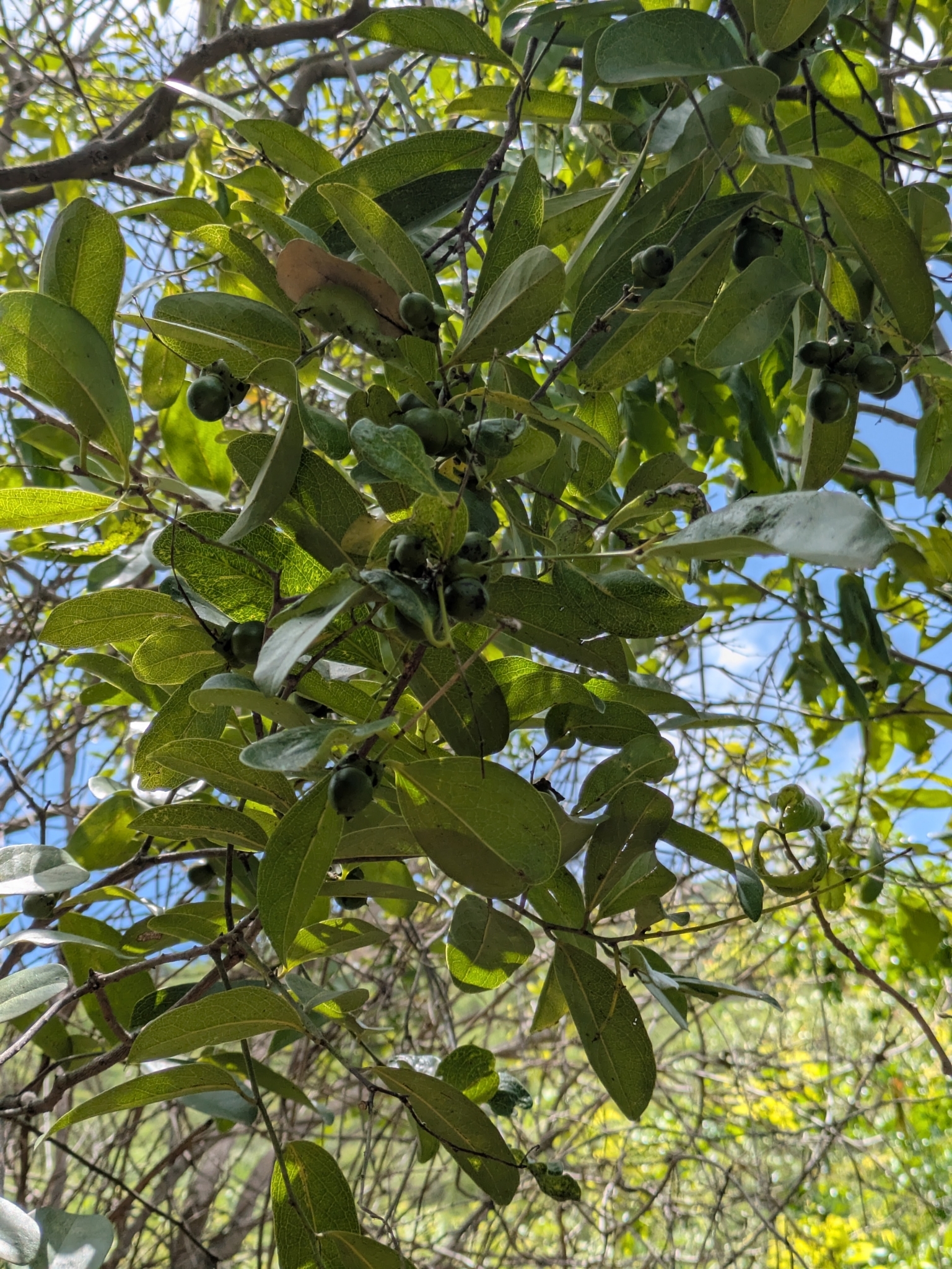
The Date Plum is a deciduous tree native to a broad region stretching from Southeast Europe to East Asia, known scientifically as Diospyros lotus. It produces small, spherical fruits that transition from a pale yellow to a dusty blue-black as they ripen in late autumn.
You will likely encounter this species either as a fruiting specimen in a temperate orchard or as the hardy rootstock beneath a grafted Japanese persimmon (Diospyros kaki). It survives colder winters than many of its relatives, making it a reliable choice for growers in temperate zones.
Key Facts
- Water: Keep soil moist during the first two years
- Hardiness: Tolerates temperatures down to -15 °C (5 °F)
- Fruit: Harvest after the first frost for best flavor
- Sun: Requires full sun to ripen fruit properly
- Size: Reaches up to 9-15 m (30-50 ft) in height
Is the Date Plum Right for Your Garden?
Growing the Date Plum is a long-term commitment that rewards you with unique fruit and a wide, shade-providing canopy. This species is generally dioecious, meaning you usually need both a male and a female tree to produce a crop of fruit. If you have a small garden, you must verify if your chosen sapling is a rare self-fertile cultivar or be prepared to plant a pair.
It handles urban pollution well and fits into large backyard orchards or woodland edges. Because it is deciduous, it provides excellent summer shade while allowing light through in the winter. It is less demanding than the larger-fruited Japanese persimmon (Diospyros kaki) and can tolerate slightly poorer soil conditions.
Identifying the Caucasian Persimmon
You can identify Diospyros lotus by its glossy, oval leaves and small, marble-sized fruits that transition from yellow to dark purple. The leaves are 5-15 cm (2-6 in) long, dark green on the upper surface and paler underneath, with a smooth margin. In autumn, the foliage often turns a clear yellow before falling to reveal the fruit clusters.
The bark is grey-brown and develops a distinctive rectangular blocky pattern as the tree ages, similar to the American persimmon (Diospyros virginiana). In early summer, tiny bell-shaped flowers appear; they are yellowish-green with a reddish tint and are often hidden by the dense foliage. The fruit itself is small, rarely exceeding 2 cm (0.8 in) in diameter.
How Big Does a Date Plum Tree Get?
A mature tree typically reaches a height of 9 to 15 metres (30 to 50 feet) with a spread of 6 to 9 metres (20 to 30 feet). Growth is moderate, often adding 30-60 cm (12-24 in) per year under ideal conditions in deep, fertile soil. In restricted garden environments or colder climates, it may remain a smaller, more rounded tree of 6 m (20 ft).
Its root system is deep and expansive, which provides excellent stability but requires careful placement. Avoid planting it within 5 m (16 ft) of foundations, septic tanks, or underground pipes to prevent future structural issues. The canopy is dense and provides heavy shade, which may limit what you can grow directly beneath it once it reaches maturity.
Choosing the Best Site for Diospyros lotus
This tree requires full sun and a position sheltered from harsh, drying winds to thrive and produce sweet fruit. While it can tolerate partial shade, the fruit will not ripen or develop sufficient sugars without at least 6-8 hours of direct sunlight daily. It prefers deep, fertile soil but is adaptable to various types as long as they are not waterlogged.
- Avoid frost pockets where late spring frosts might damage new flower buds.
- Ensure the site has at least 5 m (16 ft) of clearance from other large trees.
- Select a spot with well-draining soil to prevent root rot in winter.
- Consider the fruit drop; avoid planting over paved walkways or patios.
Planting Your Caucasian Persimmon
The best time to plant is in late autumn or early spring while the tree is dormant and the soil is moist. Dig a hole twice as wide as the root ball and just as deep to encourage lateral root growth. If you are planting a bare-root tree, ensure the roots are spread out naturally and not circling the hole, which can lead to girdling.
- Remove any grass or weeds in a 1 m (3 ft) circle around the trunk to reduce competition.
- Apply a 5-10 cm (2-4 in) layer of organic mulch, keeping it 10 cm (4 in) away from the bark.
- Stake young trees in windy areas for the first two years to ensure upright growth.
- Water the tree deeply immediately after planting to settle the soil around the roots.
Watering and Feeding Requirements
Provide 25 mm (1 inch) of water per week during the growing season for young trees to establish a deep root system. Established trees are moderately drought-tolerant but produce better fruit if the soil remains consistently moist during the summer heat. If the tree experiences severe water stress, it may drop its fruit prematurely to conserve energy.
Fertilize in early spring with a balanced 10-10-10 NPK fertilizer before the buds break. Avoid over-fertilizing with high-nitrogen products, as this encourages excessive leaf growth at the expense of fruit production. A top-dressing of well-rotted compost or manure in autumn is often sufficient for mature trees in good soil.
Pruning for Health and Fruit
Prune your tree in late winter while it is still dormant to maintain a strong structural framework and manage its size. Focus on removing dead, damaged, or crossing branches to improve light penetration into the center of the canopy. If you are growing it for fruit, aim for a modified central leader shape to help the branches support the weight of the crop.
- Thin out crowded branches to improve air circulation and reduce fungal risks.
- Remove suckers arising from the base, especially if the tree is a grafted variety.
- Shorten overly long lateral branches to encourage sturdier, thicker growth.
- Always use sharp, sterilized tools to prevent the spread of disease.
Common Caucasian Persimmon Problems
The most frequent issue is fruit drop, often caused by inconsistent watering, lack of pollination, or a sudden temperature swing. While generally healthy, it can occasionally be affected by mealybugs or scale insects which cluster on the undersides of leaves. Fungal leaf spot may occur in very humid climates with poor air movement between trees.
- Yellowing leaves: check for poor drainage or a possible nitrogen deficiency.
- Premature fruit drop: ensure even watering during dry summer spells.
- Sticky residue on leaves: inspect for aphids or scale insects.
- Bird damage: use netting if you wish to harvest the fruit before birds eat it.
Winter Care and Hardiness
Mature trees are hardy to -15 °C (5 °F), but young saplings need protection from extreme cold during their first three winters. In regions at the edge of its hardiness zone, wrap the trunks of young trees in burlap or tree guards to prevent frost cracking. The tree enters a deep dormancy and does not require watering during the winter months unless the ground is exceptionally dry and unfrozen.
Avoid pruning in late autumn, as this can stimulate new growth that will be killed by the first frost. If a heavy snowfall occurs, gently brush the snow off the branches to prevent them from snapping under the weight. The fruit often stays on the tree well into winter, providing a food source for local wildlife once the leaves have fallen.
Traditional and Modern Uses
The Date Plum is primarily used as a fruit crop, an ornamental shade tree, and a vigorous rootstock for grafting. The fruit is small, roughly 2 cm (0.8 in) in diameter, and must be fully ripe (often bletted by frost) to lose its astringency. Historically, the fruits were dried and eaten like dates, which is how the tree earned its common name.
- Fresh eating: only when the fruit is soft, translucent, and jelly-like.
- Dried fruit: the high sugar content makes them excellent for long-term preservation.
- Rootstock: provides superior cold hardiness to less resilient persimmon cultivars.
- Timber: the wood is hard and fine-grained, traditionally used in small turnery and tool handles.
Year-Round Care for Date Plum
| Spring | Apply a balanced fertilizer before bud break and refresh the mulch layer. Plant new saplings once the soil is workable. |
|---|---|
| Summer | Water deeply during dry spells, providing 25 mm (1 inch) per week. Monitor leaves for scale insects or aphids. |
| Autumn | Harvest fruit after the first frost when they are soft. Clear fallen leaves to prevent fungal spores from overwintering. |
| Winter | Prune for shape and remove dead wood while the tree is dormant. Protect young trunks from frost with tree wraps. |
Why Is My Date Plum Not Fruiting? Quick Diagnosis
| What you see | Likely cause | What to do |
|---|---|---|
| Astringent or bitter fruit | Fruit is unripe | Wait for a hard frost or allow fruit to soften completely until it feels like jelly. |
| No fruit production | Lack of pollination | Ensure you have both a male and female tree, as most varieties are not self-fertile. |
| Slow growth and pale leaves | Nutrient deficiency or poor soil | Add organic matter to the soil and apply a balanced fertilizer in early spring. |
Date Plum Varieties and Cultivars
- ‘Self-fertile’ – a rare selection that produces fruit without a second tree.
- ‘Kuro-gaki’ – a variety sometimes used for its darker, more ornamental fruit.
Frequently Asked Questions
Is Diospyros lotus self-fertile?
Most Date Plum trees are dioecious, meaning you need both a male and a female tree to get fruit. A few rare cultivars are self-fertile, but you should assume a pair is needed unless specified by the nursery.
What does the Date Plum fruit taste like?
When fully ripe or bletted by frost, the fruit has a sweet, rich flavor that is a cross between a date and a plum. If eaten before it is soft, it is extremely astringent and will cause a dry, puckering sensation in the mouth.
Can I grow Date Plum in the UK?
Yes, it grows well in the UK, particularly in the southern regions or sheltered spots. It is hardy enough for the climate but needs a sunny summer to ensure the fruit ripens properly before winter.
Are there any health benefits to Caucasian Persimmon?
The fruit was traditionally used in folk medicine as a source of vitamins and to treat fevers. It is high in sugars and tannins, though it should only be consumed when fully ripe to avoid digestive discomfort.
How do I grow Diospyros lotus from seeds?
Clean the seeds from the ripe fruit and provide three months of cold stratification in a refrigerator. Sow them in early spring in a well-draining seed mix, and they should germinate as temperatures rise.
Information about traditional or historical uses is provided for educational interest only and is not medical advice. Do not use any plant to treat a condition without speaking to a qualified professional.
Sources & Verification
Taxonomy and distribution are checked against the databases below. Care guidance is written for cultivated species only and reviewed by our editor. How We Build Plant Profiles →