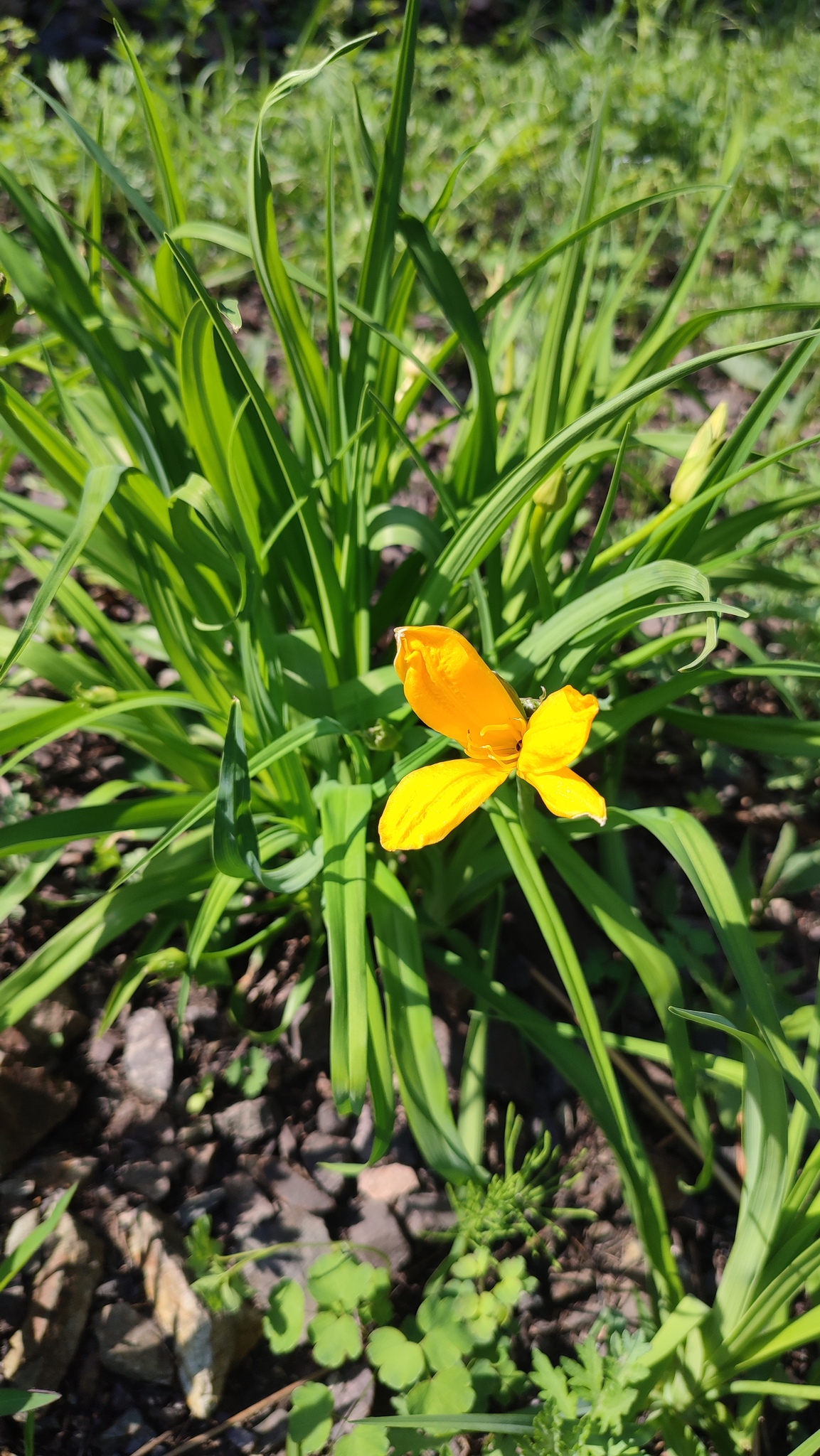
Small daylily (Hemerocallis minor) is a cold-hardy perennial native to northern Asia, including Siberia, Mongolia, northern China, and Korea. First described by botanist Philip Miller in 1768, it features grass-like leaves and clear yellow, trumpet-shaped flowers.
Plants reach a height of 30-50 cm (12-20 in), making them significantly smaller than standard garden daylilies. While non-toxic to humans, all parts of the plant are lethal to cats.
Key Facts
- Height: Grows 30-50 cm (12-20 in) tall
- Hardiness: USDA zones 3 through 9
- Light: Needs 6 hours of direct sun daily
- Soil: Moist, well-draining soil with pH 6.0-7.0
- Toxicity: Non-toxic to dogs, highly toxic to cats
Where to Plant Small Daylily in the Garden
Small daylily thrives in rock gardens, flower borders, and walkway edges where low-growing foliage remains compact. Its height of 30-50 cm (12-20 in) keeps sightlines open along garden paths and border fronts.
This species functions effectively in formal beds, cottage borders, and erosion control slopes. Its dense fibrous root system anchors topsoil while maintaining a tight horizontal footprint.
How to Identify Hemerocallis minor
Small daylily produces narrow foliage measuring 3-5 mm (0.1-0.2 in) wide and clear lemon-yellow scentless blooms measuring 5-6 cm (2-2.4 in) across. Leaves emerge in early spring in arching fan-shaped clusters from short rhizomes.
The flower scapes rise slightly above the leaf mound, bearing 2 to 5 unbranched flower buds. Key botanical traits include:
- Foliage width: Leaves stay under 5 mm (0.2 in) wide, narrower than standard daylilies.
- Flower color: Uniform yellow petals without red or orange throat markings.
- Bloom size: Flower trumpets measure 5-7 cm (2-2.8 in) long with spreading segments.
- Root system: Fleshy roots growing from a compact central crown.
Sunlight and Soil Conditions for Small Daylily
Small daylily requires 6 hours of direct sun daily to flower profusely, though it tolerates afternoon shade in warm zones. In deep shade, foliage stretches thin and flower production drops.
Soil must be moist but well-draining with a pH between 6.0 and 7.0. Plants survive heavy clay or lean sandy soils when organic compost is mixed into the top 20 cm (8 in) of earth.
How to Plant Small Daylily Bare Roots and Containers
Set small daylily crowns 2.5 cm (1 in) below the soil surface with fleshy roots spread outward over a small soil mound. Space plants 30-40 cm (12-16 in) apart to allow crowns room to expand.
Steps for planting potted or bare-root stock:
- Dig hole: Excavate a hole 30 cm (12 in) wide and 20 cm (8 in) deep.
- Form mound: Build a cone of loose soil in the center of the hole.
- Position crown: Place the crown junction 2.5 cm (1 in) below ground level.
- Backfill and water: Firm soil around roots and soak with 5 L (1.3 gal) of water.
Watering and Fertilizing Small Daylily Plants
Provide 2.5 cm (1 in) of water weekly during the active growing season from April through August. Established plants survive moderate dry spells, but consistent moisture extends the bloom period.
Apply a balanced 10-10-10 granular fertilizer in early spring when new shoots reach 5 cm (2 in) tall. High-nitrogen fertilizers promote leaf growth while reducing flower bud development.
Pruning and Deadheading Small Daylily
Remove faded individual blooms daily during the May to June bloom season to maintain appearance. Cut flower stems down to ground level once all buds on the scape finish blooming.
In late autumn or early spring, trim dead foliage back to 5 cm (2 in) above the soil. Clearing dead leaves prevents overwintering pests and fungal spores from damaging spring growth.
How to Divide Hemerocallis minor
Divide small daylily crowns every 3 to 5 years in early autumn or right after flowering finishes in midsummer. Division prevents crowded crowns and generates new stock.
Follow these steps to divide mature plants:
- Lift clump: Dig 15 cm (6 in) around the crown and lift the root mass with a garden fork.
- Separate fans: Pry the crown into sections containing 3-5 leaf fans and root stock.
- Trim leaves: Cut foliage back to 15 cm (6 in) above the root junction.
- Replant: Water thoroughly and maintain soil moisture for 3 weeks.
Preventing Pests and Diseases on Small Daylily
Small daylily encounters few diseases but can contract daylily rust (Puccinia hemerocallidis) and spider mites in warm, dry weather. Orange powdery spots on leaf undersides signal rust infection.
Inspect foliage weekly for early signs of damage. Address common problems directly:
- Aphids: Spray tender buds with a stream of water or insecticidal soap.
- Slugs and snails: Clear fallen leaves and spread iron phosphate bait around crowns in spring.
- Daylily rust: Remove infected foliage and apply copper fungicide during humid weather.
- Thrips: Rinse opening buds with water to avoid petal streaking.
Winter Care for Hemerocallis minor
Small daylily survives winter ground temperatures down to -35 °C (-31 °F) in USDA zone 3 without root damage. Foliage dies back completely after the first autumn frost.
In regions with cold winds and little snow cover, spread a 5 cm (2 in) layer of wood mulch around crowns in November. Rake excess mulch away in early March to let soil warm for spring growth.
Best Companion Plants for Small Daylily
Pair small daylily with purple-flowered perennials and fine groundcovers that bloom during late spring. Contrast purple flowers against the yellow blooms of small daylily for border displays.
Recommended companion species include:
- Siberian iris (Iris sibirica): Purple blooms frame the lower yellow flowers.
- Catmint (Nepeta racemosa): Blue-violet flowers open alongside small daylily in May.
- Cranesbill geranium (Geranium rozanne): Provides violet blooms through summer.
- Common box (Buxus sempervirens): Evergreen foliage contrasts with narrow daylily leaves.
Frequently Asked Questions
How tall do small daylilies grow?
Small daylilies (Hemerocallis minor) grow 30 to 50 cm (12 to 20 in) tall with foliage reaching 30 cm (12 in). Flower scapes hold blooms just above the leaf mound.
Is Hemerocallis minor invasive?
No, Hemerocallis minor is not invasive. Unlike orange daylily (Hemerocallis fulva), it forms tight clumps that expand slowly rather than spreading aggressively by underground runners.
What is the smallest daylily species?
Small daylily (Hemerocallis minor) is among the smallest wild daylily species, growing 30-50 cm (12-20 in) tall with leaves only 3-5 mm (0.1-0.2 in) wide. Compact cultivated hybrids grow to similar dimensions.
Is small daylily toxic to pets?
Small daylily is toxic to cats, causing rapid and severe kidney failure if foliage or pollen is ingested. It is non-toxic to dogs and horses.
How does Hemerocallis minor differ from Hemerocallis lilioasphodelus?
Small daylily (Hemerocallis minor) reaches 30-50 cm (12-20 in) tall compared to 60-90 cm (24-36 in) for yellow daylily (Hemerocallis lilioasphodelus). Leaves of small daylily are narrower (3-5 mm wide) and flowers are virtually scentless.
Sources & Verification
Taxonomy and distribution are checked against the databases below. Care guidance is written for cultivated species only and reviewed by our editor. How We Build Plant Profiles →