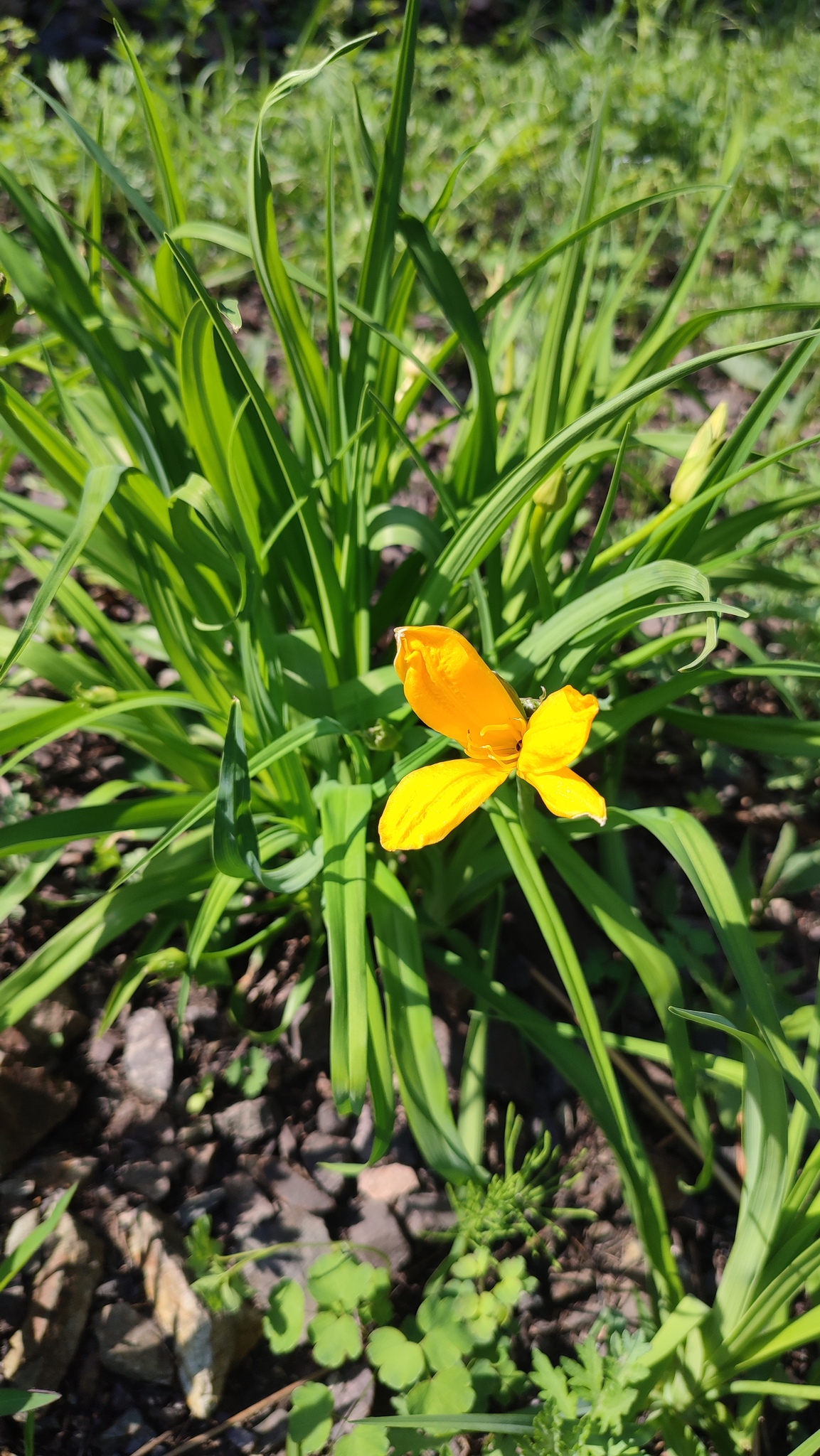
Hemerocallis citrina is a clump-forming herbaceous perennial native to China, Korea, and Japan, recognized by its tall scapes and pale lemon-yellow flowers. It belongs to the Asphodelaceae family and is a primary source of dried “golden needles” used in East Asian cuisine.
Unlike most daylilies that open at dawn, this species is vespertine, meaning its flowers open in the late afternoon and remain fragrant throughout the night. It reaches heights of 1.2 m (4 ft), making it significantly taller than many modern garden hybrids.
Key Facts
- Light: Full sun to partial shade
- Water: 2.5 cm (1 in) per week during summer
- Bloom: Nocturnal flowers from June to August
- Hardiness: USDA zones 3 to 9
- Edibility: Flower buds are traditionally eaten dried or fresh
Growing Citron Daylily in Your Garden
Citron daylily fits best in scented gardens or edible landscapes where its evening fragrance can be appreciated. It is a tall perennial that requires space to form its 90 cm (35 in) wide clumps, often serving as a vertical accent in the middle or back of a border. Because it blooms at night, it is a functional addition to “moon gardens” designed for evening enjoyment.
This species is less prone to the leaf-spotting issues that affect some modern hybrids, maintaining clean, green foliage until the first frost. It handles urban pollution well and can be used in rain gardens provided the soil does not stay waterlogged for weeks. You should plant it away from high-traffic areas for cats, as all parts of the genus are dangerous to felines.
Identifying Hemerocallis citrina
This species produces strap-like, arching leaves that reach 60-100 cm (24-39 in) in length and are roughly 2.5 cm (1 in) wide. The flower scapes are branched and rise above the foliage, bearing up to 60 buds per stem in mature specimens. The flowers themselves are narrow, trumpet-shaped, and 12-15 cm (5-6 in) long.
- Flower Color: Pale lemon-yellow with no orange or red tints.
- Bloom Time: Flowers open around 6:00 PM and close the following morning.
- Fragrance: Strong, sweet scent similar to citrus or jasmine.
- Root System: Fleshy, tuberous roots that store water and nutrients.
Choosing the Best Planting Site
Plant in full sun or light afternoon shade to ensure the stems remain upright and do not flop. In hotter climates, partial shade during the peak of the day prevents the pale flowers from bleaching or wilting prematurely. The citron daylily is adaptable to various soil types but prefers a loamy medium rich in organic matter.
Avoid sites with standing water, as the tuberous roots can rot in anaerobic conditions. A location near a patio or bedroom window is ideal for catching the nocturnal scent, which is most intense on warm, still evenings. This plant is competitive and can hold its own against weeds once the clump is established.
Planting and Establishing Citron Daylily
Space the crowns 60 cm (24 in) apart to allow for the natural spread of the rhizomatous roots. When planting bare-root specimens, spread the roots over a mound of soil in the hole and ensure the crown is buried no deeper than 2.5 cm (1 in). Deep planting is a common cause of poor flowering in the first two years.
Water the site thoroughly immediately after planting to settle the soil around the roots. Adding a 5 cm (2 in) layer of organic mulch helps retain moisture and suppress weeds while the young plant establishes its root system. Most plants will produce a few flowers in their first season, but full height is usually reached by the third year.
Watering and Feeding for Better Blooms
Provide 2.5 cm (1 in) of water per week during the peak summer flowering period to prevent bud drop. While the citron daylily is moderately drought-tolerant once established, consistent moisture leads to a higher bud count and longer-lasting flowers. Water at the base of the plant to keep the foliage dry and reduce the risk of fungal diseases.
Apply a balanced 10-10-10 fertilizer in early spring as new growth emerges from the soil. A second, lighter application can be made in mid-summer if the soil is sandy or nutrient-poor. Avoid high-nitrogen fertilizers late in the season, as this can stimulate soft growth that is susceptible to winter damage.
Pruning and Post-Bloom Care
Remove spent flower stalks (scapes) at the base once all buds have finished blooming in late summer. This prevents the plant from wasting energy on seed production and keeps the garden tidy. Unlike some perennials, the foliage of the citron daylily should be left intact throughout the summer as it continues to photosynthesize and build energy for next year.
If the foliage becomes ragged or yellowed by late August, you can trim it back by one-third without harming the plant. In late autumn, after a hard frost has turned the leaves brown, cut the entire plant down to 5 cm (2 in) above the soil level. This removes overwintering sites for pests like thrips or slugs.
Propagating Citron Daylily from Seeds and Division
Divide the root clumps every 3 to 5 years in early spring or autumn to maintain vigor and flower quality. Use a sharp spade to lift the entire clump and pull the fans of leaves apart, ensuring each division has at least 2-3 fans and a healthy portion of the tuberous root system. Replant the divisions immediately at the same depth as the original plant.
Seeds of Hemerocallis citrina require a cold stratification period of 6 weeks at 4 °C (40 °F) to germinate reliably. Sow seeds in a well-draining starting mix in late winter, barely covering them with soil. Seedlings grow quickly but may take 2 to 3 years to produce their first lemon-yellow flowers.
Common Pests and Problems
Watch for daylily gall midge (Contarinia quinquenotata), which causes the flower buds to become swollen, distorted, and fail to open. If you see these abnormal buds, pick them off and destroy them immediately to prevent the larvae from entering the soil. Aphids may also cluster on the tender new growth in May, though they rarely cause permanent damage.
- Daylily Rust: Orange pustules on the undersides of leaves; improve air circulation.
- Thrips: Tiny insects that cause silver streaks on leaves and deformed flowers.
- Bud Drop: Often caused by extreme drought or sudden temperature spikes.
- Slugs: Can tatter the emerging spring foliage in damp weather.
Winter Care and Dormancy
This species is fully hardy down to -35 °C (-31 °F) and requires no special winter protection in most temperate climates. In USDA zones 3 and 4, a layer of straw or evergreen boughs can be applied after the ground freezes to prevent frost heaving, which can push the crowns out of the soil. The plant is deciduous and will disappear completely underground during the winter months.
In early spring, remove any mulch or dead leaf debris before the new green shoots emerge. This is the best time to check the crown depth; if the plant has shifted, add a small amount of soil to cover any exposed roots. The citron daylily requires a period of winter chill to reset its internal clock for summer flowering.
Year-Round Care for Citron Daylily
| Spring | Divide large clumps every 4 years as soon as green shoots appear. Apply a balanced 10-10-10 fertilizer and clear away old mulch. |
|---|---|
| Summer | Provide 2.5 cm (1 in) of water weekly. Deadhead individual spent blooms daily if desired, and cut back entire scapes once finished. |
| Autumn | Cut foliage down to 5 cm (2 in) after the first hard frost. This is also an ideal time for planting new bare-root divisions. |
| Winter | Apply 5 cm (2 in) of mulch in cold-winter regions to prevent frost heaving. Check stored seeds for moisture if stratifying. |
Why Is My Citron Daylily Not Blooming? Quick Diagnosis
| What you see | Likely cause | What to do |
|---|---|---|
| Swollen, unopened buds | Daylily gall midge | Remove and destroy affected buds immediately to kill larvae. |
| Yellowing lower leaves | Overwatering or poor drainage | Reduce watering frequency and ensure the soil is not waterlogged. |
| No flowers on tall stems | Excess nitrogen or deep planting | Use a low-nitrogen fertilizer and ensure the crown is only 2.5 cm deep. |
Popular Citron Daylily Varieties and Hybrids
- Hemerocallis citrina var. vespertina – opens later in the evening than the type.
- Hemerocallis citrina ‘Baroni’ – slightly larger flowers and vigorous growth.
- Hemerocallis citrina ‘Yao Ming’ – a selected cultivar with high bud counts.
- Hemerocallis x ochroleuca – a fragrant hybrid with H. thunbergii.
Companion Plants for Citron Daylily
Pair with purple-flowered perennials like garden phlox (Phlox paniculata) or Russian sage (Salvia yangii) for a classic color contrast. Because it is a tall plant, it works well behind lower-growing species like cranesbill (Geranium rozanne) or catmint (Nepeta x faassenii). The fine texture of its foliage contrasts effectively with broad-leaved plants.
- Siberian iris (Iris sibirica) – shares similar moisture requirements and soil preferences.
- Purple coneflower (Echinacea purpurea) – provides a sturdy structure alongside the arching daylily leaves.
- Blazing star (Liatris spicata) – offers vertical flower spikes that bloom concurrently in mid-summer.
Frequently Asked Questions
Is Citron Daylily edible?
Yes, the flower buds are edible and are traditionally dried to make 'golden needles' for Chinese soups and stir-fries. Only consume plants grown without synthetic pesticides.
Is Hemerocallis citrina toxic to cats?
Yes, like all members of the Hemerocallis genus, it is highly toxic to cats and can cause fatal kidney failure. Keep it out of gardens accessible to roaming felines.
What are the benefits of Hemerocallis citrina?
In traditional Chinese medicine, it was used to treat insomnia and reduce inflammation. Modern gardeners value it primarily for its evening fragrance and edible yield.
How does it differ from Hemerocallis fulva?
Hemerocallis citrina has pale yellow, nocturnal, fragrant flowers, whereas the common orange daylily (Hemerocallis fulva) has scentless orange blooms that open during the day.
Information about traditional or historical uses is provided for educational interest only and is not medical advice. Do not use any plant to treat a condition without speaking to a qualified professional.
Sources & Verification
Taxonomy and distribution are checked against the databases below. Care guidance is written for cultivated species only and reviewed by our editor. How We Build Plant Profiles →