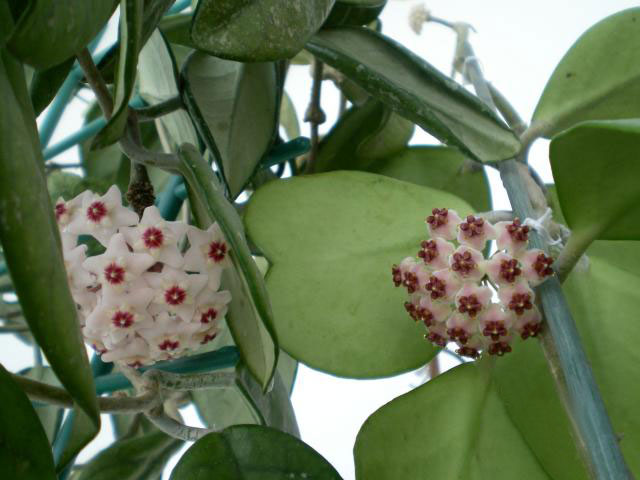
Hoya pubicalyx is a tropical climbing vine originating from the Philippines, widely grown indoors for its thick, succulent leaves and distinctive blooms. Belonging to the family Apocynaceae, this species features long trailing stems that easily wrap around trellises or cascade from hanging baskets.
You will succeed with this plant by providing bright indirect light and letting the soil dry out entirely between waterings. Unlike delicate ferns, it tolerates the lower humidity levels found in most standard homes.
Key Facts
- Light: Bright indirect light for best growth
- Water: Allow soil to dry completely between drinks
- Soil: Chunky, fast-draining orchid mix
- Temperature: 18-24 °C (65-75 °F) preferred
- Toxicity: Non-toxic to cats and dogs
Is Hoya pubicalyx a Good Fit for Your Home?
Hoya pubicalyx fits well into bright indoor spaces where its long vines can cascade down bookshelves or climb vertically up a support trellis. You will enjoy growing this species if you tend to forget watering sessions, because its thick foliage stores moisture during dry spells. Avoid placing it in dark northern corners, as it requires adequate illumination to maintain its vigor and unique foliage splashes.
This vine adapts readily to standard room temperatures between 18-24 °C (65-75 °F) and does not demand high greenhouse humidity. It remains relatively compact in a 15 cm (6 in) pot while sending out long, bare tendrils that eventually sprout leaves and buds.
How to Identify Hoya pubicalyx
Hoya pubicalyx features elongated, lance-shaped leaves measuring 7-15 cm (3-6 in) in length with a slightly fuzzy or pubscent texture when young. The stems are flexible and twine counterclockwise around any available support structure.
- Leaf markings: Ranging from solid dark green to heavy silver flecking known as splash.
- New growth: Often emerges in deep burgundy or nearly black tones before maturing to green.
- Flowers: Clusters of 20 to 40 fuzzy, star-shaped blossoms with contrasting corona colors.
- Sap: Broken stems or leaves release a milky white latex sap.
How Much Light Does Hoya pubicalyx Need?
Hoya pubicalyx requires bright indirect light for at least 6 hours daily to encourage both leaf variegation and flower production. Place your plant directly in front of an east-facing window or a few feet back from a west-facing exposure.
Low light causes the vines to stretch out with long spaces between small leaves and halts blooming entirely. Direct midday sunlight can scorch the foliage, bleaching the dark green leaves into a pale, yellowish hue.
How Often to Water Hoya pubicalyx
Water Hoya pubicalyx only when the potting mix is completely dry all the way to the bottom of the container. In a typical indoor environment, this means watering every 10 to 14 days during active spring growth.
- Check moisture levels by lifting the pot to gauge its weight or inserting a wooden skewer.
- Drench the potting mix thoroughly until water flows freely through the drainage holes.
- Empty the saucer after 15 minutes to prevent root rot from standing water.
- Reduce watering frequency by half during the shorter days of winter.
Best Soil Mix for Hoya pubicalyx
Hoya pubicalyx thrives in an extremely chunky, porous soil mix that mimics its native epiphytic habitat on tree bark. Standard peat-heavy potting soil holds too much moisture and will suffocate the root system.
- Combine equal parts standard potting soil, orchid bark, and perlite.
- Add handfuls of horticultural charcoal or pumice to boost aeration.
- Ensure your container features at least one wide drainage hole at the base.
Humidity and Temperature Requirements
Hoya pubicalyx grows best in room temperatures between 18-24 °C (65-75 °F) and tolerates standard household humidity levels of 40 to 50 percent. Keep the plant away from drafty windows, air conditioning units, and heating vents that cause rapid temperature fluctuations.
While it appreciates higher humidity during summer heatwaves, misting is unnecessary and can sometimes encourage fungal leaf spots if air circulation is poor. Never expose this tropical vine to temperatures dipping below 10 °C (50 °F).
How to Fertilize Hoya pubicalyx
Feed Hoya pubicalyx every 4 weeks during the spring and summer growing season using a balanced liquid houseplant fertilizer diluted to half strength. Over-fertilizing can damage the root system and cause leaf drop rather than faster growth.
Stop fertilizing completely from October through February when the plant enters a period of natural dormancy. Flush the soil with plain water twice a year to wash away accumulated mineral salts from tap water.
How to Propagate Hoya pubicalyx
Propagate Hoya pubicalyx easily by taking stem cuttings with at least two leaf nodes and placing them in water or damp sphagnum moss. Roots typically emerge from the submerged nodes within 3 to 4 weeks.
- Snip a 10-15 cm (4-6 in) section of healthy vine using sterilized shears.
- Remove the lower leaves so the nodes are completely bare.
- Submerge the bare nodes in a glass of clean water kept in bright indirect light.
- Transfer the cutting into an airy potting mix once roots reach 3 cm (1 in) in length.
Troubleshooting Hoya pubicalyx Problems
Hoya pubicalyx issues usually stem from watering mistakes or inadequate lighting rather than aggressive pests. Yellow leaves and mushy stems indicate root rot from overwatering, while wrinkled leaves point to severe underwatering.
- Symptom: Wrinkled, limp leaves. Cause: Underwatering or severe root dehydration. Fix: Soak the pot in a basin of water for 30 minutes.
- Symptom: Yellow lower leaves. Cause: Soil staying wet too long. Fix: Let the mix dry completely and improve drainage.
- Symptom: Sticky residue on leaves. Cause: Mealybugs or scale insects. Fix: Wipe leaves down with cotton swabs dipped in rubbing alcohol.
Is Hoya pubicalyx Toxic to Cats and Dogs?
Hoya pubicalyx is completely non-toxic to cats, dogs, and humans according to the ASPCA. You can safely place this trailing vine within reach of curious pets without worrying about poisoning.
Even though the plant is non-toxic, ingestion of large amounts of fibrous foliage or the bitter latex sap may cause mild stomach upset or vomiting in pets.
How to Encourage Hoya pubicalyx to Bloom
Hoya pubicalyx blooms when mature and root-bound, producing clusters of scented flowers that smell faintly sweet at night. Never cut off the bare woody spurs where flowers form, as future blossoms reappear on these exact same spots year after year.
Provide at least 6 hours of bright indirect light and avoid moving the plant constantly once flower buds start forming to prevent bud drop.
Hoya pubicalyx Through the Seasons
| Spring | Resume regular watering as new growth emerges. Begin fertilizing every 4 weeks with a balanced half-strength liquid fertilizer. |
|---|---|
| Summer | Maintain bright indirect light and water thoroughly whenever the potting mix dries out. Check trailing stems for pests during peak warmth. |
| Autumn | Reduce watering frequency as daylight hours shorten and indoor temperatures drop. Stop all fertilizer applications by late October. |
| Winter | Allow soil to dry out significantly between infrequent waterings. Keep the plant away from cold window drafts and heating vents. |
Hoya pubicalyx Leaf and Stem Problems Explained
| What you see | Likely cause | What to do |
|---|---|---|
| Yellow and dropping lower leaves | Overwatering or compacted soil | Let soil dry completely and repot into a chunky, well-draining orchid mix. |
| Wrinkled or leathery leaves | Underwatering or drought stress | Soak the root ball thoroughly in a basin of water for 30 minutes. |
| White cotton-like pests on stems | Mealybug infestation | Dab insects directly with a cotton swab soaked in rubbing alcohol. |
| Lack of flowers on mature vine | Insufficient light levels | Move the plant closer to a bright east or west-facing window. |
Popular Hoya pubicalyx Cultivars Compared
- ‘Royal Hawaiian Purple’ – deep purple blooms and dark stems
- ‘Pink Silver’ – heavy silver speckling across dark green leaves
- ‘Splash’ – distinct silver flecks scattered densely over foliage
- ‘Silver Ghost’ – near-solid silver leaf surfaces with minimal green
Frequently Asked Questions
How do I care for Hoya pubicalyx?
Hoya pubicalyx care involves providing bright indirect light, using a chunky well-draining soil mix, and watering only when the soil is completely dry.
What is the difference between Hoya pubicalyx Royal Hawaiian Purple and Black Dragon?
Hoya pubicalyx 'Royal Hawaiian Purple' produces deep violet-pink star-shaped flowers with fuzzy surfaces, while species like Hoya carnosa 'Black Dragon' feature much darker, almost black blooms with a glossy texture.
How do you care for Hoya pubicalyx Pink Silver Ghost?
Hoya pubicalyx 'Pink Silver Ghost' requires brighter indirect light than standard green forms to support its heavy silver leaf variegation, along with standard watering when dry.
How to propagate Hoya pubicalyx?
Propagate Hoya pubicalyx by taking 10 cm (4 in) stem cuttings with active nodes and rooting them in water or moist sphagnum moss.
Does Hoya pubicalyx flower indoors?
Hoya pubicalyx flowers indoors when given bright indirect light, mature vines, and a slightly root-bound pot.
Sources & Verification
Taxonomy and distribution are checked against the databases below. Care guidance is written for cultivated species only and reviewed by our editor. How We Build Plant Profiles →