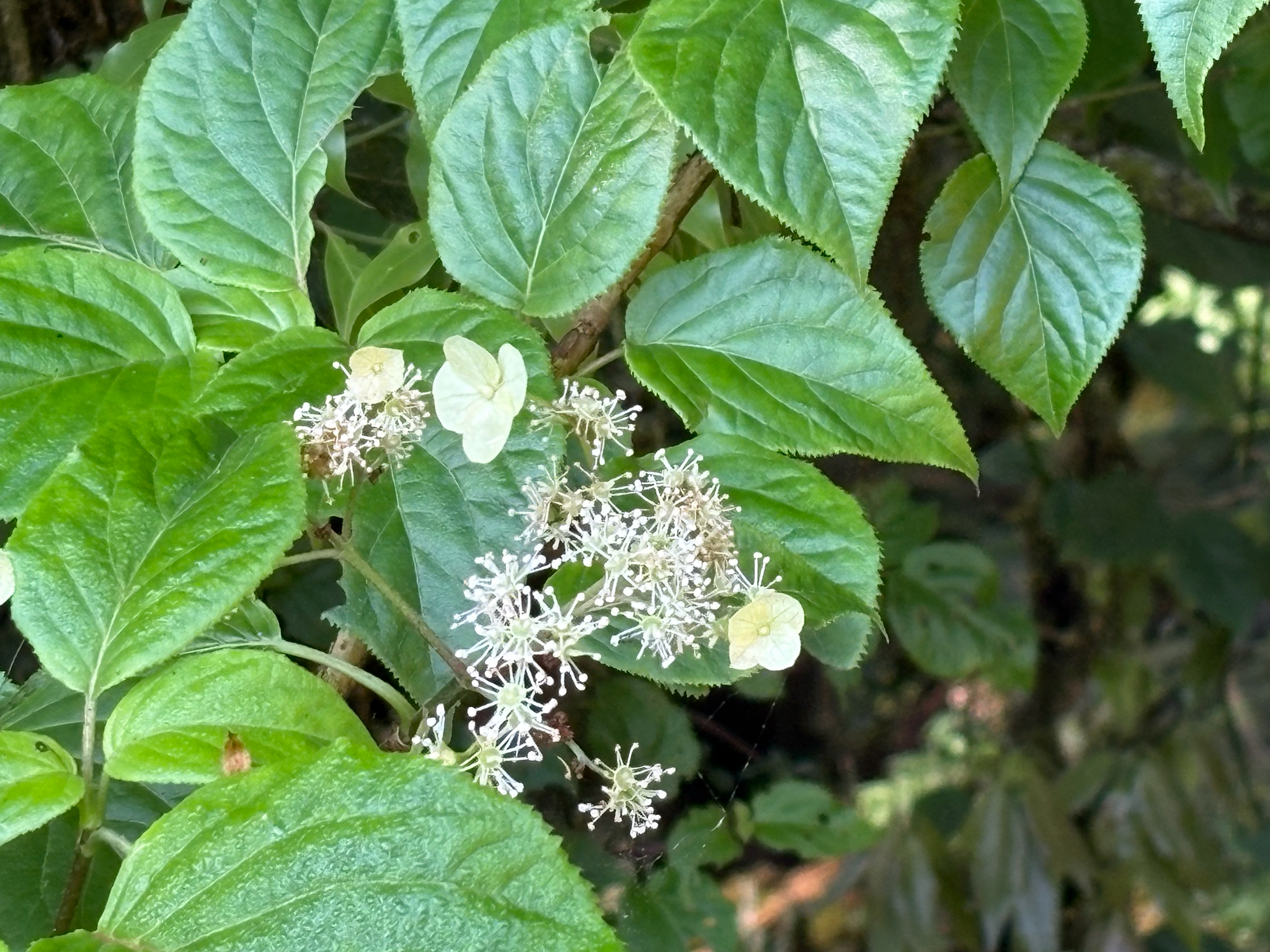
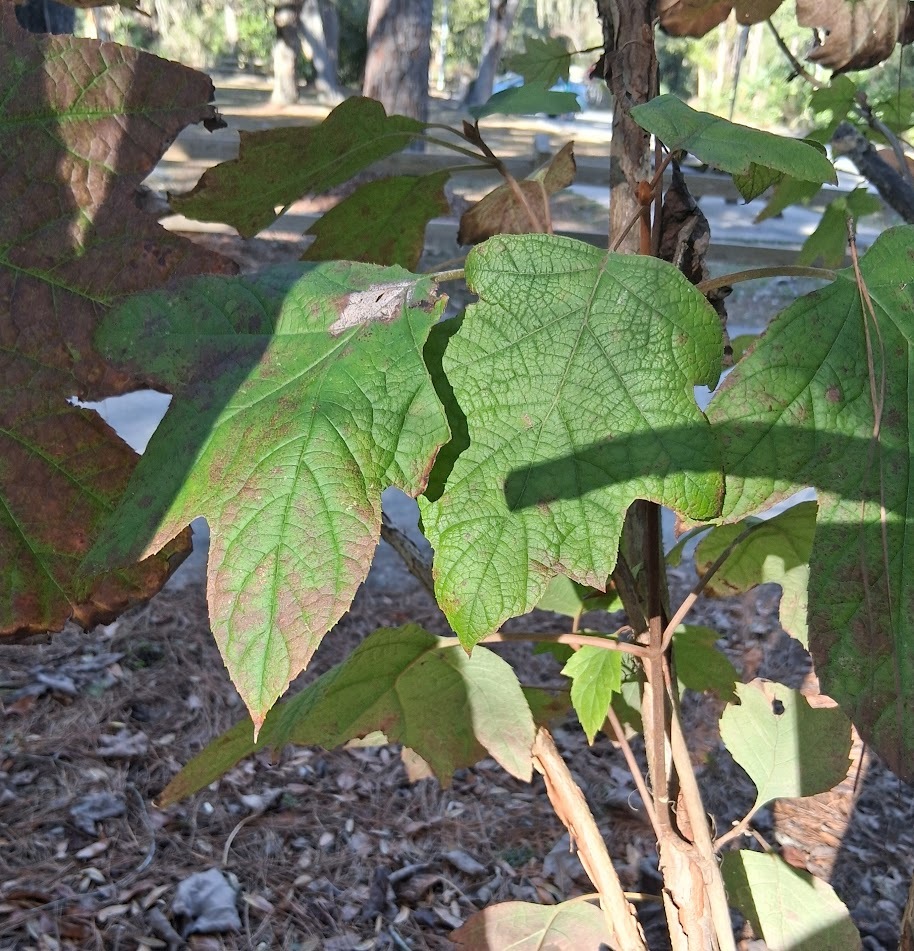
Panicle Hydrangea (Hydrangea paniculata) is a large deciduous shrub native to southern and eastern China, Japan, and Russia, easily distinguished by its cone-shaped flower clusters. Unlike many other species in its genus, it is exceptionally cold-hardy and reliably produces flowers even after harsh winters because it blooms on the current season’s growth.
This species is the only hydrangea that can be successfully trained into a small tree form, often called a standard. It handles full sun better than the more common bigleaf hydrangea (Hydrangea macrophylla) and does not require specific soil pH to maintain its white, lime, or pink coloration.
Key Facts
- Light: Full sun to partial shade
- Water: 2.5 cm (1 in) per week
- Pruning: Late winter or early spring
- Hardiness: USDA zones 3 to 8
- Bloom: Mid-summer to late autumn
Fitting Panicle Hydrangea into Your Garden
Panicle Hydrangea is the most adaptable and cold-tolerant member of its genus, making it suitable for gardens where other hydrangeas fail. It is a reliable choice for beginner gardeners because it flowers on “new wood,” meaning even a heavy-handed pruning or a late spring frost will not kill the season’s flower buds. You can use it as a massive flowering hedge, a focal point in a mixed border, or a potted specimen in its dwarf forms.
Because it can grow up to 4.5 m (15 ft) tall, you must choose a location that accommodates its mature size or commit to annual pruning. It provides structural interest in the winter with its dried flower heads, which often persist through snow. It is particularly useful in northern climates where bigleaf hydrangea (Hydrangea macrophylla) often fails to bloom due to bud kill.
What Does Panicle Hydrangea Look Like?
The Panicle Hydrangea is defined by its large, cone-shaped flower panicles that measure between 15 and 45 cm (6-18 in) in length. These panicles consist of two types of flowers: small, fertile flowers and larger, showy sterile flowers. The foliage consists of dark green, oval leaves with serrated edges, typically 7-15 cm (3-6 in) long, arranged oppositely or in whorls of three along the stems.
- Flower Shape: Pyramidal or conical clusters (panicles).
- Color Cycle: Most start creamy white or lime green, then fade to dusty pink or deep reddish-brown.
- Stem Texture: Sturdy, woody stems that are less prone to flopping than other species.
- Bark: Older stems develop a slightly exfoliating or peeling texture.
Choosing the Best Planting Site
Plant your hydrangea in a spot that receives at least 6 hours of direct sunlight for the strongest stems and most prolific blooms. While it can tolerate partial shade, too much shade results in weak, floppy branches and fewer flower clusters. In hotter southern climates, afternoon shade is beneficial to prevent the leaves from scorching during peak summer heat.
The soil should be well-draining and rich in organic matter. This species does not tolerate “wet feet” or standing water, which can lead to root rot. Unlike other hydrangeas, the soil pH does not change the flower color; a white flower will remain white regardless of whether the soil is acidic or alkaline.
How to Plant Hydrangea paniculata
Dig a hole two to three times the width of the root ball and exactly the same depth. Ensure the top of the root ball is level with the surrounding soil surface to prevent stem rot. Space plants 1.5 to 3 m (5-10 ft) apart, depending on the specific cultivar’s mature spread, to allow for adequate air circulation.
- Timing: Plant in early spring or early autumn when temperatures are mild.
- Soil Prep: Mix in 5-10 cm (2-4 in) of compost into the native soil.
- Watering: Saturate the root zone immediately after planting to remove air pockets.
- Mulching: Apply a 5 cm (2 in) layer of wood chips or shredded bark to retain moisture.
Watering and Feeding for Big Blooms
Provide 2.5 cm (1 in) of water per week, increasing the frequency during periods of extreme heat or drought. While Panicle Hydrangea is more drought-tolerant than the mophead varieties, consistent moisture is required to produce the largest flower heads. Avoid overhead watering, as wet foliage can encourage the spread of fungal diseases like powdery mildew.
Apply a balanced, slow-release fertilizer (such as a 10-10-10 NPK) in early spring just as new growth appears. Do not fertilize after mid-summer, as this can encourage soft, new growth that may be damaged by early autumn frosts. Over-fertilizing with high-nitrogen products will result in lush green leaves but very few flowers.
When and How to Prune Panicle Hydrangea
Prune your Panicle Hydrangea in late winter or early spring before new growth begins to emerge. Because this plant blooms on new wood, you can cut it back significantly without losing the year’s flowers. For a more formal, compact shrub with larger flower heads, cut the stems back by one-third to one-half of their total length.
If you prefer a more natural, airy look with smaller but more numerous flowers, simply remove the dead flower heads and any crossing or damaged branches. For tree-form standards, remove any shoots emerging from the main trunk and the base of the plant throughout the growing season to maintain the single-trunk structure. Never prune in the autumn, as this can stimulate growth that won’t harden off before winter.
Common Pests and Diseases
Panicle Hydrangea is generally resistant to most major problems, but it can occasionally be targeted by aphids or spider mites during hot, dry weather. Powdery mildew is the most frequent fungal issue, appearing as a white, flour-like coating on the leaves. This is usually caused by poor air circulation or watering late in the evening.
- Aphids: Small green or black insects on new growth; wash off with a strong stream of water.
- Spider Mites: Tiny pests that cause yellow mottling; increase humidity or use insecticidal soap.
- Leaf Spot: Brown spots on leaves; remove affected foliage and avoid overhead watering.
- Root Rot: Caused by poorly drained soil; ensure the site does not hold standing water.
Winter Care and Hardiness
This species is hardy to -40 °C (-40 °F), making it one of the toughest flowering shrubs for cold climates. Unlike bigleaf hydrangeas, you do not need to wrap the plant in burlap or protect the buds during the winter. The woody structure is strong enough to withstand moderate snow loads, though very heavy, wet snow should be gently brushed off to prevent branch breakage.
In autumn, leave the dried flower heads on the plant to provide winter interest and protection for the inner buds. Apply a fresh layer of mulch in late autumn to insulate the root system against the freeze-thaw cycle. In spring, wait until you see green buds before doing your final structural pruning to ensure you aren’t cutting off live tissue.
Panicle Hydrangea Through the Seasons
| Spring | Prune back by one-third in late winter or early spring. Apply a balanced 10-10-10 fertilizer and refresh mulch to a depth of 5 cm (2 in). |
|---|---|
| Summer | Ensure the plant receives 2.5 cm (1 in) of water weekly. Monitor for aphids and spider mites during dry spells. |
| Autumn | Stop fertilizing to allow the wood to harden. Enjoy the color change of the flowers and leave them on the plant for winter interest. |
| Winter | Gently brush off heavy snow from branches. Avoid pruning until the very end of the season or early spring. |
Common Problems with Panicle Hydrangea
| What you see | Likely cause | What to do |
|---|---|---|
| Flopping stems | Too much shade or over-watering | Move to a sunnier spot or reduce nitrogen fertilizer and water. |
| No flowers | Too much shade | Ensure the plant gets at least 6 hours of direct sunlight. |
| Yellow leaves with green veins | Iron chlorosis from high pH soil | Apply chelated iron or soil acidifier to lower the pH. |
| White powder on leaves | Powdery mildew | Improve air circulation and avoid wetting the foliage when watering. |
Popular Panicle Hydrangea Cultivars
- ‘Limelight’ – massive lime green flowers that turn pink.
- ‘Little Lime’ – a dwarf version reaching 90-150 cm.
- ‘Vanille Fraise’ – flowers turn deep strawberry red.
- ‘Bobo’ – very compact, under 90 cm tall.
- ‘Phantom’ – enormous flower heads up to 40 cm.
- ‘Kyushu’ – glossy leaves and airy, upright panicles.
Companion Plants for Panicle Hydrangea
Select companions that thrive in similar sun and soil conditions while providing contrast in texture and color. Because Panicle Hydrangea is a large, coarse-textured shrub, it looks best when paired with fine-textured grasses or low-growing perennials that cover its “bare legs” in the late season. Consider the following species for a balanced garden design:
- Boxwood (Buxus sempervirens): Provides a neat, evergreen structure at the base of the hydrangea.
- Feather Reed Grass (Calamagrostis x acutiflora): Adds vertical movement and fine texture.
- Hosta (Hosta sieboldiana): Large leaves provide a bold contrast in partially shaded spots.
- Coral Bells (Heuchera): Offers colorful foliage that complements the hydrangea’s changing flower hues.
Frequently Asked Questions
Can I turn Panicle Hydrangea flowers blue?
No, Panicle Hydrangea flowers do not change color based on soil pH. Their color is genetically determined and typically transitions from white or lime to pink or red as they age.
How do I grow a Panicle Hydrangea tree?
You can buy a pre-trained 'standard' or train a young plant by selecting one central leader stem and removing all other branches until it reaches the desired height.
Is Hydrangea paniculata toxic to dogs?
Yes, it contains cyanogenic glycosides which are toxic to dogs, cats, and horses if ingested. Symptoms include vomiting, diarrhea, and lethargy.
Why is my 'Limelight' hydrangea flopping?
Flopping is usually caused by excessive shade or over-fertilization with nitrogen, which creates weak stems. Pruning back hard in spring can also lead to fewer but larger, heavier heads that the stems cannot support.
When is the best time to prune Panicle Hydrangea?
Prune in late winter or early spring before new growth begins. Since it blooms on new wood, this timing ensures you don't remove the year's flower buds.
Sources & Verification
Taxonomy and distribution are checked against the databases below. Care guidance is written for cultivated species only and reviewed by our editor. How We Build Plant Profiles →