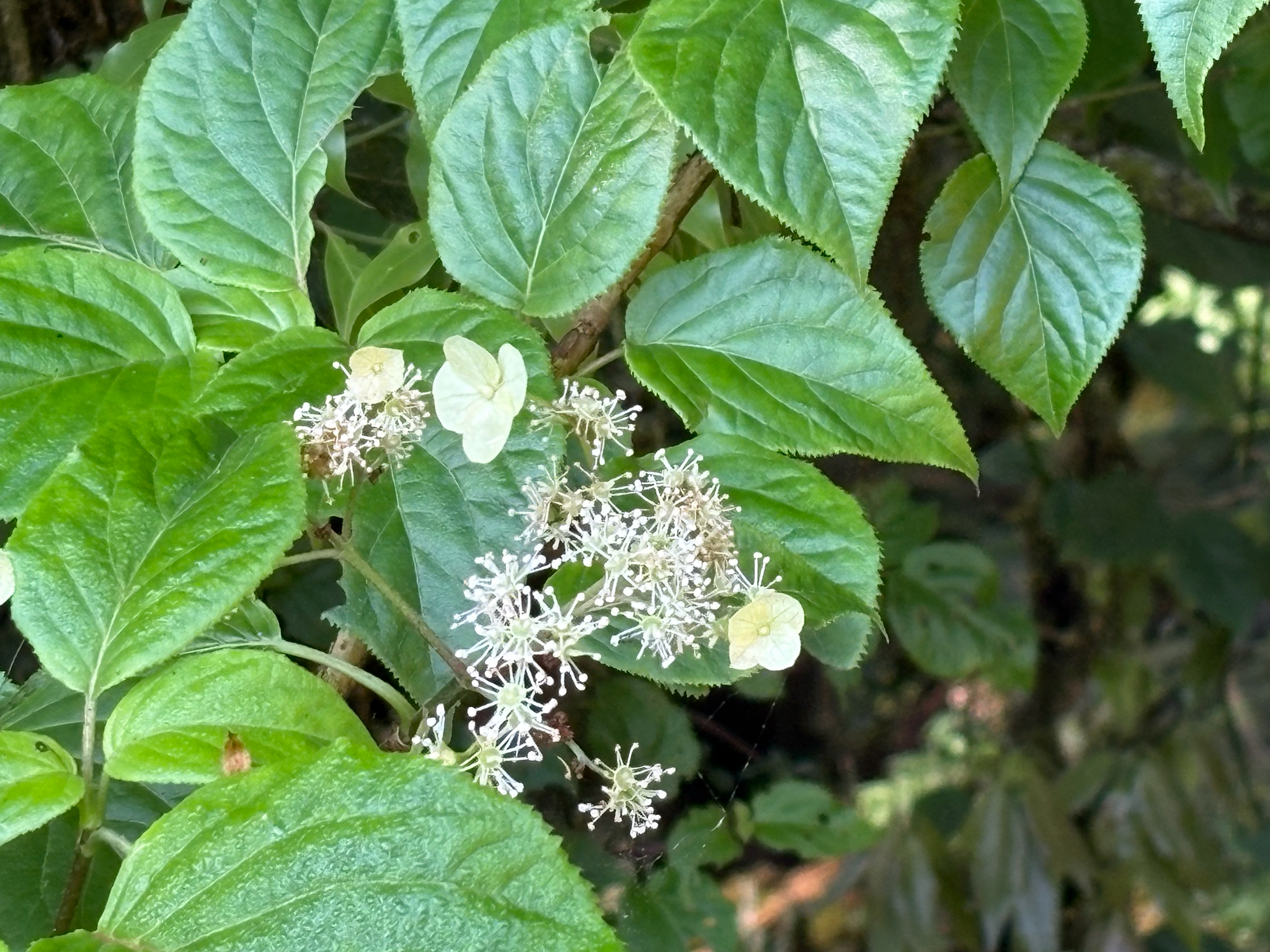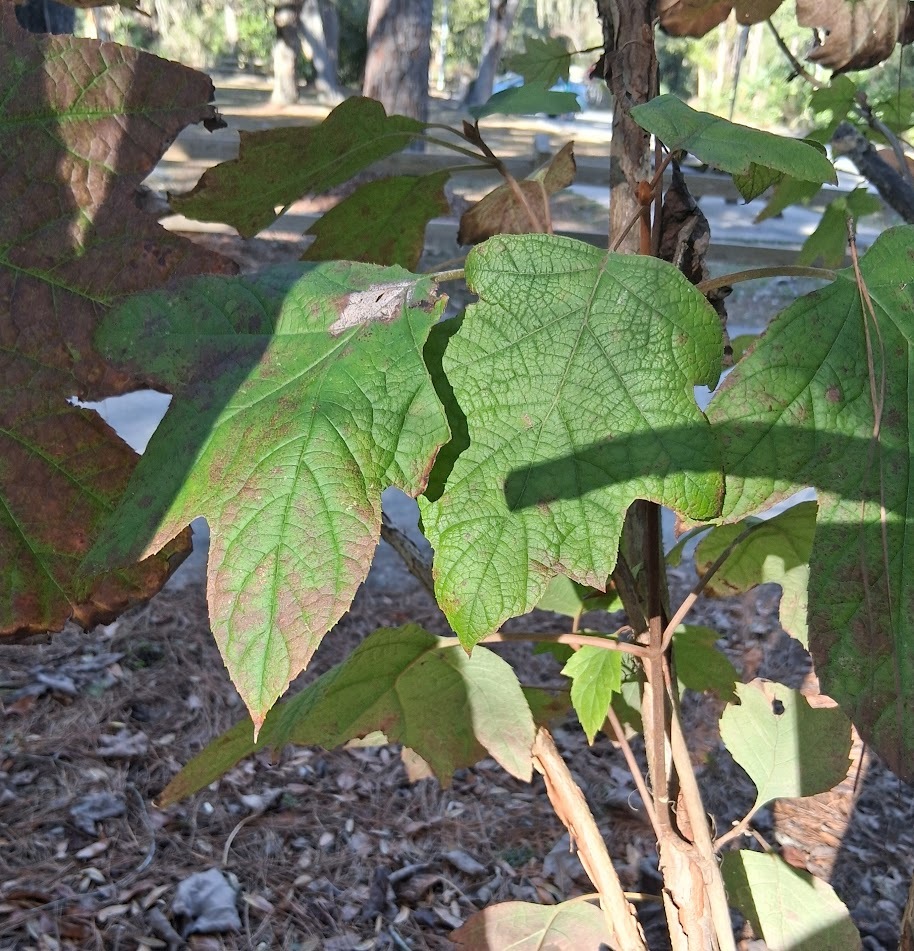
Oakleaf hydrangea (Hydrangea quercifolia) is a deciduous shrub native to woodland habitats from North Carolina to Florida. It is widely recognised by its lobed, oak-like leaves and peeling cinnamon-brown bark.
This plant suits woodland borders and foundation plantings where you need four-season interest. It demands excellent soil drainage to prevent root rot in summer.
Key Facts
- Light: partial shade to full sun
- Water: moderate once established
- Soil: rich, well-draining loam
- Hardiness: USDA zones 5 to 9
- Height: up to 2.4 m (8 ft)
Is Oakleaf Hydrangea Right for Your Garden
Oakleaf hydrangea suits gardeners who want low-maintenance shrubs with high seasonal impact. This plant thrives in USDA zones 5 through 9 and handles heavy deer pressure much better than smooth hydrangea (Hydrangea arborescens). You should plant it where it has space to reach its mature width of 2.4 to 3 m (8 to 10 ft) without aggressive crowding.
It performs exceptionally well as a specimen plant or along shady woodland borders. Avoid planting it in heavy, waterlogged clay unless you amend the bed significantly. Florida gardeners will find success by placing it in dappled afternoon shade to protect the foliage from intense heat.
What Does Oakleaf Hydrangea Look Like
This shrub features distinctive 10 to 25 cm (4 to 10 in) lobed leaves that resemble red oak foliage. In summer, upright panicles of white flowers emerge, eventually aging to pink and dry tan by autumn. The foliage turns shades of deep maroon, bronze, and purple before dropping for the winter.
- Leaves: Dark green, deeply lobed, turning brilliant red and purple in autumn.
- Flowers: Cone-shaped white panicles up to 30 cm (12 in) long appearing in early summer.
- Bark: Exfoliating, cinnamon-brown bark that provides winter texture.
- Habit: Mounded, multi-stemmed deciduous shrub growing 1.5 to 2.4 m (5 to 8 ft) tall.
Where to Plant Oakleaf Hydrangea
Plant your oakleaf hydrangea in an area with morning sun and afternoon shade for the best flower production. In northern regions, it tolerates full sun provided the soil stays evenly moist. Southern gardeners must provide afternoon shade to prevent leaf scorch during July and August.
- Choose a location with loose, organic-rich soil that drains freely after heavy rain.
- Space plants at least 2.4 m (8 ft) apart to accommodate their wide, mounding growth habit.
- Keep shrubs away from low-lying spots where standing water collects after storms.
How to Plant Oakleaf Hydrangea
Dig a hole twice as wide as the root ball and just as deep to give the roots a strong start. Place the shrub so the top of the root ball sits slightly above the surrounding soil level. Tamp the soil gently and water thoroughly to eliminate air pockets around the root system.
Apply a 7 cm (3 in) layer of organic mulch across the root zone to retain moisture. Keep the mulch a few inches away from the main stems to prevent rot. Water deeply twice a week for the first two months while the root system establishes.
Water and Feed Requirements
Water established shrubs weekly during dry spells, supplying about 2.5 cm (1 in) of moisture per week. Container-grown plants or specimens in full sun need more frequent watering. Yellowing lower leaves often indicate overwatering or poor drainage.
Apply a balanced, slow-release shrub fertilizer in early spring as new growth begins. Stop fertilizing by mid-July to prevent tender late growth from freezing during autumn frosts. Mulch decomposition naturally feeds the soil over time.
When and How to Prune Oakleaf Hydrangea
Prune your oakleaf hydrangea immediately after flowering finishes, typically by mid-summer. This shrub sets flower buds for the next year on old wood during late summer. Pruning in winter or spring will remove the upcoming flower crop.
- Cut out dead, damaged, or crossing stems down to the ground in spring.
- Shape the shrub right after the summer blooms fade by cutting stems back to a strong lateral bud.
- Avoid severe rejuvenation pruning unless necessary, as it removes flowers for up to two seasons.
How to Propagate Oakleaf Hydrangea
Take stem cuttings in early summer when the new growth is semi-firm. Snip 15 cm (6 in) segments from non-flowering shoots, removing the lower leaves. Dip the cut end in rooting hormone and insert it into a mix of perlite and peat.
Enclose the container in a clear plastic bag to maintain high humidity. Roots typically form within 4 to 6 weeks under bright, indirect light. Transplant the rooted cuttings into individual pots by early autumn.
Oakleaf Hydrangea Winter Care
Protect your shrub from harsh winter winds by applying a fresh layer of organic mulch over the root zone. In USDA zone 5, late freezes can damage flower buds set on old wood. Winter care mostly involves leaving the dried flower heads on the plant for textural interest until spring.
Avoid heavy autumn pruning, which exposes vulnerable inner stems to freezing temperatures. Heavy snow loads can split wide-spreading branches, so gently brush off wet snow after major storms.
When Does Oakleaf Hydrangea Bloom
Oakleaf hydrangea blooms from late spring through mid-summer, lasting for about six weeks. The flower panicles open crisp white before transitioning to rosy pink. As autumn arrives, the dry blooms turn a papery tan colour that persists into winter.
Lack of flowers usually results from winter frost damage to the flower buds or improper pruning in autumn or spring. Ensure your plant receives adequate sunlight to encourage heavy bud set for the following year.
Oakleaf Hydrangea Through the Seasons
| Spring | Apply a slow-release fertilizer as new buds swell. Clear away any winter debris from the root zone. |
|---|---|
| Summer | Water deeply during hot spells. Prune immediately after the white flowers fade to preserve next year's buds. |
| Autumn | Enjoy the deep maroon foliage colour. Apply a fresh <strong>7 cm</strong> (3 in) layer of mulch for winter insulation. |
| Winter | Leave dried flower heads for structure. Gently brush heavy snow off branches to prevent splitting. |
Oakleaf Hydrangea Leaf and Flower Problems Explained
| What you see | Likely cause | What to do |
|---|---|---|
| Brown leaf edges in summer | Excessive sun or drought stress | Move or shade the plant from intense afternoon sun and provide regular water. |
| No flowers in summer | Pruned at the wrong time | Stop pruning in winter or spring; only prune immediately after summer flowering. |
| Yellowing lower leaves | Overwatering or poor drainage | Reduce watering frequency and improve soil drainage around the root zone. |
Popular Oakleaf Hydrangea Cultivars Compared
- ‘Snow Queen’ – upright white panicles, strong stems
- ‘Ruby Slippers’ – compact size, flowers turn deep pink
- ‘Alice’ – large habit, blooms up to 30 cm long
- ‘Jetstream’ – dense, non-flopping habit, neat foliage
Companion Plants for Oakleaf Hydrangea
Pair your oakleaf hydrangea with shade-loving perennials that share similar moisture requirements. Great companions include hostas (Hosta spp.), bleeding heart (Lamprocapnos spectabilis), and Japanese forest grass (Hakonechloa macra). These plants fill the lower space around the shrub and contrast with its coarse foliage.
Woodland ferns like Christmas fern (Polystichum acrostichoides) create an effective textured backdrop. Avoid aggressive groundcovers that might compete with the shrub’s shallow root system.
Frequently Asked Questions
How big does an oakleaf hydrangea get?
Oakleaf hydrangea grows 1.5 to 2.4 m (5 to 8 ft) tall and spreads up to 3 m (10 ft) wide.
Is oakleaf hydrangea deer resistant?
Yes, deer generally leave oakleaf hydrangea alone compared to other smooth or bigleaf hydrangeas.
Can oakleaf hydrangea grow in Florida?
Oakleaf hydrangea grows successfully in Florida when planted in moist, well-draining soil with afternoon shade.
When is the best time to prune oakleaf hydrangea?
Prune your oakleaf hydrangea immediately after it finishes flowering in mid-summer.
Sources & Verification
Taxonomy and distribution are checked against the databases below. Care guidance is written for cultivated species only and reviewed by our editor. How We Build Plant Profiles →