
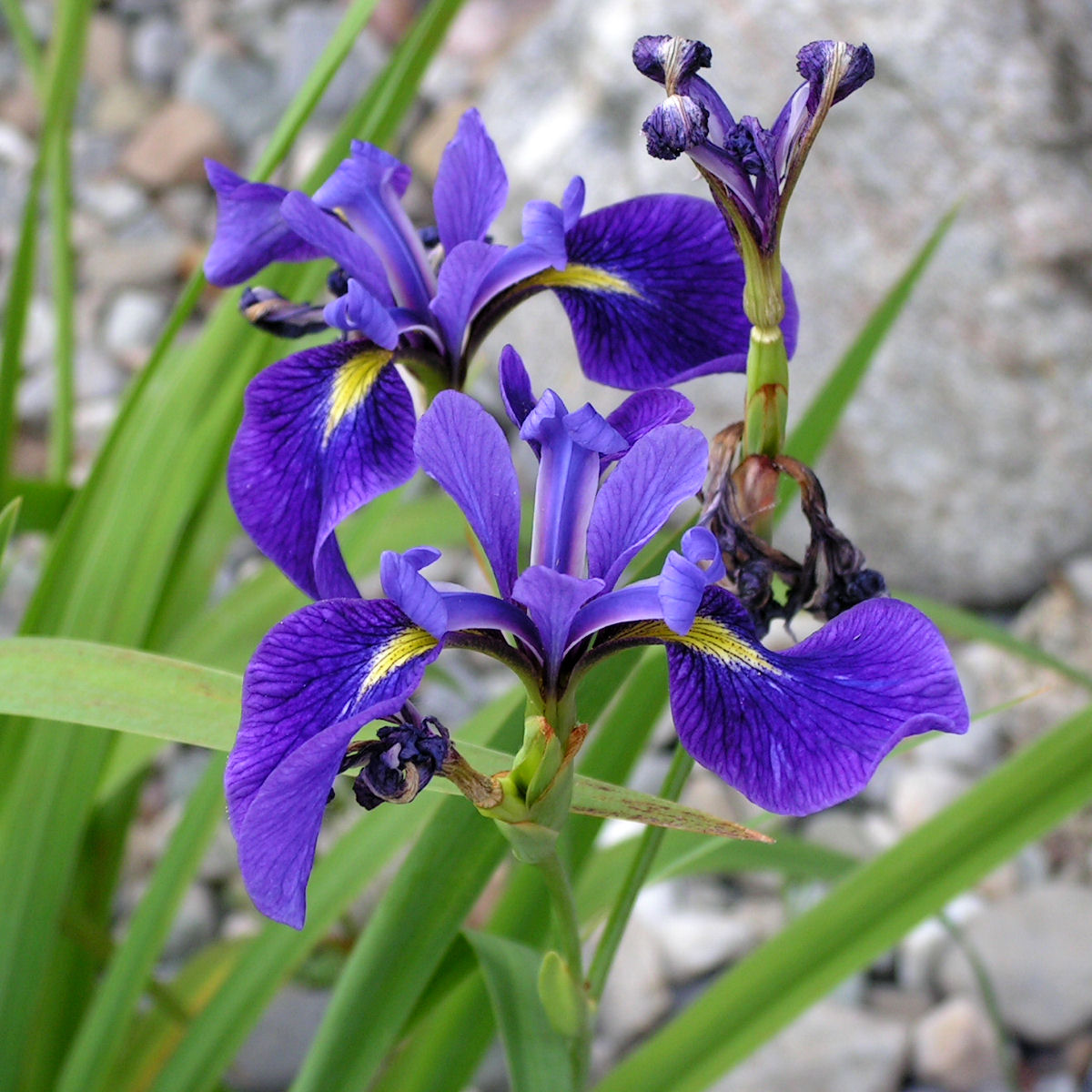
Northern blue flag (Iris versicolor) is a perennial wetland wildflower native to marshes, stream banks, and wet meadows across eastern North America, distinguished by its purple-veined violet petals and sword-shaped foliage. It forms dense clumps that anchor saturated ground and produces showy blooms in late spring.
Gardeners grow blue flag along pond margins, rain gardens, and low-lying garden beds where standard perennials fail from excess moisture. The essential factor for healthy growth is keeping the root zone consistently damp to shallowly flooded.
Key Facts
- Soil moisture: Wet ground or submerged under 5 to 10 cm of water
- Sunlight: Minimum of 6 hours direct sunlight daily
- Plant size: 60 to 90 cm (24 to 36 in) tall
- Hardiness: USDA zones 3 to 9
- Bloom window: Late May through early July
- Toxicity: All plant parts are toxic if ingested
Is Blue Flag Iris Right for Your Garden?
Northern blue flag suits gardeners with waterlogged soil or pond margins who need a reliable native perennial that tolerates standing water. It settles readily in naturalised drainage ditches, bio-swales, and aquatic planting shelves where normal border perennials rot.
Because the creeping rhizomes bind loose soil along banks, blue flag acts as an erosion control barrier against runoff. It demands very little intervention once established, provided its bed never dries out completely during hot weather.
How to Identify Northern Blue Flag Iris
Northern blue flag produces upright, sword-shaped leaves measuring 60 to 90 cm (24 to 36 in) tall and 1 to 3 cm (0.4 to 1.2 in) wide from shallow rhizomes. The smooth, grey-green leaves emerge in a fan pattern and persist into late autumn before dying back.
Flowers measure 6 to 8 cm (2.4 to 3.1 in) across, featuring three spreading downward sepals (falls) and three smaller upright petals (standards). Each fall displays a white and greenish-yellow signal patch overlaid with deep purple veining. Cylindrical, three-lobed seed capsules follow the flowers, carrying brown, D-shaped seeds that float on water.
Best Growing Conditions and Sun Exposure
Blue flag requires full sun to partial shade, producing the highest flower count when given at least six hours of direct sunlight each day. While it survives in dappled light under deciduous wetland trees, plants grown in deep shade develop floppier leaves and sparse blooms.
The plant thrives in acidic to neutral soil with a pH between 5.5 and 7.0 rich in organic matter. It tolerates heavy clay, silty loam, and muck soils that retain water continuously.
How and When to Plant Blue Flag Rhizomes
Plant rhizomes in late summer or early autumn, setting them horizontally just below the soil surface with the upper ridge slightly exposed. If you are placing containers into a pond, position the rim so the crown sits 5 to 10 cm (2 to 4 in) below the water surface.
- Space rhizome divisions 45 to 60 cm (18 to 24 in) apart to allow clump expansion.
- Anchor root divisions in heavy soil or aquatic compost; avoid light potting mixes that float away.
- Top aquatic pots with a 2 cm (0.8 in) layer of pea gravel to keep fish from unearthing rhizomes.
- Firm the substrate around the root fibers while leaving foliage fans upright.
Blue Flag Iris Care: Watering and Feeding
Keep the soil consistently saturated to damp, never allowing the root zone to dry out completely during active spring and summer growth. Plants situated outside pond basins need supplemental irrigation whenever rainfall drops below 2.5 cm (1 in) per week.
Blue flag requires minimal supplemental fertilizer when planted in fertile, silty soils or pond margins where it absorbs waterborne nutrients. In dry or poor garden beds, apply a slow-release, balanced organic granular feed in mid-spring, or insert a single aquatic fertilizer tablet near the roots of potted pond plants in May.
Pruning and Maintenance Through the Year
Cut spent flower stalks back to the base of the plant immediately after flowering finishes to redirect energy away from seed production and into rhizome reserves. Leave healthy green leaves untouched during summer because they feed next year’s flower buds.
In late autumn or early spring, remove yellowed, collapsed foliage down to 5 cm (2 in) above the soil level. Disposing of dead foliage prevents overwintering pests, such as the iris borer, from laying eggs inside leaf tissue.
How to Propagate Blue Flag Iris by Division
Propagate northern blue flag by rhizome division every 3 to 4 years in late August or early September after blooming ends. Division keeps crowded clumps vigorous and stops the centre of the ring from dying out.
- Lift the mature clump using a garden fork, taking care not to puncture the rhizomes.
- Wash away clinging soil to reveal the branching root structures.
- Cut the rhizome into pieces using a clean, sharp knife, ensuring each section has at least one leaf fan and several healthy roots.
- Trim the foliage down into a 15 cm (6 in) fan to reduce water loss.
- Replant divisions immediately into saturated soil at their original depth.
Common Blue Flag Plant Problems and Pests
The most destructive pest is the iris borer caterpillar, which tunnels down through leaf sheaths into the rhizome, introducing bacterial soft rot. Infested rhizomes turn foul-smelling and mushy, requiring swift excavation and destruction of affected sections.
- Chewed leaf margins: Iris borer larvae feeding in spring; crush larvae inside folded leaf tips or cut out ragged foliage.
- Bacterial soft rot: Smelly, hollow rhizomes caused by Pectobacterium carotovorum entering borer wounds; lift and destroy infected parts.
- Fungal leaf spot: Reddish-brown spots on older leaves from prolonged damp air; space plants for better air movement and cut off spotted leaves.
- Yellowing leaf tips: Root system has dried out; increase water depth or irrigate beds thoroughly.
Winter Care and Cold Hardiness
Northern blue flag requires no winter protection down to -40 °C (-40 °F), naturally surviving the freezing temperatures of USDA Zone 3. In outdoor beds and bog gardens, the rhizomes tolerate hard frozen ground as long as soil moisture remains present.
For plants grown in shallow garden ponds, sink containers into water deep enough that ice does not freeze the rhizomes solid. If your pond is shallower than 45 cm (18 in), move containers into a cold greenhouse or unheated garage kept around 2 to 5 °C (35 to 41 °F) for the winter, checking monthly to ensure soil stays damp.
Blue Flag Bloom Season and Flower Care
Northern blue flag blooms for 3 to 4 weeks between late May and early July, with individual blossoms lasting two to three days each. Mature clumps produce branched stalks supporting multiple flower buds that open in succession.
To maximise bloom volume, ensure the clump receives unfiltered sunlight and avoid disturbing roots in early spring. If your blue flag stops flowering, the clump has likely grown overcrowded or shaded by taller wetland trees, signalling that it is time to divide the rhizomes and relocate them into full sun.
Seasonal Tasks for Northern Blue Flag
| Spring | Trim dead foliage down to 5 cm (2 in) before new growth emerges. Inspect expanding leaf fans for signs of iris borer larvae and apply a light compost mulch around marginal bed plantings. |
|---|---|
| Summer | Cut flower stems down to the crown after blossoms fade to halt seed formation. Ensure water levels remain between saturated soil and 10 cm (4 in) of standing water during heat waves. |
| Autumn | Divide and replant crowded rhizomes in late August or September. Lower potted pond specimens below the anticipated ice line before surface water freezes solid. |
| Winter | Allow rhizomes to rest in cold dormancy. If storing potted plants in an unheated garage, moisten the soil once a month to prevent roots from desiccating. |
Diagnosing Common Blue Flag Iris Problems
| What you see | Likely cause | What to do |
|---|---|---|
| Water-soaked streaks and ragged leaf edges | Iris borer caterpillar tunneling inside leaf base | Squeeze leaves near the base to crush early larvae or cut out damaged foliage before they reach the rhizome. |
| Foul-smelling, mushy rhizome tissue | Bacterial soft rot following physical injury or pest feeding | Dig up the clump, cut away and discard all rotted tissue with sterile tools, dust cuts with sulfur, and replant in clean soil. |
| Leaves scorching brown at the tips during summer | Soil dried out below the root zone | Soak the ground immediately and maintain standing water or constant saturation around the roots. |
| Fewer flowers each season with a hollow clump centre | Overcrowding and rhizome congestion | Divide the clump in late summer, replanting vigorous outer sections and discarding the woody, inactive centre. |
Cultivars and Forms of Iris versicolor
- 'Gerald Darby' – purple-tinted spring foliage and violet flowers
- 'Rosea' – pinkish-lavender blossoms with delicate veining
- 'Cat Mousam' – vigorous native selection with rich violet-blue petals
- 'Version' – deep lavender-blue flowers on compact stems
Companion Plants for Wetland and Pond Borders
Pair blue flag with moisture-loving perennials that share identical water needs to create balanced pond borders and bog gardens. Its sharp, upright leaves contrast against broad-leaved and mounding wetland species.
- Marsh marigold (Caltha palustris): Offers bright yellow blooms in early spring before blue flag opens its violet flowers.
- Swamp milkweed (Asclepias incarnata): Produces fragrant pink flower clusters in midsummer after iris blossoms fade, feeding monarch butterflies.
- Cardinal flower (Lobelia cardinalis): Provides scarlet flower spikes in late summer that draw hummingbirds.
- Soft rush (Juncus effusus): Adds upright, rounded stems for year-round architectural texture in shallow water.
Frequently Asked Questions
What is the meaning and symbolism of the blue flag?
In botanical lore, the blue flag iris traditionally symbolises faith, wisdom, and resilience due to its ability to thrive in challenging flooded ground. In heraldry and culture, it serves as the official provincial floral emblem of Quebec.
What are the traditional medicinal uses of the blue flag plant?
Historically, Native American and herbal practitioners used dried rhizomes in small, processed amounts as an emetic, cathartic, and lymphatic stimulant. Modern clinical use is avoided due to the severe toxicity of raw rhizomes, which contain toxic iridin.
Can blue flag iris grow in regular garden soil?
Yes, provided the soil is rich, loamy, and consistently watered so it never dries out. In dry, sandy, or drought-prone soils, the plant wilts, develops brown scorched foliage, and stops blooming.
What is the difference between Iris versicolor and Iris pseudacorus?
Northern blue flag produces violet-blue flowers and stays non-invasive, whereas yellow flag (Iris pseudacorus) bears bright yellow blooms and is an aggressive, invasive weed in North American waterways.
Is blue flag iris poisonous to dogs and cats?
Yes, all parts of northern blue flag are toxic to pets, with the highest concentration of toxins found in the underground rhizomes. Ingestion causes drooling, severe vomiting, abdominal pain, and lethargy.
Information about traditional or historical uses is provided for educational interest only and is not medical advice. Do not use any plant to treat a condition without speaking to a qualified professional.
Sources & Verification
Taxonomy and distribution are checked against the databases below. Care guidance is written for cultivated species only and reviewed by our editor. How We Build Plant Profiles →
- Kew Plants of the World Onlinepowo.science.kew.org
- Missouri Botanical Gardenmissouribotanicalgarden.org
- NC State Extension Gardener Plant Toolboxplants.ces.ncsu.edu
- USDA PLANTS Databaseplants.usda.gov
- GBIF — Global Biodiversity Information Facilitytaxonomy, synonyms, occurrence records
- Wikipediageneral reference


