
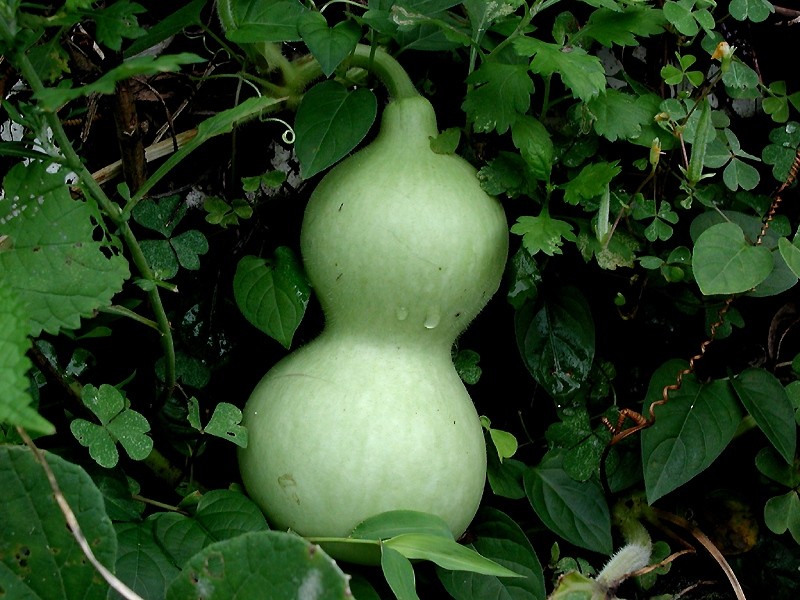
Bottle gourd, Lagenaria siceraria, is a vigorous annual climbing vine native to tropical Africa, distinguished by large nocturnal white flowers and fruits that harden into woody vessels. It produces pale green fruits consumed tender as vegetables or cured into water flasks and musical instruments.
Vines regularly stretch 9 m (30 ft) in a single summer, demanding a sturdy overhead trellis and consistent heat to set fruit. Any cold soil below 15 °C (59 °F) stunts seedlings permanently, and bitter-tasting fruits contain toxic cucurbitacins that must never be eaten.
Key Facts
- Scientific name: Lagenaria siceraria
- Soil temperature: Sow above 20 °C (68 °F)
- Planting distance: 1.5–2 m (5–6.5 ft) apart
- Trellis height: Minimum 1.8–2.4 m (6–8 ft)
- Water: 25–50 mm (1–2 in) per week
- Fruit harvest: 60–80 days after sowing
Growing Bottle Gourd at Home: Space and Commitment
Growing bottle gourd requires a dedicated vertical support structure and at least 90 to 120 frost-free days of sustained summer warmth. A single healthy vine easily expands 5 to 9 m (16 to 30 ft) along fences or heavy posts, quickly overwhelming small patio borders.
This crop suits growers with expansive vegetable beds, sunny south-facing walls, or sturdy pergola frames. If you allow the vines to run horizontally along the ground, fruits often rot, discolor from soil moisture, or suffer slug damage.
- Plan for a strong post-and-wire trellis at least 2 m (6.5 ft) tall.
- Allocate 2 to 3 m (6.5 to 10 ft) of row width per plant.
- Avoid compact container growing unless the container holds at least 45 liters (12 gallons).
Botanical Characteristics and Bottle Gourd Flower
The bottle gourd is a coarse, running annual vine with deeply furrowed stems, branched tendrils, and soft, musk-scented, circular to heart-shaped leaves measuring 15 to 30 cm (6 to 12 in) across. Both stems and leaves are covered in fine, downy hairs that feel soft to the touch.
Unlike yellow-flowered squash species such as Cucurbita pepo, the bottle gourd flower is solitary, five-petaled, and pure white with pale green veins, spanning 8 to 11 cm (3 to 4.5 in). Flowers open at dusk and remain receptive until mid-morning, pollinated primarily by nocturnal hawkmoths and early-foraging honeybees.
Fruits vary drastically in form based on selected landraces, ranging from 15 cm (6 in) globes to slender clubs over 1 m (3.3 ft) long. Tender young gourds display light green, velvety skin and crisp white pulp, which later dries into a smooth, rigid, brown, woody shell filled with flat, corky seeds.
Ideal Growing Temperature and Sun Requirements
Bottle gourd requires an optimal daytime temperature between 25 and 32 °C (77 and 90 °F) to set fruit and maintain rapid vegetative expansion. Growth stalls when temperatures fall below 15 °C (59 °F), and prolonged exposure to 10 °C (50 °F) causes leaf chlorosis and root failure.
Provide full sunlight with a minimum of 6 to 8 hours of direct, unfiltered solar exposure daily. In regions with cool maritime summers, such as the northern UK or coastal Pacific Northwest, grow vines inside an unheated polytunnel or against a reflective, whitewashed brick wall to trap daytime warmth.
Planting Time, Sowing, and Planting Distance
Sow seeds outdoors only after soil temperatures hold steadily above 20 °C (68 °F) in late spring. In temperate climates, start seeds indoors 3 to 4 weeks prior to the final predicted spring frost in biodegradable peat or paper pots to prevent root shock.
In tropical and subtropical regions, planting schedules depend strictly on rainfall seasons rather than frost:
- India: The primary summer crop is sown from February to March, while the monsoon crop is planted from June to July.
- Australia: Sow from September to November in temperate zones, or year-round in tropical northern regions.
- UK and Northern Europe: Start indoors in heated propagators in mid-April; transplant outdoors under fleece in early June.
- Seed preparation: Nick the thick seed coat with nail clippers and soak in tepid water for 24 hours to accelerate germination.
- Planting distance: Space plants 1.5 to 2 m (5 to 6.5 ft) apart along rows spaced 2 to 3 m (6.5 to 10 ft) apart.
Bottle Gourd Care, Trellising, and Watering
Apply 25 to 50 mm (1 to 2 in) of water every week directly to the root zone, keeping the soil uniformly damp but not saturated. Fluctuating water availability causes blossom end rot and misshapen fruit necks.
Pinch out the main terminal shoot once the vine reaches 2 to 3 m (6.5 to 10 ft) in length to force abundant lateral branches, as female flowers appear primarily on secondary and tertiary stems. Train these lateral shoots horizontally along wire lines or wooden slats.
- Feed monthly with balanced organic compost tea or a fertilizer high in potassium, such as 5-10-10, avoiding excess nitrogen that fuels foliage instead of flowers.
- Hand-pollinate indoor or greenhouse vines by plucking a fresh male flower at dusk and gently dabbing its central anther against the sticky stigma of a female bloom.
- Mulch heavily with straw or shredded leaves to maintain root moisture and prevent weed competition.
When and How to Harvest Bottle Gourd
For culinary vegetable use, cut gourds when they are 20 to 40 cm (8 to 16 in) long and the pale green rind yields slightly to moderate fingernail pressure. Overly mature gourds become fibrous, stringy, and bitter.
Sever the stem cleanly with sharp pruning shears, leaving 5 cm (2 in) of peduncle attached to prevent rot entry. For hard craft shells and birdhouses, leave gourds on the vine until late autumn when the leaves dry up, the vine turns brown, and seeds rattle audibly inside the lightweight shell.
Culinary and Practical Uses
Culinary preparation involves peeling the tender green outer skin, slicing the spongy seed core away if seeds have hardened, and simmering the white flesh in curries, soups, and stir-fries. Bottle gourd readily absorbs aromatic broths and spices, resembling zucchini (Cucurbita pepo) or chayote (Sechium edule) in culinary texture.
Mature, cured gourds feature durable, impermeable lignified shells used across Africa, South Asia, and the Americas for centuries. Cleaned dried shells serve as natural water jugs, resonant bodies for stringed instruments such as the sitar and berimbau, or decorative birdhouses.
Common Pests, Diseases, and Bitter Fruit Risks
The most frequent foliage ailment is powdery mildew caused by Podosphaera xanthii, which presents as white chalky patches across leaf surfaces during humid, stagnant conditions. Space vines adequately and apply sulfur or potassium bicarbonate sprays at the first sign of mildew.
Inspect foliage regularly for cucumber beetles and aphids, which vector destructive mosaic viruses. Protect young transplants using floating row covers until flowering begins.
- Bitter fruit toxicity: Taste a raw, pea-sized piece of fruit before cooking; if it tastes sharply bitter, discard the entire gourd immediately.
- Blossom drop: Caused by heat stress above 35 °C (95 °F) or lack of evening moth pollinators.
- Fruit rot: Elevate developing fruits off the ground using trellises or wooden cradles to stop fungal infections.
How to Store Bottle Gourd and Handle Fresh Juice
Store unwashed, tender fresh gourds in the refrigerator crisper drawer at 7 to 10 °C (45 to 50 °F) for up to two weeks. Wrap exposed cut segments tightly in cling film and consume them within 3 to 4 days.
When making fresh bottle gourd juice, blend only tender, sweet-tasting flesh with water and strain immediately. Never drink bitter bottle gourd juice under any circumstance; elevated levels of cucurbitacin triterpenoids do not break down with blending or cooking and cause toxic shock, hematemesis, and severe gastrointestinal ulceration.
Year-Round Care for Bottle Gourd
| Spring | Sow seeds indoors in late spring 3–4 weeks before the last frost. Harden off seedlings gradually and transplant outdoors only after night temperatures stay above 15 °C (59 °F). |
|---|---|
| Summer | Construct sturdy trellises, tie main stems, and pinch lateral shoots to stimulate female blossoms. Provide 25–50 mm (1–2 in) of water weekly and hand-pollinate evening blooms if moth activity is low. |
| Autumn | Harvest tender culinary fruits continuously before first frost. Allow craft gourds to cure on the vine until the rind turns tan and seeds rattle freely inside. |
| Winter | Clear dead vines and compost debris away from the growing bed to eliminate overwintering mildew spores. Clean, dry, and polish cured craft gourds in a warm, dry room. |
Bottle Gourd Pests and Growing Problems
| What you see | Likely cause | What to do |
|---|---|---|
| Yellowing baby gourds shrivel and drop | Lack of pollination of the female flowers | Transfer pollen manually from a fresh male blossom to the female stigma using a small paintbrush at dusk. |
| White powdery coating on foliage | Powdery mildew infection during humid weather | Spray affected leaves with potassium bicarbonate solution and prune crowded foliage to improve airflow. |
| Shriveled, brown, water-soaked fruit bottoms | Blossom end rot triggered by irregular watering and calcium uptake failure | Maintain consistent soil moisture through deep watering and apply a 5 cm (2 in) organic mulch layer. |
| Chewed leaves and stunted young seedlings | Striped or spotted cucumber beetles | Cover seedlings with insect barrier mesh until evening blooms begin opening. |
| Harsh, unpalatable bitter taste in cooked pulp | High accumulation of toxic cucurbitacin compounds caused by heat stress or wild back-crossing | Discard the entire fruit and avoid collecting seeds from bitter-tasting parent plants. |
Common Bottle Gourd Cultivars and Forms
- ‘Birdhouse’ – round bulbous base with tapered neck for crafts
- ‘Long Sicilian’ – straight, tender pale-green edible club fruits
- ‘Dipper’ – elongated curved handle shape ideal for ladles
- ‘Round Lauki’ – spherical edible form grown across South Asia
- ‘Speckled Swan’ – swan-like arching neck with green marbling
Frequently Asked Questions
What is bottle gourd used for?
Bottle gourd is harvested young as an edible culinary vegetable for curries and soups, or left to mature into a hollow, woody shell used for water containers, bowls, and musical instruments.
What does bottle gourd taste like?
Fresh culinary bottle gourd has a very mild, slightly sweet, refreshing flavor and a tender, spongy texture similar to summer squash or chayote. It should never taste sharply bitter.
Is bottle gourd juice safe to drink?
Fresh bottle gourd juice is safe only if the raw flesh tastes pleasant and sweet. If the raw juice or pulp tastes bitter, discard it immediately, as toxic cucurbitacins can cause severe gastric bleeding.
What are the traditional health benefits of bottle gourd?
Bottle gourd was traditionally used in Ayurvedic dietary systems as a cooling, hydrating food to aid digestion, support urinary tract function, and promote weight management due to its high water content.
Why are my bottle gourd flowers falling off without producing fruit?
The first wave of flowers consists almost entirely of male blossoms, which naturally drop after shedding pollen. Fruit will only develop once female flowers, distinguishable by a miniature swollen gourd behind the petals, emerge and are pollinated.
Information about traditional or historical uses is provided for educational interest only and is not medical advice. Do not use any plant to treat a condition without speaking to a qualified professional.
Sources & Verification
Taxonomy and distribution are checked against the databases below. Care guidance is written for cultivated species only and reviewed by our editor. How We Build Plant Profiles →