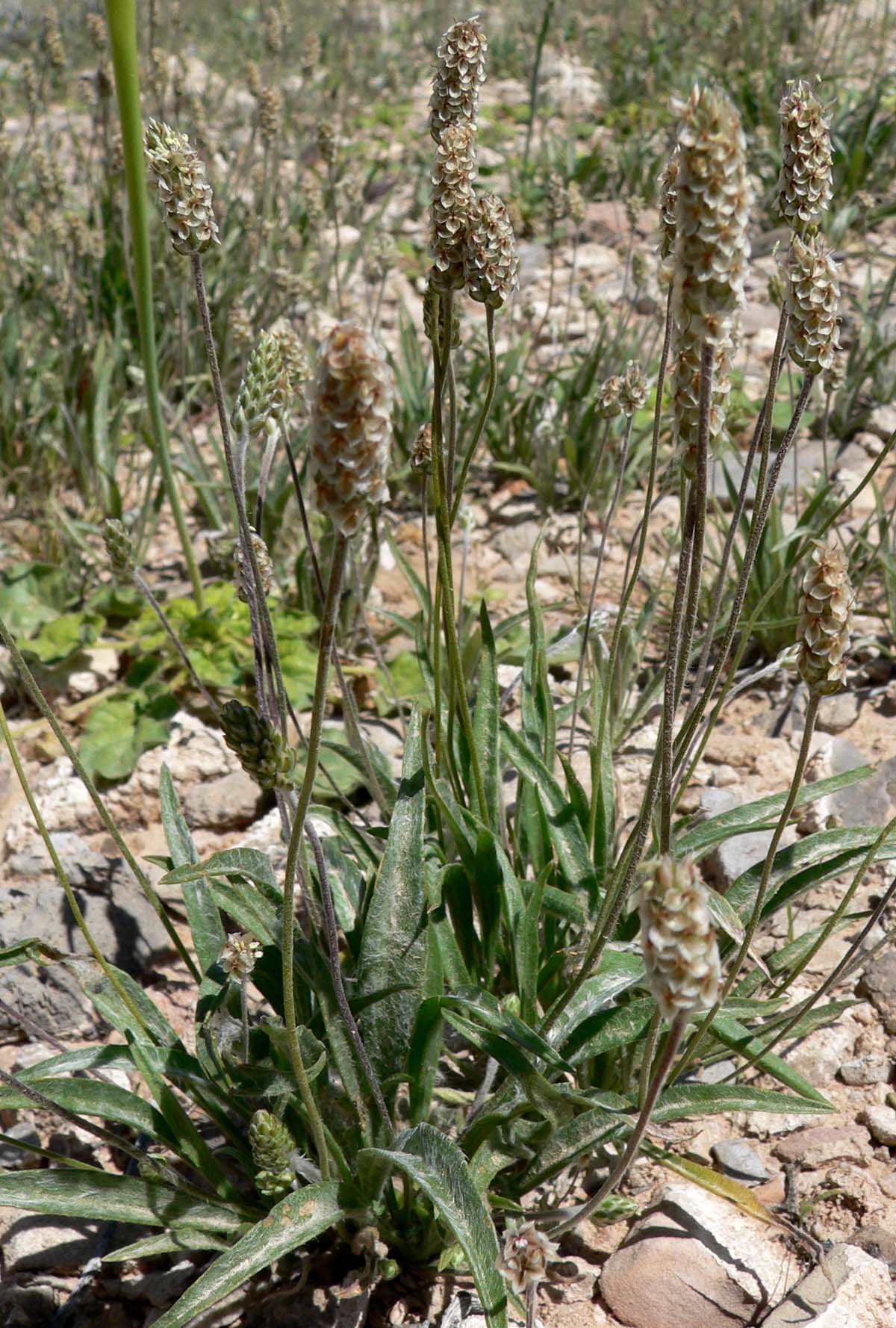
Plantago coronopus is a hardy, low-growing herbaceous plant that forms a distinctive rosette of deeply lobed, antler-like leaves. It is a common feature of coastal grasslands and salt marshes across Europe and the Mediterranean.
You will most often find this plant in sandy or rocky soils where it can tolerate high salinity and trampling. It is a resilient species that thrives in disturbed ground where other plants struggle to establish.
Key Facts
- Type: Herbaceous annual to perennial
- Native Range: Europe, Asia, and North Africa
- Leaf Shape: Deeply lobed, resembling a stag’s horn
- Habitat: Coastal dunes, salt marshes, and sandy paths
- Tolerance: High salt and drought resistance
Why Grow Buck’s-Horn Plantain
Buck’s-horn Plantain is ideally suited for coastal gardens or areas with poor, sandy soil that requires a tough, low-maintenance groundcover. It is a practical choice if you want a plant that withstands foot traffic and high wind exposure without needing supplemental irrigation.
You will find that this plant integrates well into rockeries or as a filler between paving stones where its succulent-like texture adds interest. It is not a fussy plant, requiring only a sunny, open spot to maintain its compact, rosette-forming habit.
How to Identify Buck’s-Horn Plantain
You can identify Plantago coronopus by its deeply pinnatifid leaves that grow in a basal rosette and reach up to 25 cm (10 in) in length. The leaves are covered in fine, soft hairs and have a distinct, narrow shape that gives the plant its common name.
- Leaves: Lobed like a stag’s horn, arranged in a flat rosette.
- Flowers: Tiny, greenish-yellow florets packed into a dense, cylindrical spike.
- Stems: Flowering stalks are leafless and can grow up to 30 cm (12 in) tall.
- Root: A thick, deep taproot that helps it survive in dry, sandy conditions.
Where Does Buck’s-Horn Plantain Grow
This plant is naturally found in coastal habitats, including sand dunes, salt marshes, and cliff-top grasslands. It is highly adapted to the harsh conditions of these environments, where it faces high salinity, strong winds, and periodic inundation.
Beyond the coast, you will encounter it in disturbed inland sites like gravel paths, dry meadows, and waste ground. It is an opportunistic species that colonizes bare soil where competition from taller grasses is minimal.
Ecology and Pollination
Plantago coronopus is a wind-pollinated species that releases large quantities of pollen from its inconspicuous flowers during the spring and summer. Its flowering spikes are designed to sway in the breeze, ensuring efficient dispersal across its open, exposed habitat.
The plant provides a modest food source for various insects, including certain moth larvae that feed on its foliage. Its presence helps stabilize loose, sandy soils, acting as a small-scale pioneer species in fragile coastal ecosystems.
Conservation Status
Buck’s-horn Plantain is not currently considered threatened and maintains a stable population across its broad native range. It is a widespread species that effectively colonizes human-disturbed environments, ensuring its continued survival in both natural and urban settings.
While it is not a focus for conservation efforts, it is valued as an indicator of healthy, saline-influenced coastal plant communities. You will rarely see it listed on protected species registers due to its ability to thrive in various soil types.
Traditional Uses of Minutina
Buck’s-horn Plantain has been traditionally used as a wild edible, particularly in Mediterranean cuisine where it is known as erba stella. The young, tender leaves are harvested before the plant flowers and are typically added to salads for their mild, slightly nutty flavour.
Historically, the plant was sometimes employed in folk medicine, though modern scientific evidence for specific health benefits is limited. It was traditionally used as a soothing agent, but you should always verify the source and safety before consuming any wild plant.
Similar Species to Plantago coronopus
You might confuse this plant with other members of the Plantago genus, but you can distinguish it by its distinctly lobed, antler-like leaves. Other plantains typically have broader, entire leaves that lack the deep, tooth-like divisions found on this species.
- Greater Plantain (Plantago major): Features broad, oval, unlobed leaves.
- Ribwort Plantain (Plantago lanceolata): Has long, lance-shaped leaves with prominent parallel veins.
- Sea Plantain (Plantago maritima): Possesses narrow, fleshy, entire leaves without lobes.
Frequently Asked Questions
Is Buck's-horn Plantain edible?
Yes, the young leaves of Buck's-horn Plantain are edible and are often used in salads.
What is the meaning of the name Minutina?
Minutina is an Italian common name for the plant, often referring to its small, finely divided leaves.
Does Plantago coronopus have medicinal benefits?
It has been traditionally used in herbal medicine, but there is no modern clinical evidence to support specific health claims.
How do I distinguish Buck's-horn Plantain from other plantains?
Look for the deeply lobed, antler-like leaves; most other common plantains have simple, unlobed leaves.
Information about traditional or historical uses is provided for educational interest only and is not medical advice. Do not use any plant to treat a condition without speaking to a qualified professional.
Sources & Verification
Taxonomy and distribution are checked against the databases below. Care guidance is written for cultivated species only and reviewed by our editor. How We Build Plant Profiles →