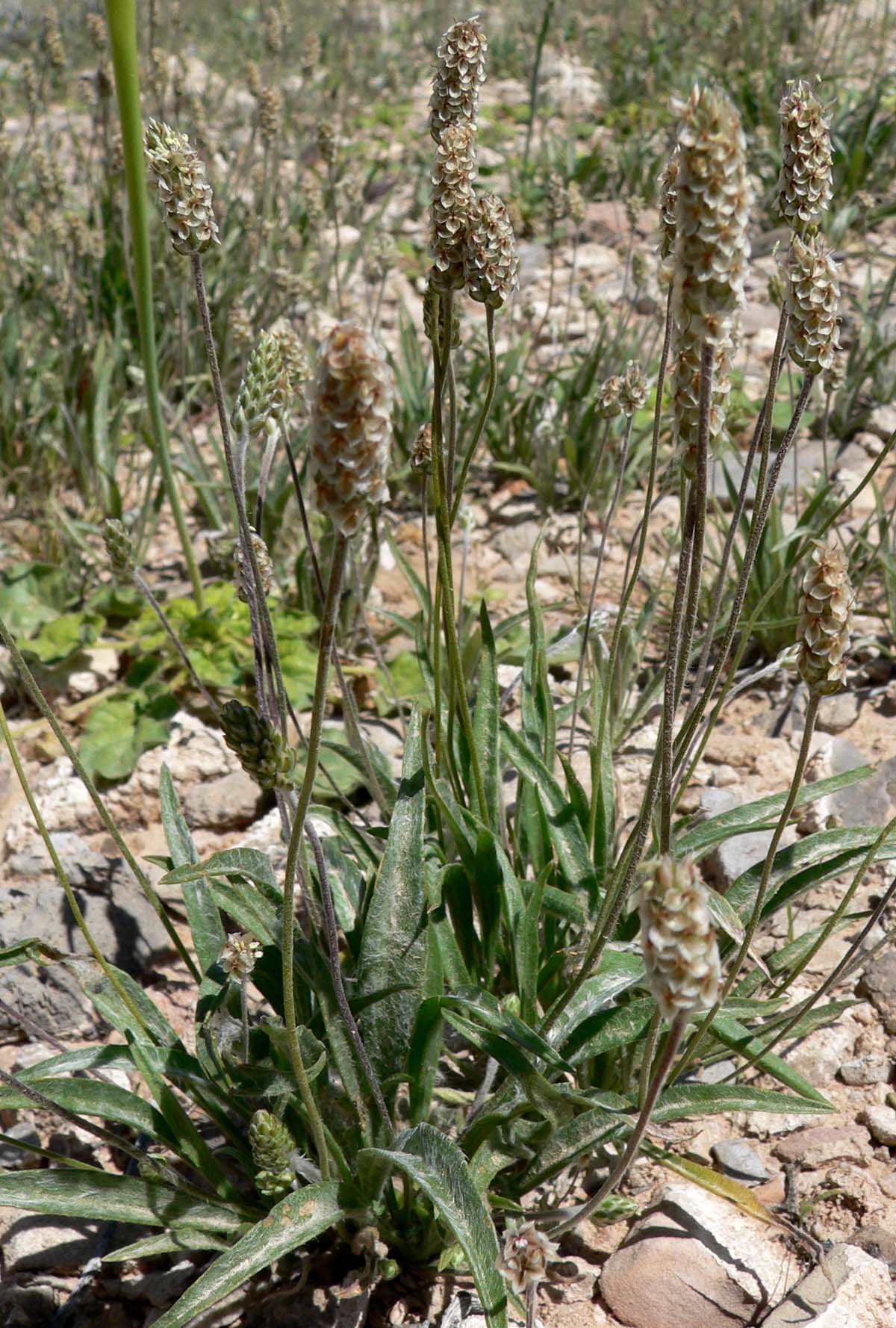
Broadleaf plantain (Plantago major) is a perennial herbaceous plant in the Plantaginaceae family, native to Eurasia and northern Africa. It forms a flat basal rosette of oval leaves with 3-9 prominent parallel veins and upright cylindrical flower spikes.
The plant thrives in compacted soil where lawn grasses fail, producing up to 14,000 seeds per plant each season. Young leaves harvested in early spring contain vitamins A, C, and K alongside calcium and iron.
Key Facts
- Plant Type: Perennial herb (Plantaginaceae family)
- Height: 10-30 cm (4-12 in) tall
- Sunlight: Full sun to light partial shade
- Soil pH: Adaptable from 6.0 to 7.8 pH
- Seed Production: Up to 14,000 seeds per plant annually
- Native Range: Eurasia and North Africa
Growing Broadleaf Plantain in Home Gardens
Broadleaf plantain grows best in full sun and compacted or loamy soils with minimum maintenance required.
While often managed as a turf weed, herbalists grow broadleaf plantain for culinary greens and traditional remedies. The rosette survives heavy foot traffic and root zone compaction in USDA hardiness zones 3 through 9.
Growing conditions to consider before planting:
- Rosette diameter reaches 15-40 cm (6-16 in) at maturity
- Thrives in soil temperatures between 10-25 °C (50-77 °F)
- Requires at least 4 hours of direct sun daily for strong seed heads
Broadleaf Plantain Identification and Leaf Features
Broadleaf plantain features a basal rosette of 5-11 oval leaves with 3-9 distinct parallel veins running from base to tip.
Individual leaf blades measure 5-20 cm (2-8 in) long and 4-10 cm (1.5-4 in) wide on broad petioles. Spikes of tiny, greenish-brown flowers emerge on leafless stalks reaching 10-30 cm (4-12 in) in height between May and September.
Key botanical characteristics include:
- Leaves: Broadly elliptic to ovate, smooth or slightly puberulent
- Veins: 3 to 9 heavy parallel veins along the underside
- Flowers: Dense cylindrical spikes 5-20 cm (2-8 in) long with 4 greenish sepals
- Roots: Thick fibrous taproot with spreading lateral rootlets
Soil and Sunlight Conditions for Greater Plantain
Broadleaf plantain tolerates a soil pH of 6.0 to 7.8 and establishes in low-nutrient clay, loam, or sand.
Plants located in full sun develop thicker leaves and denser seed heads than those in partial shade. Excessive shade reduces leaf density and seed yield.
Soil parameters for cultivation:
- Tolerates heavy clay, disturbed loam, and gravelly ground
- Survives soil bulk densities exceeding 1.4 g/cm³
- Prefers moisture-retentive soil but survives drought periods
Sowing Seeds for Home Propagation
Sow broadleaf plantain seeds directly on the soil surface in early spring when soil temperatures reach 10 °C (50 °F).
Light triggers germination, so seeds must remain uncovered or receive a light dusting of fine soil under 2 mm (0.08 in) deep. Seeds germinate within 7 to 14 days when kept moist at 15-20 °C (59-68 °F).
Step-by-step planting steps:
- Press seeds lightly into moist soil without covering them fully
- Space plantings or thin seedlings to 20 cm (8 in) apart
- Water gently with a fine mist nozzle to avoid dislodging seeds
Watering and Soil Care Guidelines
Water young plants to supply 2.5 cm (1 in) of water per week until rosettes establish deep fibrous roots.
Established rosettes require minimal irrigation except during prolonged dry spells exceeding 3 weeks. Supplemental nitrogen fertilizer is rarely necessary, as excessive nitrogen causes thin foliage with lower mineral density.
Care practices for foliage health:
- Water when the top 5 cm (2 in) of soil feels dry to the touch
- Remove fading flower spikes if self-seeding is not desired
- Mulch around cultivated patches with 2 cm (0.8 in) of straw to retain moisture
How and When to Harvest Leaves and Seeds
Harvest young tender leaves in late spring before flower spikes appear for optimal culinary texture.
Older summer leaves develop tough vascular veins. Collect dry brown seed spikes in autumn when seeds turn dark brown to black and easily detach from capsules.
Harvesting guidelines:
- Cut outer leaves near the crown base using clean shears
- Leave at least 4 inner leaves intact so the rosette continues growing
- Strip mature seed heads into paper bags on dry afternoons
Culinary, Forage, and Traditional Uses
Young broadleaf plantain leaves offer a mild, slightly bitter taste rich in calcium, iron, and vitamins A, C, and K.
Tender spring leaves are eaten raw in salads or cooked like spinach (Spinacia oleracea) in soups and sautéed dishes. Traditionally, crushed leaves were applied topically as a poultice to soothe minor insect bites, nettle stings, and minor scrapes. Seeds are ground into meal or fed to poultry.
Documented applications include:
- Culinary greens: Steam or blanch leaves for 2-3 minutes to tenderize veins
- Herbal tea: Steep dried leaves in hot water for 10 minutes
- Forage: Seeds and foliage provide feed for birds, rabbits, and livestock
How to Control and Remove Weeds from Lawns
Control unwanted broadleaf plantain in turf by hand-weeding with a fishtail weeding tool to pull out the central taproot.
Because seeds remain viable in soil for over 40 years, preventing flower spike development by mowing at a height of 8 cm (3 in) limits spread. Aerating compacted soil reduces broadleaf plantain’s advantage over turfgrasses like Kentucky bluegrass (Poa pratensis).
Effective removal steps:
- Extract plants when soil is moist to pull out intact roots
- Apply broadleaf selective herbicides in spring or autumn if manual removal fails
- Overseed bare spots immediately to prevent seed germination
Storage and Drying Methods for Harvested Leaves
Store dry broadleaf plantain leaves in an airtight glass container for up to 1 year after thorough air-drying.
Wash harvested leaves in cold water, pat dry with towels, and arrange them in a single layer on drying screens away from direct sunlight. A food dehydrator set to 35-40 °C (95-104 °F) dries leaves within 6 to 8 hours.
Preservation methods:
- Fresh leaves: Keep wrapped in damp paper towels in the refrigerator for 3-5 days
- Dried leaves: Crumble and store in dark glass jars
- Frozen leaves: Blanch for 2 minutes, cool in ice water, and freeze in sealed bags for 6 months
Broadleaf Plantain Seasonal Maintenance Schedule
| Spring | Sow seeds on soil surface when temperatures reach 10 °C (50 °F). Harvest tender young leaves before flowering spikes emerge. |
|---|---|
| Summer | Water cultivated patches during droughts exceeding 21 days. Snip off green flower spikes to prevent unwanted lawn self-seeding. |
| Autumn | Collect mature brown seed heads for seed harvest or propagation. Apply 1 cm (0.4 in) of compost around rosettes. |
| Winter | Rosettes lie flat during freezing conditions. Mulch cultivated beds with straw in regions dropping below -15 °C (5 °F). |
Common Broadleaf Plantain Problems and Solutions
| What you see | Likely cause | What to do |
|---|---|---|
| Tough, stringy leaf texture | Harvesting mature summer leaves after flowering spikes develop | Harvest young leaves under 10 cm (4 in) long in early spring before flower stalks emerge. |
| White powdery coating on leaves | Powdery mildew infection in humid, stagnant air | Space rosettes 20 cm (8 in) apart and avoid overhead evening watering. |
| Wilting leaves during heatwaves | Severe moisture stress in shallow sandy soil | Apply 2.5 cm (1 in) of water weekly during dry spells. |
| Uncontrolled spreading in lawn turf | Seed heads maturing and dispersing seed across bare spots | Mow regularly before seed spikes mature and aerate compacted soil. |
Cultivars and Ornamental Varieties of Plantago major
- ‘Rubrifolia’ – red to deep purple leaves, grown in ornamental herb gardens
- ‘Rosularis’ – green double-flowered rose-like flower bracts
- ‘Variegata’ – leaves marked with cream and pale yellow splashes
Frequently Asked Questions
Is broadleaf plantain safe to eat raw or cooked?
Young broadleaf plantain leaves are safe to eat raw in salads or cooked like spinach. Older leaves require boiling or steaming to tenderize their fibrous parallel veins.
Is broadleaf plantain poisonous to dogs or cats?
Broadleaf plantain is non-toxic to dogs and cats according to veterinary safety records. Ingesting very large quantities of raw foliage may cause minor digestive upset due to high fiber content.
What is the difference between broadleaf plantain and narrowleaf plantain?
Broadleaf plantain features broad oval leaves with 3-9 parallel veins, whereas narrowleaf plantain (Plantago lanceolata) forms long, lance-shaped leaves under 3 cm (1.2 in) wide. Both share similar growth habits, but broadleaf plantain tolerates heavier soil compaction.
What is broadleaf plantain used for in Medieval Dynasty?
In the video game Medieval Dynasty, broadleaf plantain is an edible herb collected to restore character health points and craft healing remedies. Historically, real-world folk traditions used crushed leaves as a topical poultice for minor cuts and insect stings.
How do you get rid of broadleaf plantain in a lawn?
Remove broadleaf plantain by digging out the central taproot with a fishtail weed puller when soil is moist. Aerate compacted soil and maintain lawn heights above 7 cm (2.8 in) to block seed germination.
Information about traditional or historical uses is provided for educational interest only and is not medical advice. Do not use any plant to treat a condition without speaking to a qualified professional.
Sources & Verification
Taxonomy and distribution are checked against the databases below. Care guidance is written for cultivated species only and reviewed by our editor. How We Build Plant Profiles →